
11 Bridges in Tokyo worth your time
Japan Gems
11 Bridges in Tokyo, with what to see and how to get there.
Tokyo has 11 bridges on Japan Gems. Below are the 11 we can tell you the most about — each one written up in English from Japanese sources, with what to see and how to get there. See all bridges in Tokyo.
01
Rainbow Bridge
TOKYO · PLACE レインボーブリッジ
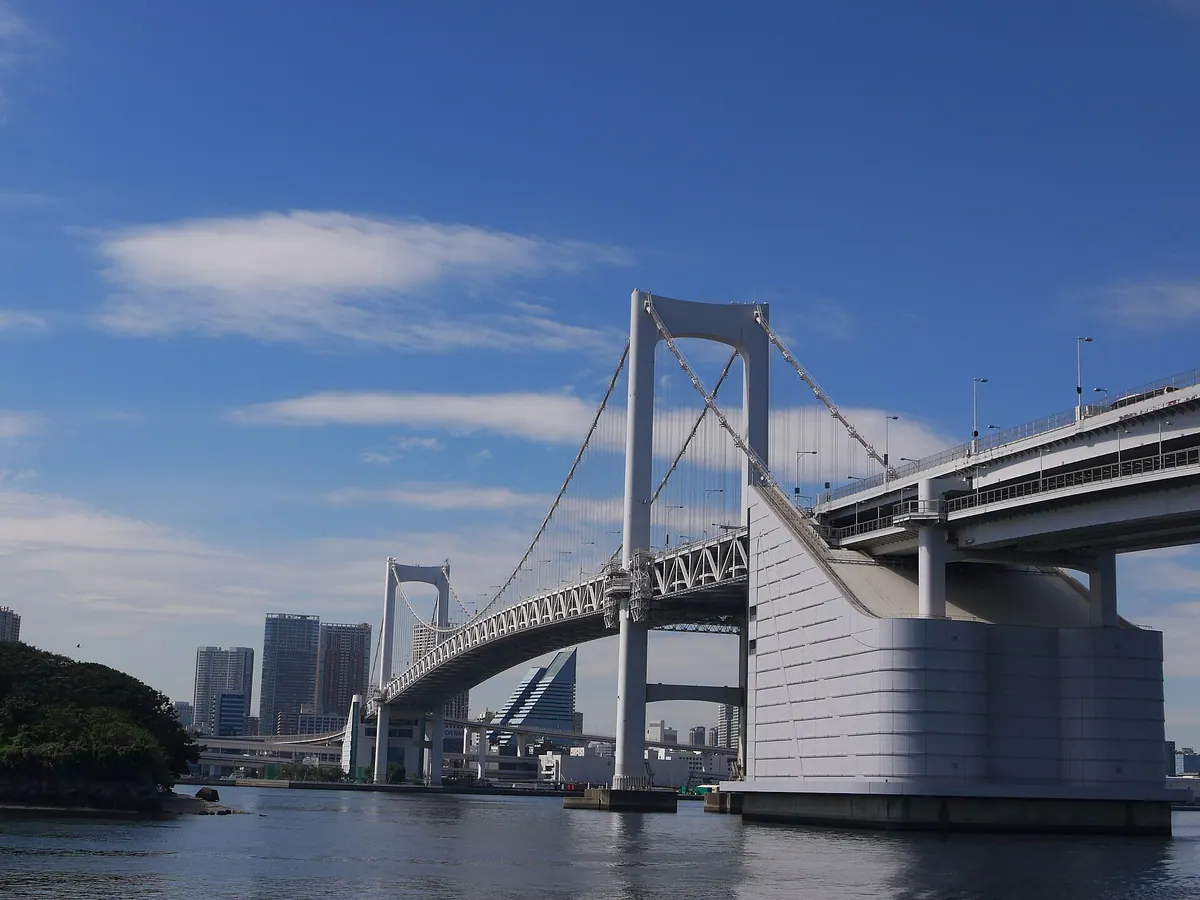
A massive double-deck suspension bridge connecting Tokyo to Odaiba, offering free pedestrian walkways and scenic views of the harbor.
What it is
- A double-deck suspension bridge connecting the Shibaura and Daiba districts in Minato, Tokyo.
- The structure officially opened to the public on August 26, 1993.
- The official name of this 798-meter long structure is the Tokyo Port Connecting Bridge.
- The design features two levels carrying an expressway, a transit system, and a road.
What to see
- Two main towers that reach a height of 126 meters above the water.
- Free pedestrian walkways located on the lower deck of the bridge.
- The Yurikamome transit system trains running along the lower level.
- Views of the harbor from a clearance of 52 meters above the water.
When to go
- Special rainbow-colored lighting displays during specific holidays and events.
02
Dream Bridge
TOKYO · PLACE 夢の大橋
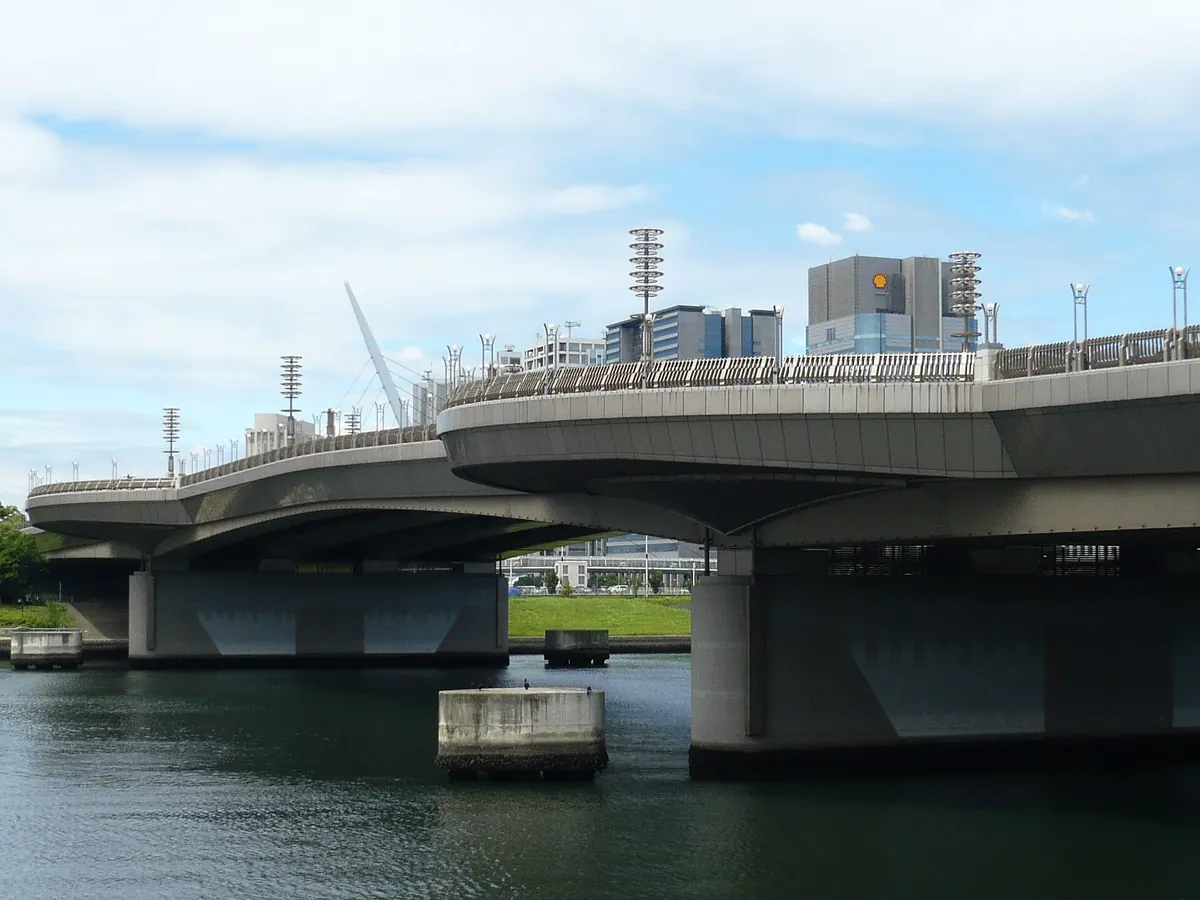
Japan's widest pedestrian bridge spans the Ariake West Canal, offering a spacious walkway used for filming and Olympic history.
What it is
- A 360-meter pedestrian and cyclist bridge spanning the Ariake West Canal.
- The widest pedestrian bridge in Japan measuring 60 meters across.
- A connection between the Aomi and Ariake districts within Symbol Promenade Park.
- A 1995 JSCE Tanaka Award winner that opened officially in October 1996.
What to see
- The site where the Olympic cauldron was installed during the 2020 Games.
- A massive walkway frequently used as a filming location for television dramas.
- Views of the surrounding waterfront districts from the center of the span.
Getting there
- A three-minute walk from Tokyo Teleport Station.
- Five minutes on foot from Aomi Station.
- Five minutes on foot from Tokyo Big Sight Station.
- Official site
- www.tptc.co.jp
03
Teleport Bridge
TOKYO · PLACE テレポートブリッジ
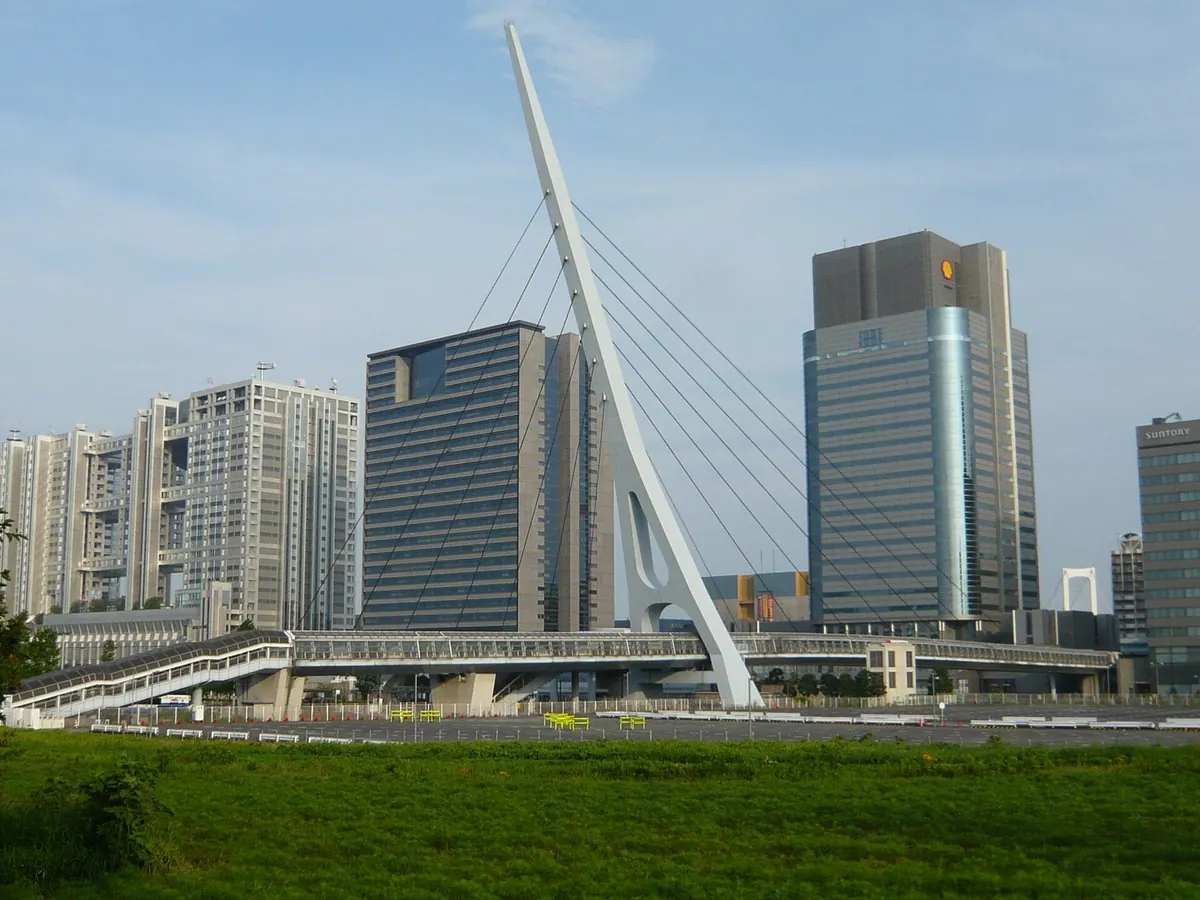
A 341-meter pedestrian cable-stayed bridge in Odaiba featuring a unique tilted support tower and views over the Shuto Expressway.
What it is
- A pedestrian-only bridge connecting the Daiba and Aomi districts in Odaiba.
- A three-span continuous cable-stayed bridge completed in 1996.
- A 341-meter walkway crossing over the Shuto Expressway Bayshore Route.
- A structural link between two major transit points in the waterfront area.
What to see
- A single main support tower positioned south of the bridge center.
- A distinctive support tower that is tilted toward the south side.
- The nine-meter wide deck designed specifically for people walking between districts.
- The cable-stayed architecture spanning across the busy expressway below.
Getting there
- The bridge links Odaiba-kaihinkoen Station and Tokyo Teleport Station.
04
Omekaido Overbridge
TOKYO · PLACE 新宿大ガード
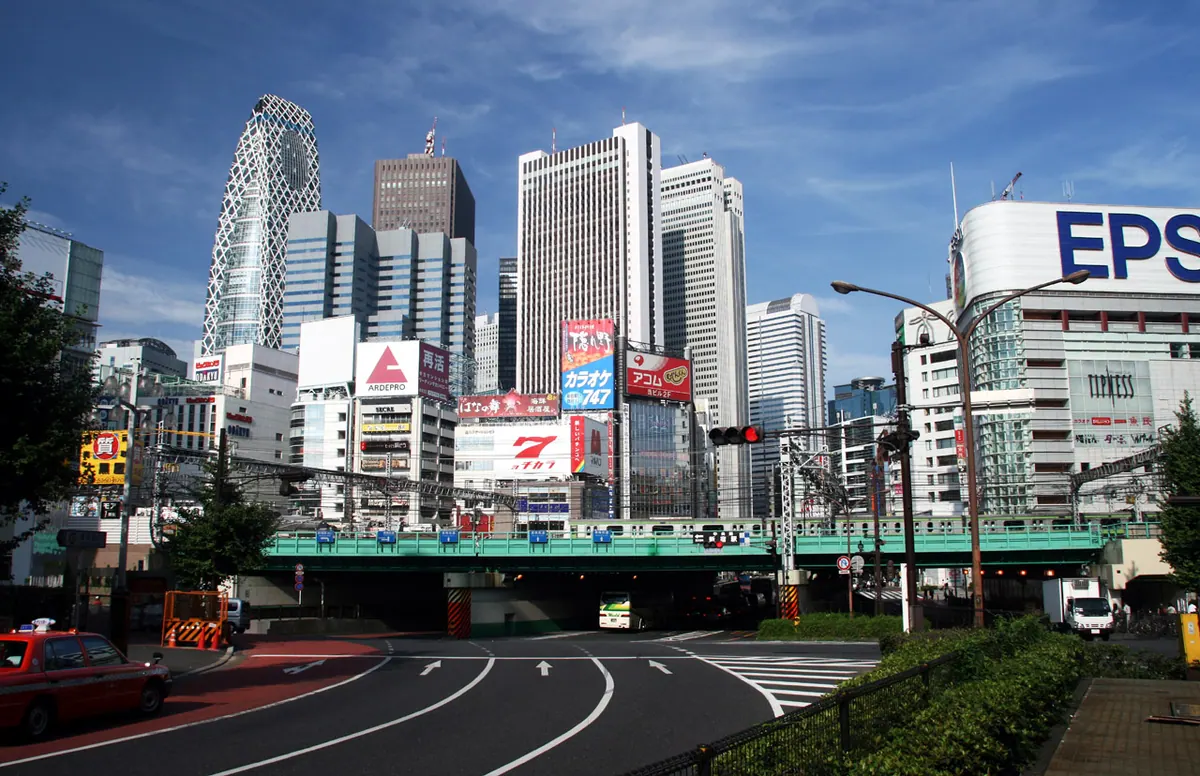
A massive railway bridge in Shinjuku featuring a pedestrian art gallery and spanning ten lanes of traffic.
What it is
- A railway bridge carrying multiple JR East lines between Shinjuku and Nishi-Shinjuku.
- The structure serves as the starting point for Ome-kaido Avenue.
- The bridge was expanded to its current scale between 1936 and 1937.
- A major transit point where Otakibashi Street and Yasukuni-dori Avenue begin.
What to see
- The O-Guard Milook gallery located within the pedestrian walkway.
- Artwork and calligraphy created by local residents displayed in the gallery.
- A wide road beneath the bridge featuring ten vehicle lanes.
- The Tsunohazu Overbridge situated 200 meters to the south.
Getting there
- Seibu-Shinjuku Station is located just north of the east intersection.
05
Itabashi
TOKYO · PLACE 板橋
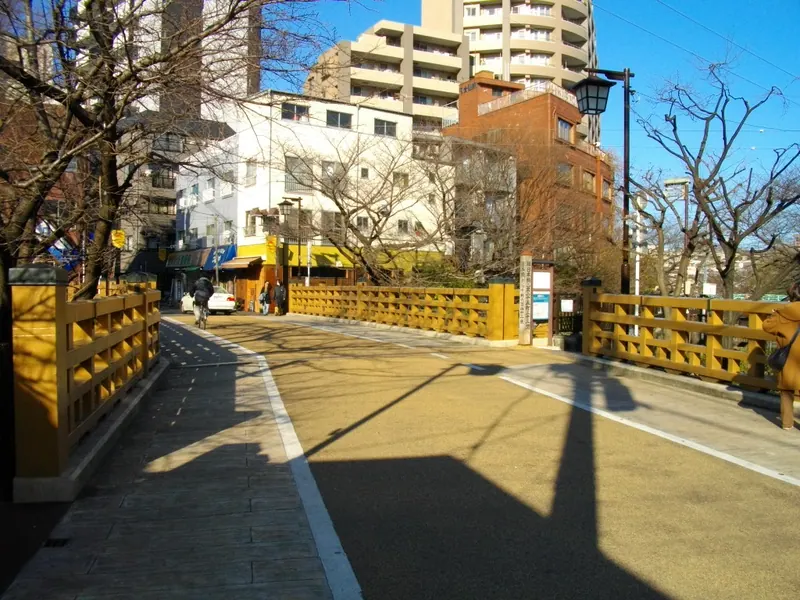
A historic bridge on the former Nakasendo route that gave its name to the surrounding ward and features seasonal cherry blossoms.
What it is
- A bridge spanning the Shakujii River connecting the neighborhoods of Honcho and Nakajuku.
- The landmark that provides the namesake for the entire Itabashi Ward.
- A crossing point located on the historic Nakasendo travel route.
- A structure that was moved from its original Kami-itabashi location during the Edo period.
What to see
- Rows of cherry trees planted along the riverbanks near the bridge.
- The adjacent Shin-itabashi bridge located upstream on Route 17.
- The Bambabashi bridge which serves as the next crossing point downstream.
When to go
- Springtime is ideal for viewing the cherry tree rows in bloom along the river.
06
Ryōgoku Bridge
TOKYO · PLACE 両国橋
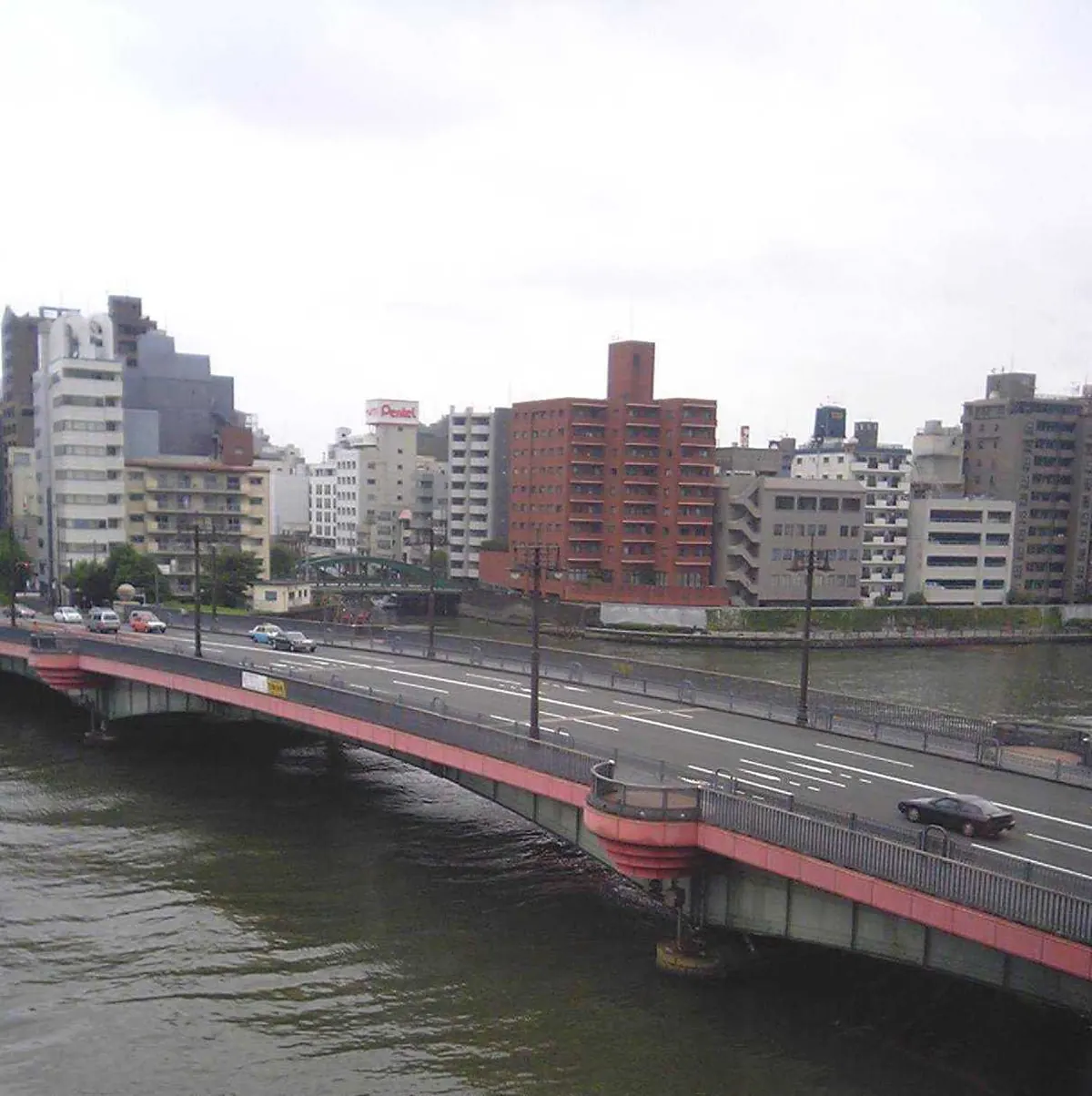
A historic steel bridge spanning the Sumida River, featuring unique sumo-themed architecture and views of the Kanda River junction.
What it is
- A three-span Gerber steel plate girder bridge connecting Chuo and Sumida wards.
- The current structure was completed in 1932 to replace earlier historical spans.
- The original bridge was built for disaster prevention following the Great Fire of Meireki.
- It is designated as a Tokyo Metropolitan Selected Historical Building.
What to see
- Balconies along the walkway designed to resemble traditional sumo rings.
- The scenic point where the Kanda River flows into the Sumida River.
- Steel girder construction spanning one hundred and sixty-four meters in length.
- Views of the river from a bridge that once marked provincial borders.
07
Tokyo Gate Bridge
TOKYO · PLACE 東京ゲートブリッジ
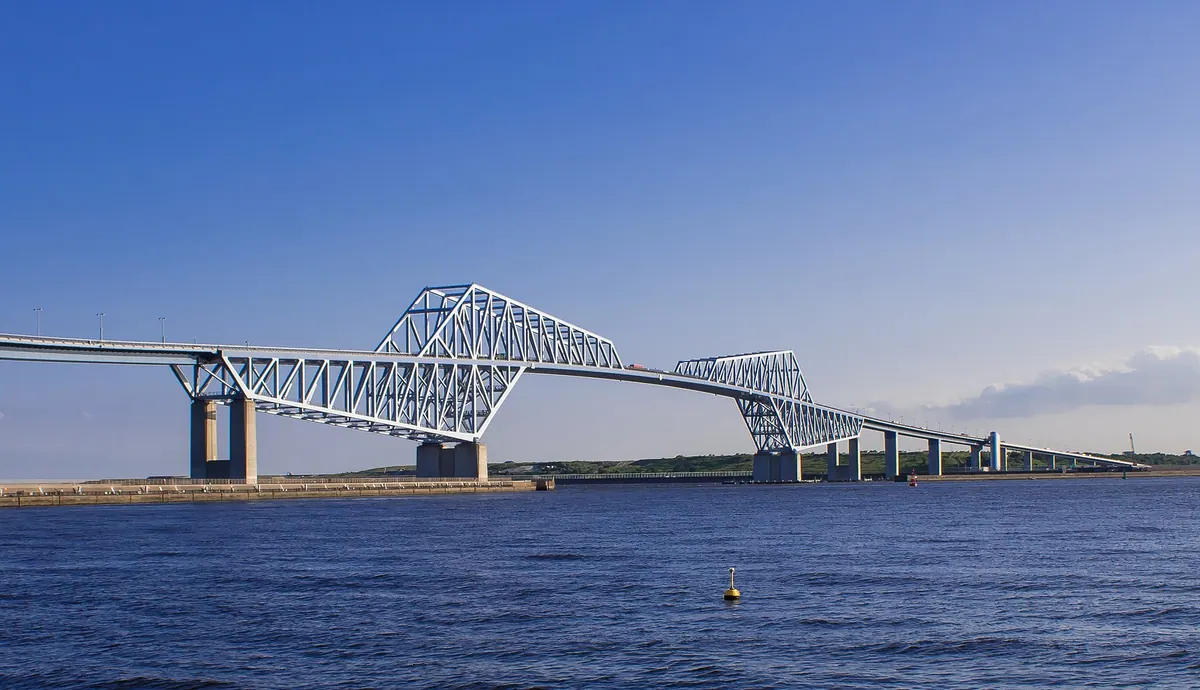
A massive truss bridge nicknamed for its dinosaur-like shape, offering a pedestrian walkway with views of Tokyo Bay.
What it is
- A 2,618-meter truss bridge connecting Wakasu in Koto Ward to the Central Breakwater
- Opened to traffic in February 2012 to facilitate vehicle movement across the bay
- Nicknamed the Dinosaur Bridge because of its unique structural silhouette
- Built with height restrictions due to its proximity to Haneda Airport
What to see
- The distinctive truss structure reaching a maximum height of 87.8 meters
- A pedestrian walkway located on the inland side of the bridge
- Energy-efficient LED lighting that illuminates the structure after dark
- Four lanes of vehicular traffic crossing a 440-meter main span
- Official site
- www.kouwan.metro.tokyo.lg.jp
08
Minamitaka Bridge
TOKYO · PLACE 南高橋
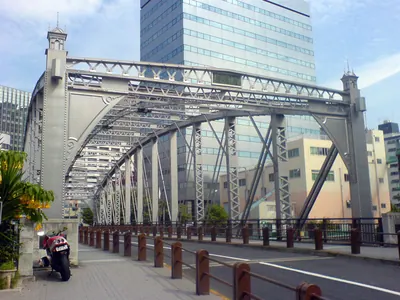
Tokyo's oldest steel truss road bridge, built in 1932 using recycled materials from the historic 1904 Ryogoku Bridge.
What it is
- A through-type simple Pratt truss bridge crossing the Kamejima River in Tokyo.
- The oldest steel truss road bridge in Tokyo, completed in March 1932.
- A designated Chuo Ward Tangible Cultural Property and JSCE Civil Engineering Heritage site.
- A structure built using recycled steel from the original 1904 Ryogoku Bridge.
What to see
- The historic steel truss structure measuring 63.1 meters long and 11 meters wide.
- The Kamejima River Sluice Gate located adjacent to the south side of the bridge.
- Industrial craftsmanship from the Tokyo Ishikawajima Shipyard which manufactured the bridge.
09
Tokiwa Bridge
TOKYO · PLACE 常盤橋
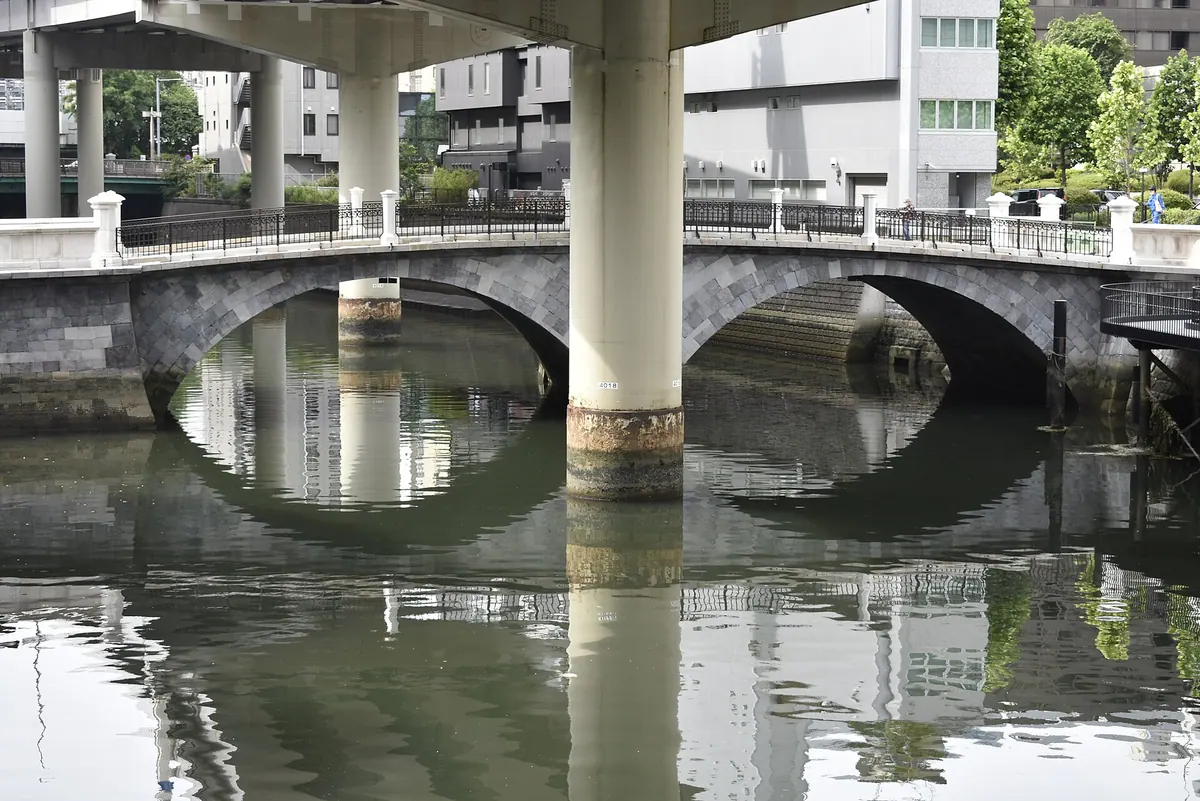
Two historic bridges spanning the Nihonbashi River, including Tokyo's oldest stone arch bridge and a National Historic Site.
What it is
- Two separate bridges located seventy meters apart spanning the Nihonbashi River.
- The upstream pedestrian bridge is the oldest existing stone bridge in Tokyo.
- A gate was originally established at this site in 1629.
- The stone bridge is a designated National Historic Site and Civil Engineering Heritage.
What to see
- The pedestrian-only stone arch bridge restored between 2013 and 2021.
- The downstream road bridge built after the Great Kanto Earthquake.
- A bronze statue of Shibusawa Eiichi located in the adjacent park.
- Important landscape objects designated by the city in 2007.
10
Manseibashi
TOKYO · PLACE 万世橋
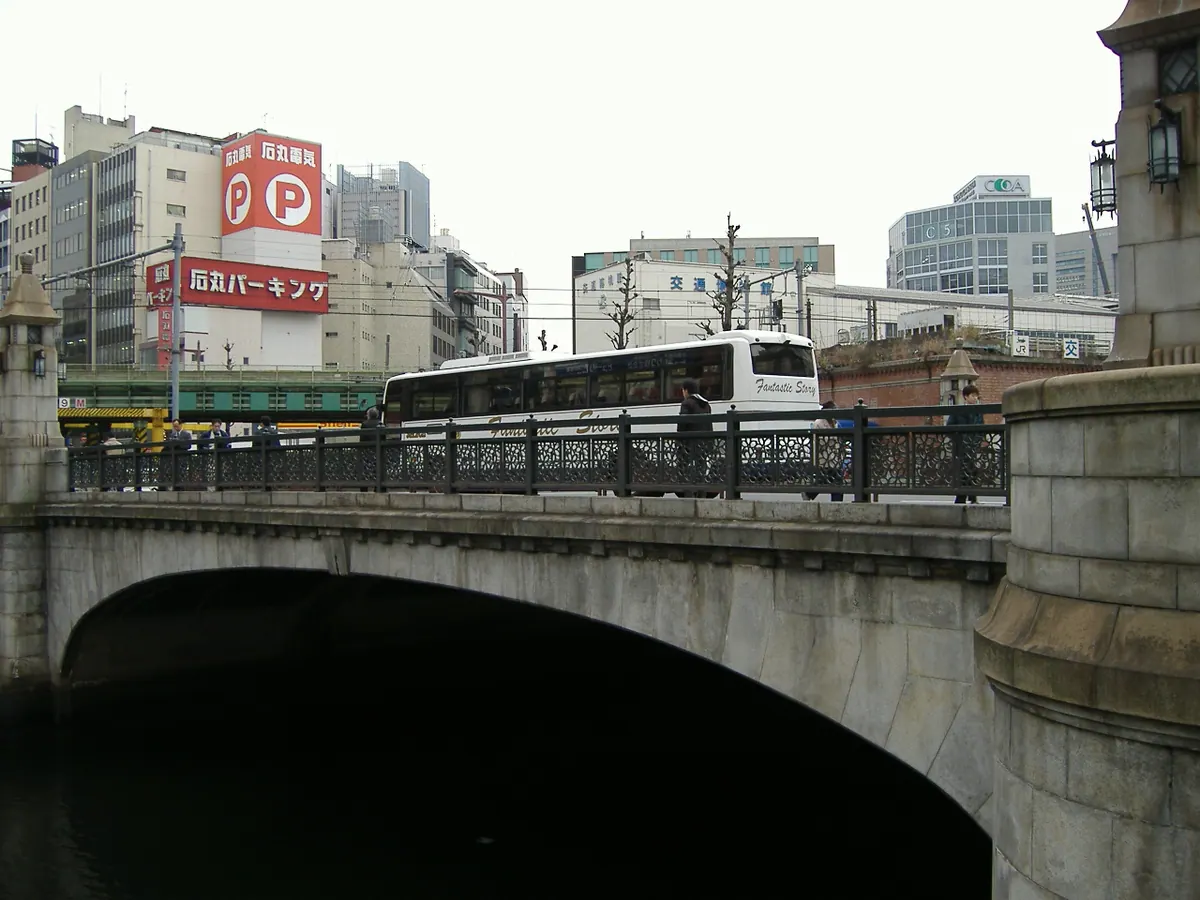
A historic stone and concrete arch bridge connecting Akihabara and Kanda, featuring unique underground ruins and river views.
What it is
- A concrete and stone arch bridge spanning the Kanda River in Chiyoda.
- Originally built as a stone arch in 1873 and reconstructed in 1930.
- A functional crossing on National Route 17 connecting Akihabara and Kanda.
- A structure measuring 26 meters long and 36 meters wide.
What to see
- The current arch design dating back to the post-earthquake reconstruction.
- A public toilet ruin located in a basement at the south end.
- Views of the Kanda River with Shohei Bridge located upstream.
- The site where statues of Takeo Hirose and Magoshichi Sugino once stood.
11
Wadakura Bridge
TOKYO · PLACE 和田倉橋
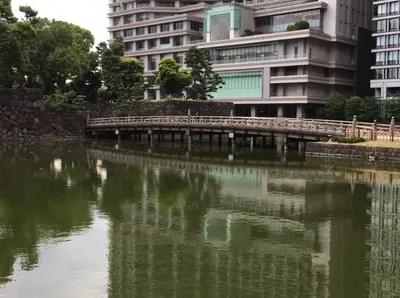
A historic bridge in Tokyo spanning the former Wadakura Gate site, featuring traditional design elements and a long reconstruction history.
What it is
- A bridge spanning the site of the former Wadakura Gate in Chiyoda Ward.
- The original structure was completed around 1590 during the early Edo period.
- The current bridge was completed in 1955 after previous versions were destroyed.
- It measures 44.6 meters long and 7.5 meters wide.
What to see
- Traditional railings decorated with ornamental giboshi finials.
- A modern foundation constructed from reinforced concrete.
- The historic site where the second bridge was built in 1661.