
Kumano Nachi Taisha Treasure Hall
熊野那智大社宝物殿
This hall displays items representing the shrine's history and religious activities, worth seeing for its unique artifacts.
What it is
- Treasure Hall of Kumano Nachi Taisha Grand Shrine.
- Displays items representing shrine's history and religious activities.
What to see
- Nachi-san Shrine Mandala, 500 years old, vivid and crisp.
- Collection of chronicles, manuscripts, bronze seal, wooden printing block.
- Small, round mirrors used in past Fire Festivals.
- Sacred sword, descended from heavens to Nachi Waterfall.
- Miniature model of portable shrines for Fire Festival.
- Drum and binzasara instruments for dengaku dance performance.
In detail
(436 ww [251-500], web)
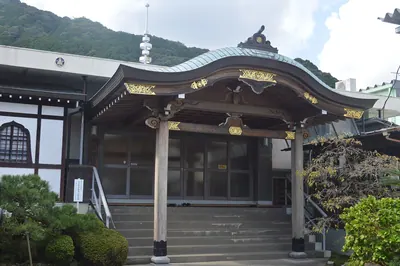
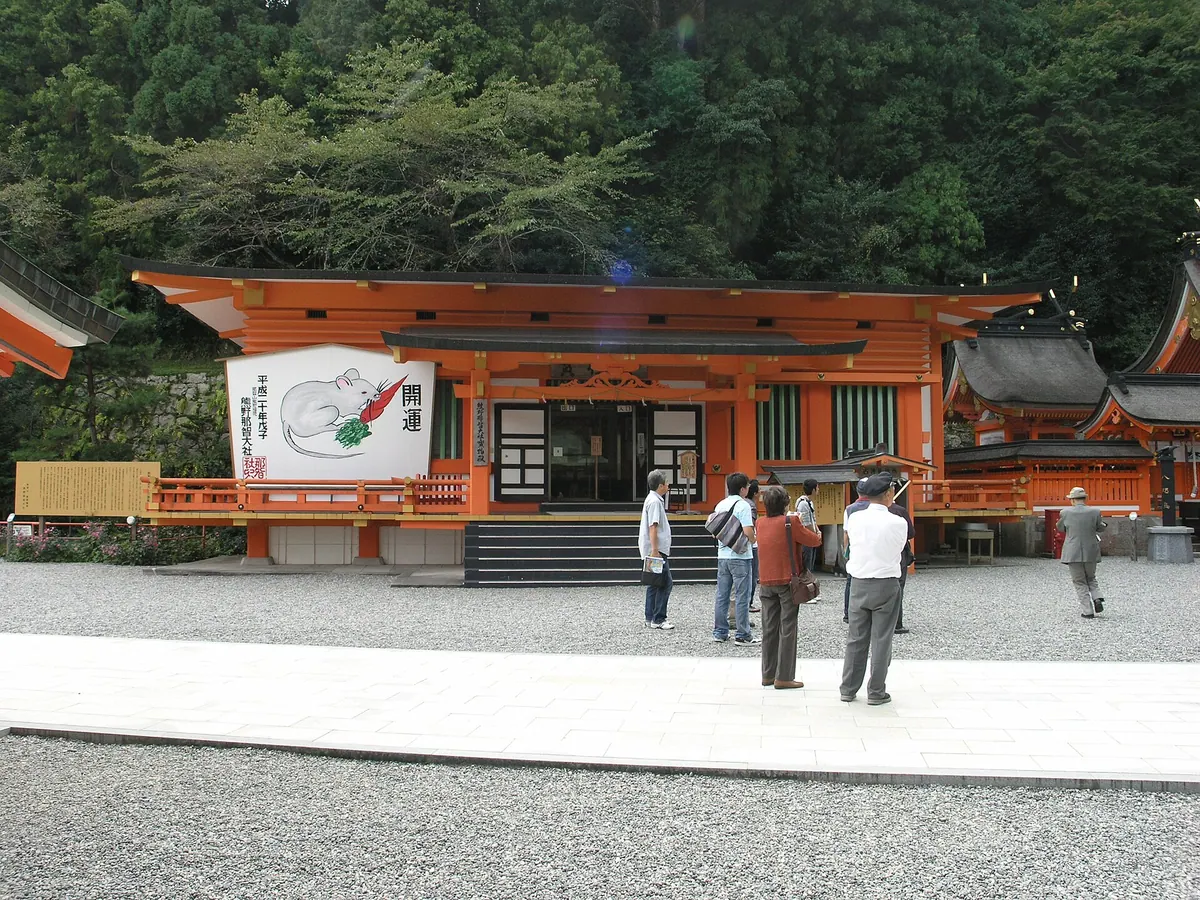
The Treasure Hall (homotsuden) at Kumano Nachi Taisha Grand Shrine is located in the main courtyard, across from the worship hall. A selection of items representing the shrine’s history and religious activities are on permanent display inside.
Mandalas and Manuscripts
The first exhibit in the Treasure Hall, just inside the entrance, is the Nachisan Shrine Mandala, an intricate graphic representation of the shrine and its cosmology. Several versions of the mandala survive, but this is a particularly well-preserved example, still vivid and crisp despite having been painted some 500 years ago. It was used as a visual aid by the Kumano bikuni (nuns) who traveled around Japan preaching the Kumano faith.
The Treasure Hall also contains an extensive collection of chronicles and manuscripts, a bronze seal, and a wooden printing block. The printing block was used to make Karasu Goohoin, paper amulets that featured 72 crows spelling out the words “Priceless Seal of Nachi Waterfall” in Chinese characters. Each of the Kumano grand shrines still produces its own amulets using new printing blocks.
Mirrors for the Fire Festival
Nachi Taisha has a large collection of small, round mirrors once used on the portable shrines carried to Nachi Waterfall during the Fire Festival. The shrines are adorned with folding fans bearing the sun disc, and the mirrors hold the fans in place.
Mirrors have long had an important place in the Shinto religion. They are a symbol of Amaterasu-no-Okami, the sun goddess and protector of the imperial family, and are thought to ward off evil. The mirrors on display at the Treasure Hall were used on the portable shrines at the Fire Festival in past centuries, but are too old and valuable to carry through the streets today.
Sacred Sword
According to tradition, the sacred sword on display in the Treasure Hall descended to Nachi Waterfall from the heavens during the Age of the Gods, the period before the accession of the legendary first emperor Jimmu. The sword is in the distinctive style carried by Shugendo mountain ascetics, with a hilt shaped like a three-pronged vajra, an implement used in esoteric Buddhism.
The scabbard and case were donated in the seventeenth century by Tokugawa Yorinobu (1602–1671), first lord of Kii Province (modern-day Wakayama Prefecture). The gold dragon on the scabbard reinforces the sword’s association with the sacred waterfall—dragons are a symbol of rivers and waterfalls across East Asia.
Other Treasures
Other exhibits in the hall include a miniature model of the portable shrines used in Nachi Taisha’s Fire Festival, a copy of a painting of Nachi Waterfall belonging to the Nezu Museum, and a drum and binzasara, two musical instruments used in the shrine’s annual dengaku dance performance.
Text: 観光庁 地域観光資源の多言語解説文データベース. Reproduced unchanged. The notes above were written from that text by Japan Gems.
Where it is
Kumano Nachi Taisha Treasure Hall Open in Google Maps
この施設の関係者の方へ
このページは公開情報をもとに Japan Gems が作成し、訪日外国人向けに英語で掲載しています。 写真や情報の追加・修正を承っています。お店の写真に差し替えることもできます。
このページの情報を更新する