
Kumaya Art Museum
熊谷美術館
This museum, in a merchant family's 1768 estate, displays 3,000 items including Japan's oldest piano.

What it is
- Art museum opened in 1965.
- Displays the private collection of the Kumaya family.
- Family residence since 1768.
- Kumaya family were powerful Edo period merchants.
What to see
- Four buildings are Important Cultural Properties.
- Collection of approximately 3,000 items.
- Paintings by Muromachi-period painter Sesshū Tōyō.
- Tea ceremony utensils by Raku ware master Keinyū.
- Folding Screen of Birds and Flowers by Unkoku Tōban.
- Oldest piano in Japan, a British-style pianoforte.
When to go
- Exhibits change a few times each year.
In detail
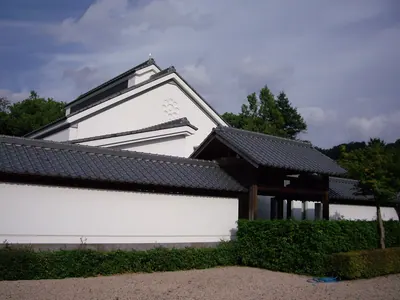
Opened in 1965, the Kumaya Art Museum displays the private collection of the Kumaya family. The estate that houses the museum has been the family’s residence since it was first built in 1768 by Kumaya Goemon Yoshiatsu (1719–1791), a wealthy merchant and official purveyor (goyō shōnin) to Chōshū domain. The Kumaya were among the most powerful merchant families in Hagi during the Edo period (1603–1867) and were extremely wealthy. Four of the estate’s buildings—the main house (omoya), annex (hanarezashiki), main warehouse (hongura), and treasure house (takaragura)—are designated Important Cultural Properties.
The museum collection contains approximately 3,000 items and includes paintings by famous Muromachi-period (1336–1573) painter Sesshū Tōyō (1420–1506), tea ceremony utensils made by eleventh-generation Raku ware master Keinyū (1817–1902) and potter and painter Ogata Kenzan (1663–1743), in addition to other items such as folding screens (byōbu), old maps, antique Hagi ware, paintings, calligraphy, old coins, and many different kinds of tea ceremony utensils. “Folding Screen of Birds and Flowers of the Four Seasons” by Unkoku Tōban (1635–1724) is another notable work. The exhibits are changed a few times each year.
On permanent display is the oldest piano in Japan, a British-style pianoforte. It was given to the fourth Kumaya Goemon (1795–1860) in 1828 by the German doctor Philipp Franz von Siebold (1796–1866), who was employed by the Dutch East Indian Company on Dejima.
Text: 観光庁 地域観光資源の多言語解説文データベース. Reproduced unchanged. The notes above were written from that text by Japan Gems.
Where it is
〒758-0052 山口県萩市今魚店町47 Open in Google Maps
この施設の関係者の方へ
このページは公開情報をもとに Japan Gems が作成し、訪日外国人向けに英語で掲載しています。 写真や情報の追加・修正を承っています。お店の写真に差し替えることもできます。
このページの情報を更新する