
Sakai City Museum
堺市博物館
This museum in Daisen Park explores kofun burial mounds and Sakai's history of craftsmanship and commerce.
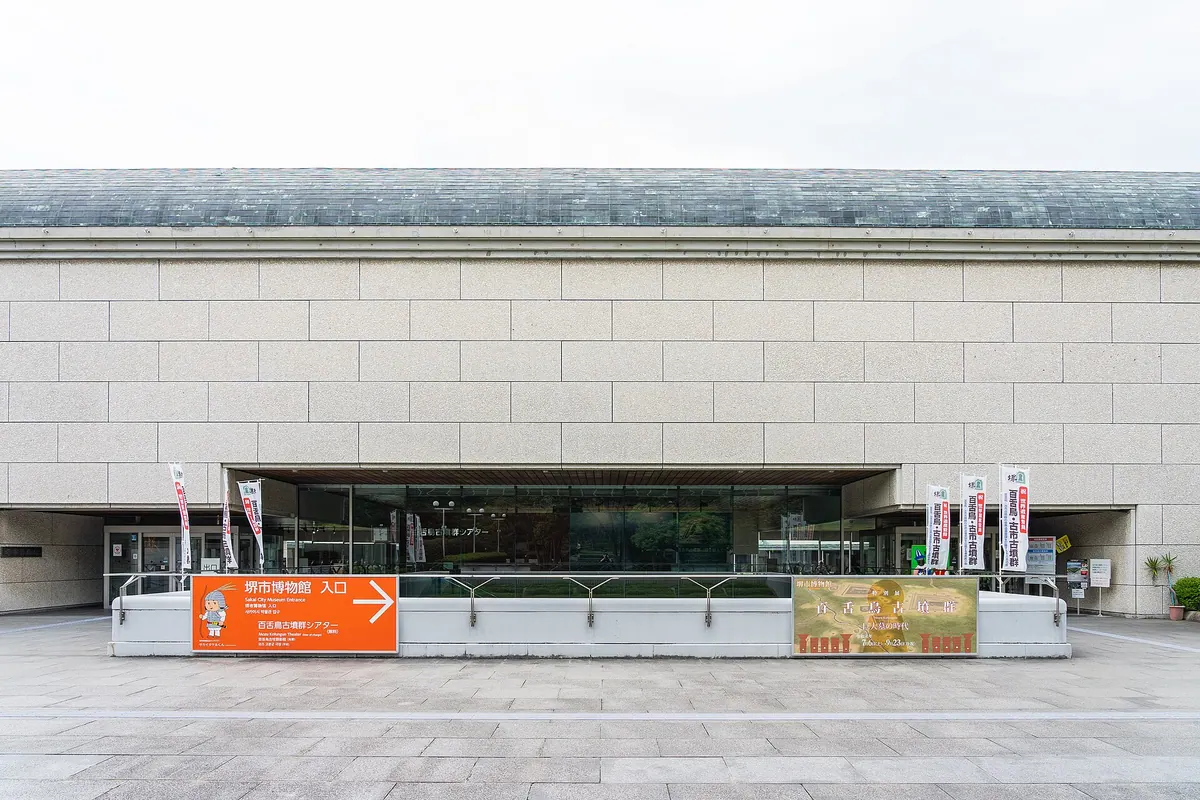
What it is
- Museum about kofun burial mounds and Sakai's history.
- Opened in 1980.
- Located in Daisen Park.
What to see
- Video presentation on kofun construction.
- Terracotta haniwa figures.
- Rare wooden haniwa figures.
- Collection of Japanese matchlock muskets.
- Models of merchant ships.
- Largest surviving Japanese matchlock gun.
Getting there
- Near the tomb of Emperor Nintoku.
In detail
The Sakai City Museum focuses on the kofun burial mounds in the Mozu-Furuichi Kofun Group and Sakai’s history as a center of craftsmanship and commerce. The museum opened in 1980 and is located in the sprawling Daisen Park, near the tomb of Emperor Nintoku (NintokuTennō-ryō Kofun).
The first room of the museum is a small theater projecting a video presentation on how kofun were likely made. Originally, rows of decorative terracotta figures called haniwa outlined the flat surfaces of the tumuli. These hollow sculptures were made in the shape of humans, animals, and other symbolic figures. The museum has many terracotta haniwa in its collection as well as a few rare wooden haniwa. The video focuses on the tomb of Emperor Nintoku, the largest kofun in Japan. This tomb has never been excavated because of its connection to the imperial household. Even today, standing on the vast burial mound is forbidden.
The museum also contains objects that document Sakai’s long history as a merchant town: a collection of Japanese matchlock muskets, models of merchant ships, a loom, and various other items connected to historical industries in Sakai. Sakai was known for making matchlocks during the sixteenth and seventeenth century struggles among rival warlords. One of the most popular pieces on display is the largest surviving Japanese matchlock gun. During the more than 200 years of peace that began in 1603 with the appointment of Tokugawa Ieyasu (1543–1616) as shogun, the gunsmiths of Sakai honed their skills, selling firearms to samurai and their lords. The gun industry in Japan was closed after World War II, but other metallurgical industries like knife making and bicycle manufacturing thrive today in its place.
Text: 観光庁 地域観光資源の多言語解説文データベース. Reproduced unchanged. The notes above were written from that text by Japan Gems.
Where it is
大阪府堺市堺区百舌鳥夕雲町2丁大仙公園内 Open in Google Maps
この施設の関係者の方へ
このページは公開情報をもとに Japan Gems が作成し、訪日外国人向けに英語で掲載しています。 写真や情報の追加・修正を承っています。お店の写真に差し替えることもできます。
このページの情報を更新する