
Shikina-en
識名園
Shikinaen is a rare Ryukyuan landscape garden, built as a royal villa for recreation and foreign guests.
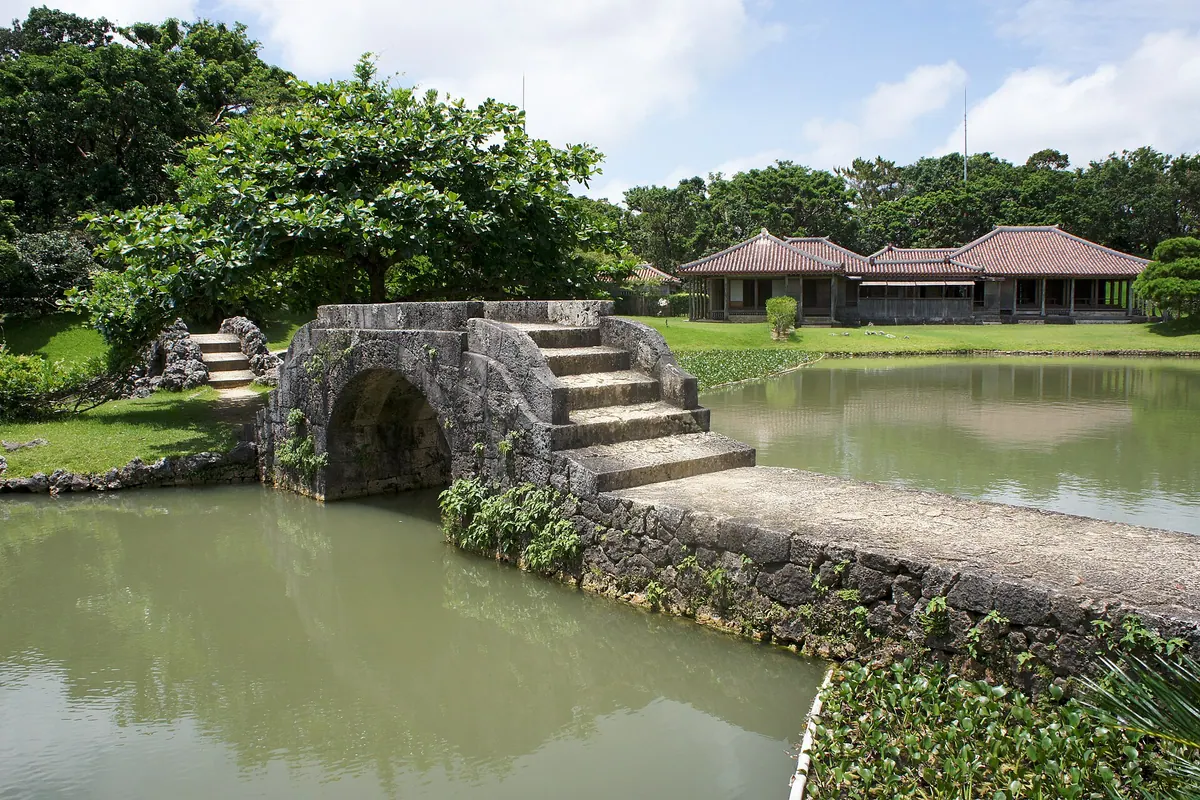
What it is
- Ryukyuan landscape garden.
- Built in 1799 as a royal villa.
- Designed for royal family and foreign guests.
- Designated a World Heritage Site in 2000.
What to see
- Unique design, terrain, and vegetation.
- Circuitous paths with vantage points.
- Different seasonal plants and natural environments.
- Features influenced by Japanese and Chinese gardens.
- Stunning pond unites the composition.
Getting there
- Located on a plateau south of Shuri Castle.
In detail
Shikinaen: Ryukyuan Landscape Garden
Shikinaen is a rare surviving example of a Ryukyuan landscape garden, with a unique design,
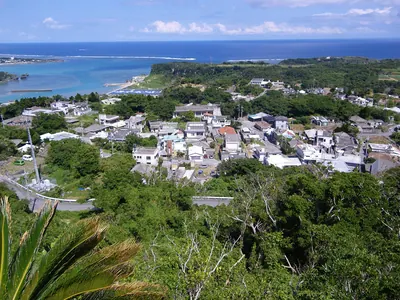
terrain, and vegetation that give it important status in Japanese garden culture. It was built in 1799 as a royal villa, on a plateau south of Shuri Castle overlooking picturesque rural villages. It was close enough to the palace in Shuri to make frequent visits possible and was intended for recreational use by the royal family as well as foreign guests. Through much of its history, Ryukyu maintained dependent relations with both China and Japan. Both relationships had specific diplomatic requirements, and Shikinaen was designed with receptions for envoys from the emperor of China in mind.
The garden exhibits both Japanese and Chinese features. Its overall plan is influenced by traditional Japanese gardens, integrating distant landscapes into the view, and featuring circuitous paths dotted with carefully composed vantage points for the appreciation of different seasonal plants and natural environments. Several focal elements, however, are derived from Chinese prototypes. Viewed as a whole, the result is a distinctively Ryukyuan garden designed around a stunning pond that unites the entire composition. In many ways, a visit to Shikinaen is like experiencing Ryukyu in microcosm.
Shikinaen was completely destroyed during the Battle of Okinawa in 1945. Twenty years of extensive restoration work began in 1975, and Sho Hiroshi (1918–1997), the great-grandson of the last king of the Ryukyu Kingdom, Sho Tai (1843–1901), donated the garden to the city of Naha in 1992. It was designated a World Heritage Site by UNESCO in 2000.
Text: 観光庁 地域観光資源の多言語解説文データベース. Reproduced unchanged. The notes above were written from that text by Japan Gems.
Where it is
Shikina-en Open in Google Maps
この施設の関係者の方へ
このページは公開情報をもとに Japan Gems が作成し、訪日外国人向けに英語で掲載しています。 写真や情報の追加・修正を承っています。お店の写真に差し替えることもできます。
このページの情報を更新する