
Sotome Museum of History and Folklore
外海歴史民俗資料館
This museum details Sotome's history, people, and culture, including Hidden Christians and coal mining.
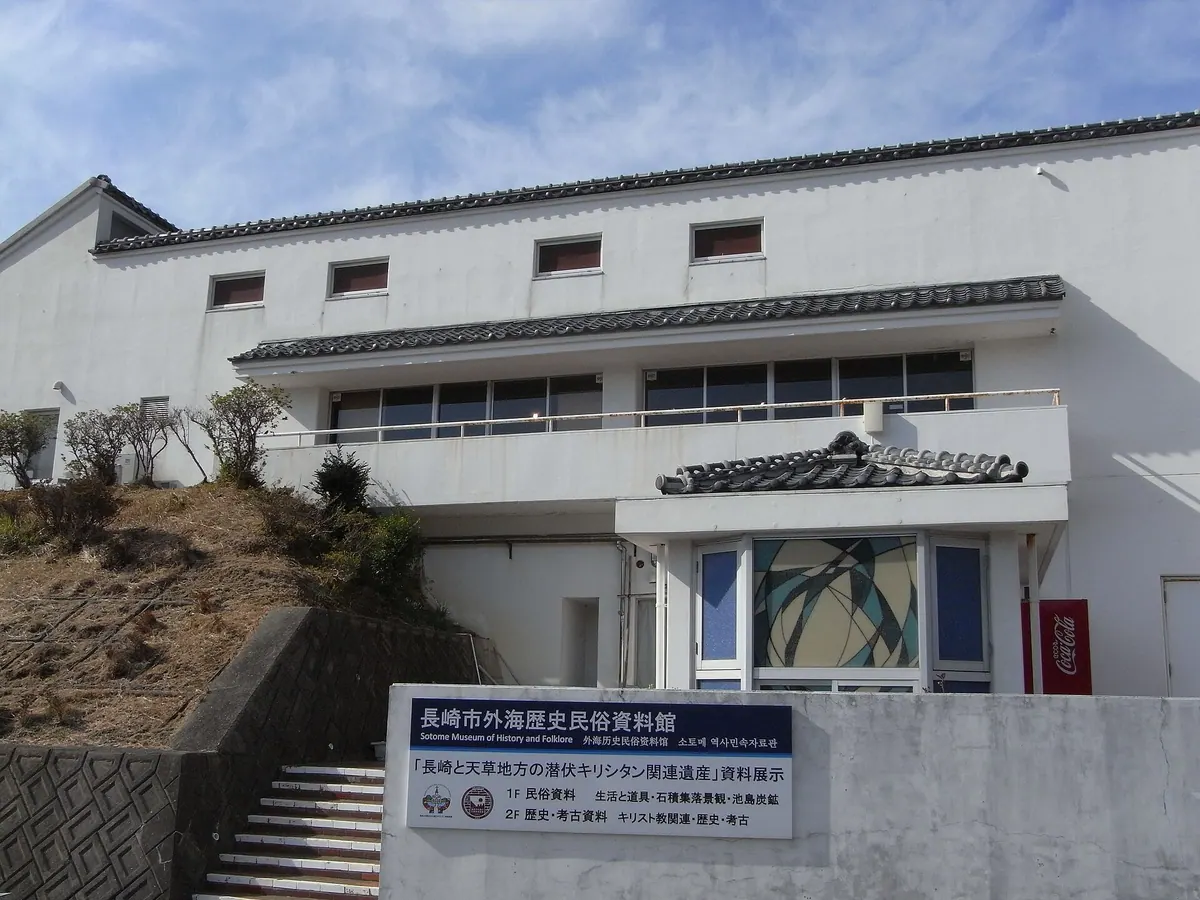
What it is
- Museum opened in 1982.
- Showcases history, people, and culture of Sotome region.
What to see
- Exhibits on traditional fishing and agriculture.
- Items related to Father Marc de Rotz's improvements.
- Exhibits about local Hidden Christians.
- Donated rosaries, prayer manuscripts, church calendars.
- Exhibits on Ikeshima coal mine.
- Section on Jomon and Yayoi period archaeological sites.
In detail
This museum, which opened in 1982, showcases the history, people, and culture of the Sotome region. The exhibits are divided into three broad categories. The first consists of exhibits related to the traditional fishing and agricultural practices of the region and the improvements introduced by Father Marc de Rotz, the entrepreneurial French priest who helmed the parish in the late nineteenth and early twentieth centuries. In the second category are exhibits about the local Hidden Christians. As the community has declined in size, descendants of the Hidden Christians have donated items such as rosaries, prayer manuscripts, and Bastian church calendars to the museum. The third category is made up of exhibits related to the coal mine on the nearby island of Ikeshima. As a coal-producing powerhouse, Kyushu played a crucial role in Japan’s industrialization, and Ikeshima mine, which closed in 2001, was the country’s last operating mine. There is also a small section on local archaeological sites from the Jomon period (13,000–300 BCE) and the Yayoi period (300 BCE–250 CE).
Text: 観光庁 地域観光資源の多言語解説文データベース. Reproduced unchanged. The notes above were written from that text by Japan Gems.
Where it is
長崎県長崎市西出津町2800 Open in Google Maps
この施設の関係者の方へ
このページは公開情報をもとに Japan Gems が作成し、訪日外国人向けに英語で掲載しています。 写真や情報の追加・修正を承っています。お店の写真に差し替えることもできます。
このページの情報を更新する