
Tottori Prefectural Mukibanda Historical Park
鳥取県立むきばんだ史跡公園
This park preserves Japan's largest Yayoi-period settlement, offering insights into prehistoric life and technology.
What it is
- Large public park for prehistoric ruins.
- Preserves a settlement from late Yayoi to early Kofun period.
- Archaeological research site and educational resource.
- Village active before writing was introduced from Asian mainland.
What to see
- Excavated ruins of approximately 950 buildings.
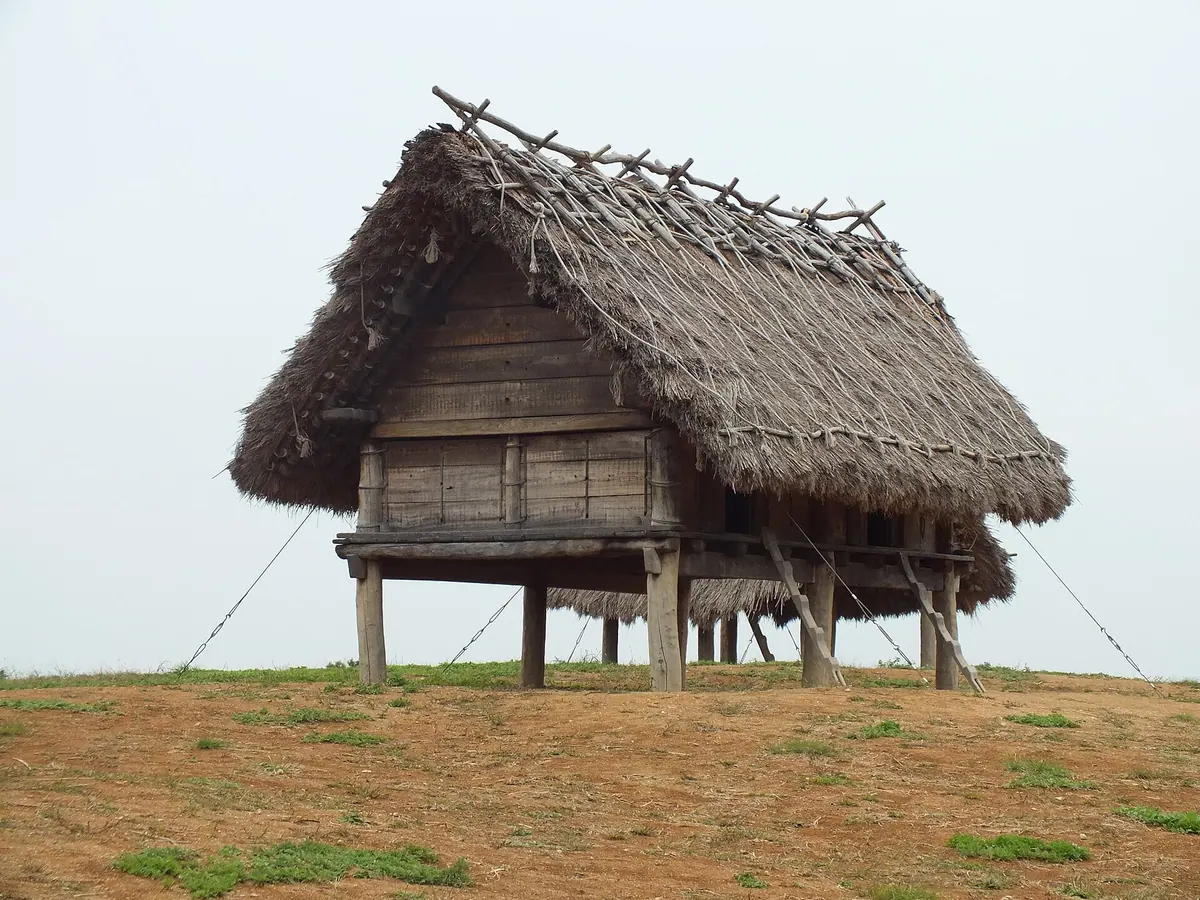
- Reconstructed pit dwellings and raised storehouses.
- Fragments of a bronze mirror of Chinese origin.
- Yayoi Mukibanda Hall with museum displays and dioramas.
- Archaeological exhibition center sheltering excavated pit dwellings.
- Outdoor excavation activity area for learning techniques.
Getting there
- Located at the foot of Mt. Daisen.
- Overlooks the Yumigahama Peninsula.
In detail
Tottori Prefectural Mukibanda Historical Park is a large public park devoted to the preservation, study, and appreciation of an important site containing prehistoric ruins. These date from the late Yayoi period to the early Kofun period (first century BCE–third century CE), and belong to a population center with hundreds of houses and other structures that reached its peak during the second half of the second century CE. This village was active several centuries prior to the introduction of writing from the Asian mainland, so its culture, technology, and trade contacts can only be reconstructed through archaeological investigation. The Yayoi ruins at Mukibanda are the largest settlement discovered from this era, and the historical park is both an archaeological research site and an educational resource.
From Stone Age to Iron Age
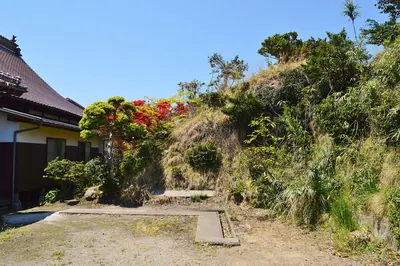
Mukibanda Historical Park contains the excavated ruins of approximately 950 buildings spread over seven closely connected districts. The site is a broad, gently sloping forested hillside at the foot of Mt. Daisen, overlooking the Yumigahama Peninsula. The first ruins were discovered here in 1931, and large-scale excavation began in 1997. Although the earliest ruins date from around 100 BCE, most date from around the third century CE. The use of stone tools was still dominant during this era in Japan, but remains of many iron tools have also been found, attesting to the fact that this era witnessed the great technological transition from the late Neolithic Age to the Iron Age. Fragments of a bronze mirror of Chinese origin, and glass beads and other trade goods, prove that Mukibanda was part of a far-flung trade network at this time.
Ancient Interior Designs
Most of the building remains have been reburied to protect them; there are signboards describing their size and other details. About 21 buildings have been reconstructed on their original sites. Nine of these are roughly circular pit dwellings (tateana) with the living space dug about one meter below the ground surface. Stout wooden posts were sunk vertically into the earth and connected with horizontal beams to form a structural frame. Saplings were laid diagonally and lashed to the frame to form the roof slope, then covered with reeds or other thatch, with openings at the peak to allow smoke to exit. Sheltered entranceways were also typical. Wide wooden boards were found at some excavation sites, suggesting that some buildings had much stronger roofs. Reconstruction experiments showed that these boards would have been able to support earthen roofs, and some examples have been reconstructed in this manner. Excavations usually uncovered the locations of fire pits, and these are included in the reconstructions, along with wide surrounding earthen shelves most likely used for the storage of daily goods. Some reconstructions have been left incomplete to show the construction process.
Storehouses for Grains and Valuables
Another common building type at Mukibanda was the raised storehouse. These were usually rectangular, and were raised about 2 meters off the ground. Wooden boards with holes in them were found, apparently so they could be lashed in place with rope to form secure walls. The reconstructions include this type, as well as others with walls made of woven cedar bark. Raising the storehouses off the ground helped deter rodents and protected the contents against rot from ground moisture.
Scratching the Surface of a Large Community
A large pit dwelling with walls and an unusual structure was discovered, and has been tentatively identified as a leader’s house. Approximately 39 stone-lined burial mounds have been excavated on-site as well, many of which have a distinctive pointed-corner design not found elsewhere in Japan. Although hundreds of building sites have been unearthed, experts believe they represent only about a tenth of the total number of buildings in the settlement, which extended far beyond the current park boundaries.
Yayoi-Period Life Exhibition
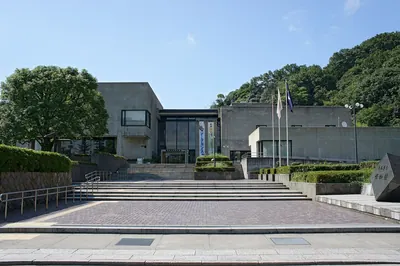
Mukibanda Historical Park has a visitor center called Yayoi Mukibanda Hall. The hall includes a museum with displays of tools, pottery, and other excavated artifacts, as well as informative dioramas showing activities like agriculture, tool making, and house construction. All aspects of Yayoi-period life are described, including food, clothing, ceramics, and trade. Workshop spaces host a wide range of activities, including Yayoi-style pottery- and tool-making. An archaeological exhibition center a short distance away shelters the excavated remains of three pit dwellings. For instructional purposes, these have been preserved in the state in which they were found. Visitors can learn excavation techniques at the outdoor excavation activity area.
Text: 観光庁 地域観光資源の多言語解説文データベース. Reproduced unchanged. The notes above were written from that text by Japan Gems.
Where it is
〒689-3324 鳥取県西伯郡大山町妻木1115-4 Open in Google Maps
この施設の関係者の方へ
このページは公開情報をもとに Japan Gems が作成し、訪日外国人向けに英語で掲載しています。 写真や情報の追加・修正を承っています。お店の写真に差し替えることもできます。
このページの情報を更新する