
Tsurugaoka Museum, Kamakura
鎌倉文華館鶴岡ミュージアム
This museum showcases Kamakura's history and culture, housed in Japan's first public modern art museum building.
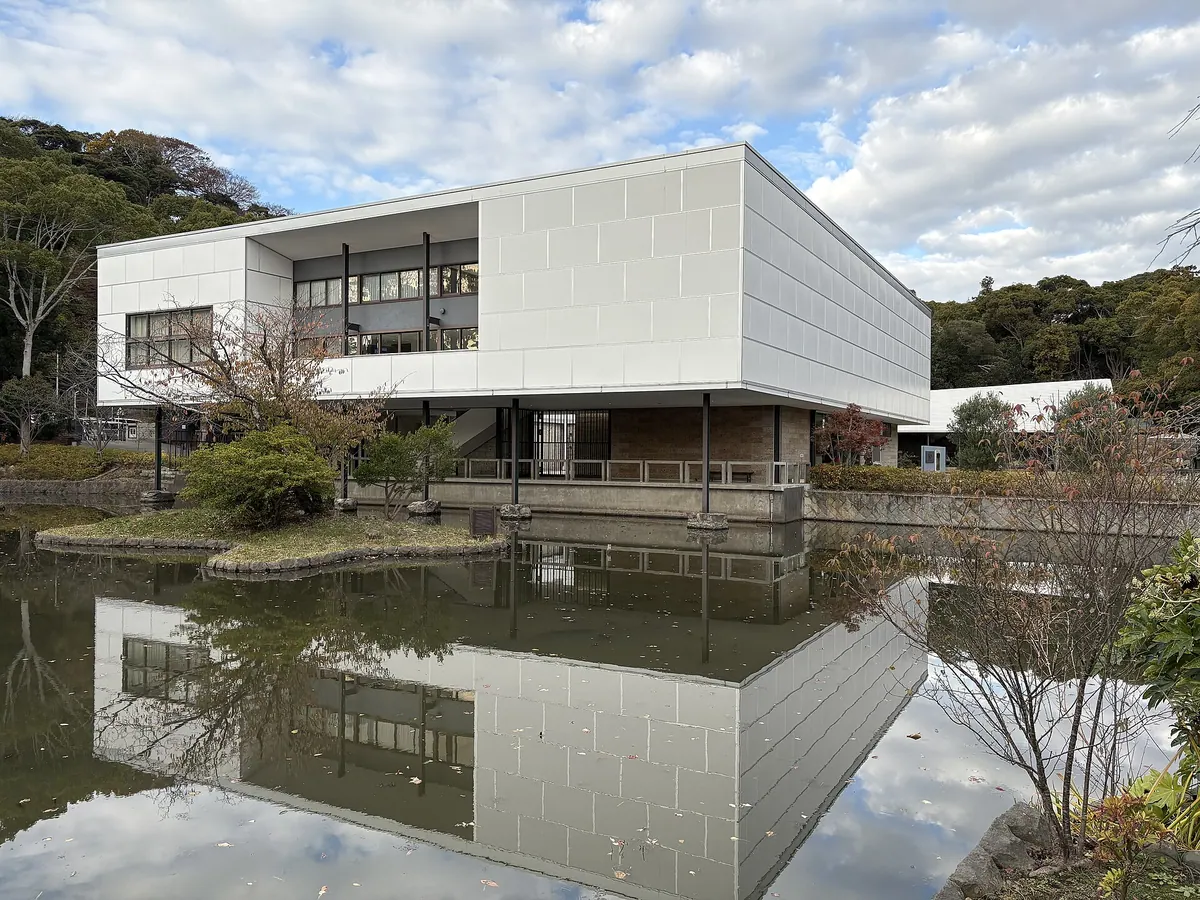
What it is
- Museum focusing on Tsurugaoka Hachimangu shrine and Kamakura history.
- Housed in a building designed by Sakakura Junzo.
- Originally Japan's first public modern art museum, opened 1951.
- Reopened in 2019 after renovation, now an Important Cultural Property.
What to see
- Square building designed by Sakakura Junzo.
- Central courtyard letting in natural light.
- L-shaped exhibition hall on the second floor.
- Covered first-floor terrace opening onto the pond.
- Museum gift shop with shrine and Kamakura items.
- Cafe with a section of the Great Ginkgo tree trunk.
Getting there
- Located next to the Heike Pond.
- On the western side of the Tsurugaoka Hachimangu grounds.
In detail
The Tsurugaoka Museum, Kamakura, is the cultural hub of Tsurugaoka Hachimangu. Its exhibition program focuses on the culture and history of the shrine and the city of Kamakura, from shrine festivals to medieval art. The museum is located next to the Heike Pond on the western side of the grounds and is housed in a square building designed by Sakakura Junzo (1901–1969), a protégé of the pioneering Modernist architect Le Corbusier (1887–1965).
The building was originally constructed as the Museum of Modern Art, Kamakura, which opened in 1951 and was the first public museum of modern art in Japan. The establishment of an ambitious and forward-looking art museum in Kamakura so soon after the devastation of World War II was part of the city’s cultural revival program, a movement driven in those years by a group of local literati. Their efforts bore fruit, and the museum remained a fixture on Kamakura’s cultural scene until 2016, when the prefecture’s lease expired and the land the museum was built on had to be returned to Tsurugaoka Hachimangu.
The shrine chose to keep the building, which was renovated extensively before reopening in 2019. It is now designated an Important Cultural Property. The renovated museum retains Sakakura’s design, with a central courtyard that lets in natural light, an L-shaped exhibition hall on the second floor, and a covered first-floor terrace that opens onto the pond. The museum gift shop sells items related to the shrine and Kamakura, and the adjacent building houses a cafe where a section of the trunk of the Great Ginkgo is on display. The 1,000-year-old tree stood next to the shrine’s stone staircase until it toppled in 2010.
Text: 観光庁 地域観光資源の多言語解説文データベース. Reproduced unchanged. The notes above were written from that text by Japan Gems.
Where it is
〒248-0005 神奈川県鎌倉市雪ノ下2-1-53 Open in Google Maps
この施設の関係者の方へ
このページは公開情報をもとに Japan Gems が作成し、訪日外国人向けに英語で掲載しています。 写真や情報の追加・修正を承っています。お店の写真に差し替えることもできます。
このページの情報を更新する