

7 Waterfalls in Yamanashi worth your time
Japan Gems
7 Waterfalls in Yamanashi, with what to see and how to get there.
Yamanashi has 7 waterfalls on Japan Gems. Below are the 7 we can tell you the most about — each one written up in English from Japanese sources, with what to see and how to get there. See all waterfalls in Yamanashi.
01
Kaneyama Falls
YAMANASHI · PLACE 鐘山の滝
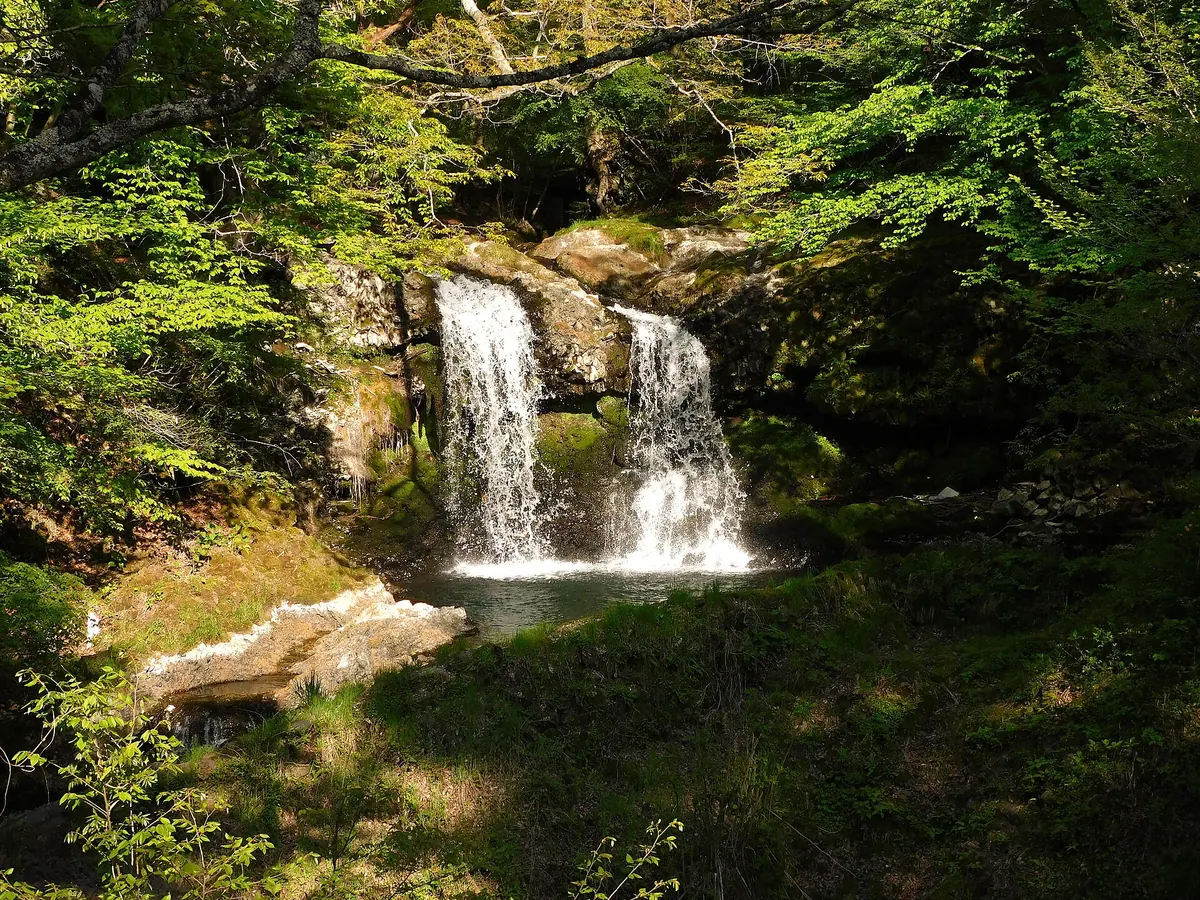
A ten-meter branched waterfall on the Katsura River featuring dual streams and evening illuminations within the Fujisan Museum Park.
What it is
- A branched waterfall standing ten meters high and six meters wide on the Katsura River.
- The water source originates from Lake Yamanaka and flows over volcanic lava rock.
- The site is named after a nearby small mountain on the border of Fujiyoshida and Oshino.
- The surrounding area is preserved as part of the Fujisan Museum Park.
What to see
- Two separate streams of water falling over dark volcanic rock formations.
- A dedicated viewing deck installed directly in front of the falls for close observation.
- The natural landscape where the river crosses the border of two local towns.
When to go
- Visit between sunset and 10:00 PM to see the waterfall illuminated by lights.
- The winter months offer a view of the waterfall when the streams freeze solid.
Getting there
- The waterfall is a one-minute walk from the nearest bus stop.
02
Kitashōji Falls
YAMANASHI · PLACE 北精進ケ滝
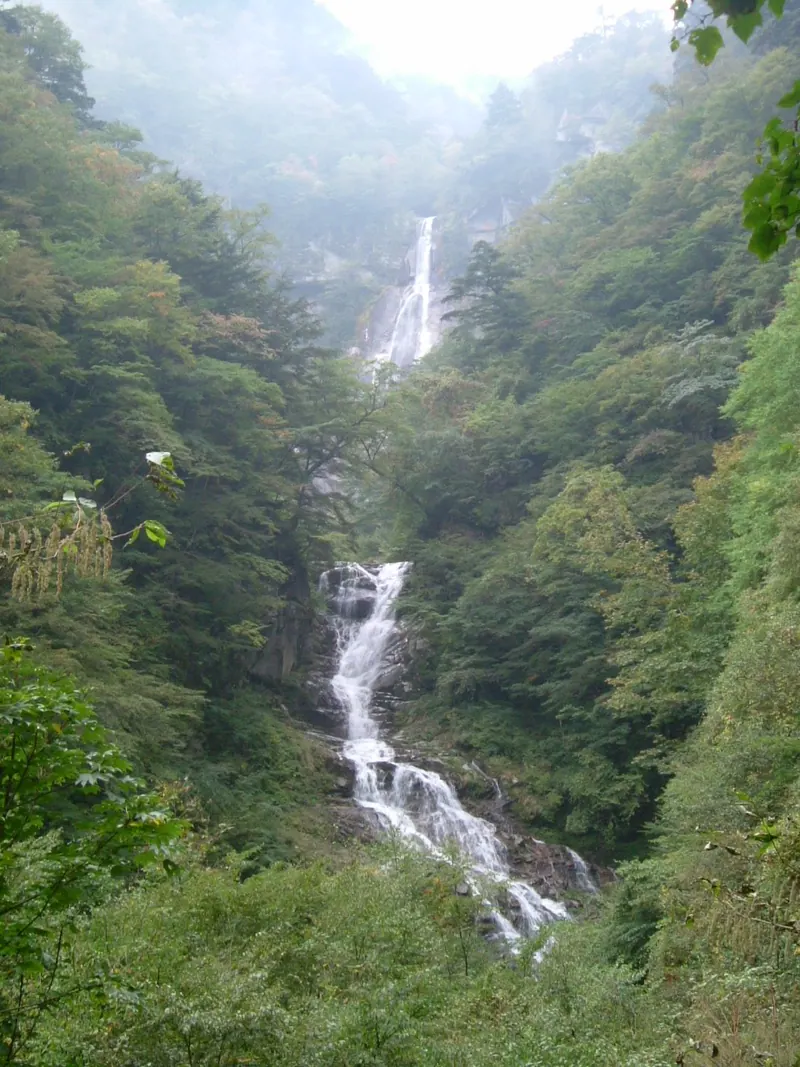
One of Japan's top 100 waterfalls featuring a massive granite drop within the Minami Alps National Park.
What it is
- A major waterfall designated as one of Japan's Top 100 Waterfalls.
- The water originates from Mount Jizogatake in the Ho-o mountain range.
- A site historically used by ascetic monks for purification rituals.
- The falls are situated on the Ishiutoro River within a national park.
What to see
- A total vertical drop estimated between 121 and 180 meters.
- Water flowing over a cliff of exposed biotite granite.
- Kudan Falls located directly below the main waterfall.
- A large granite cliff standing on the right bank of the falls.
- The surrounding scenery of the Ishiutoro River Valley.
- A viewing platform accessible via a dedicated walking trail.
Getting there
- A walking trail connects the parking lot to the viewing platform.
- The walk from the parking lot takes approximately 40 minutes.
03
Hondana Falls
YAMANASHI · PLACE 本棚 (丹沢)
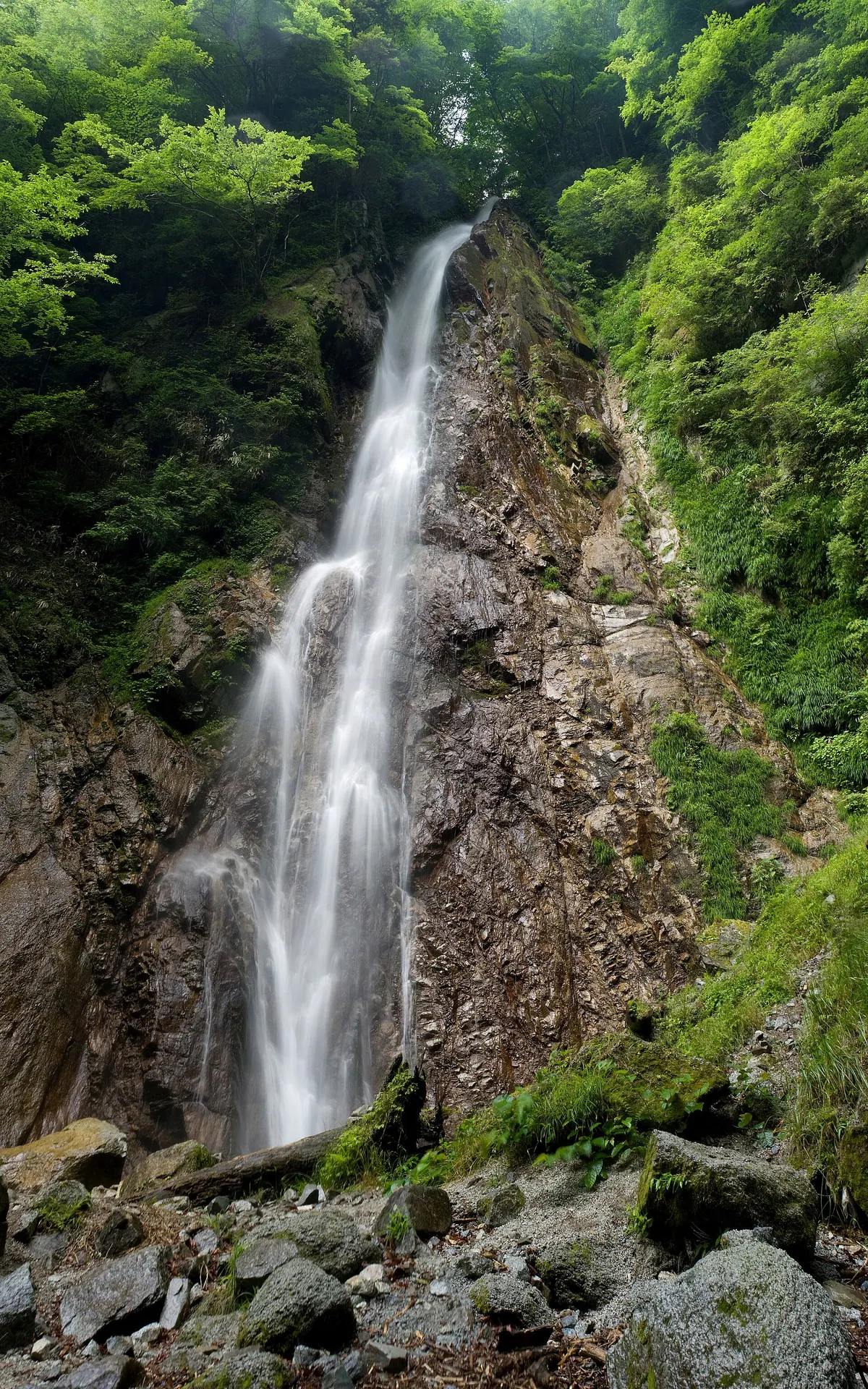
A 60-meter waterfall in the Tanzawa Mountains, offering a rugged hiking experience through a scenic quasi-national park.
What it is
- A 60-meter waterfall located on the Hondana Stream in the Tanzawa Mountains.
- One of the three major waterfalls within the Tanzawa region.
- Part of the protected Tanzawa-Oyama Quasi-National Park area.
- Named after a local custom of referring to waterfalls as shelves.
What to see
- The main 60-meter drop of the waterfall along the mountain trail.
- Karatana Falls, a seasonal waterfall located to the right of the main drop.
- Shimontana Falls, which is situated further downstream from the main site.
- Mountain streams that must be crossed along the hiking route.
Getting there
- A 100-minute walk from the Nishi-Tanzawa Visitor Center to reach the falls.
- Follow the hiking trail leading toward the summit of Mount Azegamaru.
04
Doryu Falls
YAMANASHI · PLACE 吐竜の滝
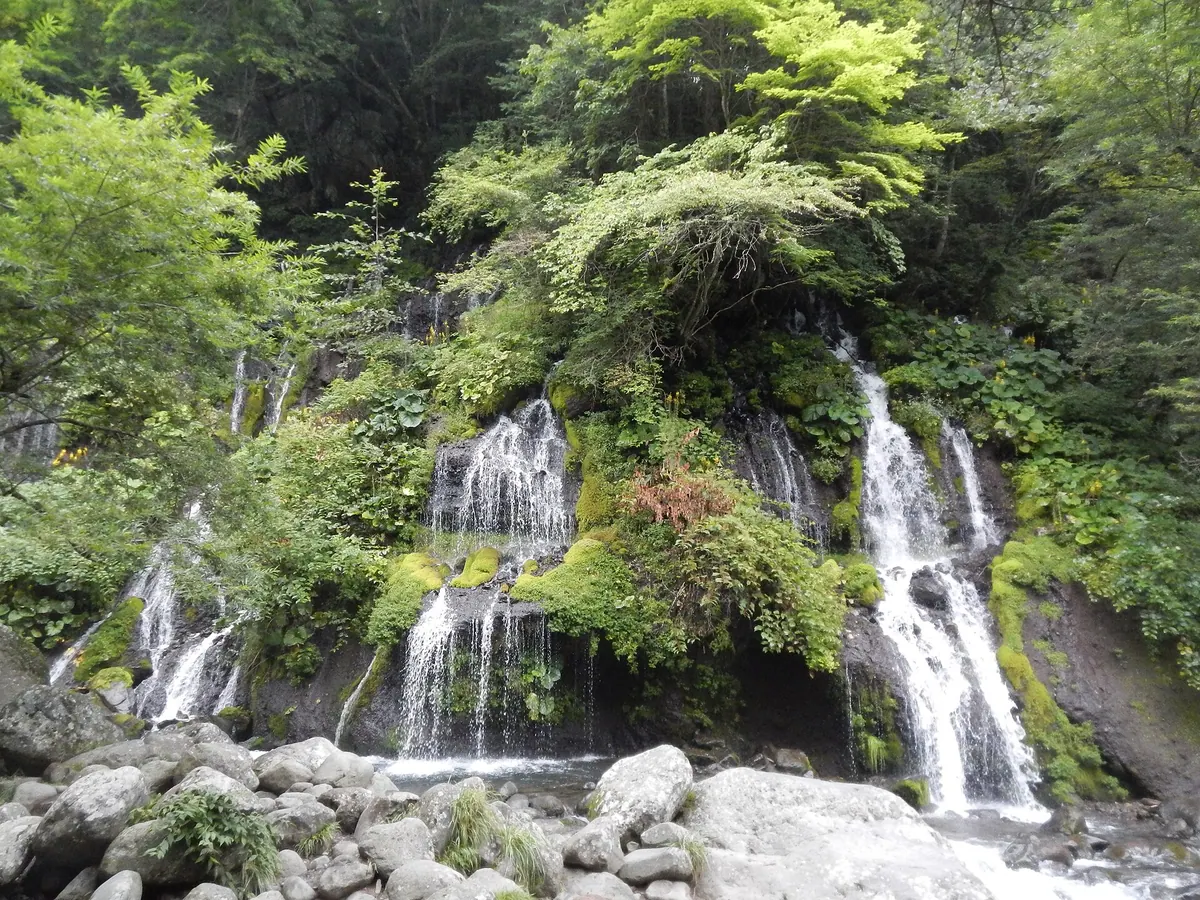
A wide subsoil waterfall in the Kawamata River Valley where groundwater flows through lava layers into a scenic basin.
What it is
- A subsoil water waterfall located within the Kawamata River Valley in Yamanashi Prefecture.
- The water originates from groundwater flowing through ancient lava layers.
- The falls stand at an elevation of 1250 meters above sea level.
- This site appeared in the opening of the 2002 NHK drama Toshiie and Matsu.
What to see
- A waterfall measuring 10 meters in height and 15 meters in width.
- The Kawamata Higashizawa Valley Nature Trail which passes through the area.
- Consistent water flow and temperature that remain steady throughout the entire year.
Getting there
- A 30-minute drive from the Nagasaka Interchange to the local parking area.
- A 15-minute walk from the parking lot to reach the waterfall site.
05
Fujinuta no taki fall
YAMANASHI · PLACE 藤垈の滝
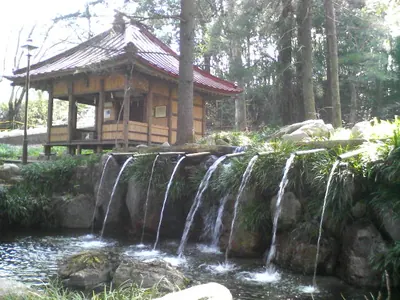
A historic ritual purification site featuring eight small streams and seasonal skunk cabbage flowers within a peaceful forest park.
What it is
- A series of eight water streams falling two meters from a forest spring.
- A historic site used for ritual purification in front of Serizawa Fudoson.
- Part of the Okubo Iyashi no Mori Park in Fuefuki City.
- A location introduced to readers by the author Masuji Ibuse.
What to see
- Eight separate waterfalls fed by twelve degree Celsius spring water.
- Approximately 3,000 skunk cabbage plants growing along the nearby stream.
- Serizawa Fudoson at Koshoin Temple located directly behind the falls.
- A park area featuring a promenade, gazebo, and playground equipment.
When to go
- Mid-April to see the skunk cabbage flowers in bloom.
06
Senga Falls
YAMANASHI · PLACE 仙娥滝
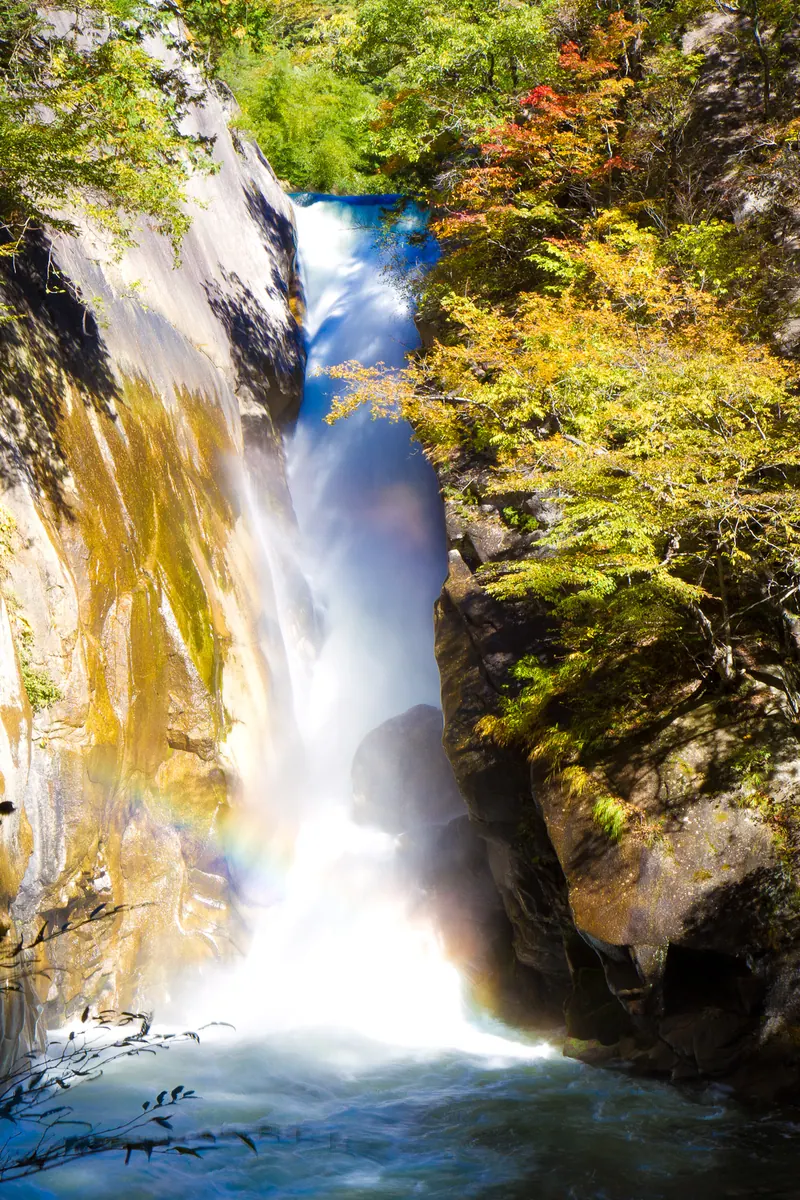
A scenic thirty-meter waterfall on a granite face, ranked among Japan's top one hundred falls and located near Kakuenpo Peak.
What it is
- A thirty-meter waterfall created by a fault from crustal movement.
- One of Japan's Top 100 Waterfalls located on the upper Arakawa River.
- A natural landmark named after a woman from Chinese mythology.
- A site situated at the base of the granite Kakuenpo Peak.
What to see
- Water dropping thirty meters down a steep granite rock face.
- The surrounding landscape of the Shosenkyo area in Kofu City.
- Views of the nearby Kakuenpo Peak rising above the falls.
When to go
- The autumn foliage season when many tourists visit the area.
Getting there
- A five minute walk from the nearby parking lot.
07
Fuji Summit Falls
YAMANASHI · PLACE 富士サミットフォール
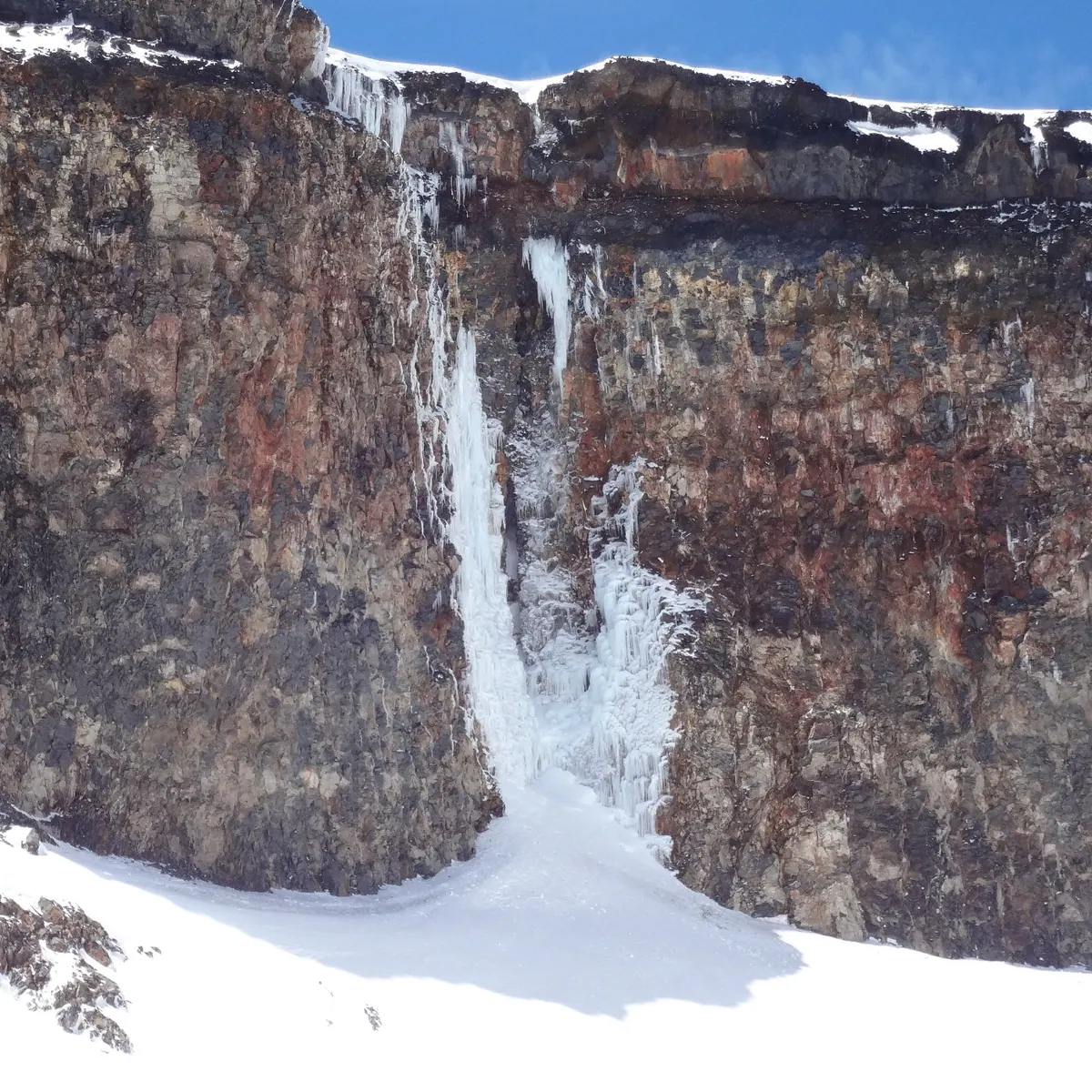
Japan's highest icefall features 100-meter frozen pillars formed by snowmelt inside the Mount Fuji summit crater.
What it is
- A seasonal icefall located within the Dainaiin area of the Mount Fuji summit crater.
- The highest altitude icefall in Japan at an elevation of 3670 meters.
- Frozen pillars created when snowmelt from the Nishiyasanokawara area freezes at night.
What to see
- A vertical icefall with a drop of approximately 100 meters.
- Frozen formations developing directly below the peak of Mount Hakusan.
When to go
- The icefall is visible from mid-May through late June.