

9 Waterfalls in Ōita worth your time
Japan Gems
9 Waterfalls in Ōita, with what to see and how to get there.
Ōita has 9 waterfalls on Japan Gems. Below are the 9 we can tell you the most about — each one written up in English from Japanese sources, with what to see and how to get there. See all waterfalls in Ōita.
01
Harajiri Falls
ŌITA · PLACE 原尻の滝

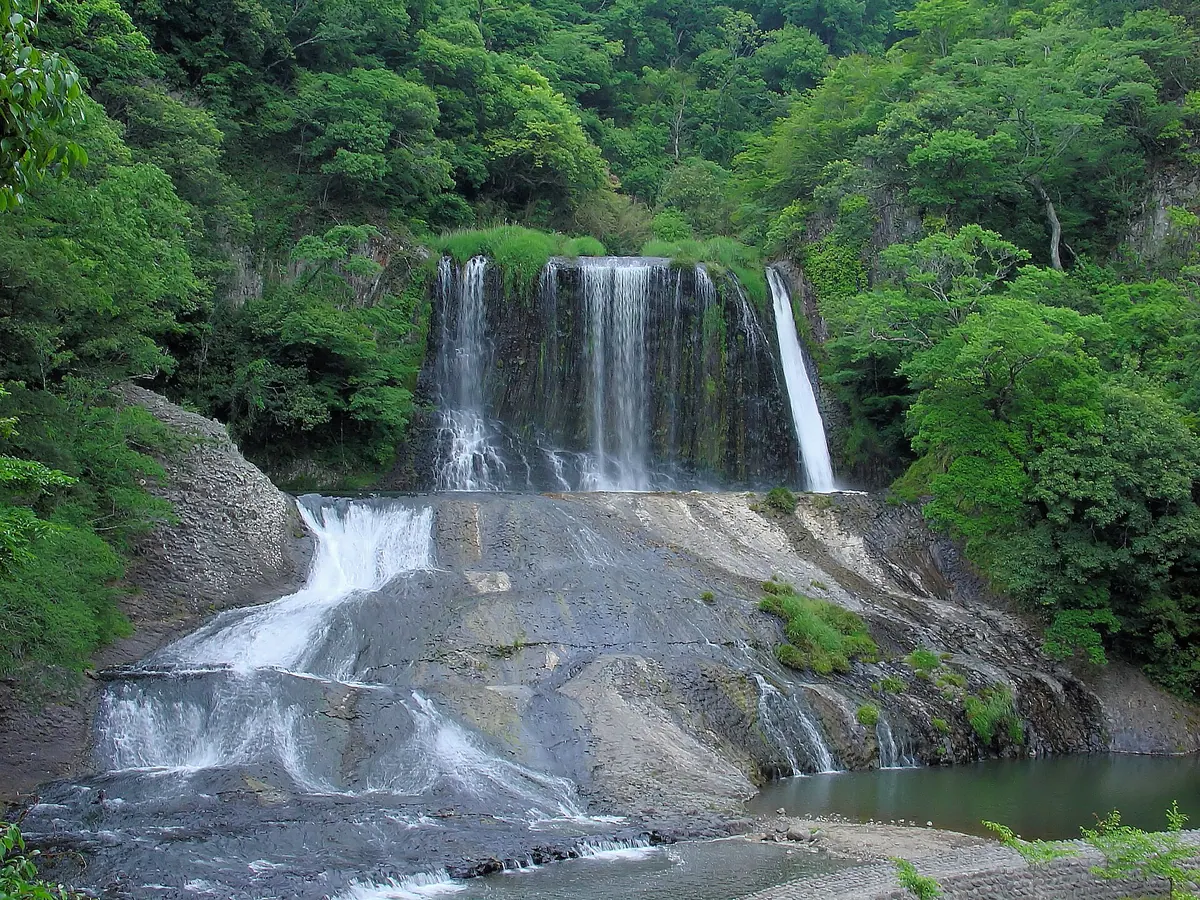
A massive waterfall formed by ancient volcanic flows, featuring a suspension bridge and walking trails through the Oita countryside.
What it is
- A natural waterfall measuring 120 meters wide and 20 meters high.
- One of the Top 100 Waterfalls of Japan located in Bungo-ono City.
- A geological site formed by Mount Aso pyroclastic flows 90,000 years ago.
- A cliff face composed of Aso-4 welded tuff with distinct columnar joints.
What to see
- The Takimibashi wooden suspension bridge spanning the downstream area.
- A submersible bridge located immediately upstream of the waterfall.
- The five-arch stone Harajiri Bridge built in 1923.
- A walking trail that allows visitors to circle the entire area.
- Roadside Station Harajiri Falls which provides parking for visitors.
When to go
- The Ogata Tulip Festival held every April.
Getting there
- A ten-minute bus ride from Ogata Station reaches the falls.
02
Ryūmon Falls
ŌITA · PLACE 竜門の滝
A two-tiered waterfall on the Matsuki River famous for a natural rock slide and its historic Zen temple connection.
What it is
- A two-tiered waterfall measuring forty meters wide and twenty meters high on the Matsuki River.
- Named by Zen master Rankei Doryu after the Longmen falls in China during the Kamakura period.
- The site of Ryumonji Temple, which was established by the same Zen master.
- A recreation area featuring several campgrounds and the nearby Ryumon Hot Spring.
What to see
- The first tier of the falls which features a deep plunge pool.
- A second tier consisting of a smooth rock slide used for recreation.
- The middle basin located between the two main tiers of the waterfall.
- Matsuki Dam which is located further upstream from the falls.
When to go
- Summer is the peak time for visitors to participate in waterfall sliding.
- An annual waterfall opening ceremony is held at the site.
- Official site
- bf04.bfit.jp
03
Otobaru Falls
ŌITA · PLACE 乙原の滝
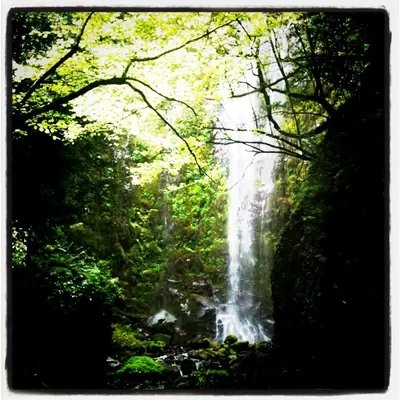
A scenic dual waterfall on Mount Funabara featuring a sixty-meter drop and a peaceful fifteen-minute forest walk.
What it is
- A natural landmark consisting of a male and a female waterfall.
- The site is located on the side of Mount Funabara in Beppu.
- Water from these falls flows directly into the Asami River.
- The male waterfall features a significant drop of sixty meters.
What to see
- The primary male waterfall with its sixty-meter vertical drop.
- The smaller female waterfall which drops thirty meters.
- Views of the falls visible from the Oita Expressway.
- The Takimi Bridge crossing over the Otobaru River.
Getting there
- Park near the Takimi Bridge over the Otobaru River.
- Walk fifteen minutes from the parking area to reach the falls.
- The site is located near the Beppu Rakutenchi amusement park.
04
Fukino Falls
ŌITA · PLACE 福貴野の滝
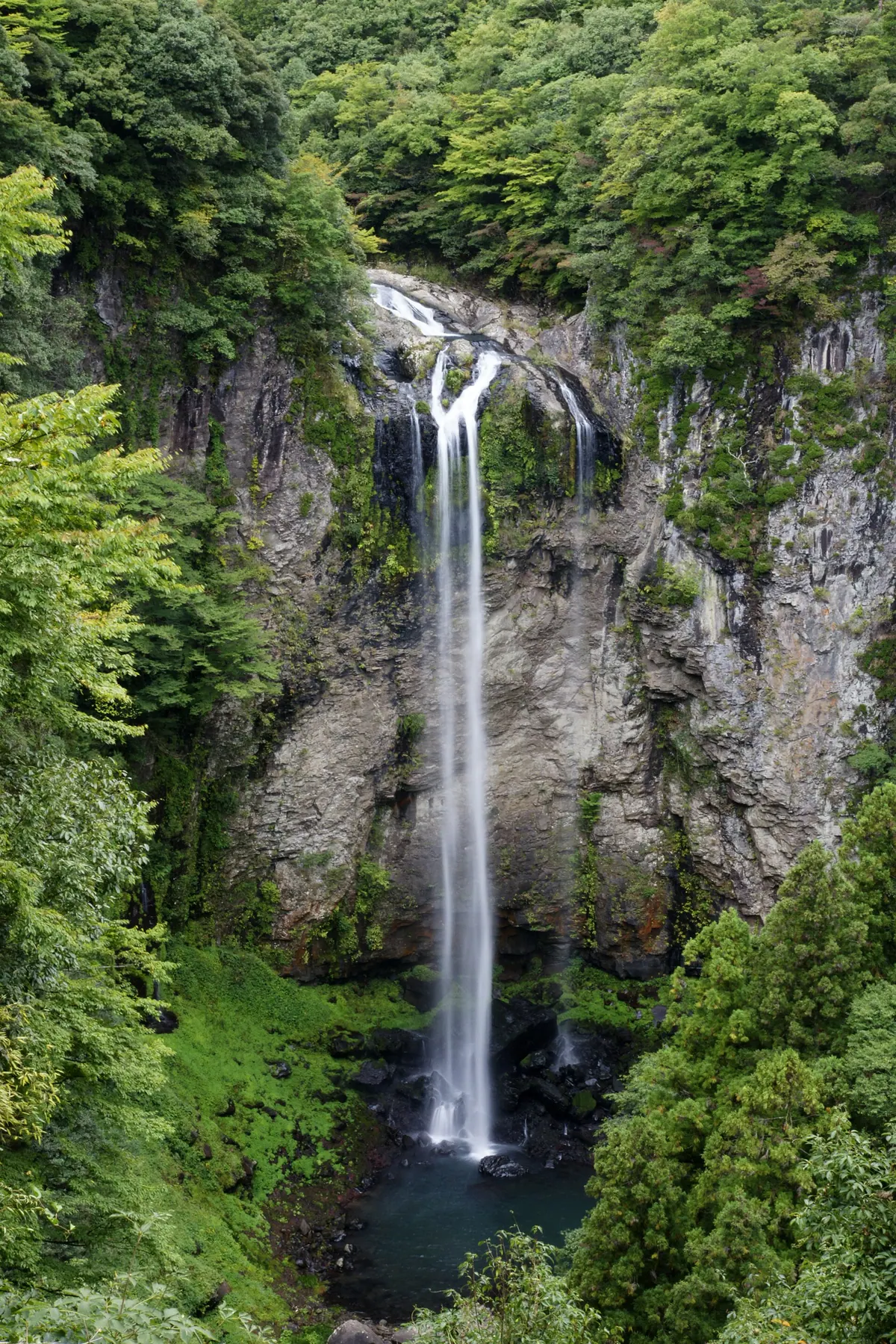
A 65-meter waterfall in Oita featuring dual streams and a viewing platform within a local temple's grounds.
What it is
- One of the Three Waterfalls of Usa located in Ajimu Town.
- Part of the Yabakei National Scenic Spot featuring two streams called Otaki and Metaki.
- A Urami waterfall where the upper rock layer consists of Shin-Yaba lava.
- Also known by the names Ryusen Falls, Ryusenji Falls, or the Child Waterfall.
What to see
- A vertical waterfall drop of approximately 65 meters into a basin.
- A viewing platform located within the Ryusenji Temple grounds.
- Lower rock layers consisting of agglomerate beneath the lava flow.
- Rainbows that appear in the waterfall basin during the morning hours.
When to go
- Visit during the morning to see rainbows in the waterfall basin.
05
Shindō Falls
ŌITA · PLACE 震動の滝
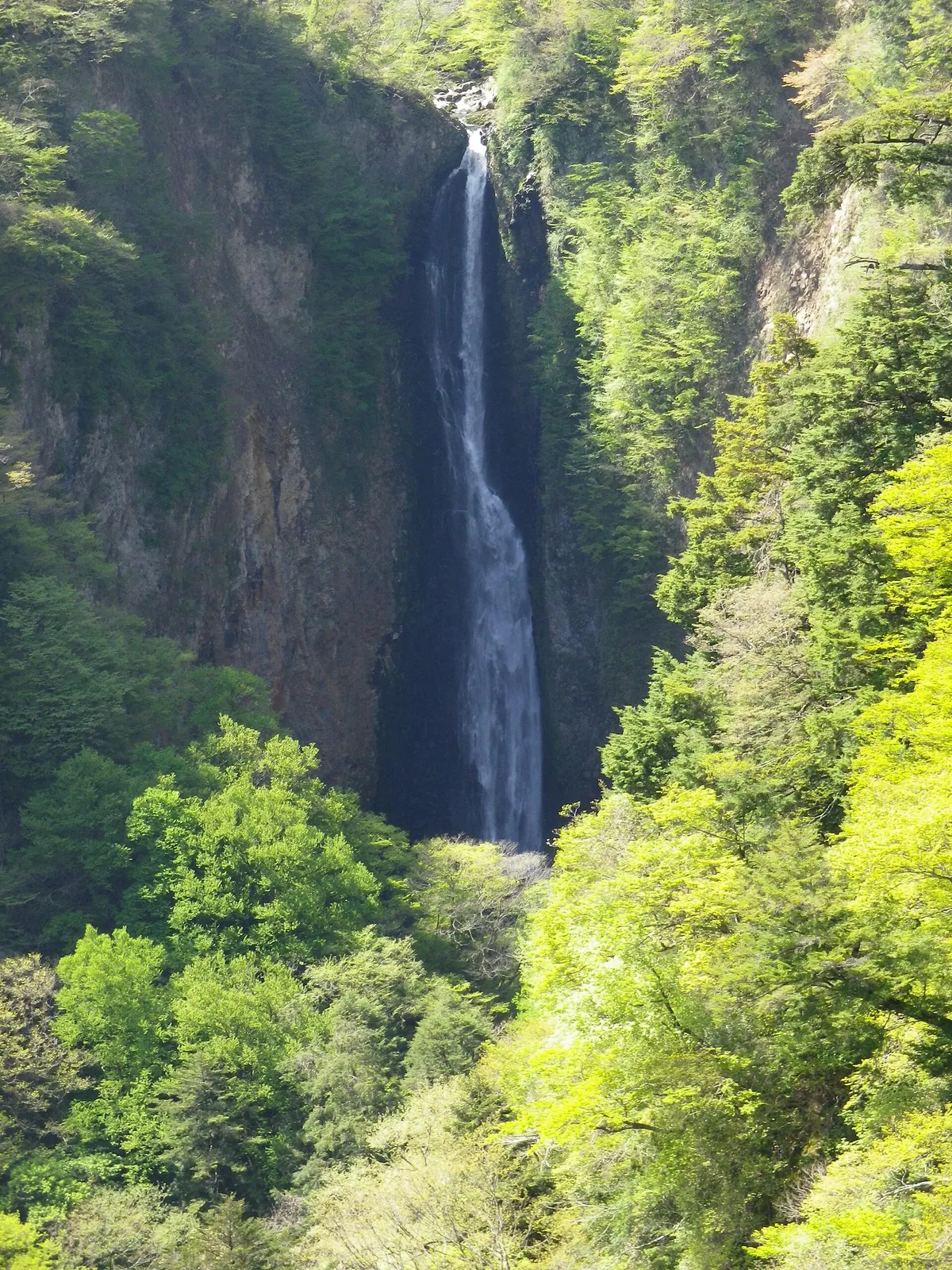
A pair of massive waterfalls ranked among Japan's top 100, featuring dramatic drops and historical ties to local dragon legends.
What it is
- A pair of waterfalls known as Odaki and Medaki located in Kokonoe Town.
- One of Japan's Top 100 Waterfalls mentioned in historical texts dating back to 1486.
- A site where local people historically offered rice cakes to a dragon god.
- A natural landmark featuring hot springs that emerge near the waterfall basin.
What to see
- The Odaki waterfall which features a drop of 83 meters.
- The Medaki waterfall which features a drop of 93 meters.
- A large basin at the foot of Odaki covering 1,600 square meters.
- A walking trail that leads visitors directly to the waterfall site.
- Panoramic views of the falls from the Kokonoe Yume Grand Suspension Bridge.
06
Chinda Falls
ŌITA · PLACE 沈堕の滝
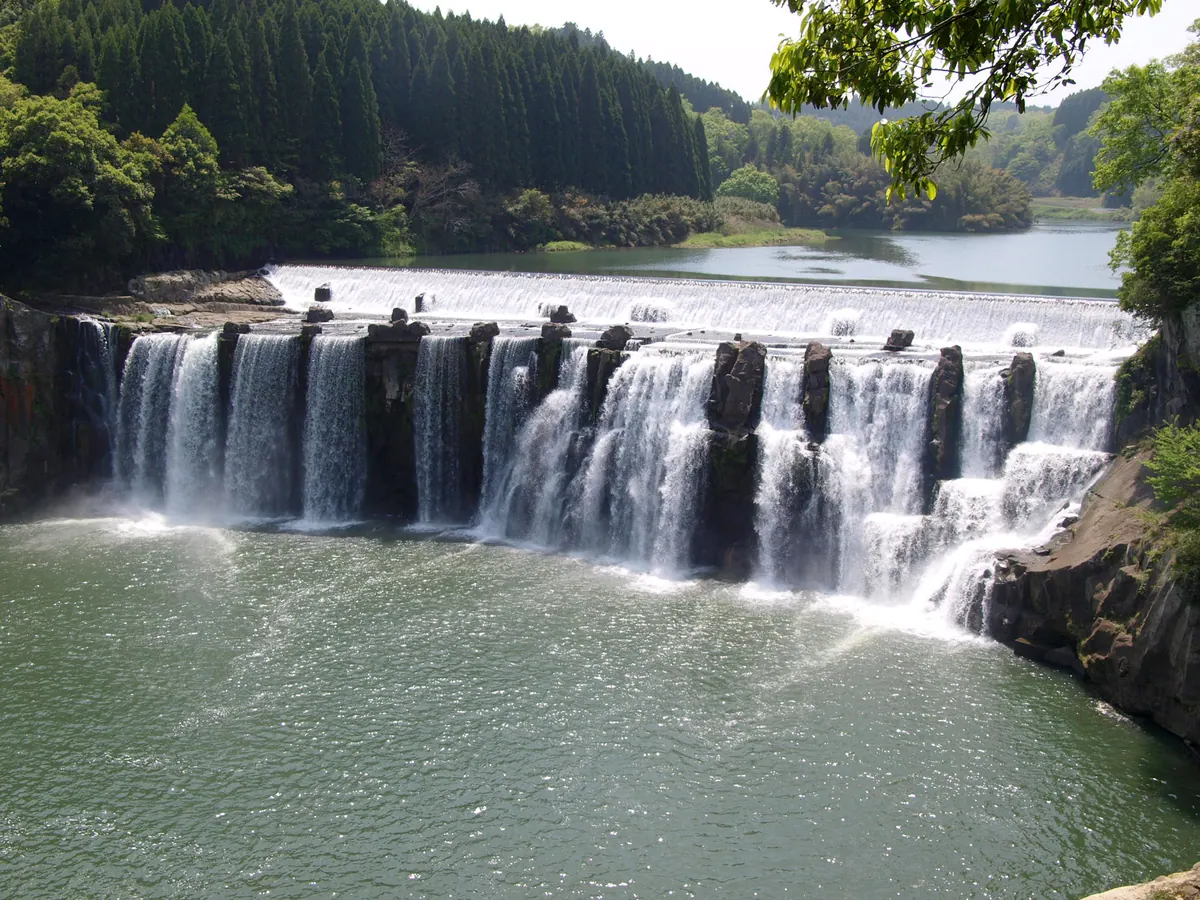
A historic waterfall and stone power plant ruins in Oita, famously painted by Sesshu and nicknamed the Niagara of Bungo.
What it is
- A national monument consisting of the Odaki and Medaki waterfalls in Bungo-ono City.
- Formed naturally through the erosion of debris from ancient Aso volcano eruptions.
- Historically served as an execution ground and later as a site for hydroelectric power.
- Famous for being the subject of a painting by the artist Sesshu during the Muromachi period.
What to see
- The Odaki falls measuring twenty meters high and one hundred meters wide.
- The Medaki falls which stand eighteen meters high and four meters wide.
- Stone ruins of a hydroelectric power plant built at the site in 1909.
- An upstream dam that ensures a constant flow of water over the falls.
07
Rakumon Falls
ŌITA · PLACE 落門の滝

A 40-meter waterfall named by a Confucian scholar, featuring seasonal ice formations and historical irrigation roots behind Bungo-Taketa Station.
What it is
- A registered monument of Japan with a drop of approximately 40 meters.
- Also known as Shimogi Falls and named by Confucian scholar Hirose Tanso.
- Fed by the Jōbaru irrigation canal established by Lord Nakagawa Hisakiyo.
What to see
- A waterfall that drops 40 meters down a cliff face.
- A stone monument inscribed with a Chinese poem located near the station.
When to go
- Cold winter days to see ice formations on the falls.
- Be aware the waterfall may have no water depending on the season.
Getting there
- The site is located directly behind Bungo-Taketa Station.
08
Nishishiiya Falls
ŌITA · PLACE 西椎屋の滝
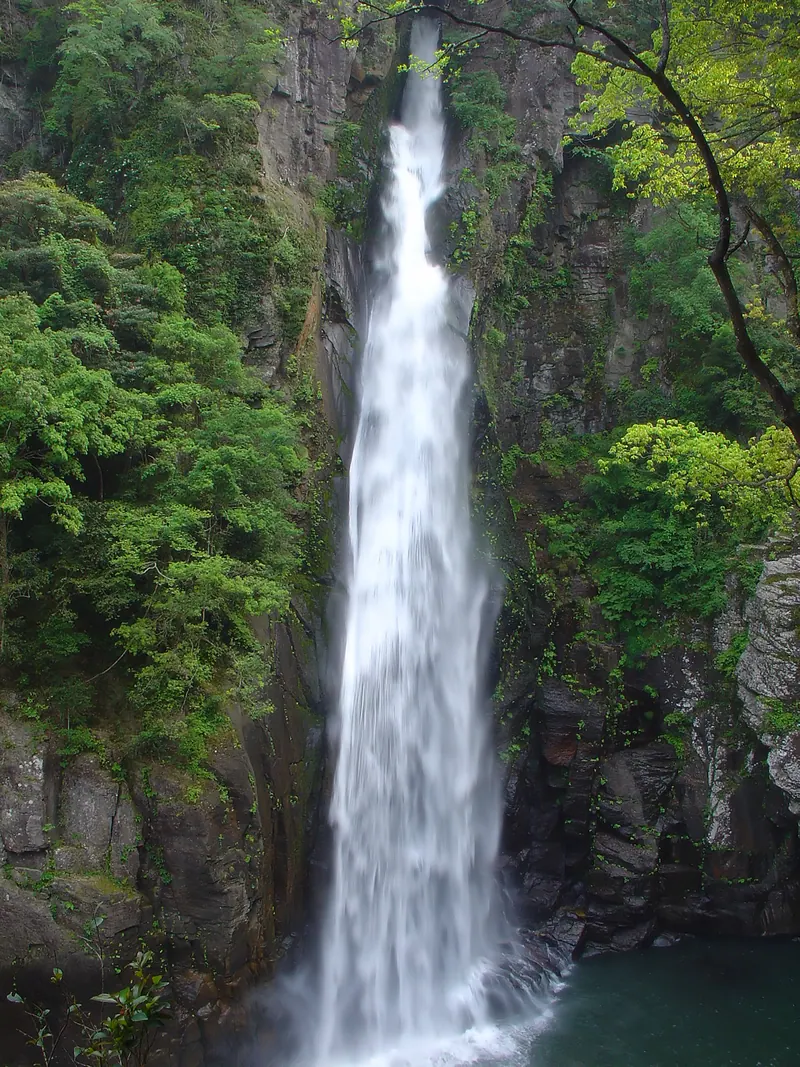
A massive 83-meter waterfall on the border of Kusu and Usa, recognized as one of Japan's top 100 scenic falls.
What it is
- A waterfall with an 83-meter drop located in the Yabakei scenic area
- Designated as one of Japan's Top 100 Waterfalls and the Three Waterfalls of Usa
- A natural landmark situated on the border of Kusu Town and Usa City
- Part of the 66 Views of Yabakei near the Hijyu Dam
What to see
- The 83-meter vertical drop of water into the valley below
- An observation platform reached by a 400-meter steep walking path
- Scenic views of the surrounding Yabakei landscape and rock formations
- The head of the waterfall located near the Hijyu Dam construction
09
Higashishiiya Falls
ŌITA · PLACE 東椎屋の滝
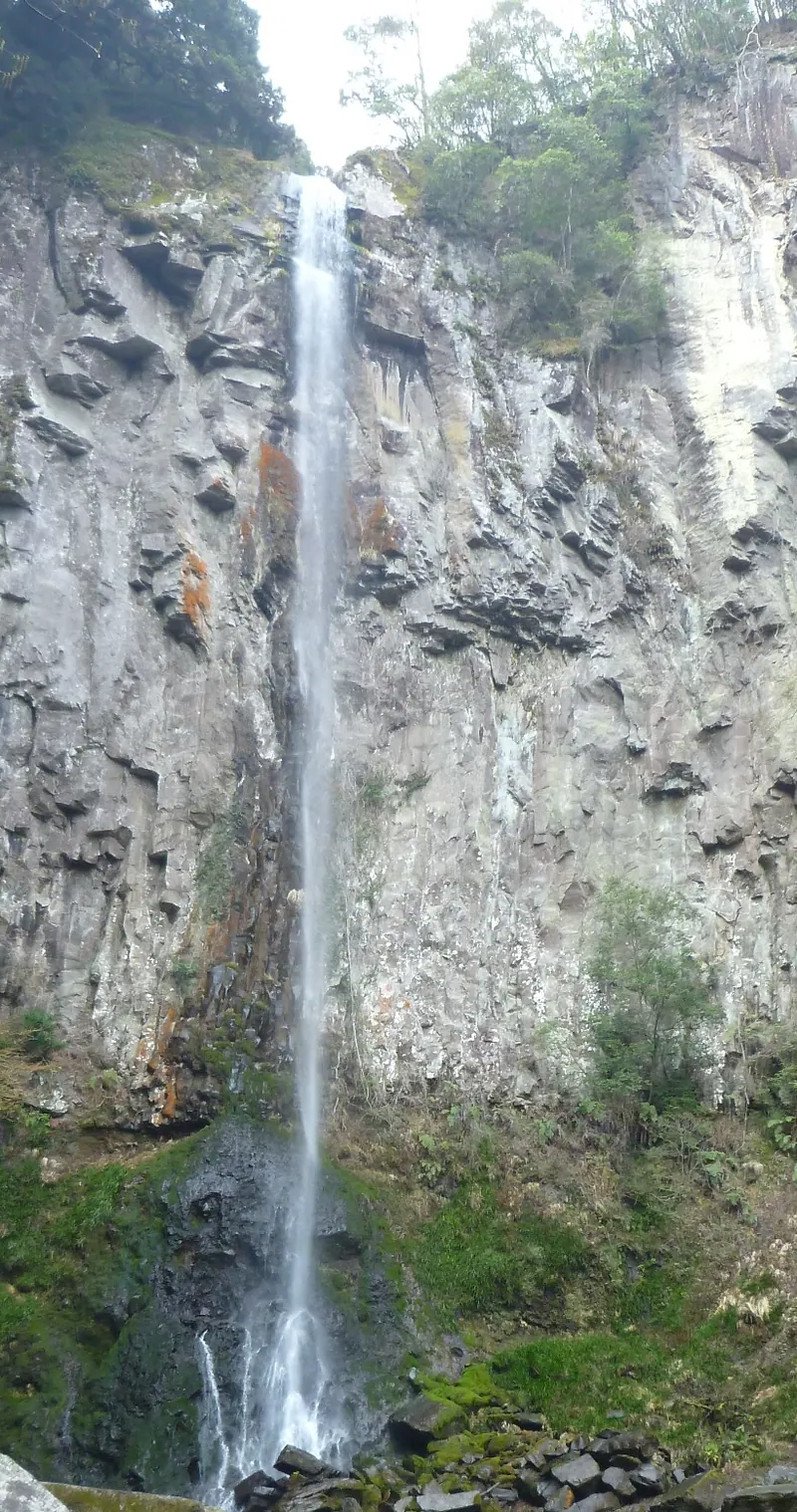
A 85-meter vertical waterfall in Oita ranked among Japan's top 100 and known as the Kegon of Kyushu.
What it is
- One of Japan's Top 100 Waterfalls with an 85-meter vertical drop.
- A historic site for Kannon worship located in the town of Ajimu.
- One of the Three Waterfalls of Usa situated in Oita Prefecture.
- Commonly nicknamed the Kegon of Kyushu due to its impressive scale.
What to see
- A large basin at the base of the vertical drop.
- A scenic valley extending from the bottom of the waterfall.