
Aizu Bukeyashiki
会津武家屋敷
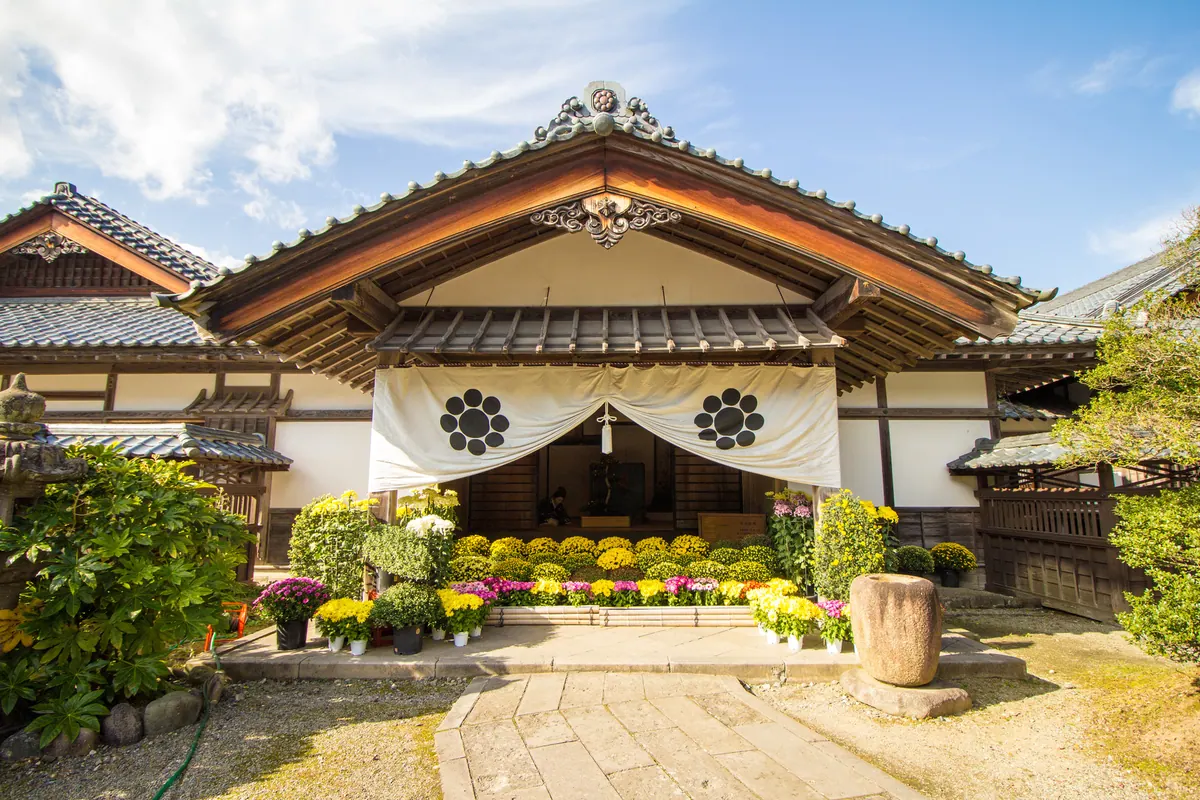
This open-air museum shows the daily life of a high-ranking samurai family from the late 19th century.
What it is
- Open-air museum about a high-ranking samurai family.
- Reconstructed residence of Saigo Tanomo, chief advisor to Aizu clan.
What to see
- Samurai residence with 38 rooms.
- Artifacts and dioramas of daily life.
- Diorama of Saigo family women's tragic scene.
- Workshops: archery, folk craft painting, glass etching.
- Café serving regional dishes.
- Gift shop.
Getting there
- 30-minute walk from Tsuruga Castle.
- 15-minute walk from Oyakuen Garden.
In detail
This open-air museum provides insight into the lifestyle of a high-ranking samurai family from the late nineteenth century. Its main feature is a carefully reconstructed samurai residence (bukeyashiki) based on the home of Saigo Tanomo (1830–1903), chief advisor to the Aizu clan. The house contains 38 rooms, with artifacts and dioramas offering a glimpse into the daily lives of the family and their staff.
The complex offers workshops including archery, painting traditional folk crafts, and glass etching, and has a café serving regional dishes and a gift shop. The Aizu Bukeyashiki is a 30-minute walk from Tsuruga Castle or a 15-minute walk from Oyakuen Garden.
A voice of reason
To fully appreciate a visit to the Aizu Bukeyashiki, it is helpful to know the background of the Saigo family. Tanomo was appointed chief advisor to daimyo lord Matsudaira Katamori (1836–1893) in 1860. Tanomo was concerned about political problems with the ruling Tokugawa shogunate and urged his lord not to get involved with the imperial forces, but he found himself removed from his position as a result. The political situation worsened, resulting in the Boshin War (1868–1869) between the shogunate and those who wanted to return power to the emperor. Tanomo was asked to return to his position as advisor to the Aizu clan, and once again he cautioned against fighting the imperial forces. Tanomo’s advice was ignored a second time. Katamori and his troops surrendered in autumn 1868, after a month-long siege of Tsuruga Castle by the enemy. Tanomo was imprisoned for several years following the war but went on to earn respect as a Shinto priest and instructor in the martial art of jujutsu. He also served as one of the head priests at the renowned Toshogu Shinto shrine in Nikko.
A woman of strength
Although Tanomo survived the war, many members of his family did not. These include his wife Chieko (1835–1868), his five daughters ranging in age from two to sixteen, and other female relatives who were waiting out the war in the family home. When the women learned of the impending defeat, they ended their lives instead of facing capture by the enemy. Chieko killed her three younger girls with a sword before taking her own life. Her teenage daughters, two younger sisters, and mother-in-law also committed suicide. A diorama in the Aizu Bukeyashiki shows the tragic scene.
The Nayotake (flexible bamboo) Monument is dedicated to the 233 women and children who died in the Battle of Aizu (October–November, 1868). It stands in the grounds of Zenryuji Temple in the city and is inscribed with a poem that Chieko wrote just before her death. While she did not take part in the fighting, Chieko demonstrated the Aizu samurai spirit in her own way.
I am a mere bamboo reed blowing in the wind,
but (I hear that) bamboo has unbending strength.
Text: 観光庁 地域観光資源の多言語解説文データベース. Reproduced unchanged. The notes above were written from that text by Japan Gems.
Where it is
〒965-0813 福島県会津若松市東山町大字石山字院内1 Open in Google Maps
この施設の関係者の方へ
このページは公開情報をもとに Japan Gems が作成し、訪日外国人向けに英語で掲載しています。 写真や情報の追加・修正を承っています。お店の写真に差し替えることもできます。
このページの情報を更新する