
Engyō-ji Temple
圓教寺
This historic temple on Mt. Shosha offers many buildings and monuments, and is a pilgrimage site.
What it is
- Temple founded in 966 by monk Shōkū.
- Comprises dozens of historic buildings, monuments, and grave sites.
- Main temple and six subtemples cover over 31 hectares.
- Received patronage from aristocrats, imperial family, warriors, and commoners.
What to see
- Maniden Hall, rebuilt several times, retains symbolic significance.
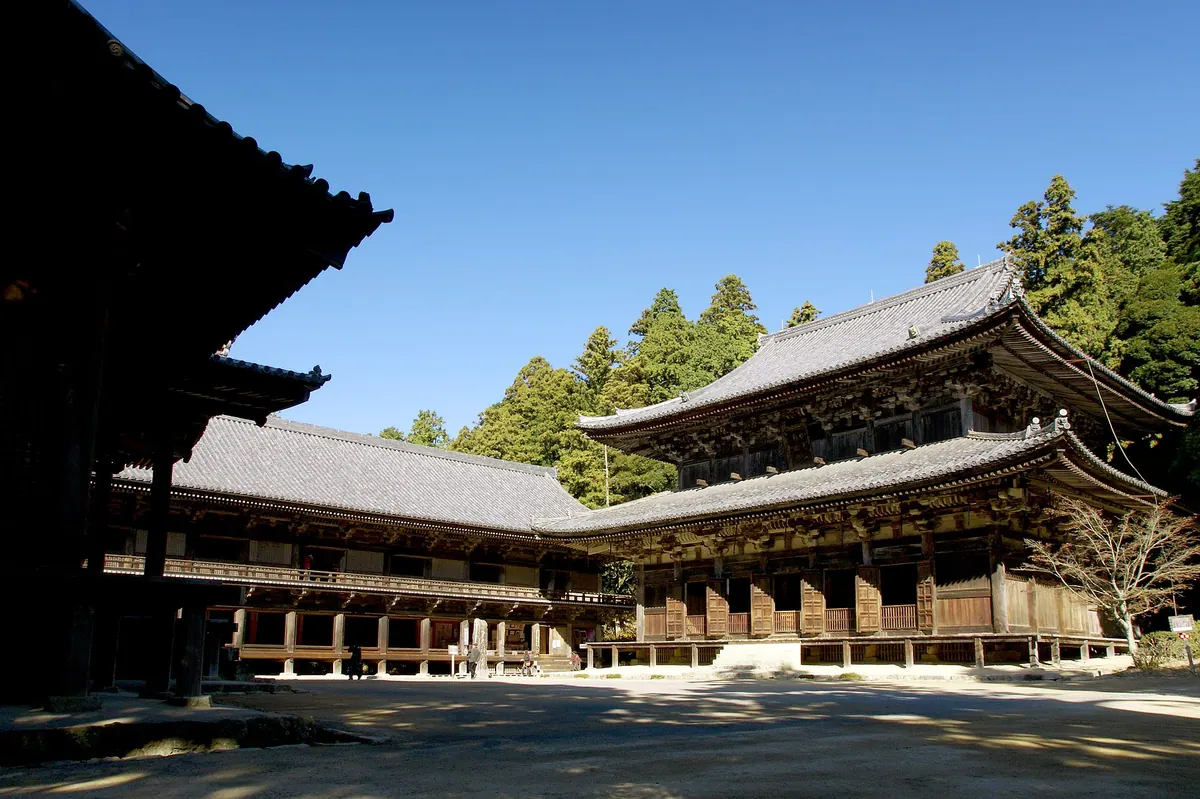
- Daikōdō, Jōgyōdō, and Jikidō halls form a U-shape around a courtyard.
- Representations of Shakyamuni and two attendants in Daikōdō, carved in 987.
- Kaisandō and Fudōdō Halls, built in 1673 and 1697.
- Twin Gohōdō Shrines, enshrining deities Ototen and Wakaten.
- Niōmon Gate, a symbolic divide between secular and sacred.
Getting there
- Located on Mt. Shosha in central Hyogo Prefecture.
- Access via ropeway established in 1958.
- Enter temple grounds through Niōmon Gate after ropeway.
In detail
Engyōji is located on Mt. Shosha, in central Hyogo Prefecture. Comprising dozens of historic buildings, monuments, and grave sites, the main temple and its six subtemples cover an area of more than 31 hectares. From the time of its establishment in 966 by the monk Shōkū (910–1007), Engyōji has received the patronage of wealthy aristocrats and members of the imperial family. Elite warriors and commoners also contributed to the creation of the temple’s structures and Buddhist images, many of which date to the Muromachi period (1336–1573) and are registered cultural properties.
The greater temple complex can be divided into three main sections. At its center is Maniden Hall. The hall stands on the site where, during the early period of his residence on the mountain, Shōkū is said to have witnessed a heavenly maiden dancing around a cherry tree and reciting holy poetry. Inspired by the miraculous vision, he sculpted the tree into a representation of the jewel-bearing bodhisattva Nyoirin Kannon (Sanskrit: Cintamanicakra). Although the icon was lost to fire and the Maniden has been rebuilt several times, the structure nonetheless retains its symbolic and ritual significance. It is the twenty-seventh stop along the “Thirty-three Pilgrimage Sites of Western Japan” (Saikoku Sanjūsansho). This route, which was established in the eighth century, continues to draw visitors from around the country and around the world.
One of the main areas of Engyōji Temple is centered on its three halls: the Daikōdō (Great Lecture Hall), Jōgyōdō (Circumambulatory Hall), and Jikidō (Refectory). Built between the tenth and fifteenth centuries, these elegant and imposing structures form an angular “U” that is centered on a broad courtyard. Representations of Shakyamuni and his two attendants housed within the Daikōdō were carved in 987 by the monk Kan’na, a disciple of Shōkū. From their elevated position, the trio gaze serenely across the courtyard to the Jōgyōdō’s attached stage.
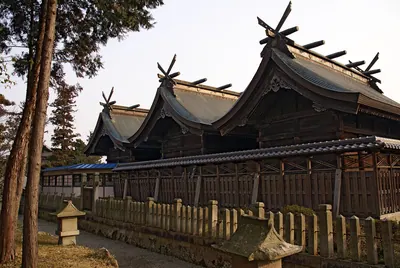
A cluster of buildings at the western end of the grounds is Engyōji’s inner sanctum (okunoin). It includes the Kaisandō and Fudōdō Halls (built in 1673 and 1697 respectively) and the twin Gohōdō Shrines, which enshrine the deities Ototen and Wakaten. The pair have protected Engyōji since its establishment, and they feature prominently in temple lore and traditions that continue to this day.
For many centuries, visitors to Engyōji could reach the temple only by ascending Mt. Shosha via one of six narrow hiking trails. In 1958, a ropeway was established along the eastern route to facilitate access to the temple. Visitors who arrive via the ropeway enter the temple grounds by passing through the Niōmon Gate, a symbolic divide between the secular and sacred realms.
Text: 観光庁 地域観光資源の多言語解説文データベース. Reproduced unchanged. The notes above were written from that text by Japan Gems.
Where it is
〒671-2201 兵庫県姫路市書写2968 Open in Google Maps
この施設の関係者の方へ
このページは公開情報をもとに Japan Gems が作成し、訪日外国人向けに英語で掲載しています。 写真や情報の追加・修正を承っています。お店の写真に差し替えることもできます。
このページの情報を更新する