

20 Temples in Hyōgo worth your time
Japan Gems
Hyōgo prefecture has 234 temples, including UCCJ Kobe Church and Senshō-ji Temple. Visitors can find a wide range of spiritual sites across the region.
Hyōgo has 255 temples on Japan Gems. Below are the 20 we can tell you the most about — each one written up in English from Japanese sources, with what to see and how to get there. See all temples in Hyōgo.
01
Engyō-ji Temple
HYōGO · TEMPLE 圓教寺
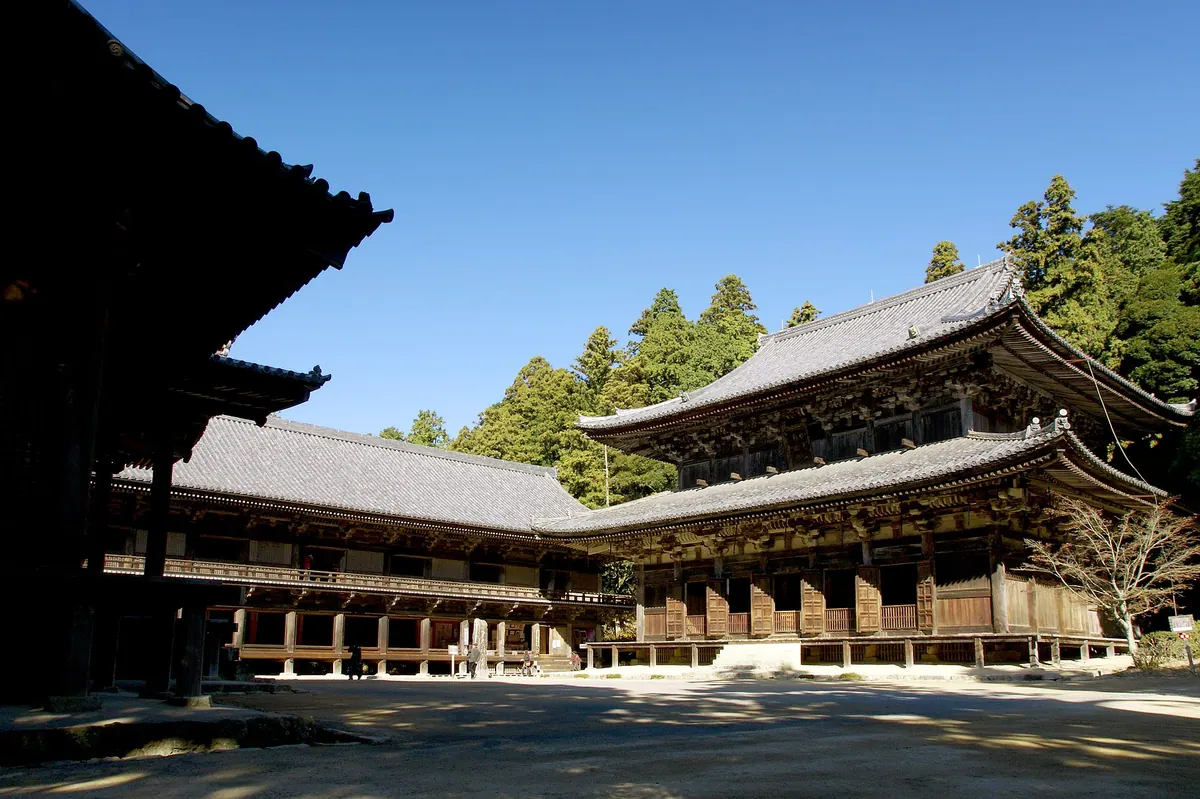
This historic temple on Mt. Shosha offers many buildings and monuments, and is a pilgrimage site.
What it is
- Temple founded in 966 by monk Shōkū.
- Comprises dozens of historic buildings, monuments, and grave sites.
- Main temple and six subtemples cover over 31 hectares.
- Received patronage from aristocrats, imperial family, warriors, and commoners.
What to see
- Maniden Hall, rebuilt several times, retains symbolic significance.
- Daikōdō, Jōgyōdō, and Jikidō halls form a U-shape around a courtyard.
- Representations of Shakyamuni and two attendants in Daikōdō, carved in 987.
- Kaisandō and Fudōdō Halls, built in 1673 and 1697.
- Twin Gohōdō Shrines, enshrining deities Ototen and Wakaten.
- Niōmon Gate, a symbolic divide between secular and sacred.
Getting there
- Located on Mt. Shosha in central Hyogo Prefecture.
- Access via ropeway established in 1958.
- Enter temple grounds through Niōmon Gate after ropeway.
- Address
- 〒671-2201 兵庫県姫路市書写2968 Map
- Official site
- www.shosha.or.jp
02
Kōshō-ji Temple
HYōGO · TEMPLE 高照寺
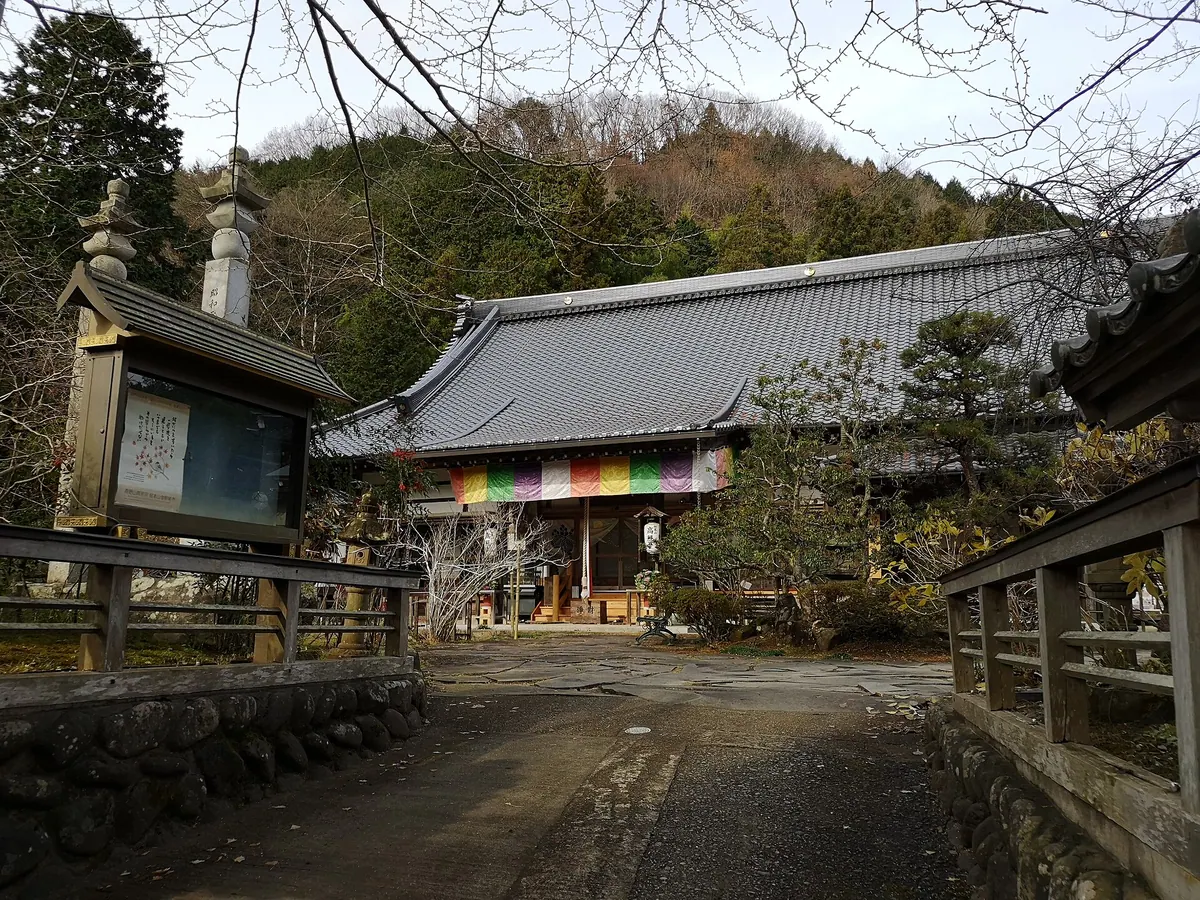
A historic Shingon sect temple founded in 720, famous for its seasonal flowers and status as a pilgrimage site.
What it is
- A Koyasan Shingon sect temple dedicated to the deity Dainichi Nyorai.
- Founded by the monk Gyoki in the year 720.
- The fifth site on the Kansai Flower Temple Pilgrimage.
- Relocated to its current site in Yabu in 1819.
What to see
- The main hall and a traditional bell tower on the grounds.
- A statue of Kobo Daishi standing on the temple premises.
- Magnolias blooming in spring and bush clover blooming in autumn.
- Seasonal flowers that mark its place on the regional pilgrimage route.
When to go
- May 8th for the annual Flower Festival.
- August 15th for the memorial service for the war dead.
- Springtime to see the magnolia trees in bloom.
- Autumn to view the flowering bush clover.
Getting there
- Accessible via a bus departing from Yoka Station.
03
Ōshō-ji Temple
HYōGO · TEMPLE 應聖寺
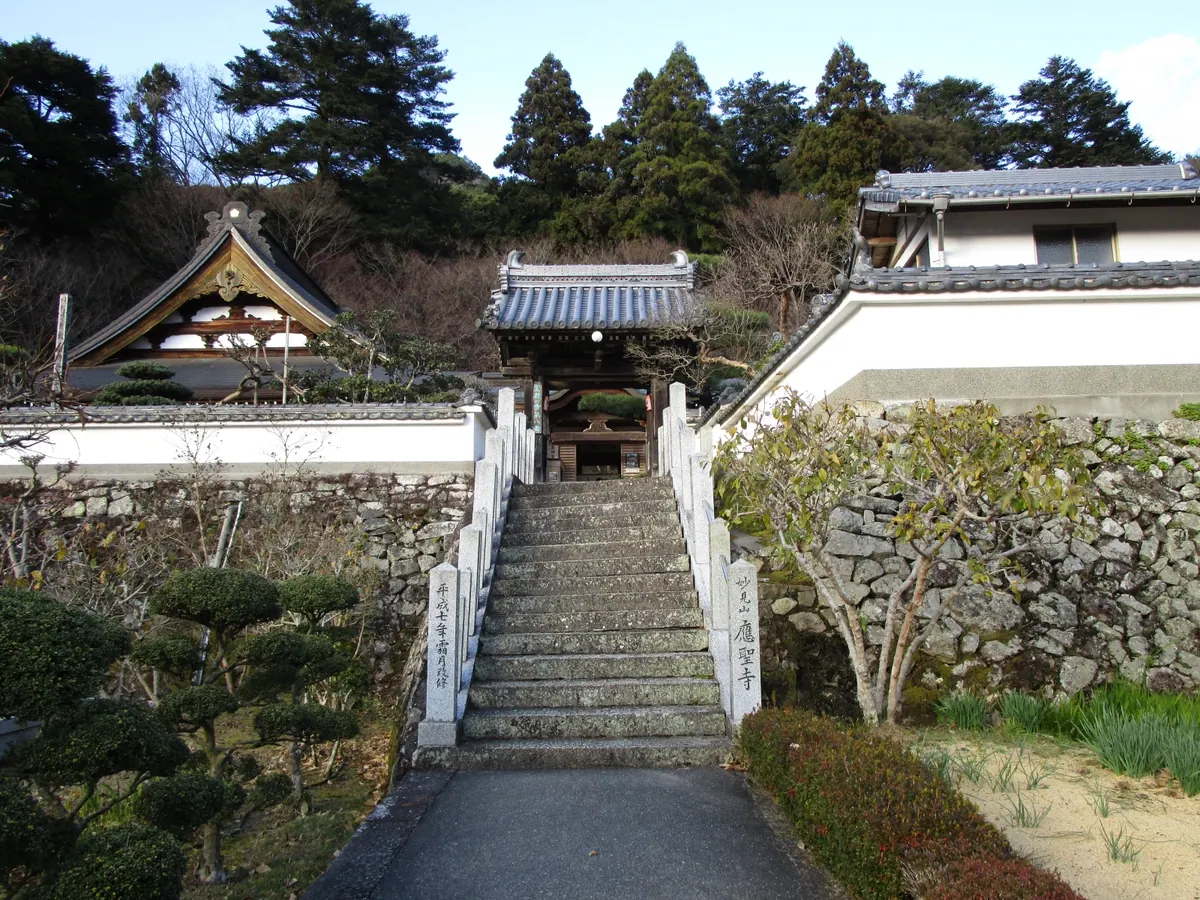
A historic Tendai Buddhist temple in Fukusaki featuring a scenic garden and a unique eight-meter-long Nirvana Buddha statue.
What it is
- A Tendai Buddhist temple founded by Hodo Sennin between 650 and 654.
- The eighth site on the Kansai Flower Temple pilgrimage dedicated to Sho-kannon.
- Known as the Temple of Sal Trees with a garden designated as a Place of Scenic Beauty.
- The main hall was rebuilt in 1868 and underwent renovation in 1924.
What to see
- An eight-meter-long Nirvana Buddha statue crafted from stone and hedges.
- A bronze Buddha statue dating back to the 7th century.
- A historic main hall rebuilt by Akamatsu Norisuke in 1351.
- Scenic garden landscapes recognized for their beauty in Hyogo Prefecture.
When to go
- The Sal Festival takes place from mid-June to early July.
Getting there
- The temple is an eight-minute taxi ride from Fukusaki Station.
04
Harima Kokubun-niji
HYōGO · TEMPLE 播磨国分尼寺
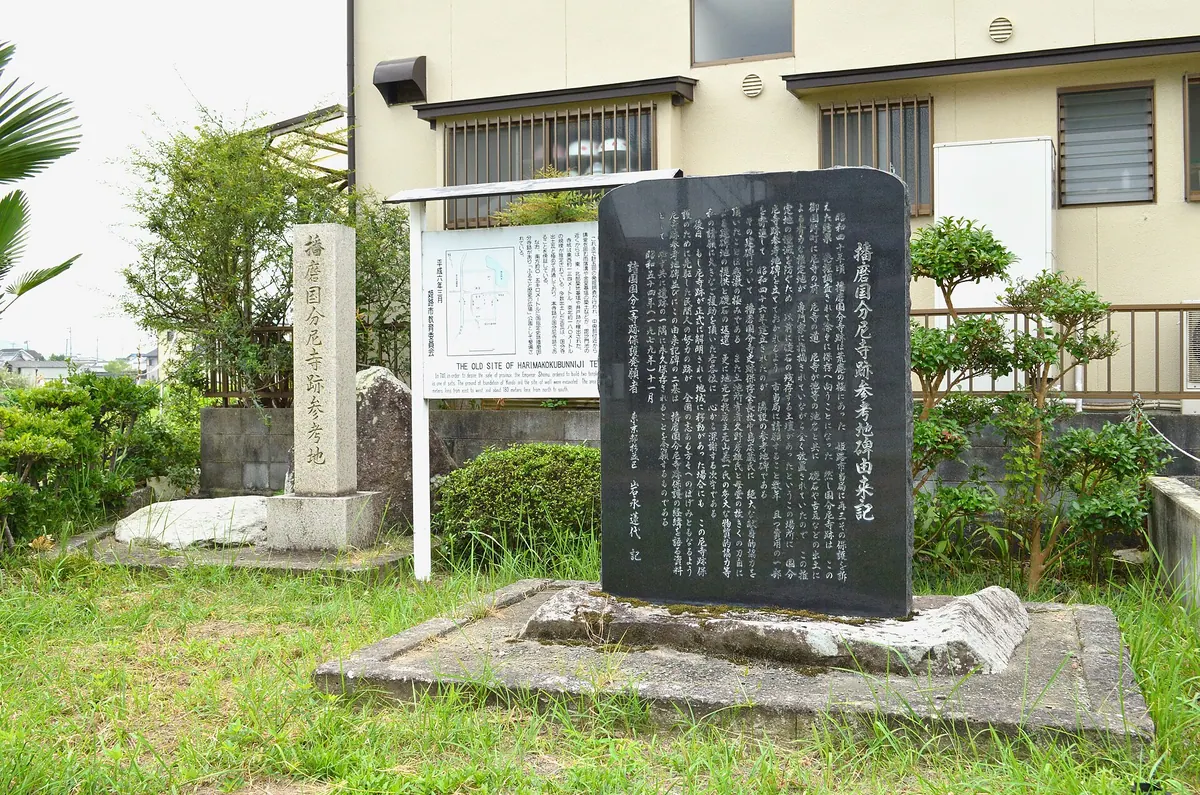
This National Historic Site features ancient temple ruins and a relocated Himeji Castle building within a public park.
What it is
- A Shingon Buddhist temple established following Emperor Shomu's 741 edict.
- The site is a designated National Historic Site located on the Ichikawa River terrace.
- A historic park called Furusato Rekishi no Hiroba now occupies the temple grounds.
- Toyotomi Hideyoshi donated land to this religious site in 1587.
What to see
- Excavated ruins of a pagoda and main hall with a layout similar to Todai-ji.
- The current main hall which was moved from the grounds of Himeji Castle.
- A stone pagoda from the Muromachi period designated as a prefectural cultural property.
- Nunnery ruins located approximately 600 meters north of the main temple site.
Getting there
- The temple is a seven-minute walk from JR Gochaku Station.
05
Hachijo-ji Temple
HYōGO · TEMPLE 八浄寺
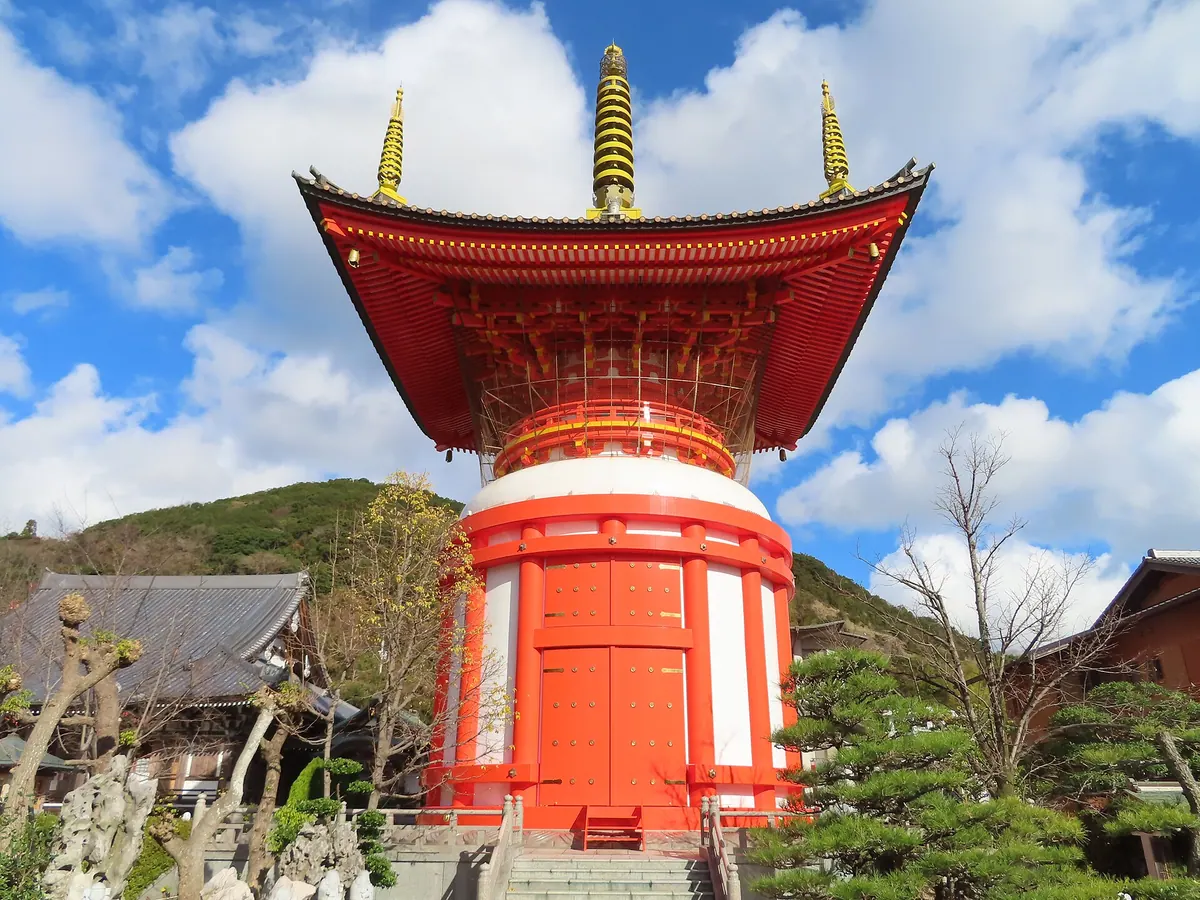
A Shingon Buddhist temple in Awaji City serving as the head of the island's Seven Lucky Gods pilgrimage.
What it is
- A Koyasan Shingon Buddhist temple founded by Shinryo Hosshi during the Oei era
- The primary deity enshrined at this location is Amida Nyorai
- The head temple for the Awaji Island Seven Lucky Gods circuit
- The 64th stop on the Awaji Shikoku 88 pilgrimage route
What to see
- A wooden Daikokuten statue standing over two meters tall
- The Yugi Shichifuku Pagoda which was completed in late 1999
- The main hall which was rebuilt in September 1989
- A pilgrimage path containing sand from the Shikoku 88 temples
- Enjo-ji temple which serves as the inner sanctuary for this site
When to go
- The temple is the origin site of the Mawari Benten festival
06
Erin-ji Temple
HYōGO · TEMPLE 恵林寺
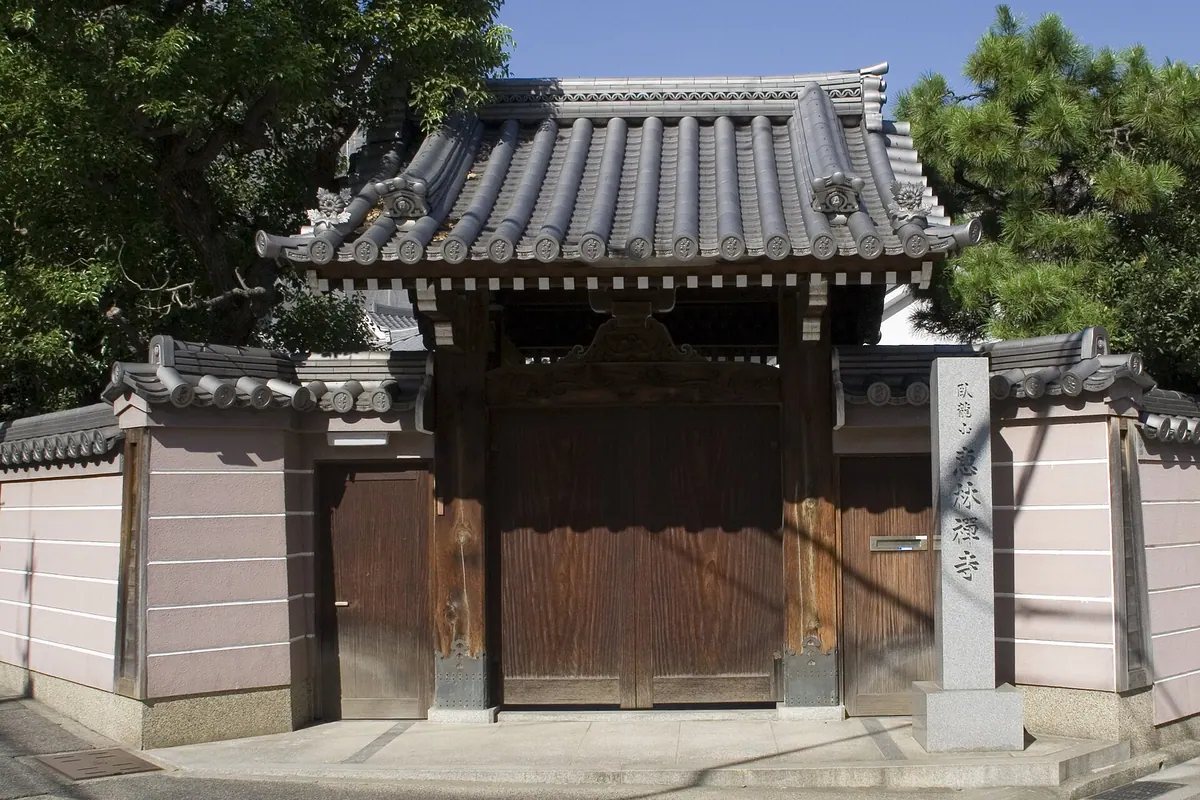
A resilient Rinzai Zen temple in Kobe featuring a historic shrine dedicated to the protector of a former island.
What it is
- A Rinzai Nanzen-ji sect Buddhist temple founded by Zen master Kinko Shobun in 1346.
- The grounds house a shrine dedicated to Benzaiten, known as the Wave-Repelling Benzaiten.
- Taira no Kiyomori built the original shrine to protect the historic Kyogashima island.
- The current structures are reconstructions completed in 2003 following the Great Hanshin Earthquake.
What to see
- The Wave-Repelling Benzaiten shrine located within the temple grounds.
- Modern temple buildings restored after the total destruction caused by the 1995 earthquake.
Getting there
- A twelve-minute walk from JR Kobe Station.
- A twelve-minute walk from JR Hyogo Station.
07
Yakushi-in Temple
HYōGO · TEMPLE 薬師院
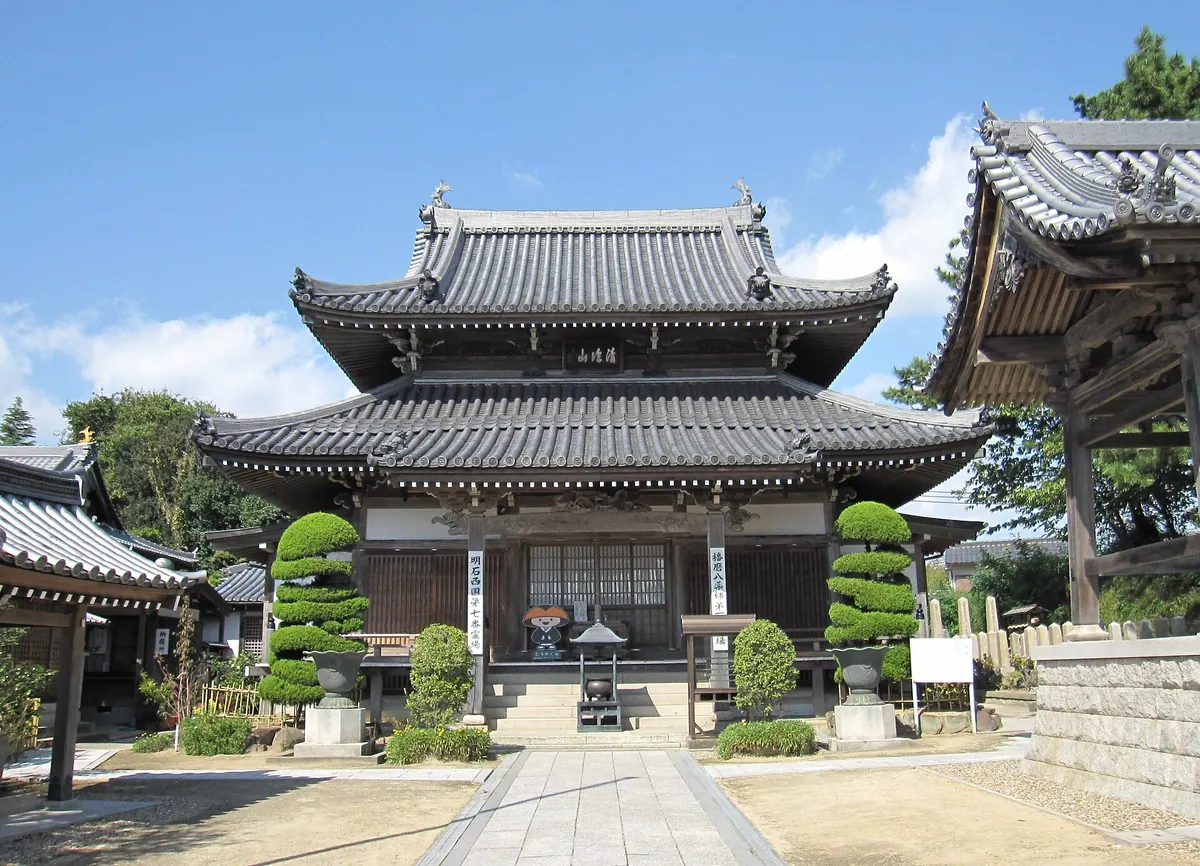
A Shingon sect temple in Akashi known as the Peony Temple, featuring a massive garden with fifty flower species.
What it is
- A Koyasan Shingon sect temple founded by the monk Gyoki.
- The seventh station on the Akashi Saigoku Pilgrimage route.
- Commonly known as Botan-dera due to its extensive peony gardens.
- The main hall enshrines the deities Yakushi Nyorai and Kobo Daishi.
What to see
- A two thousand square meter garden containing fifty species of peonies.
- The Sazuke Jizo statue which was erected in 1973.
- Traditional artworks housed on-site by the painter Ishida Yutei.
- The Seireizan mountain setting and the historic main hall architecture.
Getting there
- A ten-minute walk from Sanyo Uozumi Station.
- A twenty-minute walk from JR Uozumi Station.
08
Tajima Kokubun-niji
HYōGO · TEMPLE 但馬国分尼寺
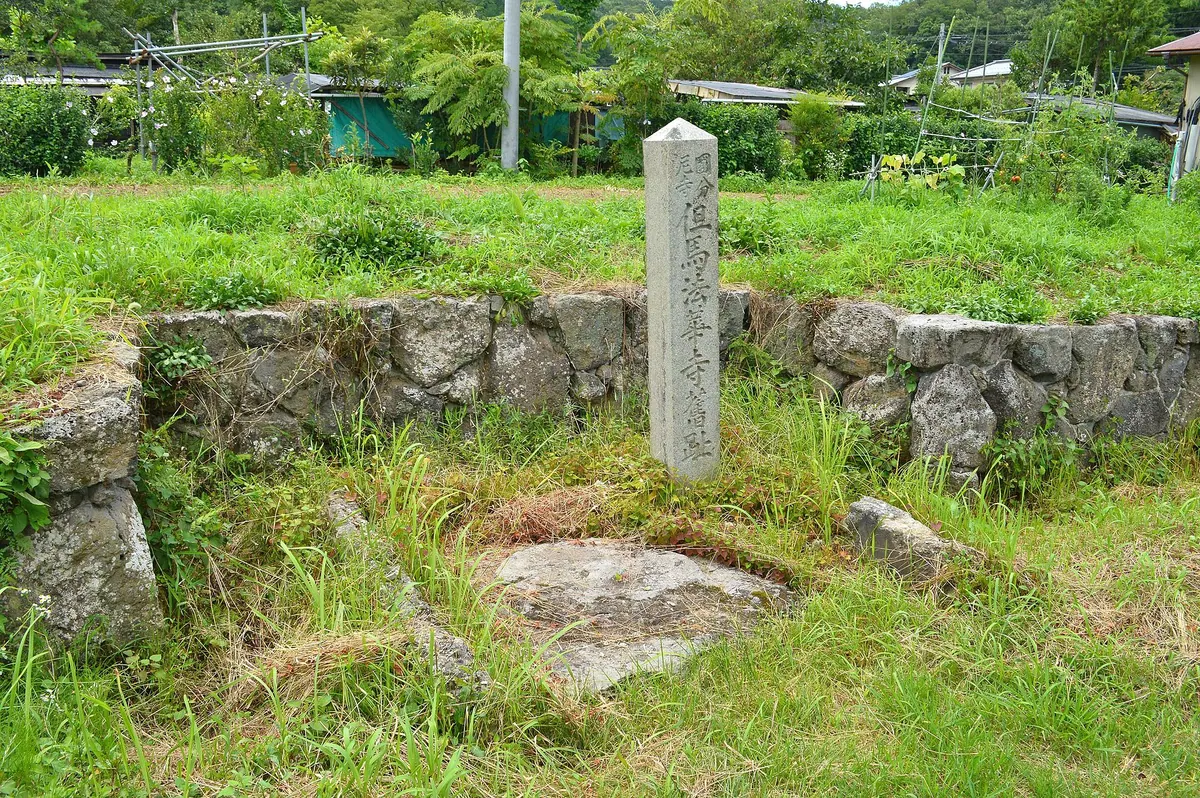
A National Historic Site featuring ancient temple ruins, a historic statue, and a museum displaying rare Nara-period wooden tablets.
What it is
- A Jodo sect Buddhist temple originally commissioned by Emperor Shomu during the Nara period.
- The site was designated as a National Historic Site in 1990.
- The original grounds once spanned a square area of approximately 160 meters.
- A nunnery site is located about one kilometer north of the main temple grounds.
What to see
- The archaeological remains of a former seven-story pagoda.
- A Shaka Nyorai statue brought to the site from Kyoto in 1759.
- Artifacts and excavated wooden tablets displayed at the Toyooka City Historical Museum.
Getting there
- The site is a five-minute walk from JR Ebara Station.
09
Ichijō-ji Temple
HYōGO · TEMPLE 一乗寺
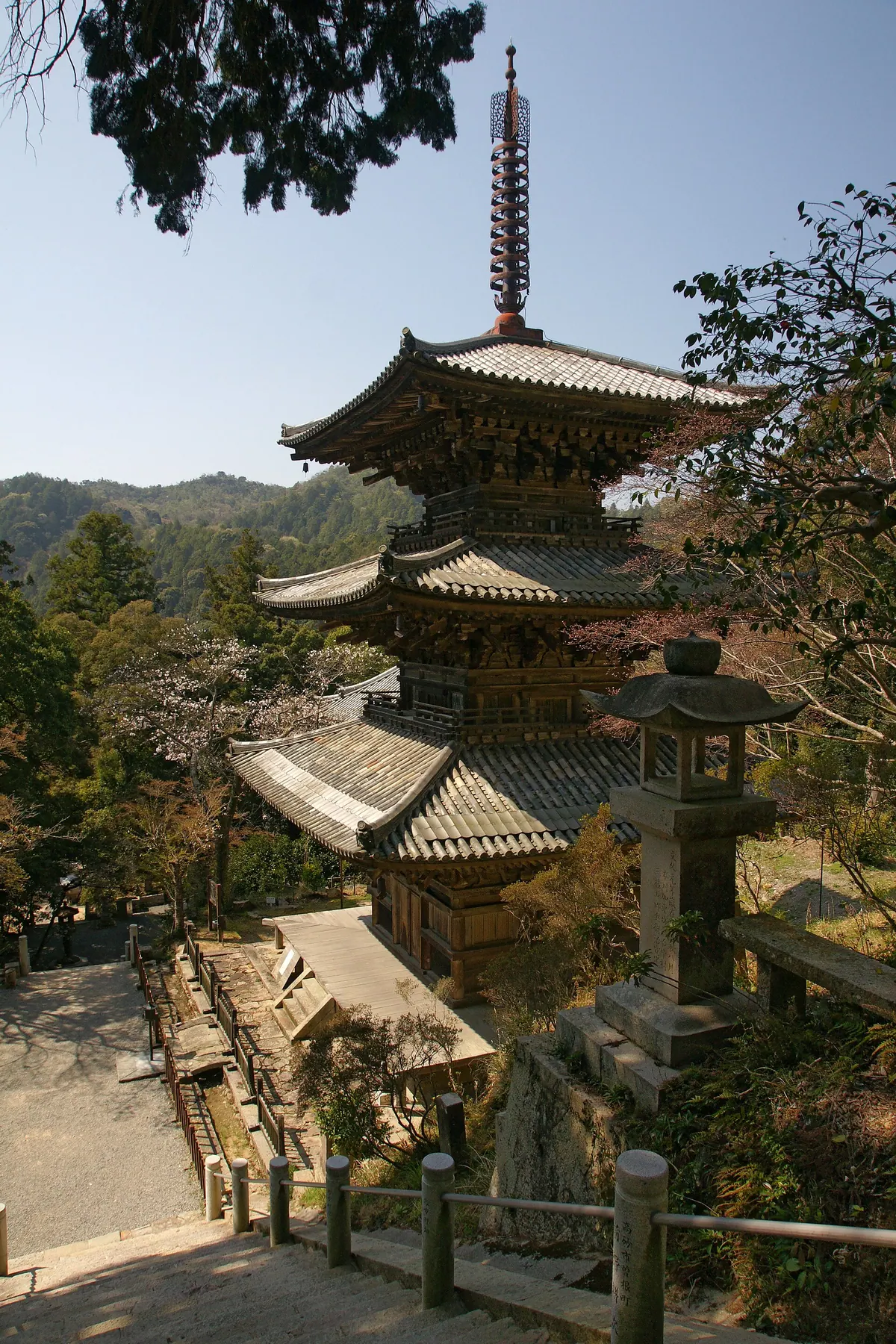
Ichijō-ji Temple is a historic Tendai temple with a National Treasure pagoda and seasonal beauty.
What it is
- Tendai sect temple in Kasai City, Hyogo Prefecture.
- Principal image is Shō Kannon Bosatsu, a hidden Buddha.
- 26th temple of the Saigoku Sanjūsan-sho pilgrimage.
- Founded with the mountain name Hokke-zan.
What to see
- National Treasure three-storied pagoda built in 1171.
- Six gilt bronze Buddha statues from the 7th to 8th centuries.
- Main hall rebuilt in 1628 with feudal lord support.
- Bell tower is a Hyogo Prefecture cultural property.
- Stone stupa at the entrance supervised by Monkanbō Kōshin.
When to go
- Spring for cherry blossoms.
- Autumn for autumn leaves.
- Address
- 兵庫県加西市坂本町821-17 Map
10
Saifuku-ji Temple
HYōGO · TEMPLE 西福寺
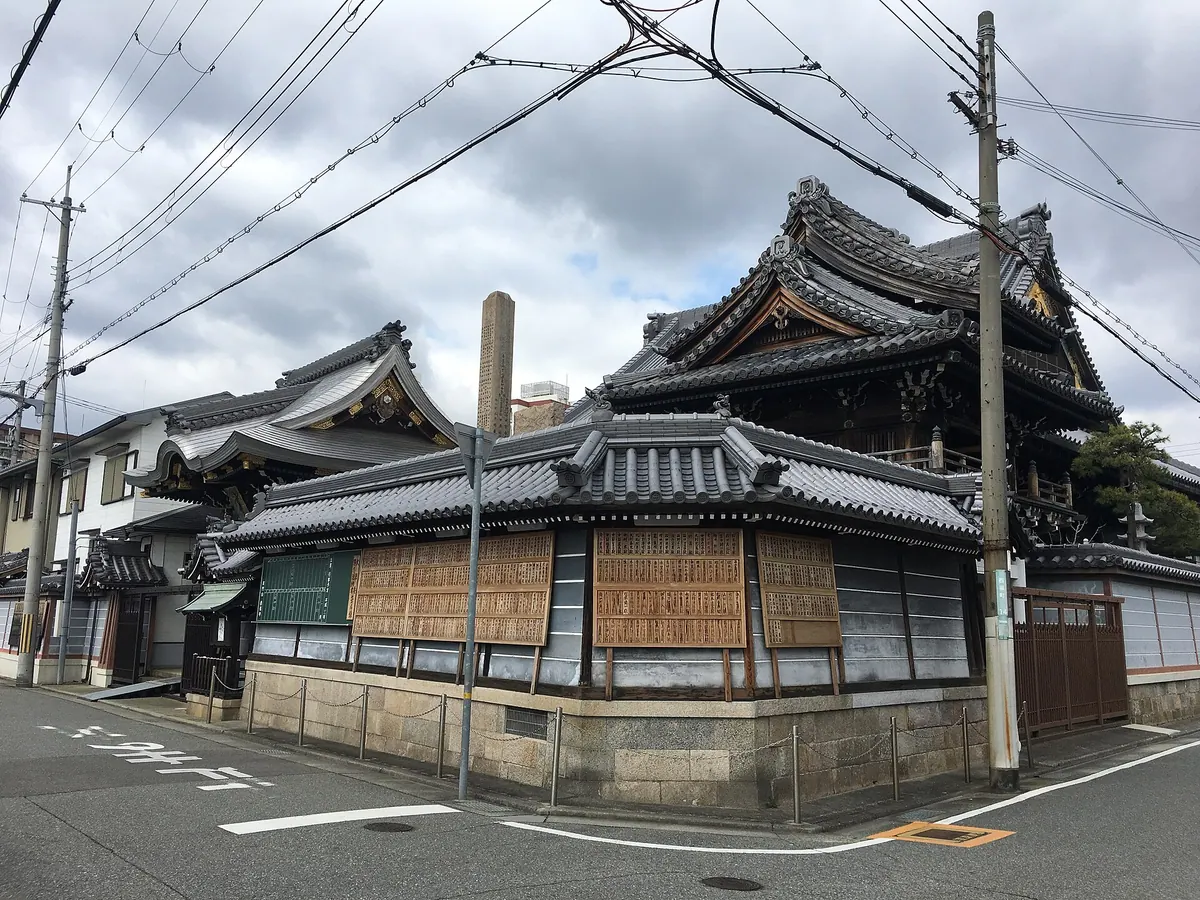
A historic Jodo Shinshu temple founded in 1580, housing a statue of Amida Nyorai in Nishinomiya City.
What it is
- A Jodo Shinshu Hongwanji-ha temple founded in 1580
- The temple is dedicated to the main deity Amida Nyorai
- The mountain name of this religious site is Tomonzan
- Toyohara Taisei formerly served as the head priest here
What to see
- The main hall housing the image of Amida Nyorai
- Shinmei Hachiman Shrine located in the immediate vicinity
- The nearby Nishinomiya City Wakatake Library and Central Gymnasium Annex
Getting there
- Accessible by walking from the JR Nishinomiya Station
- Located within walking distance of Hankyu Nishinomiya-kitaguchi Station
11
An'yō-in
HYōGO · TEMPLE 安養院
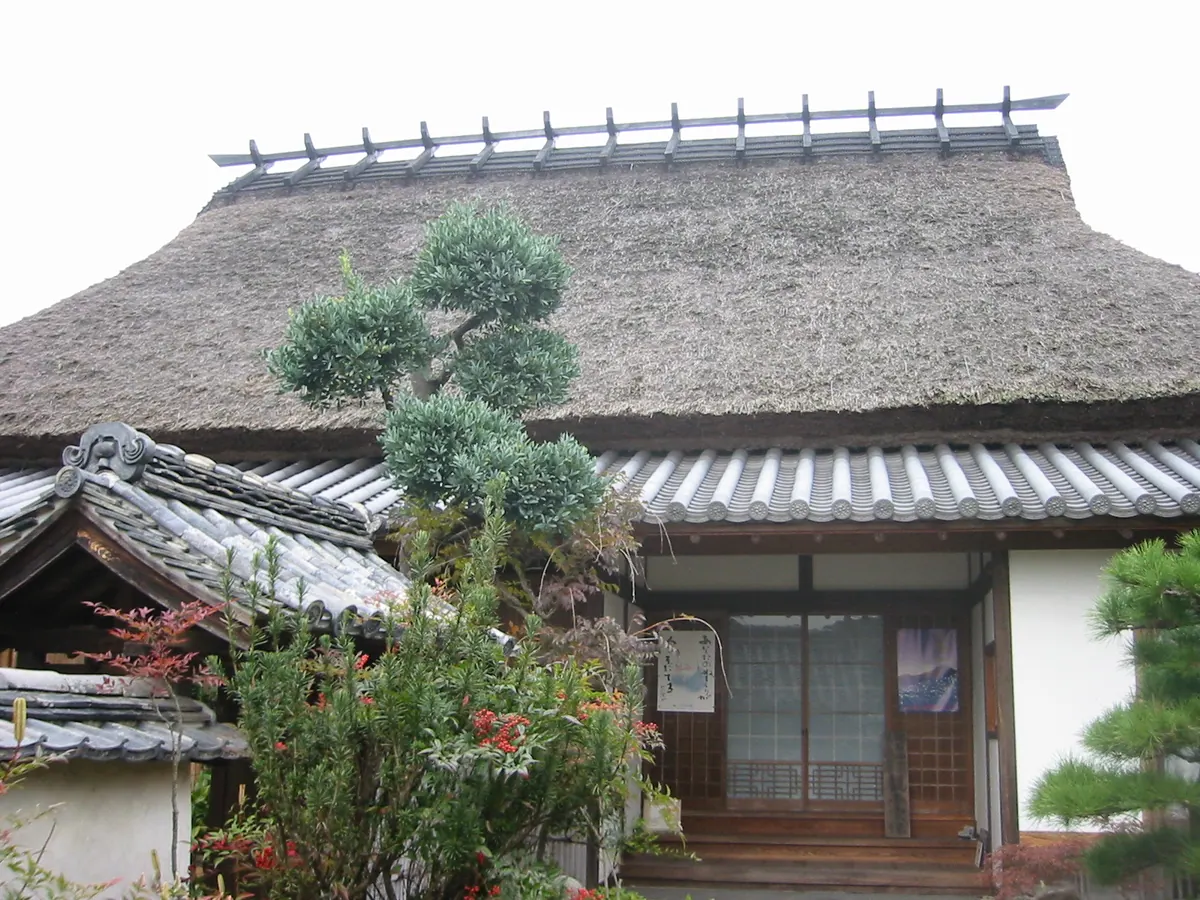
An'yō-in is a historic dry landscape garden with unique stone arrangements, offering a glimpse into traditional design.
What it is
- A nationally designated Place of Scenic Beauty since 1980.
- Created in the Azuchi-Momoyama period.
- A dry landscape garden with borrowed scenery.
- Expresses Horai Shinsen thought with bold stone arrangements.
What to see
- Horai stone, turtle stone, and crane stone arrangements.
- Two stone bridges and a cave stone arrangement.
- Three waterfall stone arrangements.
- Shoin building with two thatched-roof houses from mid-Edo period.
When to go
- Open to the public for limited periods.
Getting there
- 5-minute walk from the Taizan-ji Niomon gate.
- Address
- 〒651-2108 兵庫県神戸市西区伊川谷町前開 Map
- Official site
- www.do-main.co.jp
12
Jūrin-ji Temple
HYōGO · TEMPLE 鷲林寺
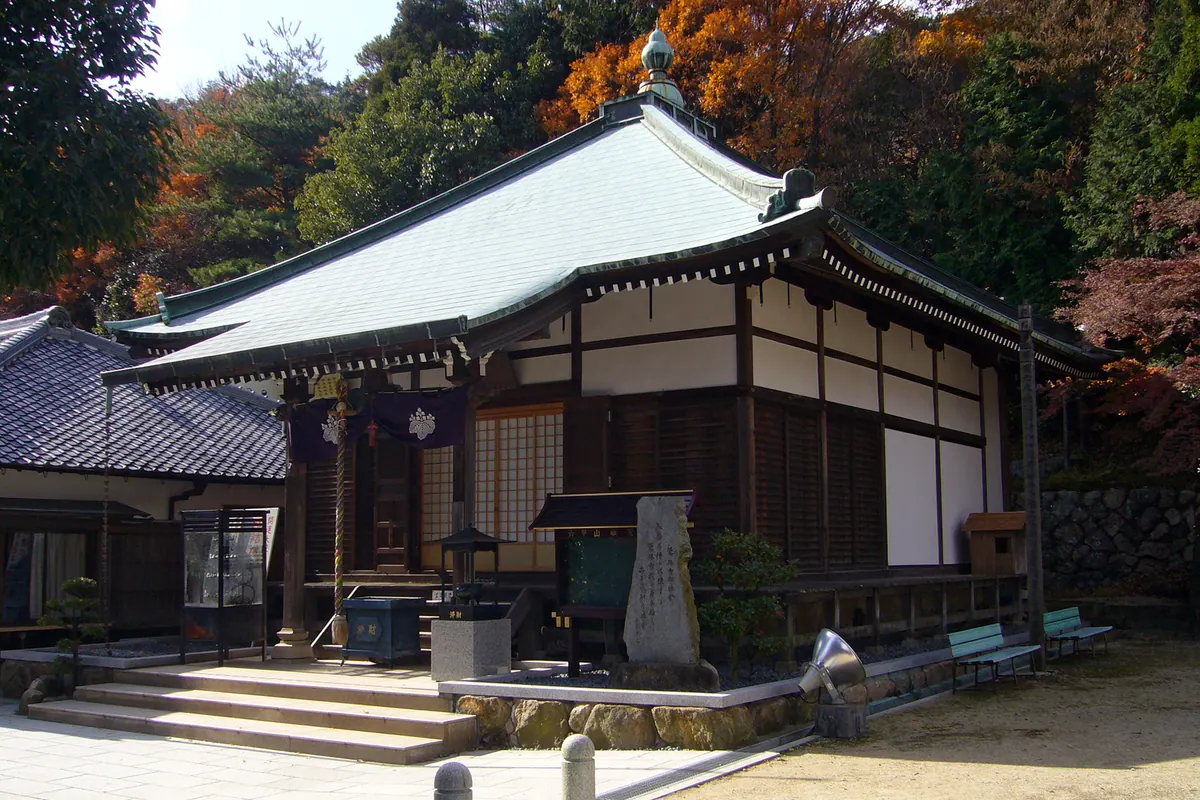
Ancient Buddhist temple founded by Kūkai, offering unique deities and sacred spring water.
What it is
- Buddhist temple of the Kōyasan Shingon sect.
- Founded by Kūkai in 833.
- Main deity is Eleven-faced Kannon.
- Temple mountain name is Mount Rokkō.
What to see
- Main hall enshrines the Eleven-faced Kannon.
- Goma-dō enshrines Fudō Myōō, Bishamonten, and Benzaiten.
- Pagoda has a charnel house on the first floor.
- Pagoda enshrines Dainichi Nyorai, Fudō Myōō, and Aizen Myōō.
- Benzaiten Pond is on the temple grounds.
- Kannon-sui is drinkable spring water from Mount Rokkō.
Getting there
- 20-minute walk from the Washirin-ji bus stop.
- Address
- 兵庫県西宮市鷲林寺町4-8 Map
13
Naritasan Hōrin-ji Temple
HYōGO · TEMPLE 成田山法輪寺
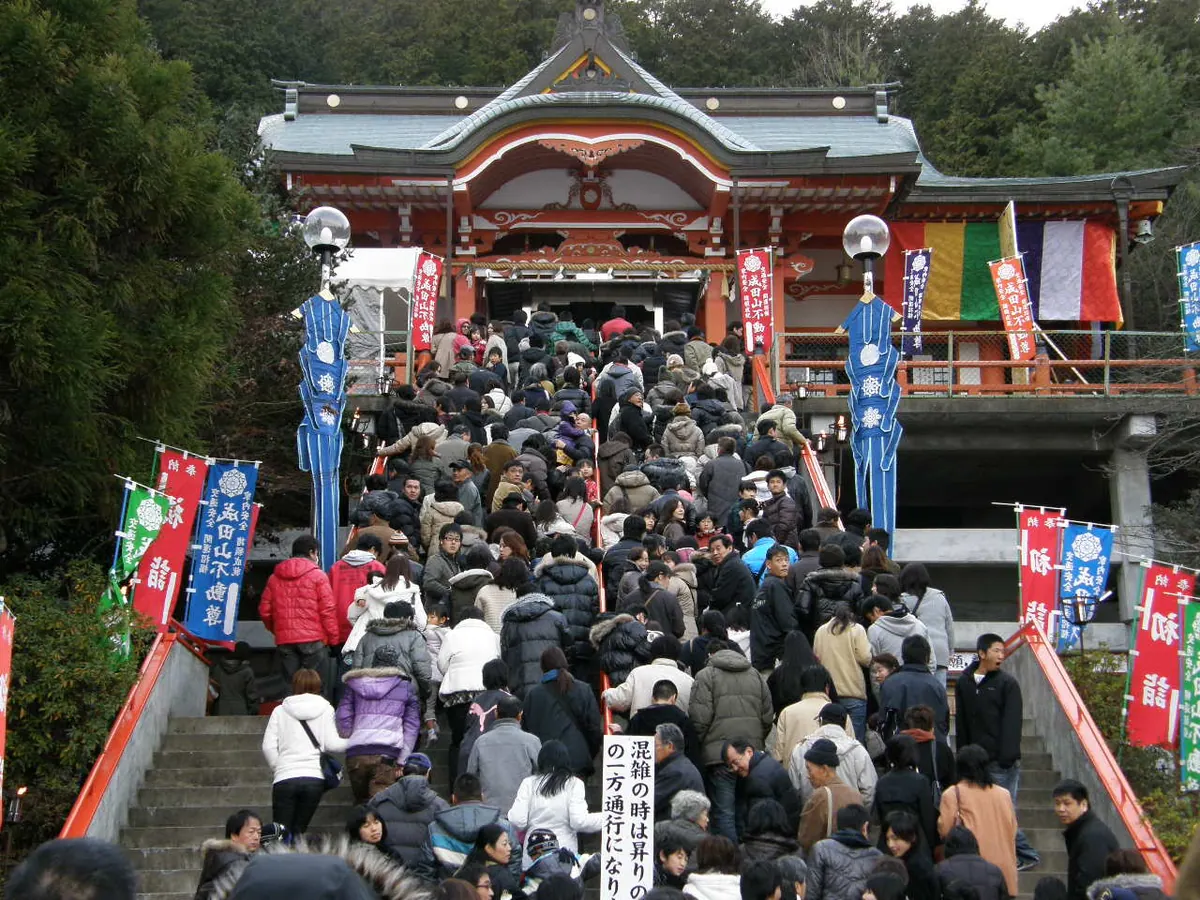
Banshū Naritasan is a unique branch temple with impressive pagodas and statues, worth an hour's visit.
What it is
- A branch temple of Naritasan Shinshō-ji Temple.
- Founded in 1950.
- Commonly known as Banshū Naritasan.
- Main deity is Fudō Myōō.
What to see
- Prototype Fudō Myōō statue.
- 23-meter Shaka Pagoda, modeled after Mahabodhi Temple.
- Wooden Shaka Nyorai statue and Buddha's relics inside the pagoda.
- 21-meter Nepalese-style three-story prayer hall, Hōrin-kaku.
- Standing Fudō Myōō statue in Hōrin-kaku.
- Substitute amulet from Naritasan Shinshō-ji.
Getting there
- 7-minute taxi ride from JR Kakogawa Line Nishiwakishi Station.
- Address
- 兵庫県西脇市小坂町438-2 Map
14
Yakujo-ji Temple
HYōGO · TEMPLE 薬上寺
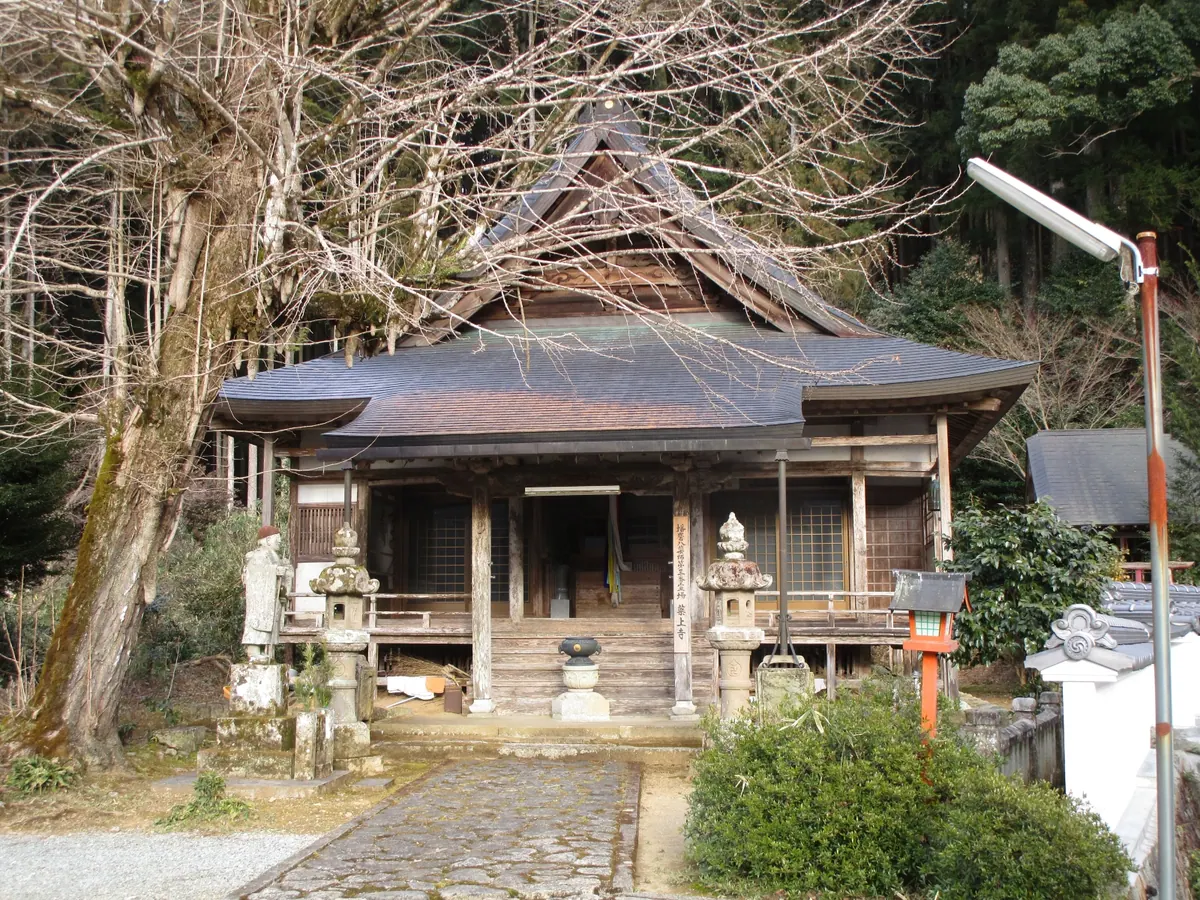
A historic Koyasan Shingon temple in Himeji dedicated to Yakushi Nyorai, known for its ancient healing history and literary connections.
What it is
- A Koyasan Shingon sect temple located on Mount Rokuyasan in Himeji City.
- Dedicated to the deity Yakushi Nyorai and founded by the monk Gyoki.
- The third station of the Harima Eight Yakushi Pilgrimage route.
- Historical writer Takashi Terabayashi once served as the head priest here.
What to see
- The Main Hall which houses a statue of Yakushi Nyorai crafted by Hogen.
- A traditional Sanmon gate marking the entrance to the temple grounds.
- Architecture restored by the monk Daiho during the reign of Ikeda Terumasa.
15
Fumyō-ji Temple
HYōGO · TEMPLE 普明寺 (宝塚市)
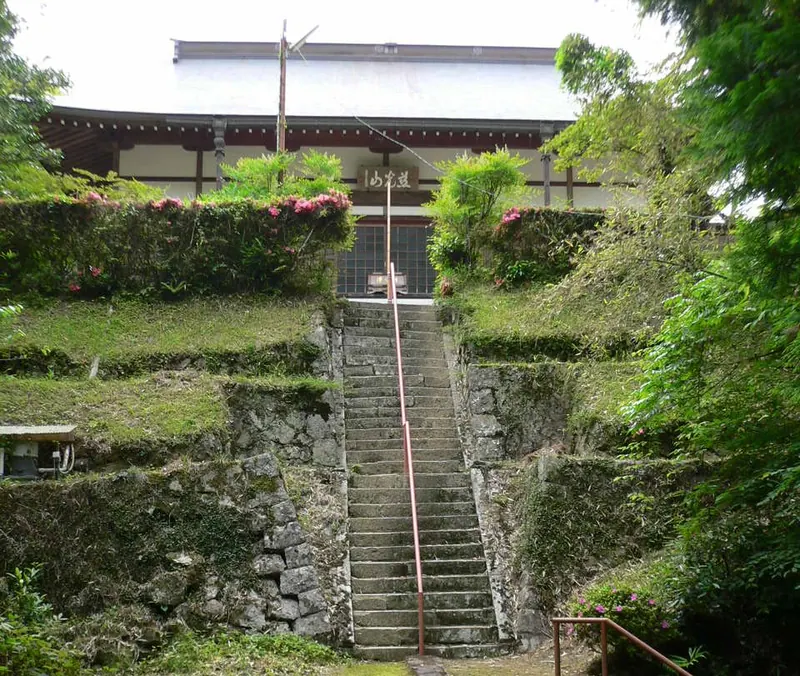
Fumyoji is a historic Soto Zen temple with unique cultural properties and a rainmaking horse skull.
What it is
- A Soto Zen temple in Takarazuka City.
- Founded in the mid-Heian period by Minamoto no Yorihira.
- Originally a Shingon sect temple, later rebuilt as Soto Zen.
- Served as an imperial prayer temple during the Chotoku era.
What to see
- Principal image is Amitabha Nyorai.
- Senju Kannon enshrined on the left side of the main hall.
- Hōkyōintō pagoda is a Prefectural Important Cultural Property.
- Zushi Tobira-e and Kasatoba are City Tangible Cultural Properties.
- A horned horse skull, a temple treasure for rainmaking.
- Address
- 兵庫県宝塚市波豆字向井山1-26 Map
16
Koke-ji Temple
HYōGO · TEMPLE 高家寺
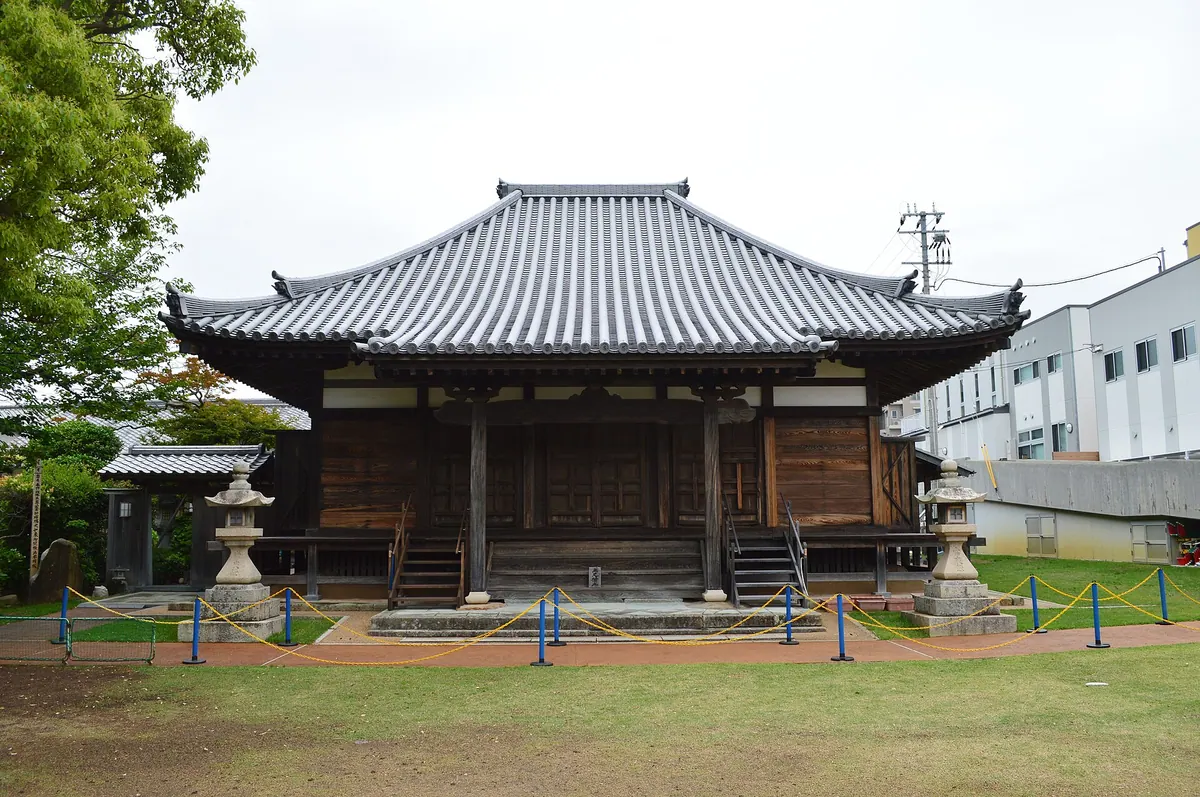
Visit Koke-ji Temple for Akashi City's oldest temple architecture and a historic Hakuho-era site.
What it is
- Tendai sect temple, founded in the late 7th century.
- Main image is Yakushi Nyorai.
- 5th sacred site of Banshu Yakushi.
- Only Hakuho temple in former Akashi County.
What to see
- Main hall built during the Genna era.
- Main hall is Akashi City's oldest temple architecture.
- Main hall is a Hyogo Prefectural Tangible Cultural Property.
- Seated Yakushi Nyorai statue from the late Heian period.
- Taidera廃寺 pagoda site is a Hyogo Prefectural Historic Site.
- Taidera廃寺 site is estimated to be 100 meters square.
- Address
- 兵庫県明石市太寺2丁目10-35 Map
17
Kiyomizu-dera Temple
HYōGO · TEMPLE 清水寺
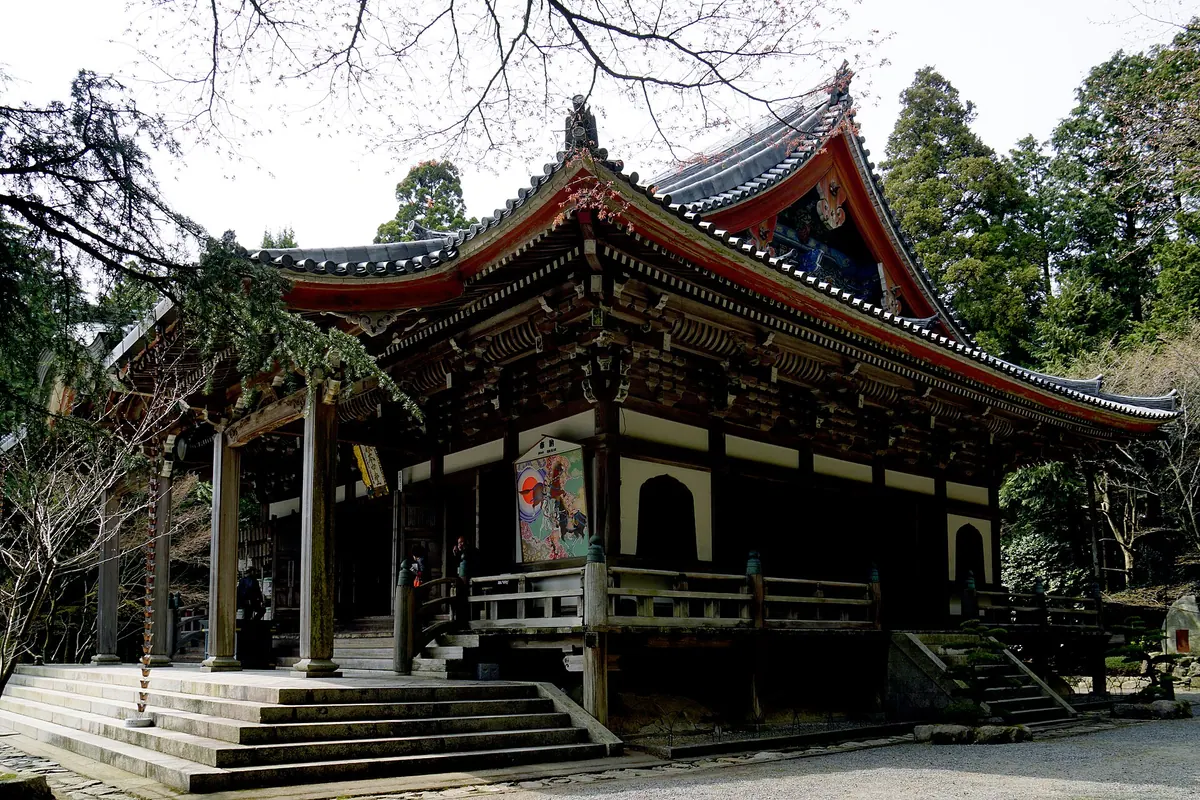
Kiyomizu-dera Temple is a historic Tendai temple, part of the Saigoku Kannon Pilgrimage.
What it is
- Tendai sect temple in Kato City, Hyogo Prefecture.
- Principal image is the Eleven-faced Kannon Bosatsu.
- 25th temple of the Saigoku Kannon Pilgrimage.
- Also known as Banshu Kiyomizu-dera.
What to see
- Konpon Chudo is a Registered Tangible Cultural Property.
- Daikodo is a Registered Tangible Cultural Property.
- Honbo is a Registered Tangible Cultural Property.
- Kyakuden is a Registered Tangible Cultural Property.
- Shoro is a Registered Tangible Cultural Property.
- Two swords are Important Cultural Properties.
- Address
- 兵庫県加東市平木1194 Map
18
Zuihōji Park
HYōGO · TEMPLE 瑞宝寺公園
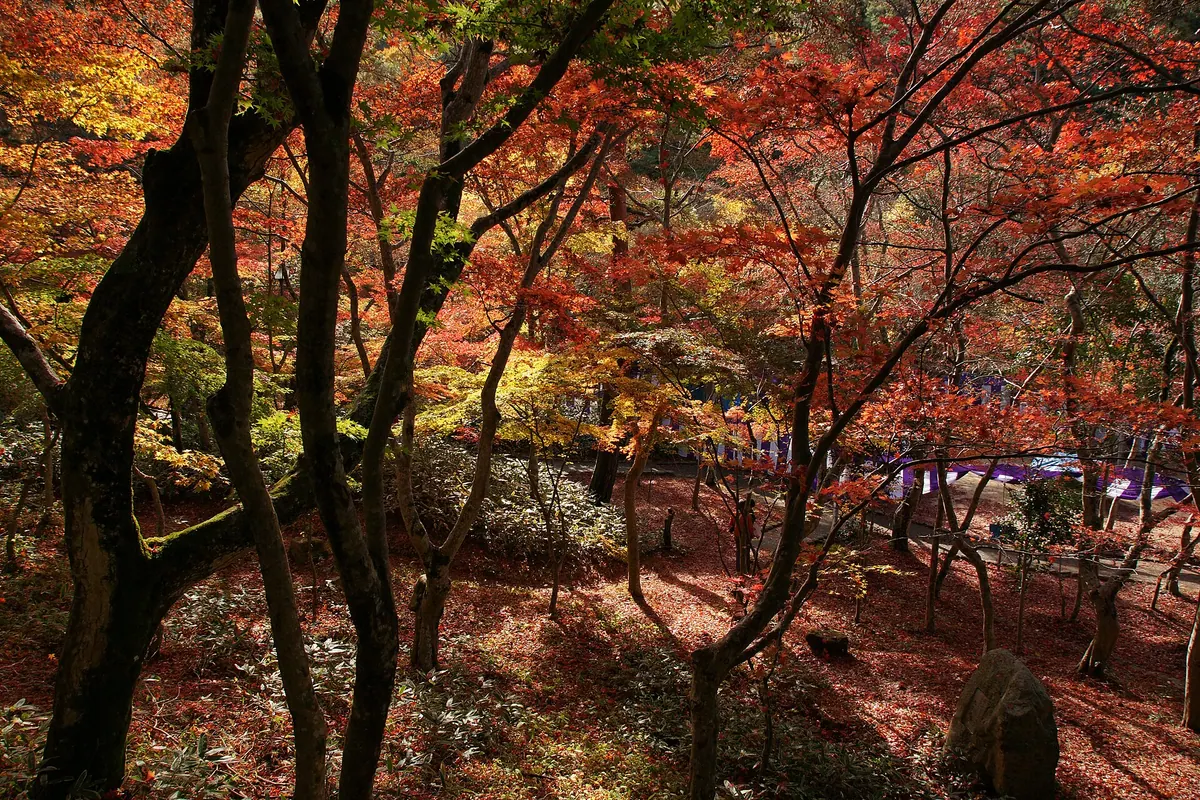
Zuihōji Park offers autumn leaves and historical relics at Arima Onsenkyo's highest point.
What it is
- An urban park in Arima Onsenkyo, Kobe City.
- Developed by Kobe City in 1951.
- Former site of Zuihōji Temple, founded in 1604.
- Located at 500m above sea level.
What to see
- A stone go board used by Toyotomi Hideyoshi.
- Main gate relocated from Fushimi Momoyama Castle.
- A monument with a waka poem.
- Autumn leaves.
When to go
- Known for its autumn leaves.
- Arima Grand Tea Ceremony on November 2nd and 3rd.
Getting there
- 15-minute walk from Arima Onsen Station.
19
Tōkutsu-ji Temple
HYōGO · TEMPLE 東窟寺
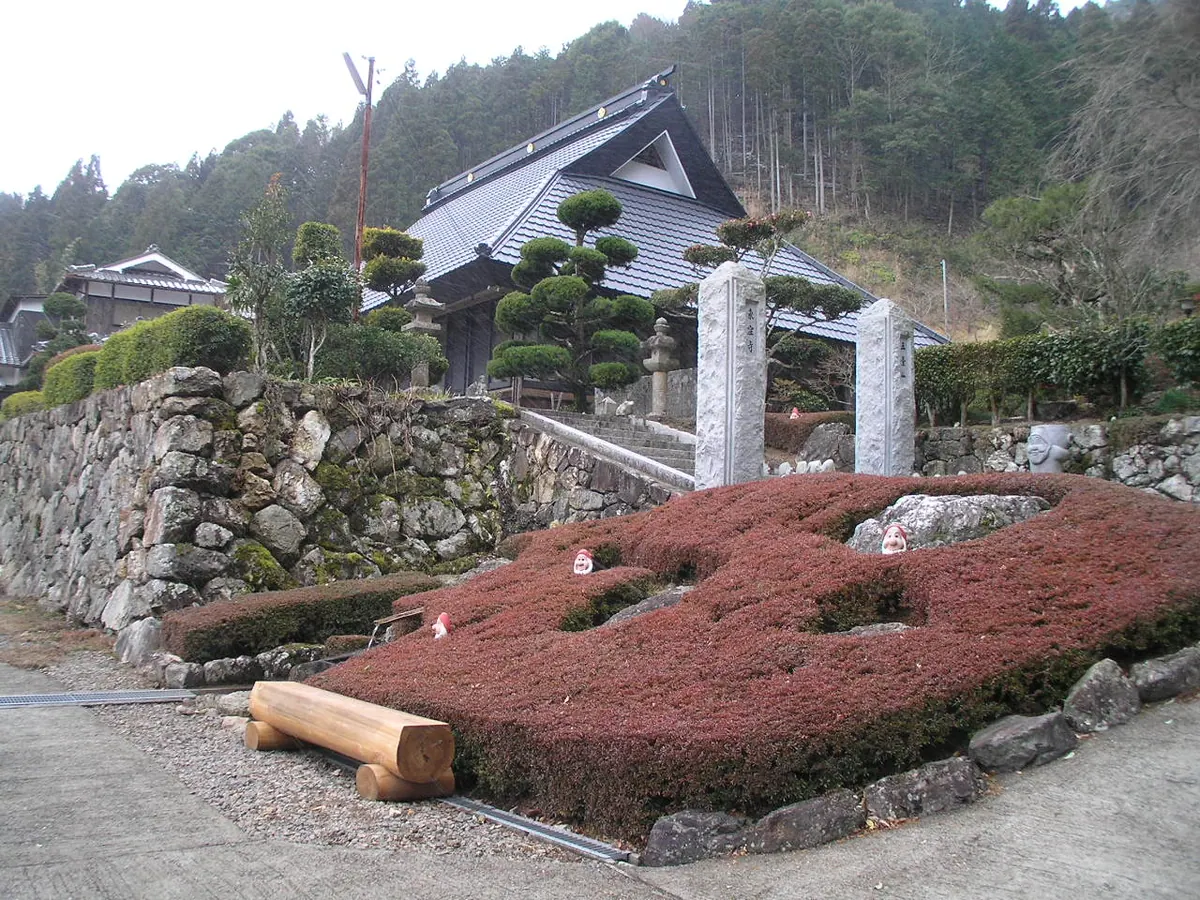
Tōkutsu-ji Temple is a historic Tendai temple with surviving statues and a mountain Kannon.
What it is
- A Tendai sect temple.
- Founded by Hōdō Sennin during the Taika era.
- Served as a prayer place for Sasayama Castle lords.
- Once had 49 sub-temples and seven main halls.
What to see
- Eleven-faced Kannon, Fudō Myōō, Bishamonten, Yakushi Nyorai statues.
- Bishamonten enshrined in the Bishamondo hall.
- Ebisu enshrined in the Ebisudo hall.
- Iwaya Kannon about 600m up from the main hall.
- Tsugomori Kannon statue at Iwaya Kannon.
When to go
- Daihannya-e prayer festival on February 11th.
- Address
- 兵庫県丹波篠山市藤岡奥161-4 Map
20
Enju-ji Temple
HYōGO · TEMPLE 延寿寺
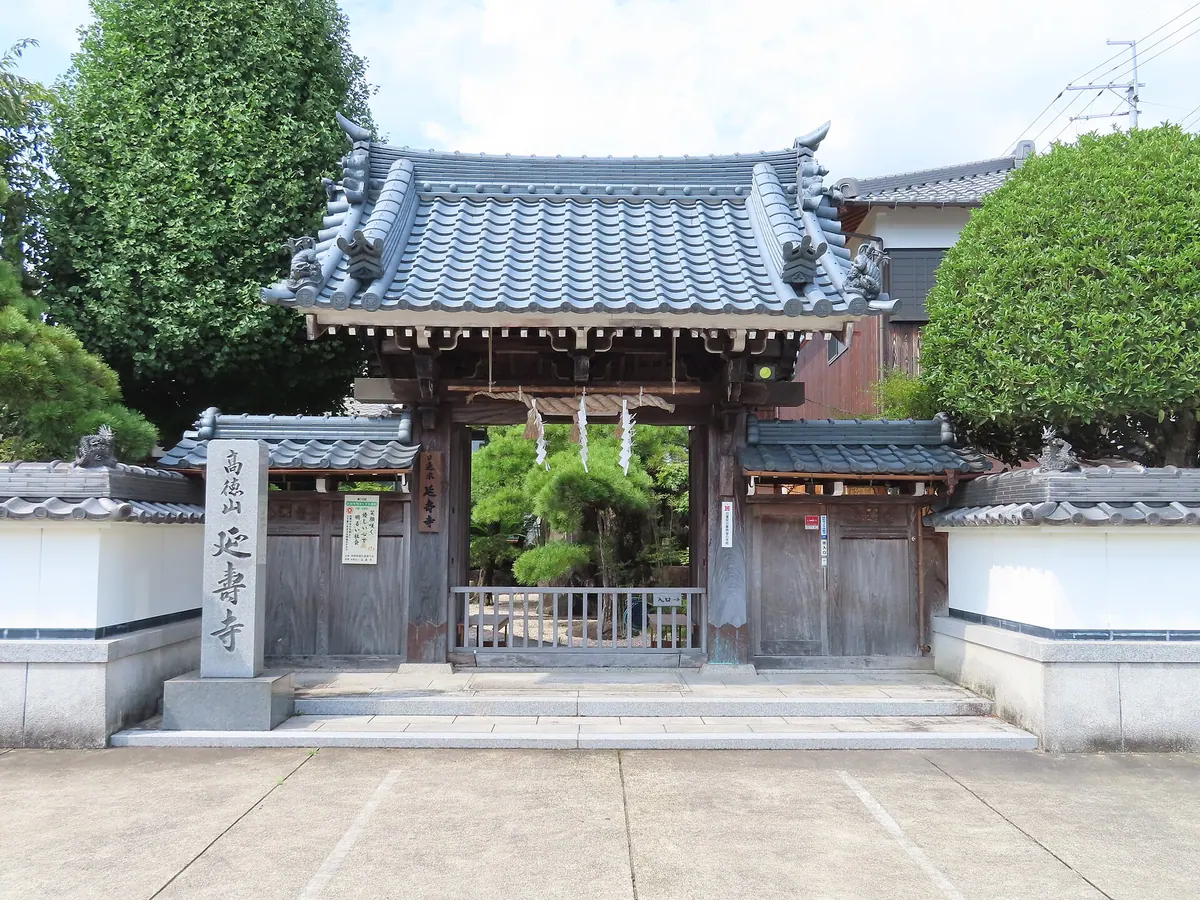
Enju-ji Temple is a modern Nichiren Buddhist temple with a unique history.
What it is
- A Nichiren Buddhist temple.
- Founded on March 14, 1942.
- Established as Kotokusan Enju-ji Temple.
- Its founder was Shinsenin Kanpo Nichijo Koji.
What to see
- A stupa built in 1930.
- The main hall, completed in 1935.
- The priest's living quarters, completed in 1935.
- The temple gate, completed in 1941.
- An earthen wall, completed in 1941.
Getting there
- 20-minute walk from Tsurui Station on the JR Bantan Line.
- One minute from Ichikawa-Kita Interchange on Bantan Renraku Expressway.
- Address
- 兵庫県神崎郡市川町沢286-1 Map