

20 Temples in Tokushima worth your time
Japan Gems
Tokushima Prefecture has 141 temples, including 和泉寺 and Saiden-ji Temple. Many are part of the Shikoku Pilgrimage, offering a spiritual journey.
Tokushima has 143 temples on Japan Gems. Below are the 20 we can tell you the most about — each one written up in English from Japanese sources, with what to see and how to get there. See all temples in Tokushima.
01
Tokuen-ji Temple
TOKUSHIMA · TEMPLE 徳円寺 (佐那河内村)
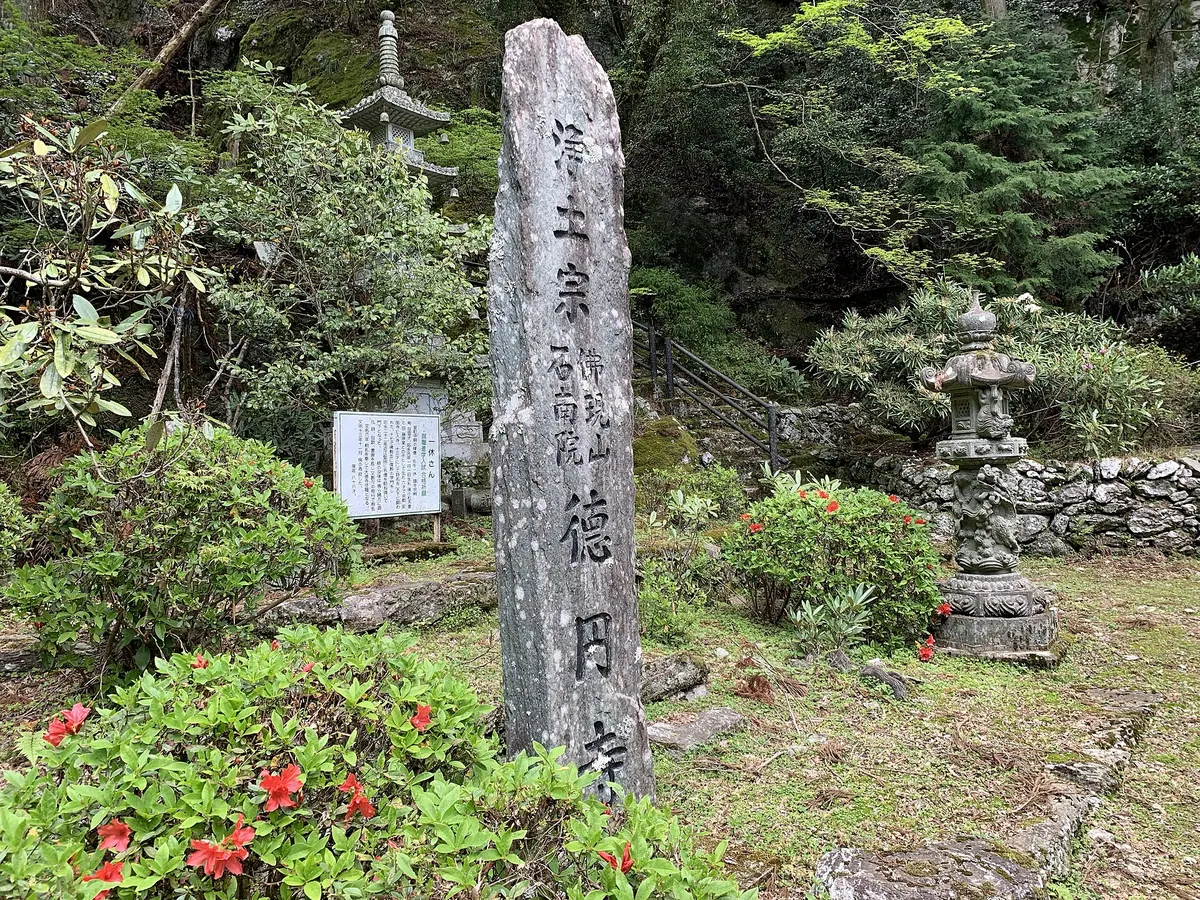
A high-altitude Jodo sect temple in a natural park, famous for its ancient wild rhododendrons blooming in late spring.
What it is
- A Jodo sect temple founded in 1824 by Priest Tokuen.
- Located at an elevation of 700 meters within Higashiyama-kei Prefectural Natural Park.
- Built through the cooperation of local believers during the Bunsei era.
- Situated near the upper reaches of the Saga River in Sanagochi Village.
What to see
- Hundreds of wild rhododendrons growing across the temple grounds.
- Ancient rhododendron trees that are over 120 years old.
- Scenic views from the temple's high-altitude location in the natural park.
When to go
- Late April to early May to see the rhododendrons in bloom.
Getting there
- A 40-minute drive from JR Tokushima Station.
- Located 50 minutes by car from the Tokushima Interchange.
02
Myōō-in Temple
TOKUSHIMA · TEMPLE 明王院
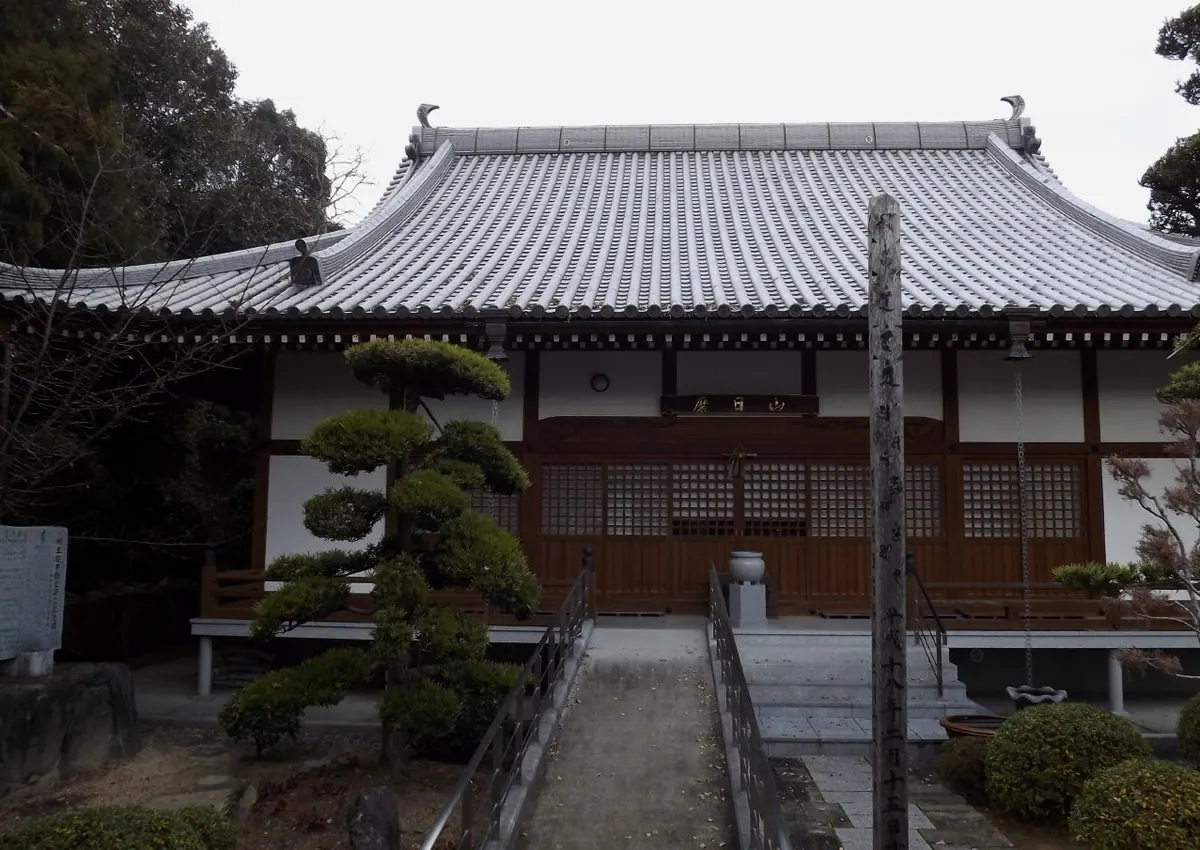
A historic Shingon Buddhist temple founded by Kukai, serving as the second stop on the Shikoku 36 Fudo Pilgrimage.
What it is
- A temple of the Koyasan Shingon sect founded by Kukai around 830 AD.
- Dedicated to the deities Fudo Myoo and Amida Nyorai.
- The second station of the Shikoku 36 Fudo Pilgrimage.
- Rebuilt in 1622 after a flood destroyed the original buildings in 1543.
What to see
- The main hall and a traditional bell tower gate.
- A Fudo Myoo statue nicknamed Nezumi Fudo.
- Several varieties of cherry blossoms that bloom across the grounds.
When to go
- Springtime is ideal to see the various cherry blossoms in bloom.
Getting there
- The temple is located approximately 5.5 kilometers from Gaku Station.
03
Ganshō-ji Temple (Tokushima)
TOKUSHIMA · TEMPLE 願成寺 (徳島市)
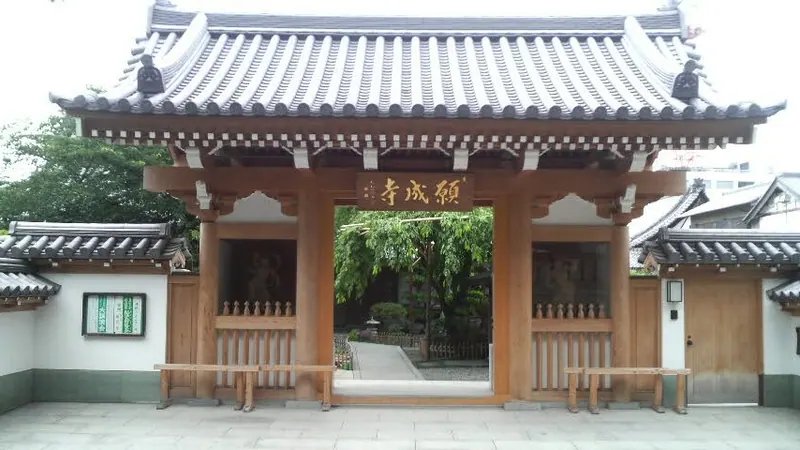
Ganshō-ji Temple offers a serene escape with unique statues and beautiful cherry blossoms.
What it is
- A Shingon-shu Omuro-ha Buddhist temple.
- Dedicated to Fudō Myōō, its principal image.
- The 10th temple of the Tokushima 24 Jizo Sacred Sites.
- A Daikokuten site of the Tokushima Seven Lucky Gods.
What to see
- A Daikoku-do hall at the temple entrance.
- Daikoku enshrined in the main hall's left section.
- A stone Fudō Myōō statue past the Niōmon gate.
When to go
- Known for its beautiful cherry blossoms.
Getting there
- 10-minute walk from JR Tokushima Station.
- 10-minute drive from Tokushima Interchange.
- Address
- 徳島県徳島市寺町86 Map
04
Senpuku-ji Temple
TOKUSHIMA · TEMPLE 千福寺
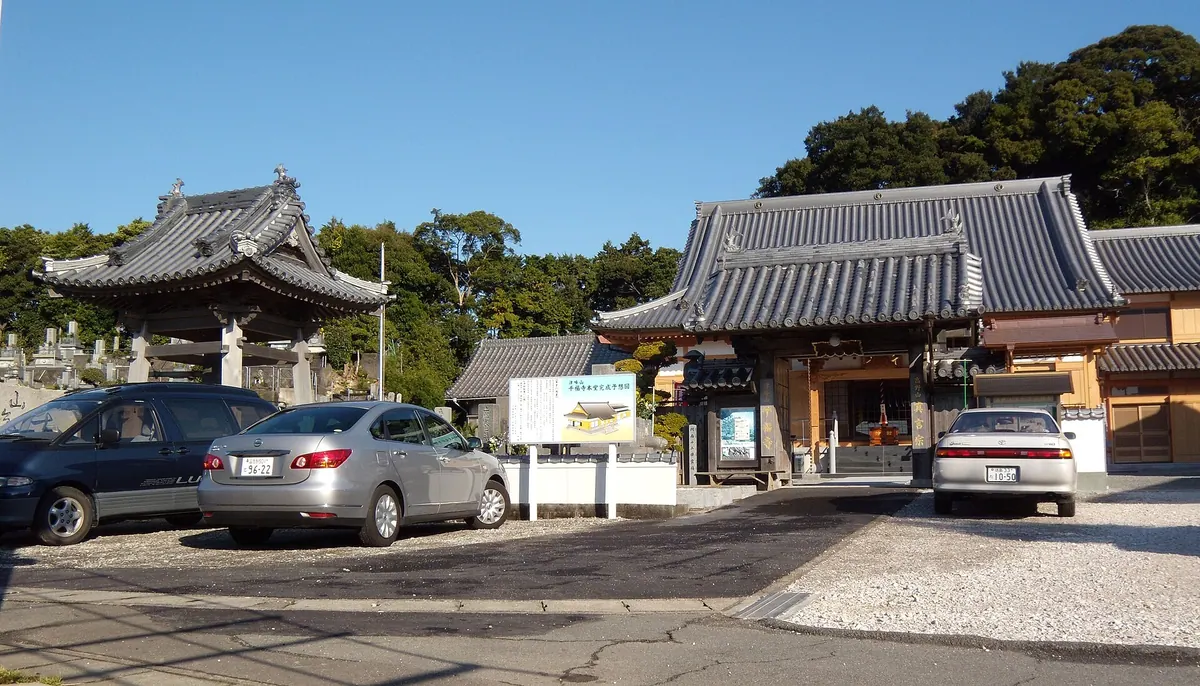
Senpukuji is a historic temple founded in 724, housing unique statues and treasures.
What it is
- Koyasan Shingon sect temple.
- Founded in 724 by Gyoki.
- Main hall and priest's quarters rebuilt in 2009.
What to see
- Hidden statue of Yakushi Nyorai is the main image.
- Statues of Fudo Myoo and Kobo Daishi are enshrined.
- Torii gate enshrined on the main hall altar.
- Kannon-do hall houses Sho Kannon Bosatsu, Kobo Daishi, Jizo Bosatsu.
- Seven Lucky Gods boat and Mandala stone in front of Kannon-do.
- Storehouse holds a 1788 bronze jaw and Edo period copper mirror.
Getting there
- 0.4km from Minobayashi Station.
- Address
- 徳島県阿南市見能林町寺ノ前4 Map
05
Unpen-ji Temple
TOKUSHIMA · TEMPLE 雲辺寺
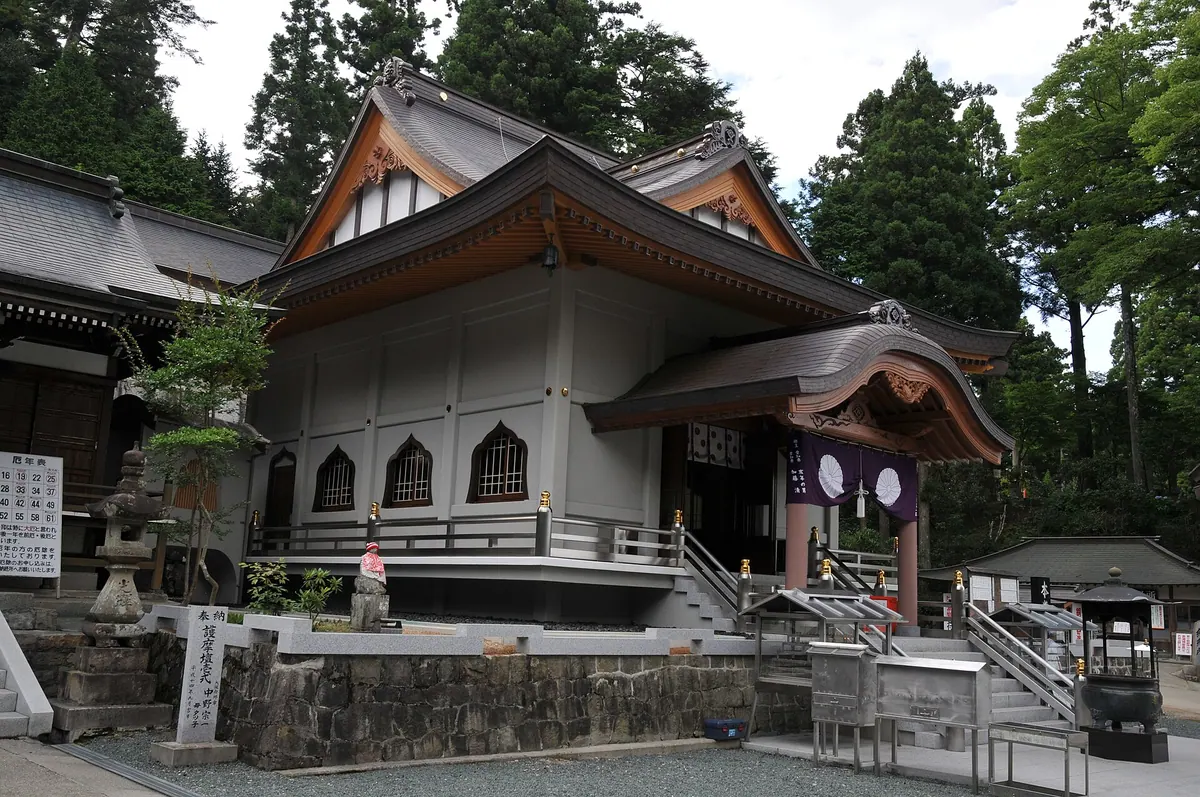
Unpen-ji Temple, founded by Kukai, is the highest temple on the Shikoku Pilgrimage.
What it is
- Shingon-shu Omuro-ha temple.
- 66th temple of the Shikoku 88 Pilgrimage.
- 21st temple of the Awa Saigoku 33 Kannon Pilgrimage.
- Founded by Kukai in 789.
What to see
- Main deity is Senju Kannon Bosatsu.
- Current main deity from late Heian period.
- Main hall completed in 2009.
- Important cultural properties include wooden statues.
- A painted scroll is an important cultural property.
- Historic Awa Henro Road section.
Getting there
- Near the summit of Mt. Unpen-ji.
- Connected by Unpen-ji Ropeway since 1987.
- Address
- 徳島県三好市池田町白地ノロウチ763-2 Map
06
Jifuku-ji Temple
TOKUSHIMA · TEMPLE 地福寺 (徳島県石井町)
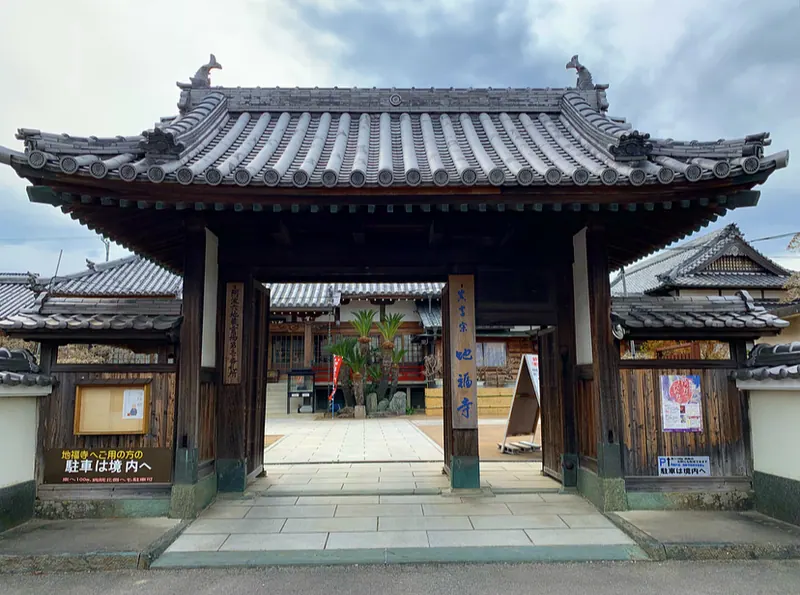
Jifuku-ji Temple offers a peaceful visit to see historic wisteria trees and a Jizo Bosatsu statue.
What it is
- A Shingon-shu Daikaku-ji school temple.
- Dedicated to Jizo Bosatsu, its principal image.
- Founded by Yuchi Shonin during the Keicho era (1596-1615).
- It is an Awa Rokujizo Reijo (Migarajizo).
What to see
- Purple wisteria tree planted during the Kansei era (1789-1801).
- White wisteria added by Shohto Shonin in 1897.
- See both purple and white wisteria trees.
When to go
- Wisteria festival from mid-April to early May.
Getting there
- 5-minute walk from JR Tokushima Line Ishii Station.
- Address
- 徳島県名西郡石井町石井字石井321番地 Map
07
Chokoku-ji Temple
TOKUSHIMA · TEMPLE 長谷寺
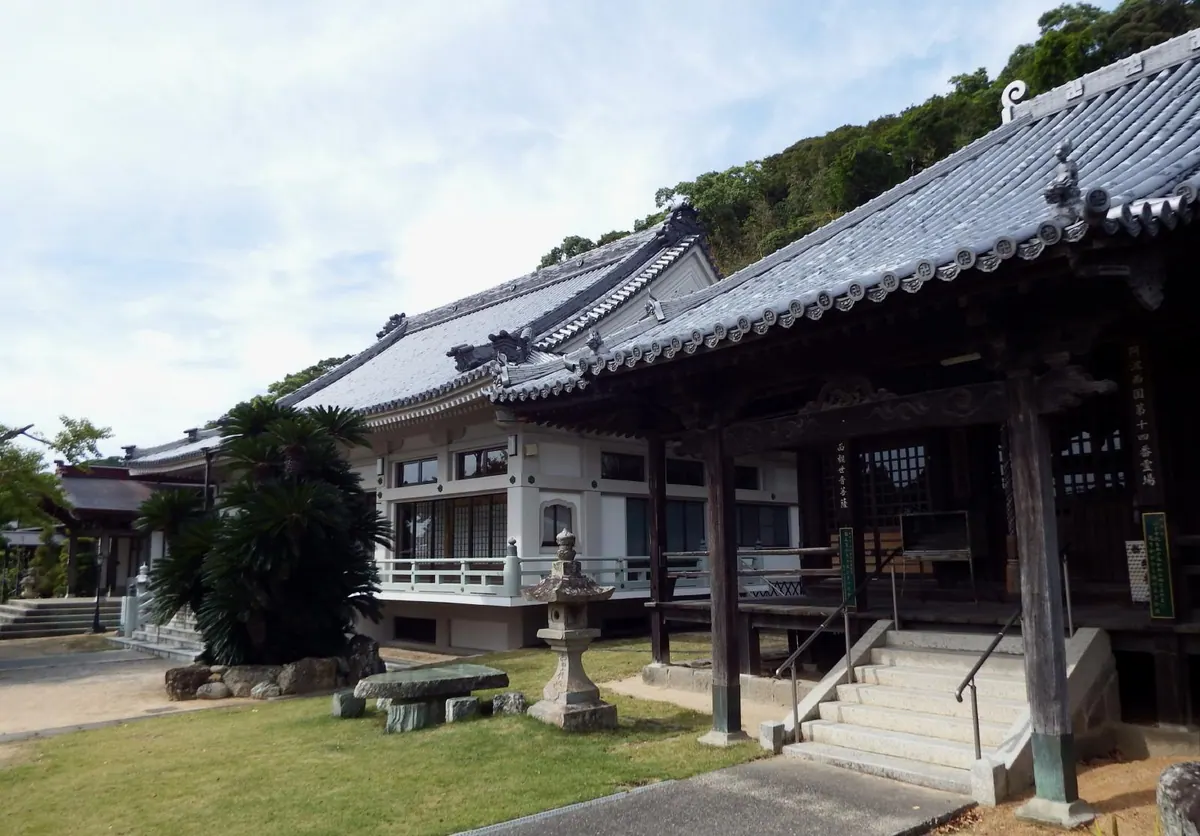
Chokoku-ji Temple, founded in 1480, offers a glimpse into Japanese religious history and unique architecture.
What it is
- Koyasan Shingon sect temple, founded in 1480.
- Dedicated to the Eleven-faced Kannon Bosatsu.
- The 2nd Fudasho of New Shikoku Mandala Sacred Sites.
- The 19th Fudasho of Awa Hokurei Yakushi Sacred Sites.
What to see
- Main hall, rebuilt in 1601.
- Nio and Shitenno statues inside the main hall.
- Bell tower with Hakamagoshi-zukuri style.
- Ginkgo tree, designated a natural monument.
- Two documents designated as cultural properties.
Getting there
- 80 meters from Konpira-mae Station on the JR Naruto Line.
- Address
- 徳島県鳴門市撫養町木津1037-1 Map
08
Ganshō-ji Temple
TOKUSHIMA · TEMPLE 願勝寺
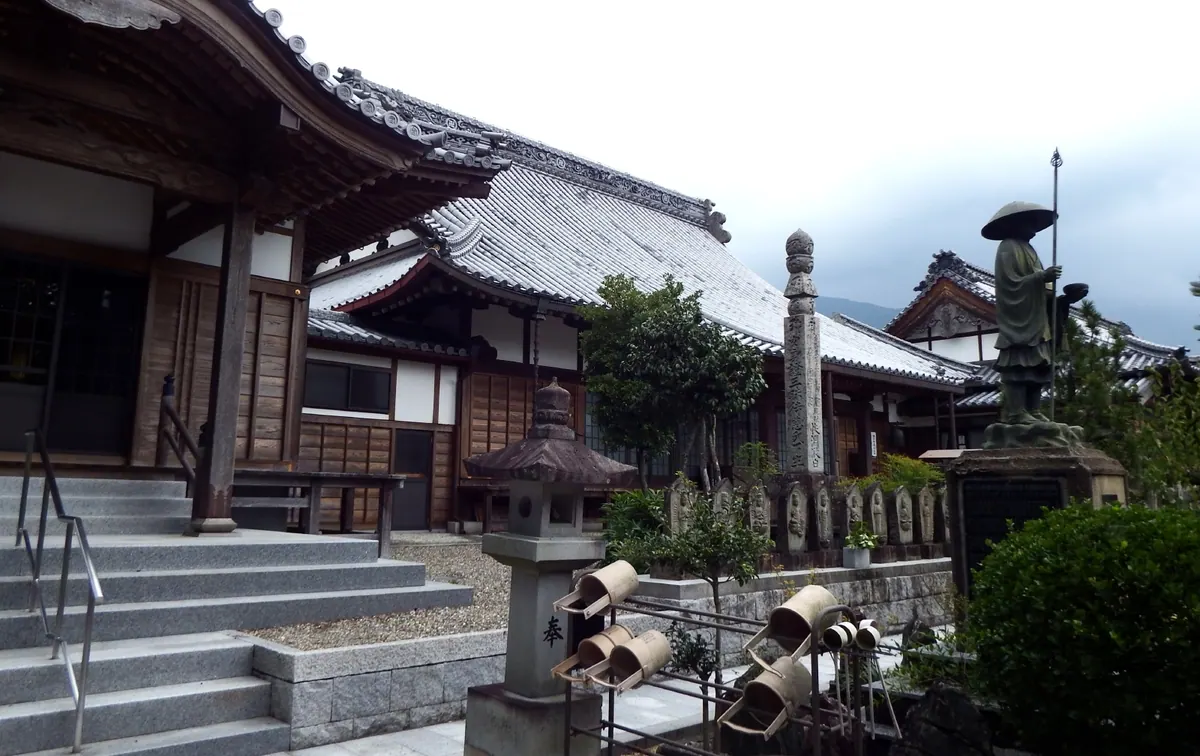
Ganshoji is a historic temple with a beautiful garden and important cultural properties.
What it is
- It is a Shingon-shu Omuro-ha temple.
- The main deity is an Amida Nyorai statue.
- It is the 68th Fudasho of the New Shikoku Mandala Pilgrimage.
- It is the 30th Fudasho of the Awa Saigoku Sanjusankannon Pilgrimage.
What to see
- The temple gate is a Registered Tangible Cultural Property.
- The temple gate dates from the Meiji period.
- The garden is a Prefectural Designated Place of Scenic Beauty.
- The garden dates from the Muromachi period.
Getting there
- About 5 minutes by car from Mima Interchange.
- Address
- 徳島県美馬市美馬町願勝寺8 Map
09
Hōrin-ji Temple
TOKUSHIMA · TEMPLE 法輪寺
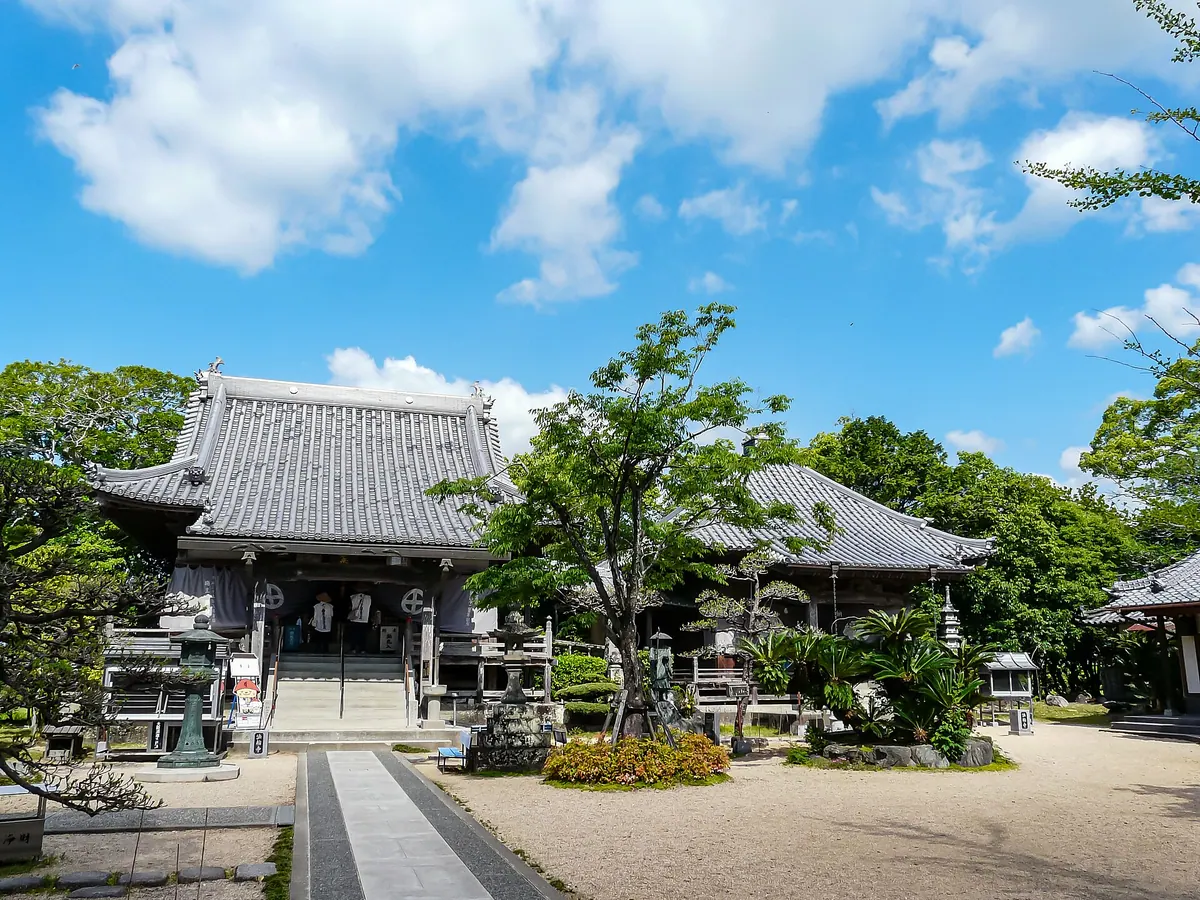
Hōrin-ji Temple is a historic pilgrimage site with a unique reclining Buddha statue.
What it is
- A Kōyasan Shingon sect Buddhist temple.
- Founded by Kūkai, who carved its main image.
- The 9th temple on the Shikoku 88-temple pilgrimage.
- Rebuilt multiple times after fires, most recently in Meiji era.
What to see
- The principal image: Nirvana Shaka Nyorai, a reclining Buddha.
- The Sanmon gate, also known as Niōmon.
- The bell tower, which survived an 1859 fire.
- The main hall, rebuilt during the Meiji era.
When to go
- February 15th, to see the principal image displayed.
- Address
- 徳島県阿波市土成町土成字田中198-2 Map
10
Jinkō-ji Temple
TOKUSHIMA · TEMPLE 神光寺
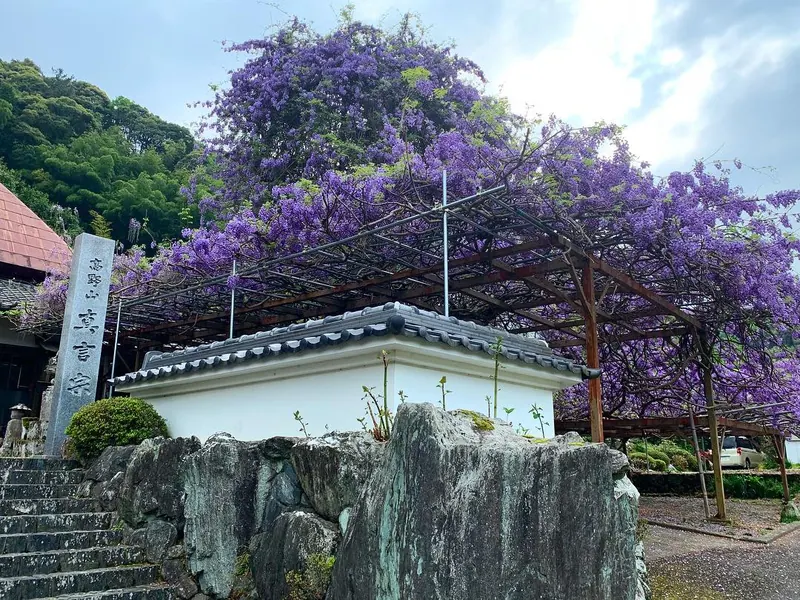
Jinkoji Temple offers a unique wisteria display, making it a worthwhile stop in spring.
What it is
- A Koyasan Shingon sect temple.
- Its Sango is Oniimesan.
What to see
- Wisteria flowers bloom from mid to late April.
- Wisteria wraps around a 15-meter-high iron fence.
- The wisteria is called Noborifuji.
When to go
- Mid to late April for wisteria flowers.
Getting there
- 45 minutes by car from JR Tokushima Station.
- 50 minutes by car from Itano Interchange.
- 50 minutes by car from Aizumi Interchange.
- Parking lot adjacent to the temple grounds.
- Address
- 徳島県名西郡神山町鬼籠野字喜来435 Map
11
Wasen-ji Temple
TOKUSHIMA · TEMPLE 和泉寺
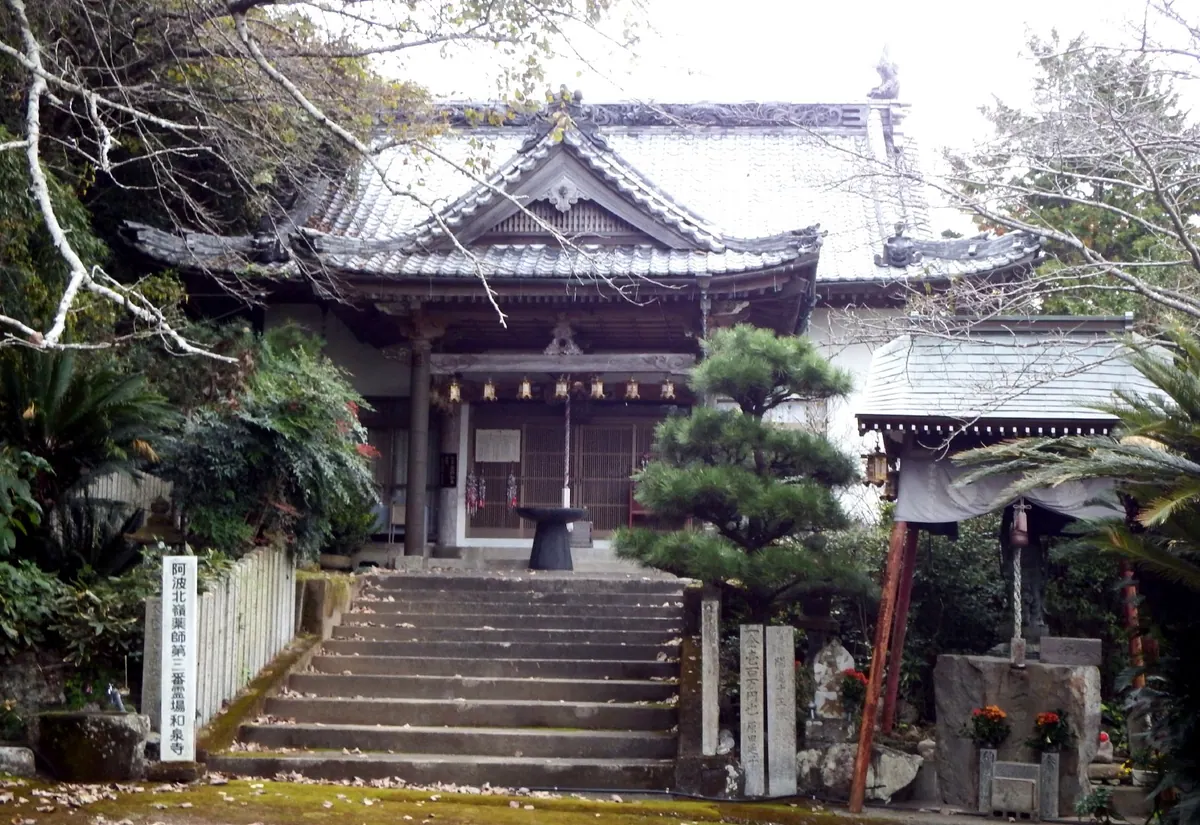
Ancient temple founded in the 8th century, home to significant Buddhist statues and pilgrimage routes.
What it is
- Koyasan Shingon sect temple, founded in the Tenpyo era (729-749).
- Principal image is the Eleven-faced Kannon Bosatsu, created by Gyoki.
- Kukai performed Shingon rituals here.
- Part of two pilgrimage routes: Awa Saigoku and Awa Hokurei Yakushi.
What to see
- Main hall enshrines Eleven-faced Kannon and Yakushi Nyorai.
- Kannon stone statue stands in front of the main hall.
Getting there
- About 20 minutes by car from Tokushima Expressway interchanges.
- Address
- 徳島県板野郡上板町泉谷字寺ノ下4 Map
12
Myōō-ji Temple (Tokushima)
TOKUSHIMA · TEMPLE 明王寺 (徳島市)
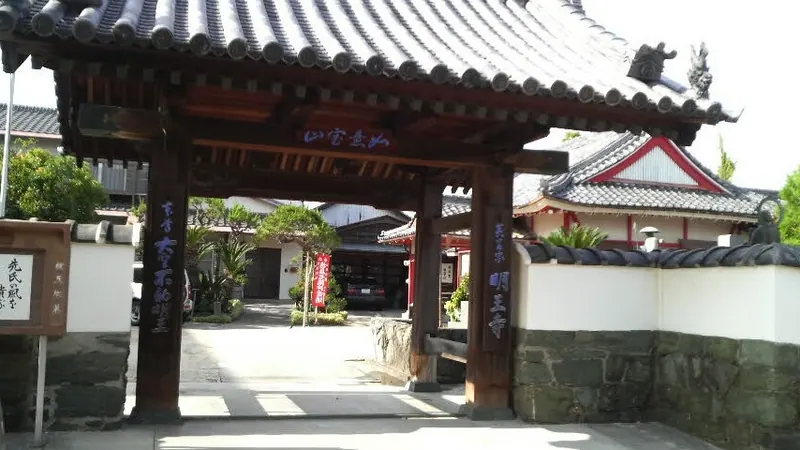
A Kōyasan Shingon-shu temple in Tokushima with a Jizō Bodhisattva made by Kūkai.
What it is
- A Kōyasan Shingon-shu temple.
- The principal image is Dainichi Nyorai.
- It is the 20th Fudasho of Tokushima 24 Jizō Sacred Sites.
- It is the Hotei-son of Tokushima Seven Lucky Gods Sacred Sites.
What to see
- A Jizō Bodhisattva in the precincts.
- The Jizō Bodhisattva was made by Kūkai.
- The Jizō Bodhisattva is called Shikubi Jizō.
Getting there
- 15 minutes walk from JR Tokushima Station.
- 10 minutes by car from Tokushima Interchange.
- Address
- 徳島県徳島市中前川町2丁目21 Map
13
Kuninaka-ji Temple
TOKUSHIMA · TEMPLE 國中寺
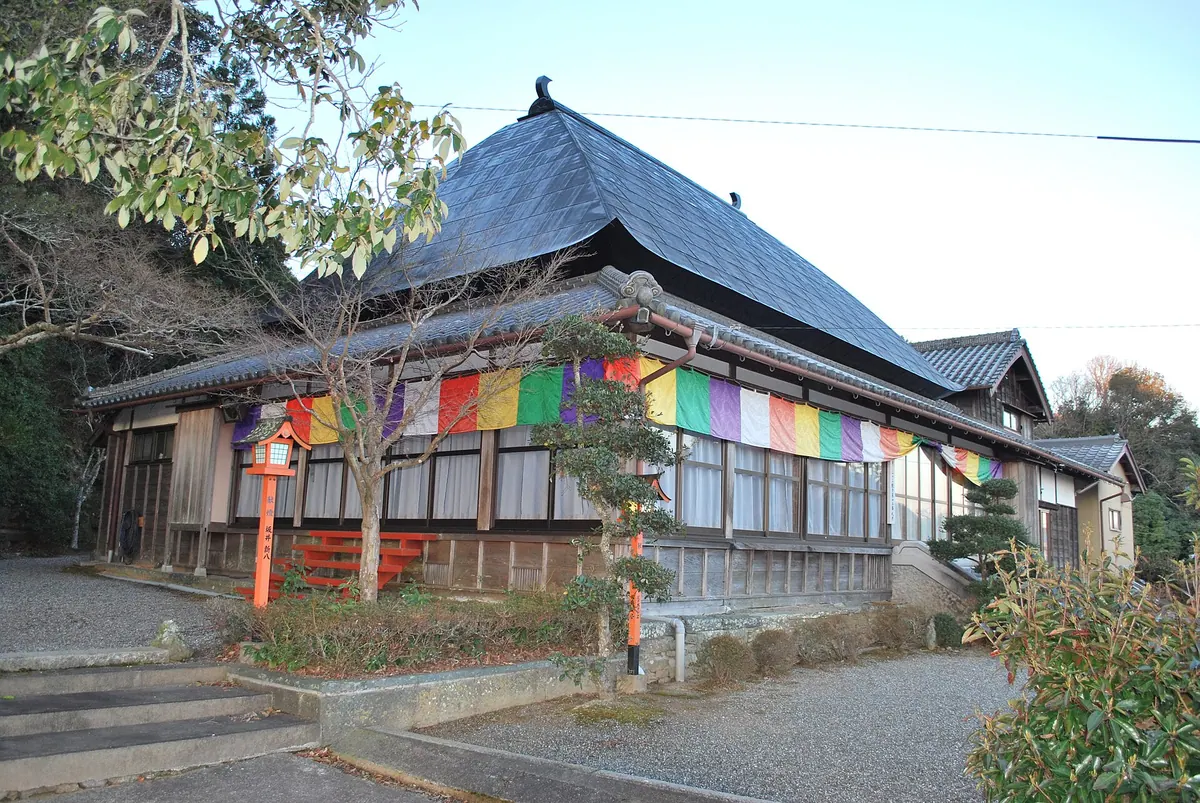
This Shingon temple offers unique spiritual significance and a historic shrine.
What it is
- A Shingon sect temple, mountain name Nyoizan.
- Main deities are Namikiri Fudo Myoo and Yugi Kannon.
- 13th Daitaiji Shin-oku-no-in of Shikoku 88 Pilgrimage.
- 13th sacred site of the Boke-fuji 33 Kannon Pilgrimage.
What to see
- Namikiri Fudo Myoo, known for maritime safety.
- Kuninaka Shrine, founded before the Heian period.
Getting there
- About 30 minutes by car from Tokushima Interchange.
- About 10 minutes by car from JR Fuchu Station.
- Address
- 徳島県徳島市一宮町東丁191 Map
14
Jūraku-ji Temple
TOKUSHIMA · TEMPLE 十楽寺
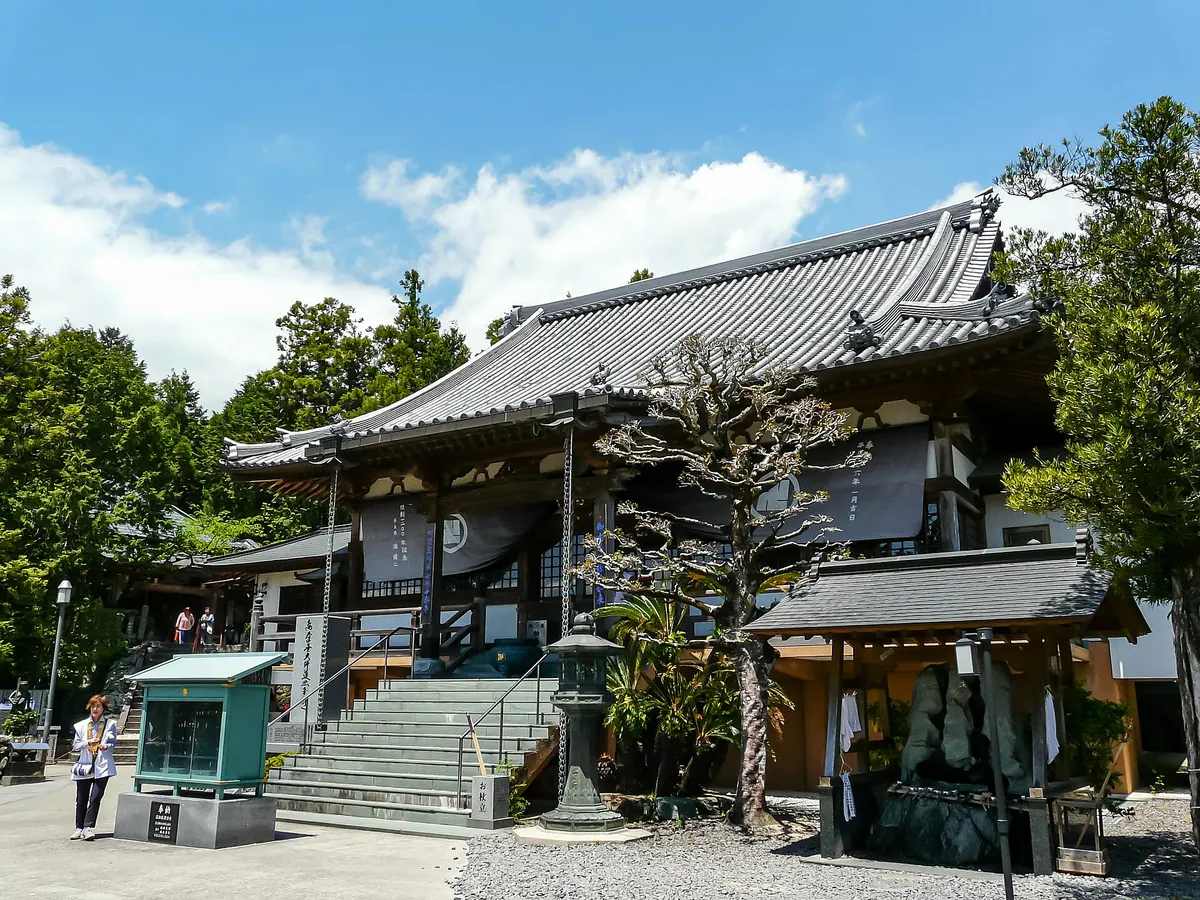
Jūraku-ji Temple is a significant pilgrimage site with ancient Buddhist statues and a unique healing hall.
What it is
- A Kōyasan Shingon sect Buddhist temple.
- Formal names are Kōmyōzan and Renge-in.
- Dedicated to Amitābha Tathāgata.
- The 7th temple of the Shikoku 88-temple pilgrimage.
What to see
- Main image and two bodhisattvas from Kamakura period.
- Kūkai enshrined an Amitābha image carved from camphor wood.
- The main hall was constructed in 1994.
- The Chūmon's upper floor is the Aizen-dō hall.
- The Jiganjissokusaichizō is known for healing eye diseases.
- Address
- 徳島県阿波市土成町高尾字法教田58 Map
15
Kōsen-ji Temple
TOKUSHIMA · TEMPLE 光仙寺
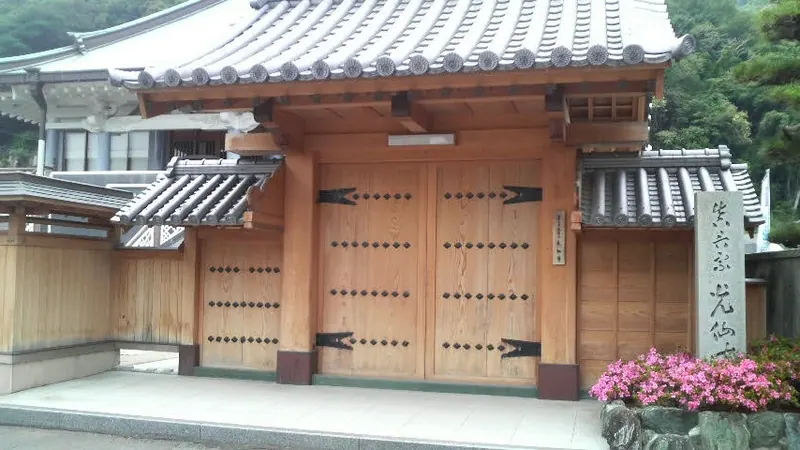
Kōsen-ji Temple is a modern pilgrimage site with unique architecture, worth visiting for its distinct style.
What it is
- The 32nd fudasho of the Awa Chichibu Kannon Pilgrimage.
- The Bishamonten of the Tokushima Shichifukujin Pilgrimage.
- A Shingon-shu Omuro-ha temple.
- Located at the foot of Mount Bizan.
What to see
- The new sanmon connecting the Bishamondo with a board fence.
- The modern Bishamondo hall.
- The Bishamondo's yosemune-zukuri style.
- A garage under the Bishamondo's floor.
Getting there
- 17 minutes walk from JR Nikenya Station.
- Address
- 徳島県徳島市伊賀町4-17 Map
16
Kannon-ji Temple
TOKUSHIMA · TEMPLE 観音寺 (徳島市勢見町)
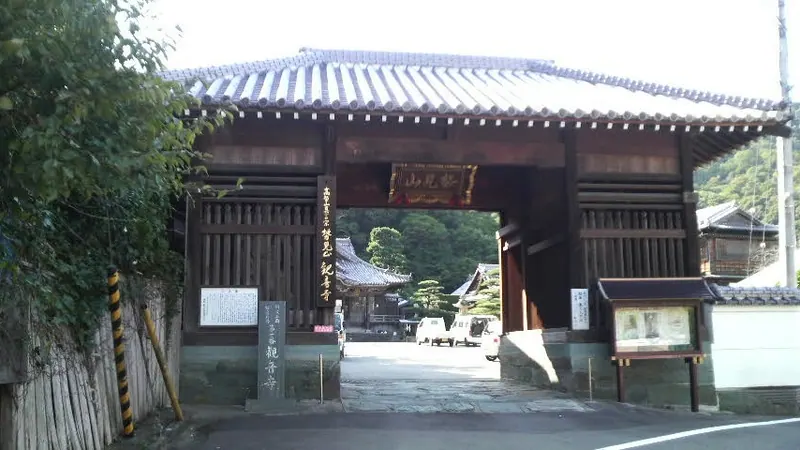
Kannon-ji is a historic temple with a beautiful garden, relocated in 1616.
What it is
- A Koyasan Shingon sect temple.
- Its mountain name is Semiyama.
- The principal image is Senju Kannon.
- Relocated in 1616 by Hachisuka Iemasa.
What to see
- The main hall, a tangible cultural property.
- Main hall architecture is Gongen-zukuri style.
- Kannon-ji Shoin Garden, a designated scenic spot.
- The garden is Chisen-kansho-shiki style.
Getting there
- Take a bus to Kotohira-mae stop.
- Walk 5 minutes from the bus stop.
- Address
- 徳島県徳島市勢見町2丁目19 Map
17
Myōō-ji Temple
TOKUSHIMA · TEMPLE 明王寺 (徳島県神山町)
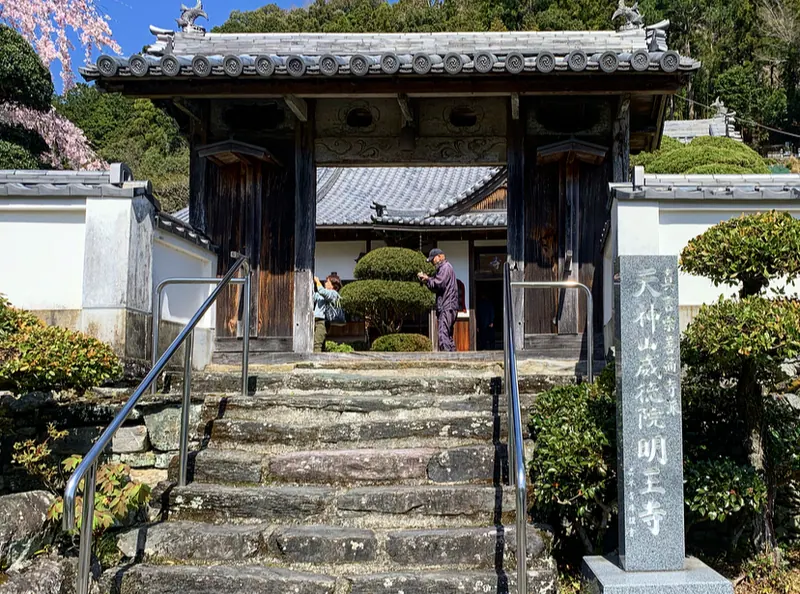
Myōō-ji Temple offers ancient weeping cherry trees and a vibrant spring festival.
What it is
- A Shingon-shu Zentsuji-ha Buddhist temple.
- Its Sango is Tenjin-zan.
- Its Ingo is Itoku-in.
- Dedicated to Fudō Myōō, the principal image.
What to see
- Two ancient weeping cherry trees.
- Trees are 100 and 80 years old.
When to go
- Late March to early April for cherry blossoms.
- Annual weeping cherry blossom festival.
- Festival features Awa Jōruri puppet theater.
- Festival includes music, mochi pounding, and sales.
- Address
- 徳島県名西郡神山町下分東寺56 Map
18
Jiko-ji Temple
TOKUSHIMA · TEMPLE 慈光寺 (徳島市)
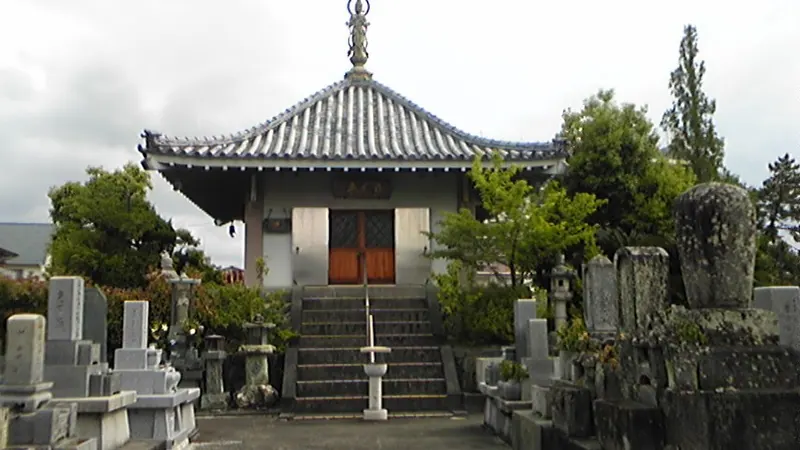
Jiko-ji Temple is a historic Rinzai Buddhist temple, serving as a pilgrimage site and family gravesite.
What it is
- A Rinzai sect Myoshin-ji school temple.
- The 25th fudasho of the Awa Chichibu Kannon Pilgrimage.
- Founded by Hachisuka Yoshishige.
- Became the bodaijo for Yoshishige's mother, Jikoin.
What to see
- Graves of Chikamatsu Yukishige.
- Graves of Okuda Yukitaka's parents.
Getting there
- 22-minute walk from JR Tokushima Station.
- In front of Fukushima Elementary School bus stop.
- Bus stop is on the Okisu, Suehiro Ferry line.
- Address
- 徳島県徳島市福島1-10-73 Map
19
Saimyo-ji Temple
TOKUSHIMA · TEMPLE 最明寺 (美馬市)
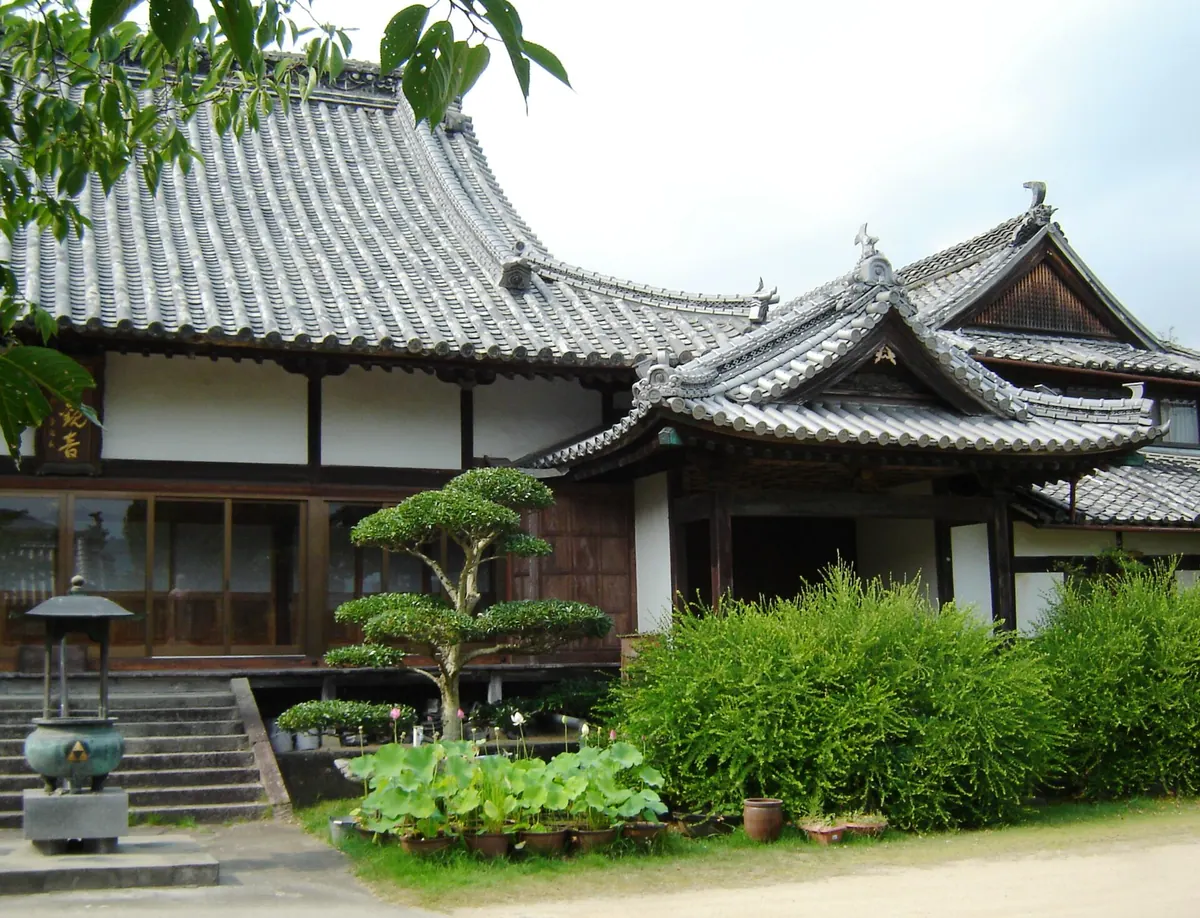
Saimyo-ji Temple, founded in the 8th century, is a pilgrimage site known for its main hall and statues.
What it is
- A Shingon-shu Daikaku-ji school temple.
- Main deity is Sho-Kannon Bosatsu.
- Founded by Gyoki during the Tenpyo era (729-748).
- Known as 'Hagi-dera'.
What to see
- The main hall, rebuilt in 2024.
- Homa-do hall enshrines a seated Fudo Myoo statue.
- Treasure hall houses a wooden Amitabha Nyorai seated statue.
- Treasure hall houses a wooden Bishamonten standing statue.
When to go
- Mid-September for blooming Hagi flowers.
- Address
- 徳島県美馬市脇町猪尻字西上野44 Map
20
Kurotaki-ji Temple
TOKUSHIMA · TEMPLE 黒瀧寺
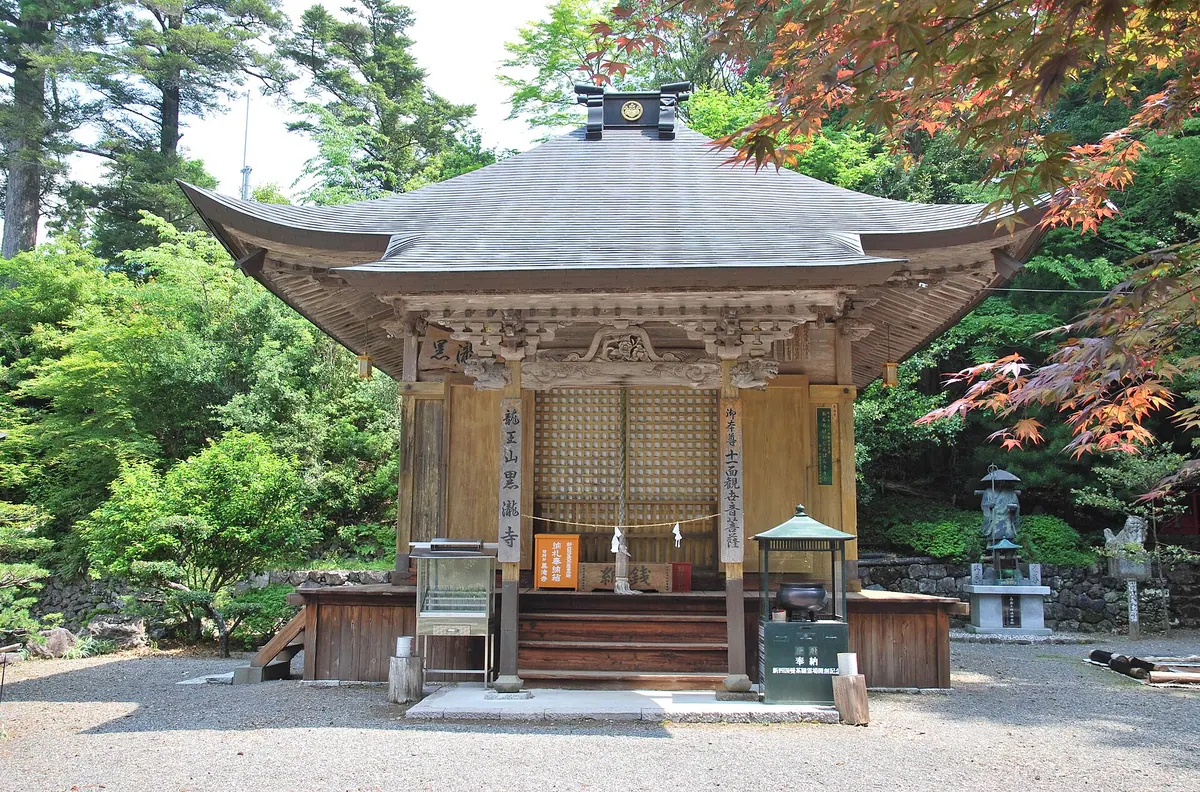
Kurotaki-ji Temple is a mountain temple with a sacred spring, important to Shikoku's pilgrimage routes.
What it is
- A temple of the Koyasan Shingon sect.
- It is the Okunoin of Tairyu-ji Temple, Shikoku 88 Sacred Places No. 21.
- The 88th sacred site of the New Shikoku Mandala Sacred Places.
- Believed to be the birthplace of mountain Buddhism.
What to see
- The principal image is the Eleven-faced Kannon.
- Kukai carved an Eleven-faced Kannon here.
- A sacred spring called Akai no Mizu flows on the grounds.
- Temple buildings constructed between 1716 and 1956.
- Address
- 徳島県那賀郡那賀町阿津江字黒滝山5 Map