
Fuko-ji Temple (Omuta)
普光寺 (大牟田市)
Fuko-ji Temple is an ancient Buddhist site, known for its historic statues and a unique, sprawling plum tree.
What it is
- Oldest Buddhist temple in Ōmuta.
- Part of the Tendai school of esoteric Buddhism.
- Founded in 820 by priest Ennin.
What to see
- Main Hall dates to the Edo period.
- Wooden statue of Yakushi Nyorai, the Buddha of Healing.
- Wooden statue of founder Jikaku Daishi.
- Pagoda, stone Buddhist statues, tutelary shrines, gravestones.
- Enormous, double-flowering pink plum tree, over 350 years old.
- Variety of other plum trees on the grounds.
When to go
- Mid-February to late March for plum blossoms.
In detail
Fukōji is the oldest Buddhist temple in Ōmuta and part of the Tendai school of esoteric Buddhism. It was founded under the auspices of the Miike clan in 820 by the priest Ennin (794–864), known posthumously as Jikaku Daishi. Over time, the temple developed into a large complex with three subtemples and seven residences. It was destroyed by landslides in the late Heian period (794–1185). Only a handful of the temple buildings were ever rebuilt.
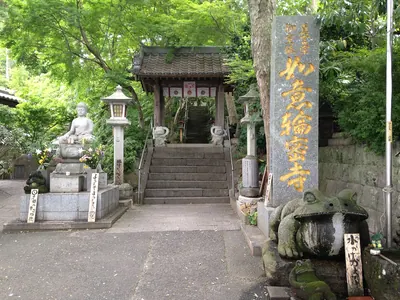
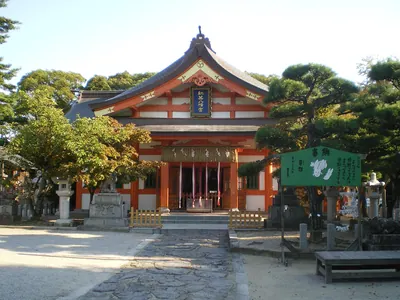
The current Main Hall dates to the Edo period (1603–1867). The temple’s main objects of veneration are wooden statues of Yakushi Nyorai, the Buddha of Healing, made in the late twelfth century, and of the temple’s founder Jikaku Daishi, which was carved in 1429 in Kyoto. Both have been designated as prefectural Cultural Properties. On the temple grounds also stand a pagoda, stone Buddhist statues, tutelary shrines, and gravestones.
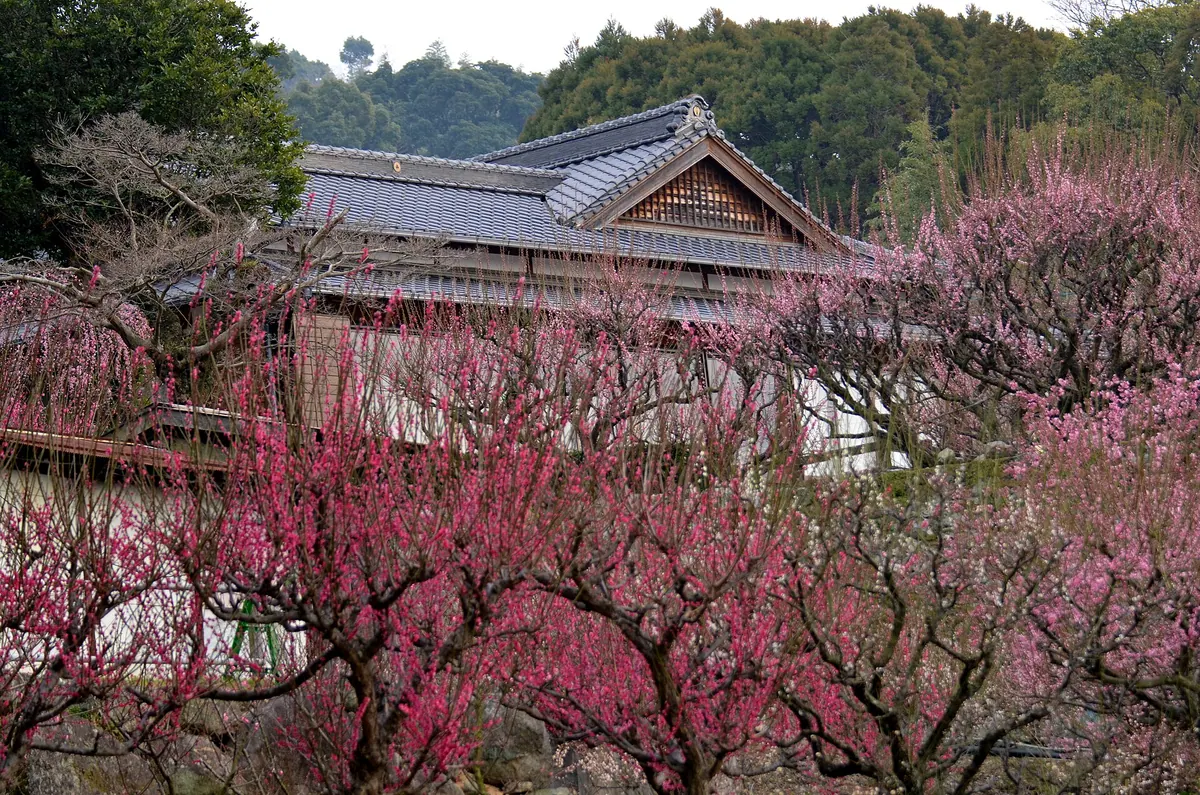
The temple is known today for the enormous, double-flowering pink plum tree along the approach to the Main Hall. Called the “reclining dragon plum” (Garyūbai), the tree is more than 350 years old, and although it stands only 3 meters tall, it stretches for more than 25 meters down the hill. Its branches took root where they touched the ground, extending the tree’s reach farther away from the original trunk.
The temple has planted a variety of other plum trees and is a popular spot to view plum blossoms between mid-February and late March. Admission fees are charged while the trees are in bloom.
Text: 観光庁 地域観光資源の多言語解説文データベース. Reproduced unchanged. The notes above were written from that text by Japan Gems.
Where it is
福岡県大牟田市今山2538 Open in Google Maps
この施設の関係者の方へ
このページは公開情報をもとに Japan Gems が作成し、訪日外国人向けに英語で掲載しています。 写真や情報の追加・修正を承っています。お店の写真に差し替えることもできます。
このページの情報を更新する