
Kenroku-en
兼六園
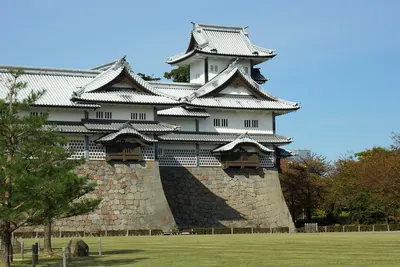
Kenrokuen is a Japanese strolling garden next to Kanazawa Castle, famous for combining six ideal garden qualities.
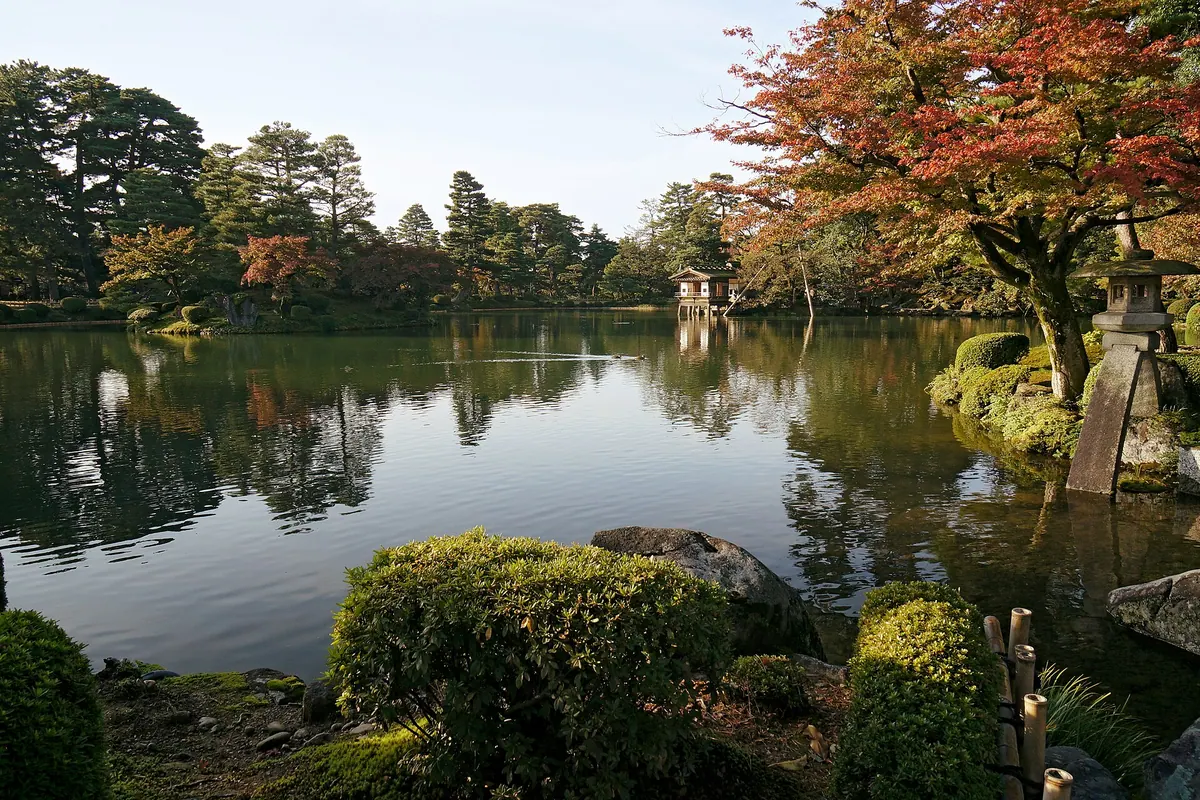
What it is
- Expansive Japanese-style strolling garden.
- Named for combining six qualities of an ideal garden.
- Opened to the public in 1874.
What to see
- Diverse garden elements.
- Historic teahouses, including Yugao-tei (built 1774).
- Shigure-tei, a pavilion built in 2000.
- Cherry blossoms in spring.
- Green moss in summer.
- Japanese maples and zelkovas in autumn.
When to go
- Spring for cherry blossoms.
- Summer for green moss.
- Autumn for gold, crimson, and russet colors.
- Winter for trees with yukizuri.
Getting there
- Located next to Kanazawa Castle.
In detail
Kenrokuen is an expansive Japanese-style strolling garden located next to Kanazawa Castle. Its blend of diverse garden elements has made it one of the most famous gardens in Japan.
Kenrokuen, meaning “garden of the combined six,” is so named because it combines the six qualities of an ideal garden according to an ancient Chinese text, ordinarily difficult to achieve in the same garden. They are grouped into three pairs: spaciousness and seclusion, human artifice and the effects of age, water features and vistas.
The garden’s appearance changes dramatically with the seasons. In spring, cherry blossoms form a pastel canopy over the walking path starting from the entrance facing Kanazawa Castle. In summer, carpets of green moss flourish in the woods below the pavilion on Yamazaki Hill. In autumn, the Japanese maples and zelkovas in the southeastern part of the garden burst into gold, crimson, and russet colors. In winter, gardeners tie up trees with bamboo and rope supports called yukizuri to help them weather the region’s heavy snowfall and maintain their painstakingly cultivated shape.
The garden is home to historic teahouses, a legacy of the importance of tea ceremony in Kanazawa during the Edo period (1603–1867). These include Yugao-tei, Kenrokuen’s oldest surviving structure, built in 1774. Shigure-tei, a more recent addition, was built in 2000 in the style of the garden’s original pavilion. Today, visitors can relax here with tea and traditional snacks.
The Maeda family, the rulers of the Kaga domain that included present-day Ishikawa, established a predecessor of Kenrokuen in the seventeenth century as the outer garden of Kanazawa Castle. It was originally much smaller, covering only the area around Renchimon Gate. Subsequent Maeda generations developed and expanded the garden through the mid-1800s. The garden opened to the public as Kenrokuen in 1874.
Text: 観光庁 地域観光資源の多言語解説文データベース. Reproduced unchanged. The notes above were written from that text by Japan Gems.
Where it is
Kenroku-en Open in Google Maps
この施設の関係者の方へ
このページは公開情報をもとに Japan Gems が作成し、訪日外国人向けに英語で掲載しています。 写真や情報の追加・修正を承っています。お店の写真に差し替えることもできます。
このページの情報を更新する