
Kumano Nachi Taisha
熊野那智大社
Kumano Nachi Taisha is a 1,700-year-old grand shrine known for its nature worship tradition.
What it is
- Grand Shrine, 1,700 years old.
- Worships nature, started at Nachi Waterfall.
- Formerly part of a Shinto-Buddhist complex.
What to see
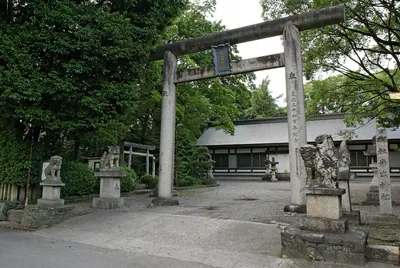
- Main torii gate.
- Treasure Hall and subsidiary shrine.
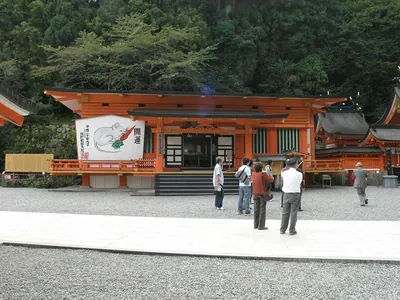
- Worship hall.
- Inner sanctum with six sanctuaries and thirteen deities.
- Finials on sanctuary buildings, cut horizontally or vertically.
- Yatagarasu-ishi (Yatagarasu Stone).
When to go
- Nachi Fire Festival on July 14.
In detail
(480 ww [251-500], web)
Kumano Nachi Taisha Grand Shrine traces its history back some 1,700 years. It was founded as a new location for the worship that had begun at Nachi Waterfall, and upholds the same tradition of reverence for nature. The shrine is also known for the Nachi Fire Festival, a spectacular parade of torches and portable fan shrines held each July 14.
For much of its history, Nachi Taisha and neighboring Seiganto-ji Temple were part of the same religious complex, exemplifying the Shinto-Buddhist syncretism once prevalent in Japan. Following the Meiji Restoration of 1868, the new government ordered the separation of Shinto and Buddhism, and today the temple and shrine are formally distinct.
The Shrine Grounds
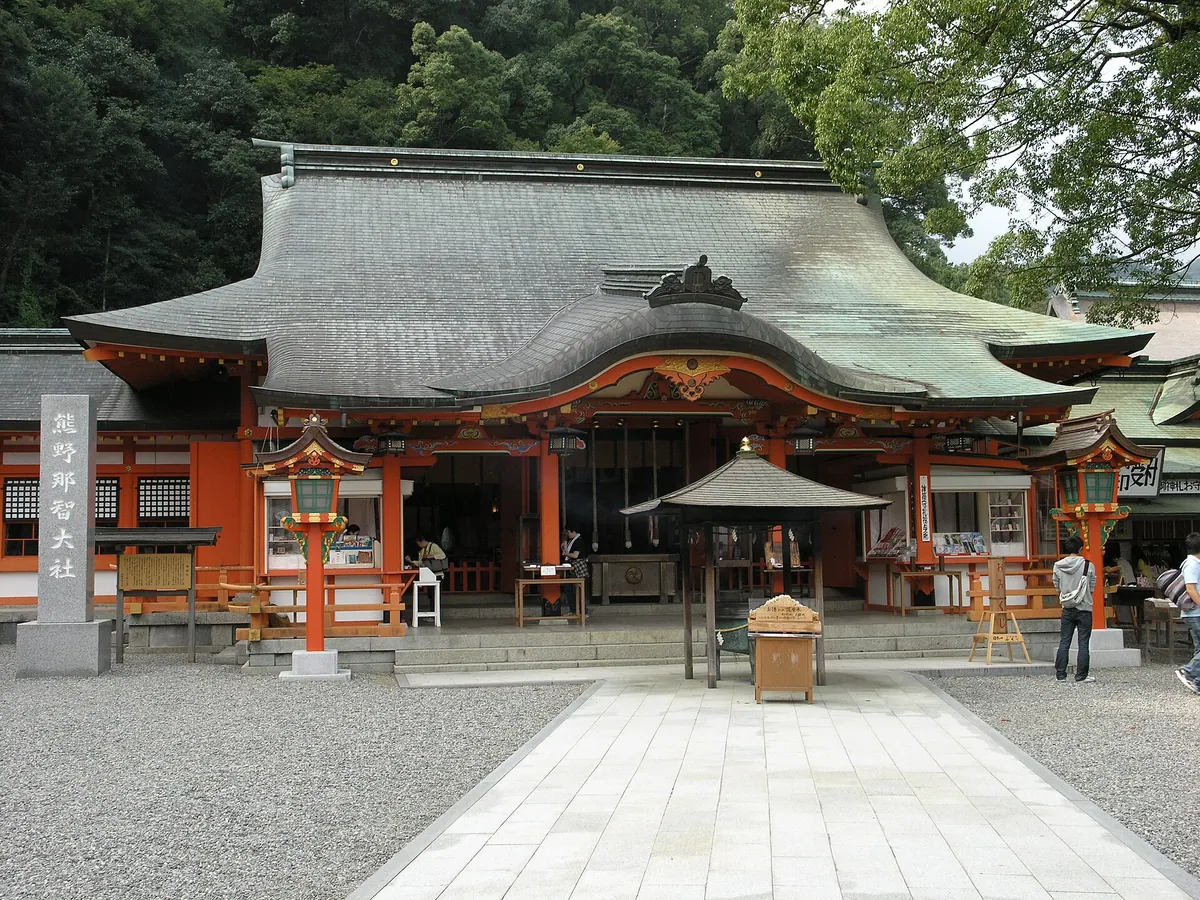
The shrine grounds are arranged around a central courtyard, with the main torii gate at the northeast. From the torii, the office buildings and stage area for dengaku dance performances are to the left. Directly ahead of the torii is the Treasure Hall (homotsuden) and Miagatahiko-sha, a subsidiary shrine. To the right, at the northwest end of the courtyard, stands the worship hall (haiden).
Behind the worship hall is the inner sanctum, which is usually closed to the public. This contains six separate sanctuaries (honden) enshrining thirteen deities. From right to left, the enshrined deities are as follows:
Of these, Kumano Fusumi-no-Okami is the chief enshrined deity. The deities of numbers 2 through 4 are collectively known as the Kumano Sansho, or Three Kumano Deities, and are worshiped at all three of the Kumano grand shrines.
Noteworthy features of the sanctuary buildings are their finials (chigi), crossed wooden members that rise in a V-shape from the ends of the roof ridges. They follow the pattern used at Ise Shrine in Mie Prefecture: the ends are cut horizontally for female deities (numbers 4 and 5), and vertically for male deities (all others).
Also in the inner sanctum is the Yatagarasu-ishi (Yatagarasu Stone). According to legend, the Yatagarasu was a great three-legged crow that guided the legendary first emperor Jimmu from Kumano to found Japan’s first capital, in present-day Nara. It then flew back and tucked its beak under its wing to rest, becoming the Yatagarasu Stone. It is said that Nachi Taisha was relocated here because the Yatagarasu chose to alight at this site.
Passage Through the Womb
At the edge of the shrine courtyard in front of the worship hall is a sacred camphor tree. The tree is more than 850 years old, and is now largely hollow inside. The tunnel beneath it, marked with a small torii gate, is known as the Tainai Kuguri (Passage Through the Womb). Walking through the tunnel is thought to bring good luck.
Text: 観光庁 地域観光資源の多言語解説文データベース. Reproduced unchanged. The notes above were written from that text by Japan Gems.
Where it is
Kumano Nachi Taisha Open in Google Maps
この施設の関係者の方へ
このページは公開情報をもとに Japan Gems が作成し、訪日外国人向けに英語で掲載しています。 写真や情報の追加・修正を承っています。お店の写真に差し替えることもできます。
このページの情報を更新する