
Lecture Hall, Toshodai-ji
唐招提寺講堂
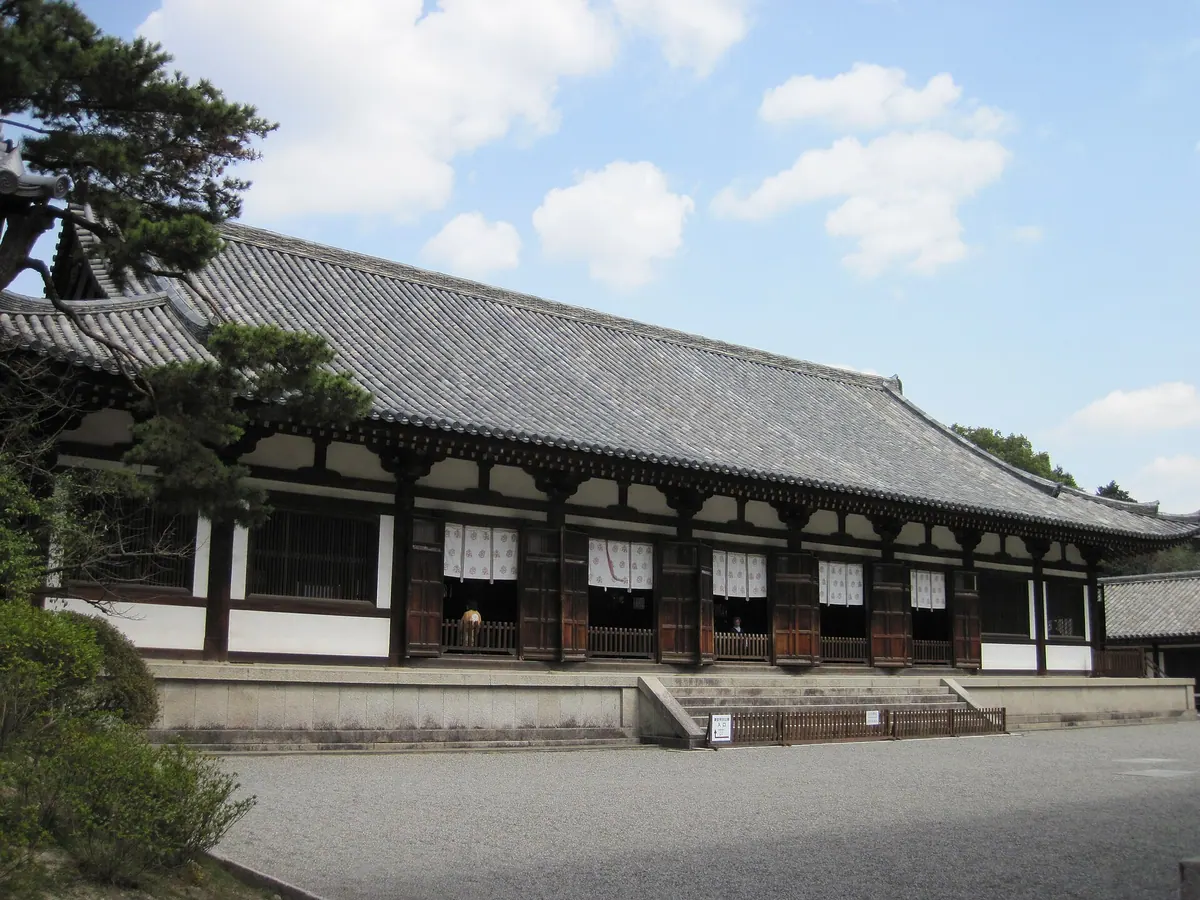
This lecture hall, a National Treasure, is the only surviving structure with parts of the Heijo Palace.
What it is
- Lecture Hall at Toshodai-ji temple.
- Originally an assembly hall at Heijo Palace.
- Presented to the temple around 760.
- Modified into its current spacious structure.
What to see
- National Treasure building, architecturally significant.
- Only surviving structure with Heijo Palace vestiges.
- Hip-and-gable (irimoya-zukuri) roof style.
- Traditional hon kawarabuki roof tiling method.
- Raised base protects from flooding and dampness.
- Principal image: Miroku Nyorai statue.
When to go
- Formal discussions and debates held twice a year.
- May event includes court music and dance (gagaku).
In detail
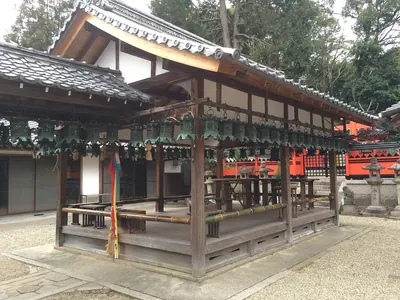
The Toshodaiji Lecture Hall (Kodo) exhibits an elegance attesting to its former role as an assembly hall within the grounds of Heijo Palace, the imperial residence in Heijokyo (present-day Nara) during the Nara period (710–794). It was presented to the temple by the court in around 760 and subsequently modified as the spacious structure we see today.
Like many buildings at Toshodaiji, the Lecture Hall is a National Treasure and a building of some architectural significance: It is the only surviving structure that retains vestiges of the Heijo Palace, which was located just northeast of the temple at a time when this area was at the heart of the Nara capital.
The building features a hip-and-gable (irimoya-zukuri) roof, a style introduced from China in the sixth century that has been used in temple and shrine architecture ever since. The gabled part covers the core (moya) of the building, while the hipped roof covers raised aisles (hisashi) running around the outside of the core. Like many other buildings, the roof itself is covered by the traditional tiling method known as hon kawarabuki composed of broad, flat concave tiles linked by semi-cylindrical convex tiles. The base of the building is raised to protect the structure from flooding and dampness. Much of the structure you see today is believed to date back to the Kamakura period (1185–1333).
Among the Buddhist statues inside is the hall’s principal image, Miroku Nyorai, and one depicting Zochoten, one of the four heavenly kings, which is a National Treasure from the Nara period. There are also lecterns from which, in time-honored fashion, discussions and debates about the Buddhist precepts are conducted. Today these are formal occasions that take place twice a year. One of them, in May, includes a performance of court music and dance (gagaku), among them a piece entitled “Bairo” that was introduced by temple founder Ganjin.
Text: 観光庁 地域観光資源の多言語解説文データベース. Reproduced unchanged. The notes above were written from that text by Japan Gems.
Where it is
奈良県奈良市五条町 Open in Google Maps
この施設の関係者の方へ
このページは公開情報をもとに Japan Gems が作成し、訪日外国人向けに英語で掲載しています。 写真や情報の追加・修正を承っています。お店の写真に差し替えることもできます。
このページの情報を更新する