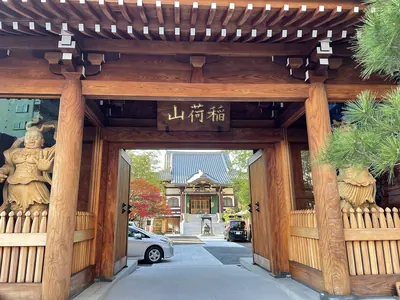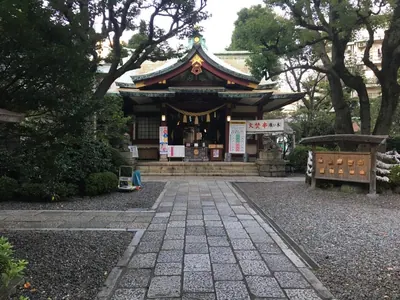

Musashi Mitake Shrine Treasure Hall
武蔵御嶽神社宝物殿
This hall displays historical armor, swords, and a saddle, including two National Treasures, worth seeing for their age.
What it is
- Museum displaying historical items dedicated to Musashi Mitake Shrine.
- Houses two National Treasures, Important Cultural Properties, and Tangible Cultural Properties.
- Items span from the Heian period to the Edo period.
What to see
- Statue of samurai Hatakeyama Shigetada on horseback.
- Akaito odoshiyoroi, or “red thread armor,” a National Treasure.
- Ornate war saddle, a National Treasure, presented by Emperor Shijo.
- Mikoshi portable shrine dedicated by shogun Tokugawa Tsunayoshi.
- Video exhibition of Daidai Kagura, a Shinto ritual dance.
When to go
- Open Saturdays, Sundays, and public holidays, 9:30 a.m. to 4 p.m.
- Daidai Kagura video features performances from June to November.
In detail
(501-750 words, QR / App, Pamphlet)
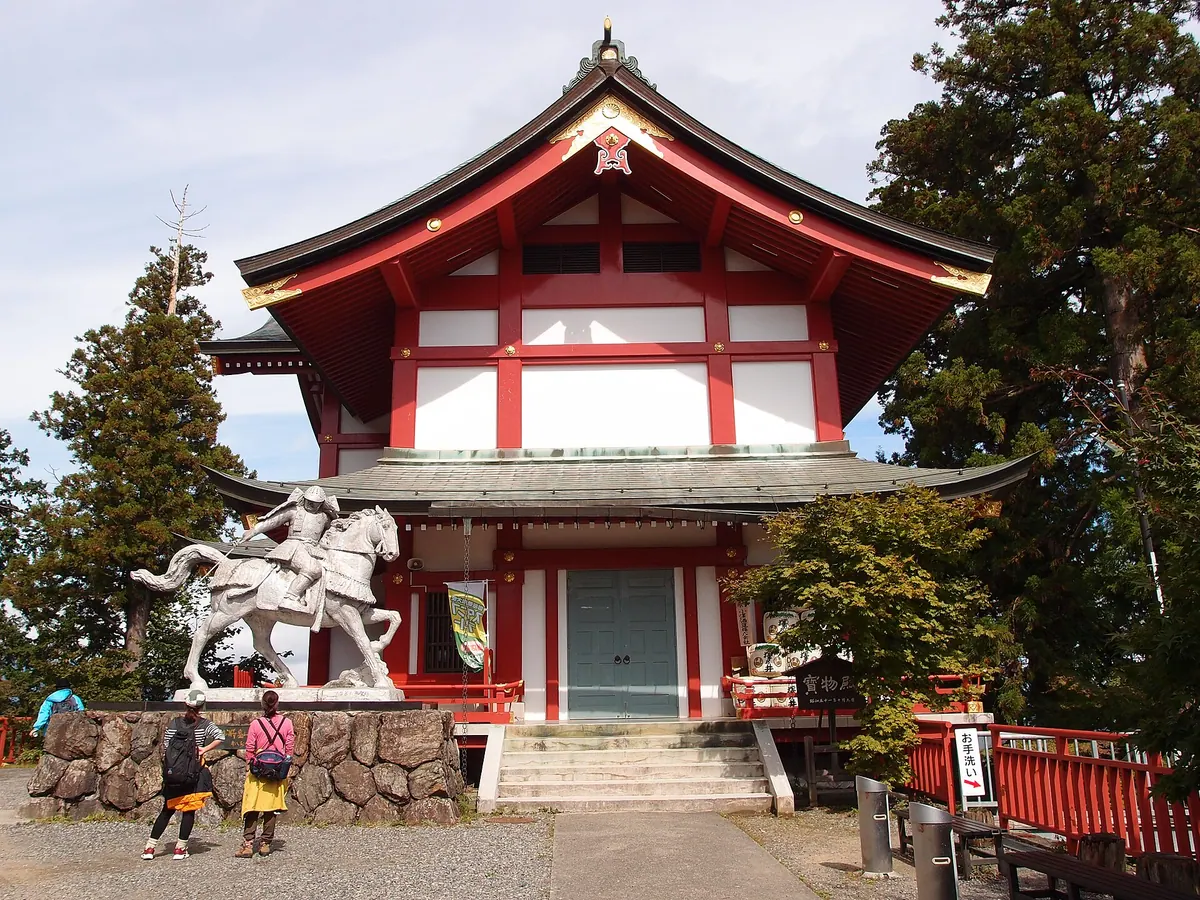
The Treasure Hall displays a number of important historical items that were dedicated to Musashi Mitake Shrine between the Heian period (794–1185) and the Edo period (1603–1867). These treasures include suits of armor, swords, and a decorated saddle. The hall contains two National Treasures, along with Important Cultural Properties and Tangible Cultural Properties.
A statue of the samurai Hatakeyama Shigetada (1164–1205) on horseback stands in front of the Treasure Hall. This warlord is believed to have dedicated his armor to the shrine in 1191. The suit of armor, known as the akaito odoshiyoroi or “red thread armor,” is made of small plates of iron and leather bound together with red silk cord. A National Treasure, it was produced in the late Heian period, and is one of the oldest intact sets of Japanese armor in the world.
In 1234, Emperor Shijo (the 87th emperor) presented an ornate war saddle to the shrine. The lacquered wooden saddle is inlaid with circles of mother-of-pearl. It is known as a kagami kura, or mirror saddle. It takes its name from the pommel and cantle, which are clad in gilt copper, polished to a mirror-like finish. This saddle is also a National Treasure.
A mikoshi portable shrine on display was dedicated by the shogun Tokugawa Tsunayoshi (1646–1709). The mikoshi is decorated with the Tokugawa family crest of three hollyhock leaves and is topped with five gilded phoenixes. A reproduction of the mikoshi is used in the annual Hinode sunrise festival (May 8) to mark the opening of Mt. Mitake for climbing and Shugendo training. The festival is one of Musashi Mitake Shrine’s main celebrations, and features a procession of people dressed in samurai costumes.
In addition to the displays of artifacts, a video exhibition features performances of Daidai Kagura, a form of Shinto ritual dance and music. Performances take place at Musashi Mitake Shrine between June and November each year. The shrine priests and their families have been performing Daidai Kagura for 32 generations, since the Edo period (1603–1867). The dance form is an Intangible Folk Cultural Property of Tokyo.
The Treasure Hall is open from 9:30 a.m. to 4 p.m. on Saturdays, Sundays, and public holidays.
Text: 観光庁 地域観光資源の多言語解説文データベース. Reproduced unchanged. The notes above were written from that text by Japan Gems.
Where it is
Musashi Mitake Shrine Treasure Hall Open in Google Maps
この施設の関係者の方へ
このページは公開情報をもとに Japan Gems が作成し、訪日外国人向けに英語で掲載しています。 写真や情報の追加・修正を承っています。お店の写真に差し替えることもできます。
このページの情報を更新する