
Myōgaku-ji Temple
妙覚寺 (京都市)
This temple, relocated in the 1500s, offers a serene garden and autumn maple foliage.

What it is
- Nichiren Buddhist temple.
- Relocated to this site in the late 1500s.
- Frequented by aristocracy and samurai lords.
What to see
- Imposing gate from Jurakudai palace.
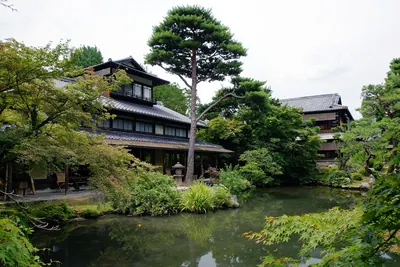
- Simple and serene temple garden.
- Autumn foliage of maple trees.
When to go
- Particularly noted for autumn foliage.
In detail
Like the several other Nichiren Buddhist temples in its vicinity, Myokakuji was relocated to this site in the late 1500s, when the warlord Toyotomi Hideyoshi (1537–1598) ruled Japan. Hideyoshi initiated a number of extensive public works in Kyoto, the capital at the time, including fortifying the city and building a lavish new palace called Jurakudai.
These projects were accompanied by orders to relocate many of Kyoto’s temples, which had been spread out across the city and its outskirts but were now to be concentrated in specific areas. Hideyoshi’s reasons for doing so were many, but included asserting control over the temples, many of which were politically influential in their own right.
Myokakuji was one of these prominent temples, frequented by the aristocracy and powerful samurai lords. It continued to thrive during Hideyoshi’s reign and after it. When the Jurakudai palace was dismantled in the final years of the 1500s, its imposing gate was moved to Myokakuji, where it still marks the temple’s main entrance.
The simple and serene temple garden is open to visitors and, while it is beautiful in every season, it is particularly noted as a place to view the autumn foliage of maple trees. Visitors can enjoy the scenery over a cup of tea and traditional sweets.
Text: 観光庁 地域観光資源の多言語解説文データベース. Reproduced unchanged. The notes above were written from that text by Japan Gems.
Where it is
京都府京都市上京区上御霊前通小川東入下清蔵口町135 Open in Google Maps
この施設の関係者の方へ
このページは公開情報をもとに Japan Gems が作成し、訪日外国人向けに英語で掲載しています。 写真や情報の追加・修正を承っています。お店の写真に差し替えることもできます。
このページの情報を更新する