
Myōjō-in Temple
明星院 (五島市)
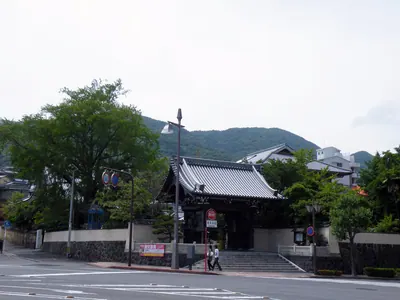
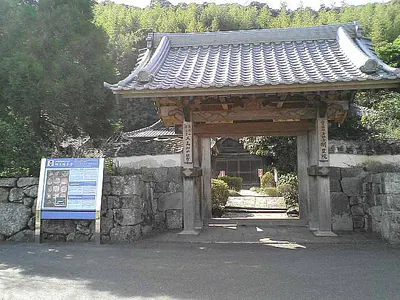
This temple on Fukue Island has a copper Buddha statue and a main hall with 121 ceiling paintings.
What it is
- Temple of Myojoin, on Fukue Island.
- Originally a guest house for envoys to Tang China.
- Named by Buddhist priest Kukai in 806.
- Supported by the Goto family from the 14th century.
What to see
- Copper statue of Yakushi, Buddha of medicine.
- Main hall interiors repainted in the 17th century.
- Ceiling with 121 paintings of plants and birds.
- Four corners with images of tennyo, celestial beings.
- Ho-o, a mythical bird, near the center of the outer section.
In detail
According to local legend, the temple of Myojoin on the outskirts of what is now the town of Fukue on Fukue Island was originally a guest house for the Japanese envoys who traveled to Tang China via the Goto Islands between the eighth and ninth centuries. The temple’s copper statue of Yakushi, the Buddha of medicine and healing, which one of the emissaries may have brought to the island as an amulet for protections on the dangerous journey across the sea, is thought to date to this time. Perhaps the most famous of the envoys, the Buddhist priest Kukai (774–835), is believed to have named the temple upon his return from China in 806. As the story goes, Kukai prayed that the knowledge he had acquired would benefit Japan and its people. A bright star appeared in the sky the next morning to signify that his wish would be granted, and Kukai named the site of his prayer Myojoan (“hermitage of the shining star”), which later became Myojoin.
From the fourteenth century onward, the Goto family that governed the islands prayed at Myojoin and made donations to the temple. The family funded the repainting of the interiors in the main hall in the seventeenth century, when an artist of the famous Kano school was commissioned to decorate the ceiling with 121 paintings of plants and birds. The ceiling’s four corners bear images of tennyo, celestial beings that lead the dead to paradise. Depicted near the center of the room’s outer section, directly above the place where the daimyo lord of Goto would sit in prayer, is a ho-o, a mythical bird that in East Asian mythology brings tidings of a king’s birth and is considered a symbol of power.
Text: 観光庁 地域観光資源の多言語解説文データベース. Reproduced unchanged. The notes above were written from that text by Japan Gems.
Where it is
五島市吉田町1905番地 Open in Google Maps
この施設の関係者の方へ
このページは公開情報をもとに Japan Gems が作成し、訪日外国人向けに英語で掲載しています。 写真や情報の追加・修正を承っています。お店の写真に差し替えることもできます。
このページの情報を更新する