
National Museum of Western Art
国立西洋美術館
This museum houses the Matsukata Collection of Western art, fulfilling a collector's dream to benefit Japan.
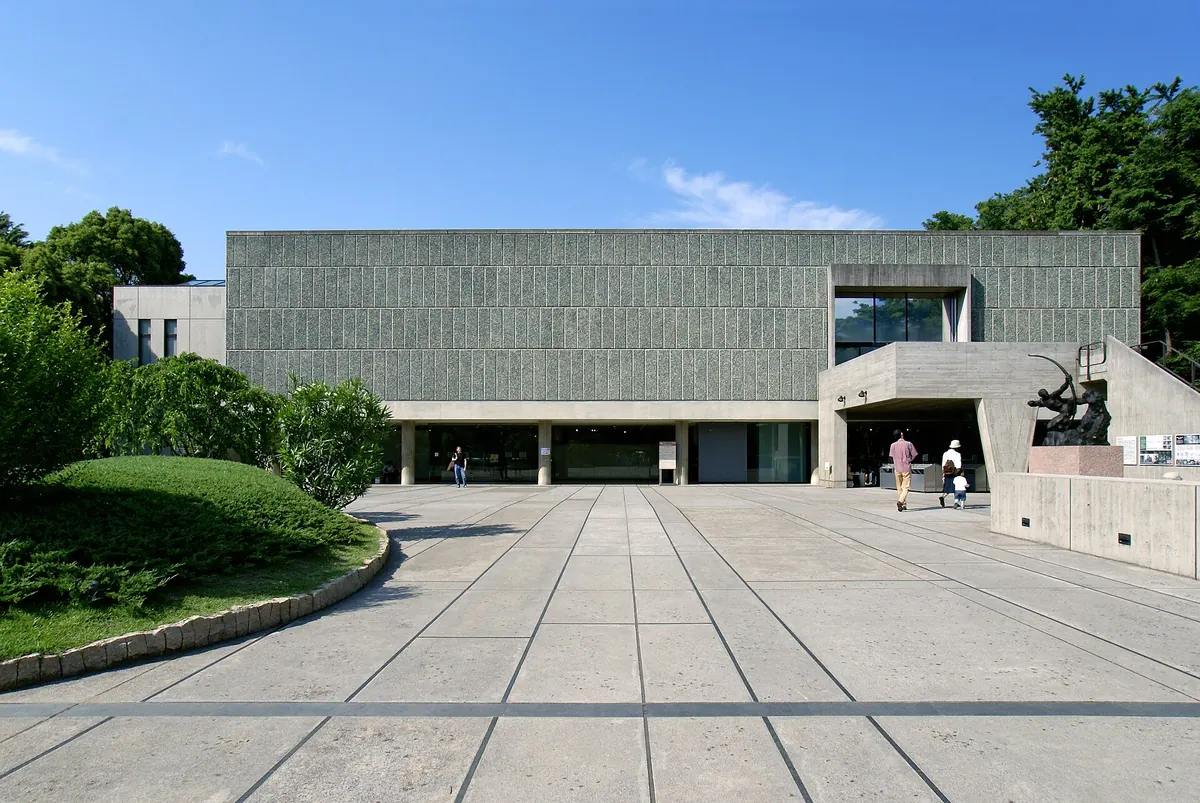
What it is
- National Museum of Western Art.
- Established to house the Matsukata Collection.
- Opened in 1959.
- Realized Matsukata Kojiro's dream.
What to see
- European oil paintings.
- Sculptures and tapestries.
- Furniture.
- Around 400 pieces from the Matsukata Collection.
In detail
The National Museum of Western Art was established to house and display the Matsukata Collection, named after shipbuilding magnate and art collector Matsukata Kojiro (1866–1950). Educated in the United States, Kojiro was the son of Matsukata Masayoshi (1835–1924), aristocrat and one-time prime minister. Kojiro went on to make a fortune as president of the Kawasaki Dockyard corporation, which benefited from the highly lucrative business of building ships for the Japanese navy during World War I (1914–1918). Kawasaki expanded aggressively in these years, opting to produce ready-made ships for sale instead of waiting for buyers to place orders. This strategy and the proactive sales efforts it required brought Matsukata to London in 1916, where he began to collect art.
A businessman and patriot, Matsukata was not interested in art for art’s sake. Instead, he wanted to take advantage of his wealth to compile a collection that could be displayed in Japan for the benefit of Japanese artists and connoisseurs. This ambition can be understood in the context of Japanese efforts in his time to “catch up” with the West in all spheres, including the military, economic, and cultural. Matsukata ventured that establishing a museum of Western art would help his countrymen “understand the psychology of the Western peoples.”
Between 1916 and 1926, Matsukata’s collection swelled to more than 10,000 works of art, including a diverse selection of European oil paintings, sculptures, tapestries, and furniture as well as around 8,000 ukiyo-e prints, which had been acquired by foreign buyers and taken out of the country in the latter half of the 1800s. Matsukata stored much of his vast trove in London and Paris due to the prohibitively high costs of shipping the art to Japan, but did not give up on his vision of eventually establishing a museum.
That dream, however, seemingly died in 1927, when a financial crisis toppled the Jugo Bank, Kawasaki Dockyard’s largest creditor. To save the company, Matsukata had to put up most of his personal assets, including his art, as collateral. The Matsukata Collection was dispersed: the artworks kept in Japan were sold off one after the other, while those in London were lost in a fire in 1939. The approximately 400 pieces that remained in France survived World War II, but were seized as “enemy property” by the French government before the end of the war.
In the early 1950s, negotiations were initiated between the Japanese and French governments for the return of the Matsukata Collection. The two sides eventually reached a deal, with the French agreeing to send most of the artworks to Japan in exchange for a promise that a museum be built to house them. This pledge led to the 1959 opening of the National Museum of Western Art, and the belated realization of Matsukata Kojiro’s dream.
Text: 観光庁 地域観光資源の多言語解説文データベース. Reproduced unchanged. The notes above were written from that text by Japan Gems.
Where it is
7-7 Ueno-koen, Taito-ku Open in Google Maps
この施設の関係者の方へ
このページは公開情報をもとに Japan Gems が作成し、訪日外国人向けに英語で掲載しています。 写真や情報の追加・修正を承っています。お店の写真に差し替えることもできます。
このページの情報を更新する