
Seaside Literary Memorial
海辺の文学記念館
This museum explains how Gamagori became a popular resort for writers, displaying artifacts and a reproduction of an inn room.

What it is
- Museum explaining Gamagori's popularity with writers in early 20th century.
- Opened in 1997 on site of former Tokiwakan inn.
- Dedicated to the Tokiwakan inn and its founder Taki Nobushiro.
- Reproduction of a 1910 wooden building, formerly a clinic.
What to see
- Artifacts and documents from Tokiwakan and Gamagori Hotel.
- Reproduction of a room at the Tokiwakan, decorated as in 1927.
- Tatami-mat room with shoji panels opening to Takeshima view.
- Panels detailing lives and works of authors who stayed at the inn.
- Ornate wooden carvings from the Rokkakudo building.
- Special exhibitions on Gamagori, Takeshima, and hotel history.
In detail
Exhibits at the Seaside Literary Memorial Museum explain how Gamagori became a popular holiday resort for noted writers in the early twentieth century. The story revolves around the Tokiwakan inn, which opened in 1912 on the beachfront site currently occupied by the museum, and the inn’s founder, Taki Nobushiro (1868–1938), a Nagoya businessman who played a key role in turning Gamagori into a tourist destination. On display at the museum are artifacts and documents from the Tokiwakan and the Gamagori Hotel (now the Gamagori Classic Hotel), a reproduction of a room at the Tokiwakan, and panels detailing the lives and works of authors who stayed at the inn, including Nobel Prize winner Kawabata Yasunari (1899–1972), Tanizaki Junichiro (1886–1965), and Shiga Naoya (1883–1971).
Leisure and literature
The association between Gamagori and some of the most famous literary figures in the country came about through the efforts of wealthy textile trader Taki Nobushiro. Taki established the Tokiwakan inn on the coast of Mikawa Bay opposite the island of Takeshima. It was the site of his family’s holiday home and a place he had loved since childhood.
Gamagori was already well-known regionally as a travel destination, but Taki wanted to advertise the area to a nationwide audience. He came up with the idea of inviting high-profile authors to stay at the Tokiwakan, with the condition that they would then write about Gamagori, Takeshima, and the inn in their works. This strategy proved successful. Following the opening of the Tokiwakan, writers including Kawabata, Tanizaki, Shiga, Kikuchi Kan (1888–1948), Yamamoto Yuzo (1887–1974), and Inoue Yasushi (1907–1991) stayed at the inn and wrote about the Takeshima area in numerous novels, short stories, and poems.
Some of these works include Kawabata’s short story Roba ni noru tsuma (Wife Riding a Donkey), which centers on a horse-riding ring built next to the Tokiwakan to entertain guests, and Tanizaki’s Sasameyuki (The Makioka Sisters), in which one of the titular siblings visits Gamagori and stays at the Tokiwakan after an unsatisfying encounter with a prospective groom.
The museum
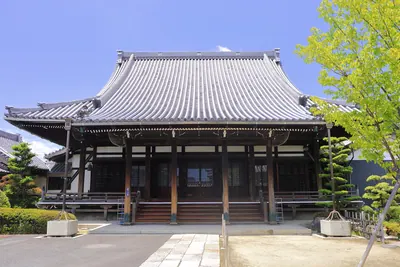
The Tokiwakan was dismantled in 1982, but its legacy and atmosphere live on at the Seaside Literary Memorial Museum, which opened in 1997 on the site of the inn. The structure is a reproduction of a single-story wooden building from 1910 that was used as a clinic in central Gamagori.
Inside, explanatory panels tell the stories of the writers who stayed at the Tokiwakan and highlight their works that feature the inn and the surrounding area. Attached to the museum building is a reproduction of a room at the Tokiwakan, decorated to look as it did when Tanizaki Junichiro stayed there in August 1927. The tatami-mat room has shoji panels that open to reveal a view of Takeshima directly across the water.
Also on display at the museum are artifacts of the Gamagori Hotel and its annexes, including ornate wooden carvings that once decorated the exterior of the six-sided Rokkakudo building near the hotel entrance. Another section of the museum has special exhibitions on Gamagori, Takeshima, and the history of the Tokiwakan and the Gamagori Hotel.
The museum’s “Time Letters” program encourages visitors to write down a message or memory related to their time in Gamagori and have the letter mailed to an address of their choice (in Japan) on a date between two months to ten years after visiting the museum.
Text: 観光庁 地域観光資源の多言語解説文データベース. Reproduced unchanged. The notes above were written from that text by Japan Gems.
Where it is
愛知県蒲郡市竹島町15-62 Open in Google Maps
この施設の関係者の方へ
このページは公開情報をもとに Japan Gems が作成し、訪日外国人向けに英語で掲載しています。 写真や情報の追加・修正を承っています。お店の写真に差し替えることもできます。
このページの情報を更新する