
Shōkō-ji Temple
勝興寺
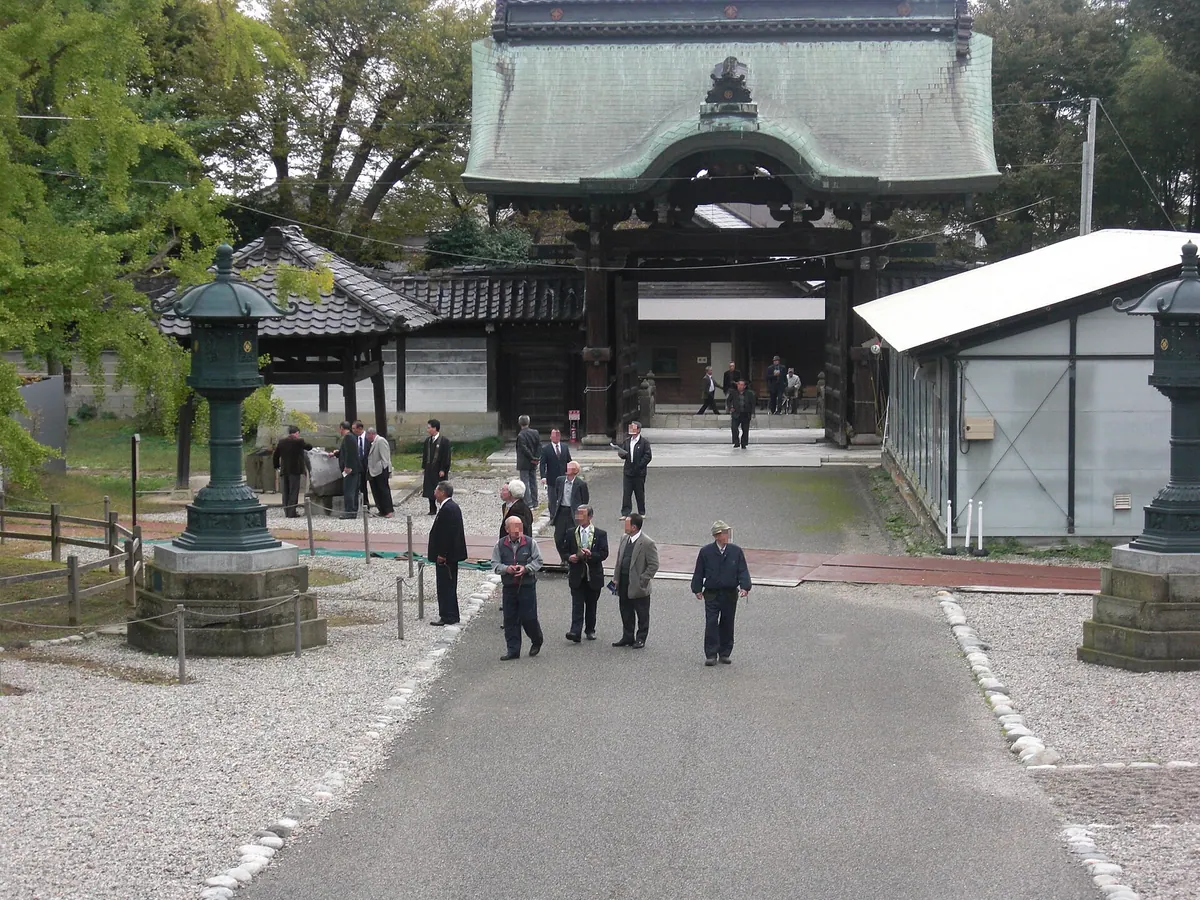
Shokoji Temple, rebuilt in 1584, is worth visiting for its 12 Edo period buildings, including National Treasures.
What it is
- Established in 1471 as a Jodo Shinshu Buddhist temple.
- Teaches all people are equal before the Buddha.
What to see
- Twelve buildings, all designated Important Cultural Properties.
- Main Hall, Reception Hall, Entrance Hall are National Treasures.
- Temple complex looks much as it did in 1803.
- Most structures date from the Edo period (1603–1867).
In detail
Shokoji was established in 1471 as a temple of the Jodo Shinshu, or True Pure Land, school of Buddhism. Jodo Shinshu teaches that all people, regardless of status or background, are equal before the Buddha. This was particularly appealing to the common people and contributed to the school’s widespread popularity. Shokoji’s history reflects the strong local support of its followers. Almost all the structures on the grounds date from the Edo period (1603–1867), and the temple complex looks much as it did in illustrations preserved from 1803.
Architectural heritage
The temple complex consists of 12 buildings, all of which are designated Important Cultural Properties. In particular, the Main Hall, the Reception Hall, and the Entrance Hall are National Treasures recognized for their architectural and historical significance. In the late nineteenth century, many temples were destroyed or had their land holdings reduced when the new Meiji government (1868–1912) declared Shinto the official religion. As such, it is rare to find a temple complex largely unchanged and with so many buildings from a single historical period.
Turbulent history and relocation
During the late fifteenth century, Shokoji Temple was a base for militant groups engaged in a series of uprisings known as Ikko-ikki. These revolts were led by Jodo Shinshu practitioners, including farmers and merchants, against daimyo lords and the samurai class to oppose what they saw as unfair taxation and social conditions. Shokoji was burned to the ground during these uprisings and was rebuilt at its current site (present-day Takaoka, Toyama Prefecture) in 1584.
Support of the Maeda family
Shokoji flourished during the Edo period with the help of the powerful Maeda family. As daimyo of the Kaga domain (present-day Toyama and Ishikawa Prefectures), they protected and financially supported the temple. This was despite the temple’s past involvement in the Ikko-ikki movement and ongoing tensions between some Jodo Shinshu practitioners and the ruling class. Their backing was likely a move to gain favor with the local populace and quell further uprisings. Several sons of the Maeda family served as abbots, and the family granted land and contributed funds to expand and improve the temple.
Text: 観光庁 地域観光資源の多言語解説文データベース. Reproduced unchanged. The notes above were written from that text by Japan Gems.
Where it is
〒933-0112 富山県高岡市伏木古国府17番1号 Open in Google Maps
この施設の関係者の方へ
このページは公開情報をもとに Japan Gems が作成し、訪日外国人向けに英語で掲載しています。 写真や情報の追加・修正を承っています。お店の写真に差し替えることもできます。
このページの情報を更新する