
Tsumago Castle
妻籠城
Tsumago Castle was a mountain fortress with a strategic location, notable for its defensive features.
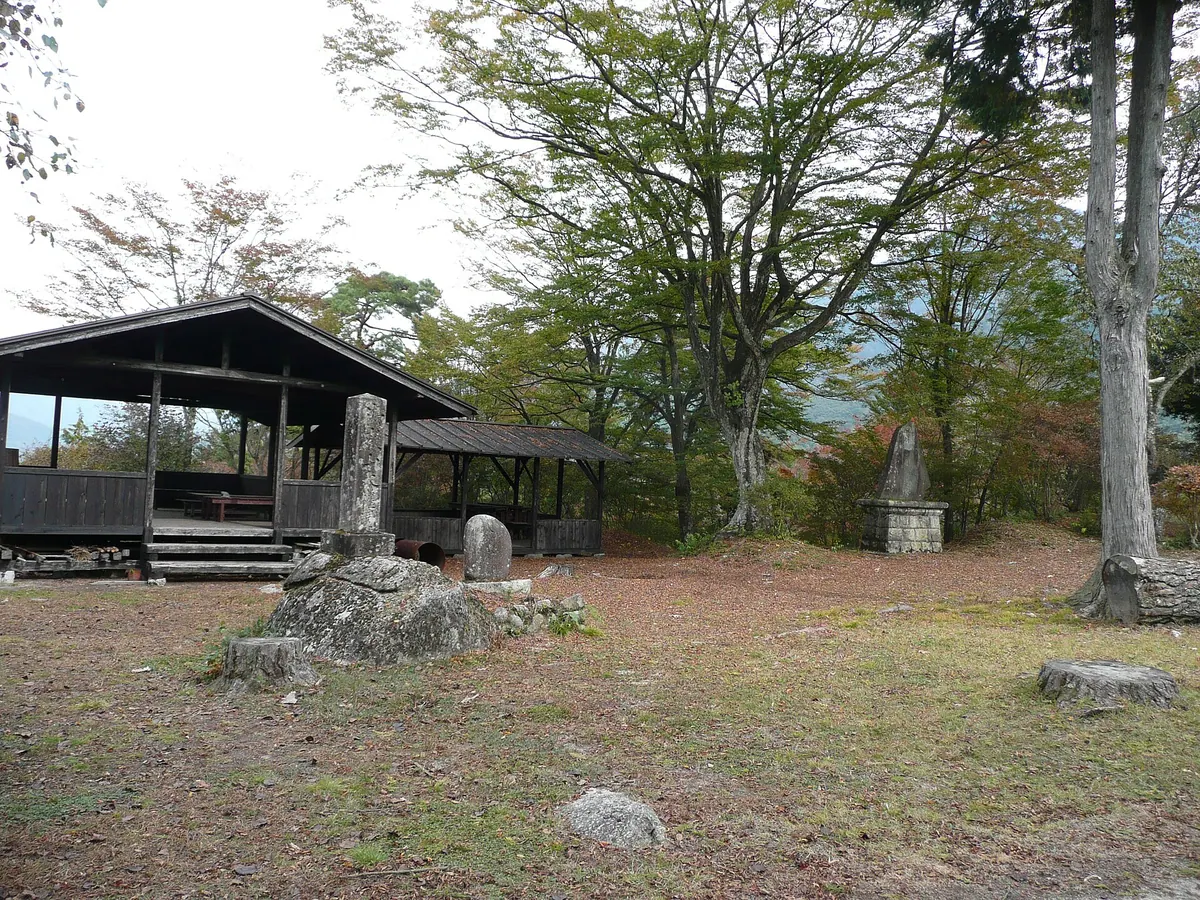
What it is
- Mountain fortress, purely defensive structure.
- Never served as a daimyo lord's residence.
- Destroyed in 1616 by Tokugawa shogunate policy.
What to see
- Traces of old defenses: ditches, walled areas, earth mounds.
- Site of huts, sheds, and a watchtower in the citadel.
- Strategic location 420 meters high.
In detail
A Strategically Situated Mountain Fortress
Tsumago Castle was a yamajiro, a mountain fortress that exploited the natural terrain for defensive advantage. The castle was in a highly strategic location: It sat upon one of the two key east-west highways connecting Kyoto and Edo; it was protected by rivers or hollows on three of four sides; and it was a commanding 420 meters high at its highest point. Back then, the hillsides around it would have been clear-cut, denying attackers any natural cover and exposing them to the bullets, arrows, or even rolled logs of the defenders.
Tsumago Castle was purely a defensive structure, and never served as the residence of a daimyo lord. As far as structures go, there would only have been some huts, sheds, and a watchtower in the innermost shukaku citadel. Walking across the site reveals traces of the old defenses, including karabori (ditches), kuruwa (outer walled areas), obikuruwa (narrow defensive walls), and earth mounds at the outer edges of the shukaku.
While the history of Tsumago Castle stretches back to the mid-Muromachi period (1336–1573), it is fair to say that its finest hour was in 1584, when 300 soldiers under Yamamura Jimbei Takakatsu, a retainer of the local lord Kiso Yoshimasa, repelled an army of 7,000 men. The regent Toyotomi Hideyoshi took over control of the local Kiso domain shortly thereafter, in 1590. Troops under the leadership of Tokugawa Hidetada, the son of Tokugawa Ieyasu, were camped here at the time of the decisive Battle of Sekigahara in 1600. (The fact that Hidetada did not make it to the battle on time infuriated his father.) Tsumago Castle was destroyed in 1616 as a result of the policy of the Tokugawa shogunate to limit each domain ruled by a daimyo lord to a single castle.
Text: 観光庁 地域観光資源の多言語解説文データベース. Reproduced unchanged. The notes above were written from that text by Japan Gems.
Where it is
Tsumago Castle Open in Google Maps
この施設の関係者の方へ
このページは公開情報をもとに Japan Gems が作成し、訪日外国人向けに英語で掲載しています。 写真や情報の追加・修正を承っています。お店の写真に差し替えることもできます。
このページの情報を更新する