
Yūkyūzan Park
悠久山公園
Yūkyūzan Park offers cherry blossoms, autumn leaves, and historical monuments, making it a worthwhile trip.
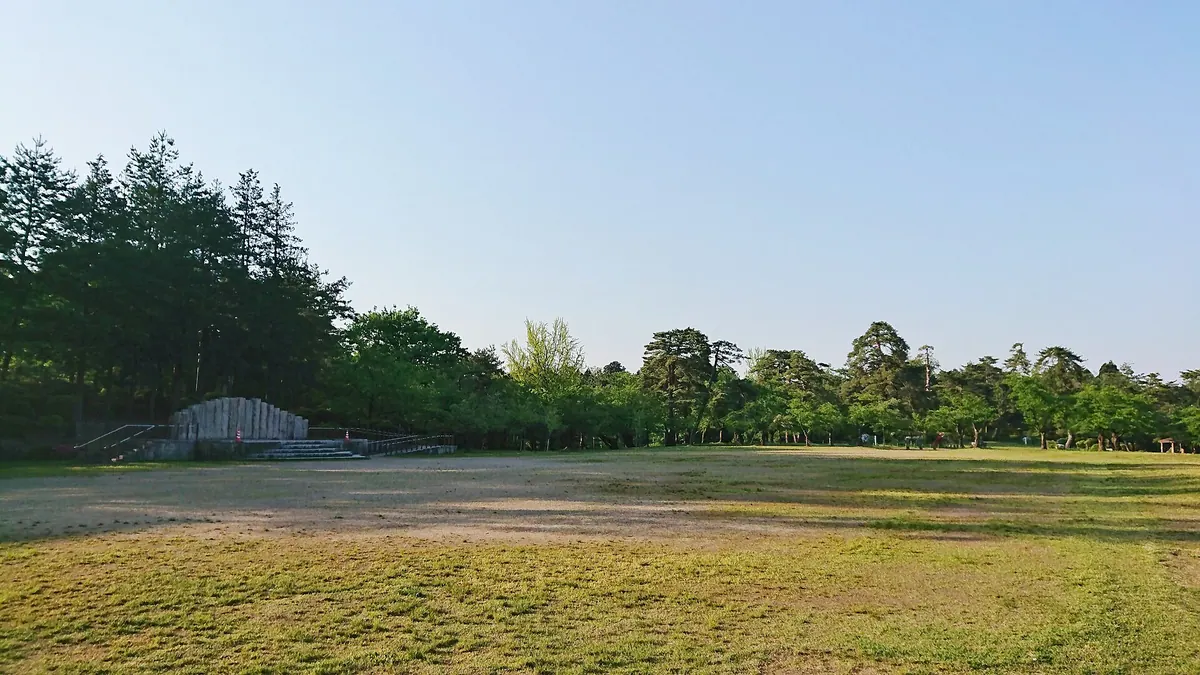
What it is
- Park opened in 1918 to commemorate Nagaoka’s 300th anniversary.
- Named after Mt. Yukyuzan, which lies just to the east.
- Founder of Eneos Oil Company, Yamada Matashichi, conceived the park.
What to see
- Cherry trees planted by Makino Tadatoki.
- Almost 250-year-old Aoshi Shrine near the park’s entrance.
- Monuments to Nagaoka daimyo lords and samurai behind Aoshi Shrine.
- Shiro the Dog Shrine, built in 2018.
- “Snake Bridge” constructed by senior citizens.
- Monument to educational pioneer Kobayashi Torasaburo.
When to go
- Springtime, especially early to mid-April, for cherry blossoms.
- Fall for autumn leaves along walking routes.
- November for Shichi-Go-San custom at Aoshi Shrine.
In detail
Yukyuzan Park draws many visitors in the springtime, especially from early to mid-April, when the cherry blossoms are in full bloom. Fall is another popular time to visit, with the autumn leaves adding a variety of browns, reds, and yellows to walking routes. It is named after Mt. Yukyuzan, which lies just to the east.
Its roots as a gathering place go back to the days of Makino Tadatoki (1665–1722), leader of the Nagaoka domain, a feudal administration centered in Nagaoka during the Edo period (1603–1867). Tadatoki oversaw the planting of several cherry trees in the area that would later become the park. From that time forward, cherry blossom viewing west of the mountain became a custom.
However, the park as we know it today opened in 1918 to commemorate Nagaoka’s 300th anniversary. It was the brainchild of Yamada Matashichi (1855–1917), the founder of the Eneos Oil Company and a Nagaoka native.
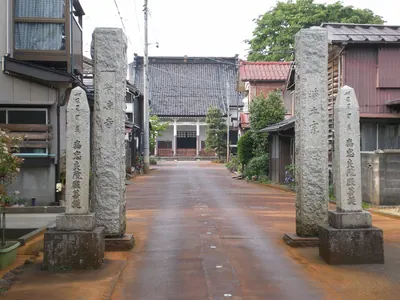
Near the park’s entrance is the almost 250-year-old Aoshi Shrine, a popular destination for observing the November custom of Shichi-Go-San (“Seven-Five-Three”), when parents take children of those ages to the shrine to pray for their healthy growth. Behind the shrine, there are monuments to the fourteen generations of past Nagaoka daimyo lords, and to the samurai who gave their lives defending the city during the Boshin War (1868–1869).
A short walk from there is another shrine, dedicated to Shiro the Dog. According to local legend, Shiro’s family moved to Nagaoka from Edo (present-day Tokyo) to live close to Aoshi Shrine. Shiro missed his family so much that he walked more than 250 kilometers from their former home to reunite with them.
Shiro’s Shrine was built in 2018 to mark Nagaoka’s 400th anniversary. Close to it lies the “Snake Bridge,” constructed by some of the city’s senior citizens.
Next to the bridge, visitors can also see a monument to Kobayashi Torasaburo (1828–1877), an educational pioneer and writer. He is best known for developing the “Kome Hyappyo” (One Hundred Sacks of Rice) philosophy.
During the Meiji Restoration in 1868, Nagaoka suffered food shortages, but the city’s leaders acquired 100 sacks of rice to feed the population. Torasaburo argued, “If 100 sacks of rice are eaten, they are lost instantly. However, if they are put toward education, they can become 10,000 or 1,000,000 sacks tomorrow.” He suggested selling the rice and using the money to finance the building of a school. After some initial resistance, the community accepted his idea, and the money gained from the sale of the rice went toward building the Kokkan Gakko school, a forerunner of modern-day elementary schools.
Across Yukyuzan Park are monuments to other notable figures of Nagaoka’s past. There is one honoring Kawai Tsuginosuke (1827–1868), a samurai who, despite his anti-war stance, fought against the imperial army during the Boshin War. Another monument pays tribute to Matsuoka Yuzuru (1891–1969), a distinguished writer, novelist, and philosopher.
Animal lovers or visitors with young children may enjoy the Yukyuzan Zoo, which holds a monkey enclosure, among other attractions.
The Nagaoka City Museum of Local History is the park’s major draw. The remarkable design of this white, multi-story building is inspired by the look of castles in feudal Japan, such as the original Nagaoka Castle, which was destroyed during the Boshin War in 1868. The castle stood on the current site of JR Nagaoka Station. When the museum opened in 1968, many rocks from the castle’s foundations were incorporated into the stone walls forming part of the entrance facade.
Inside, the museum details Nagaoka’s history through the eyes of the people who made the city what it is today. The exhibits contain artifacts from the Makino family, which led the local domain for thirteen generations. Other displays showcase artifacts from more recent notable figures, such as World War II naval leader Yamamoto Isoroku (1884–1943).
Text: 観光庁 地域観光資源の多言語解説文データベース. Reproduced unchanged. The notes above were written from that text by Japan Gems.
Where it is
Yūkyūzan Park Open in Google Maps
この施設の関係者の方へ
このページは公開情報をもとに Japan Gems が作成し、訪日外国人向けに英語で掲載しています。 写真や情報の追加・修正を承っています。お店の写真に差し替えることもできます。
このページの情報を更新する