
Banshō-in Temple
万松院
Banshō-in Temple is the ancestral temple of the So family, worth visiting for its historical mausoleum.
What it is
- Ancestral temple of the So family, lords of Tsushima.
- Founded in 1615 by So Yoshinari.
- Named after his father Yoshitoshi's posthumous name.
What to see
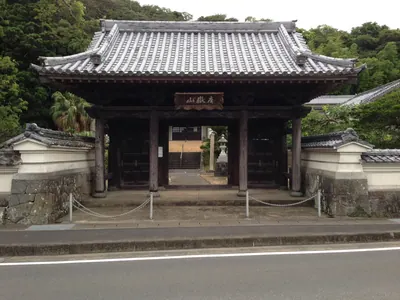
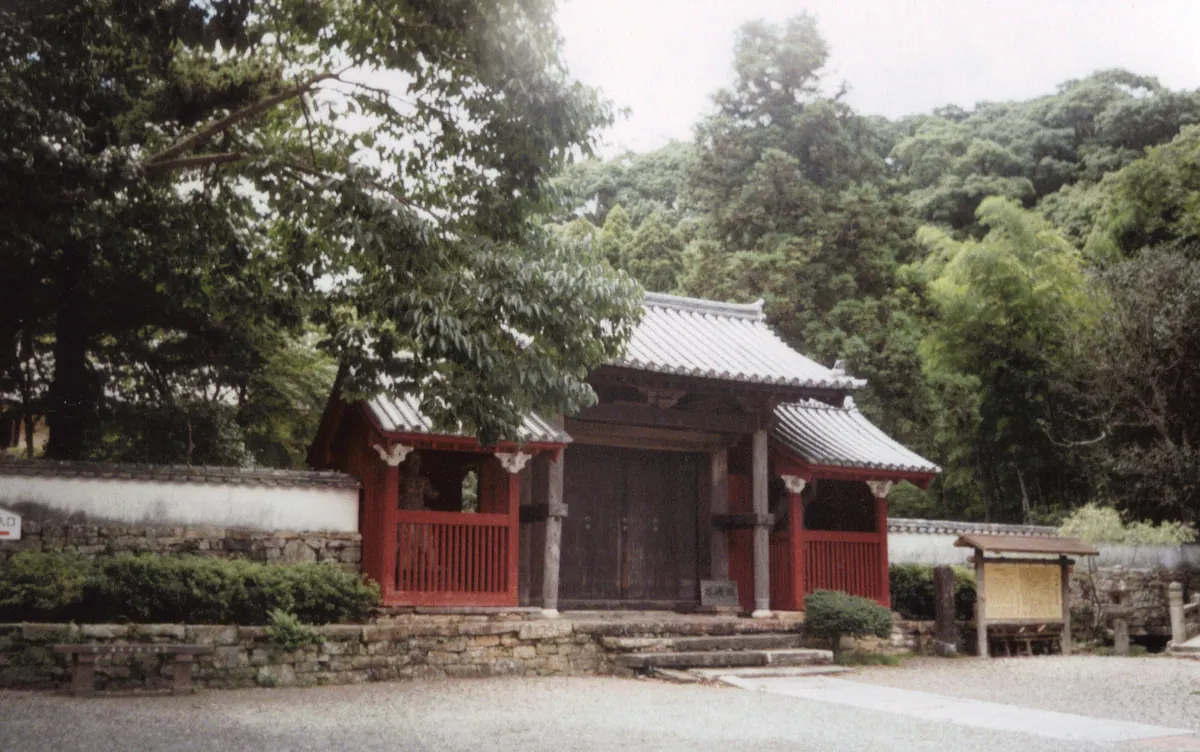
- Red main gate with Nio guardian king statues.
- Main hall with three bronze altar decorations.
- Crane-and-turtle candlestick, lion censer, flower vase.
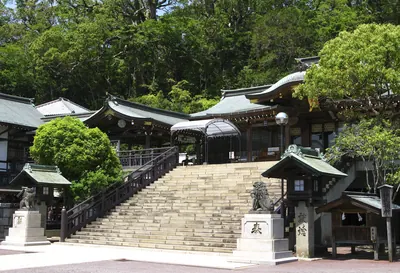
- 132-step stone staircase to the mausoleum.
- So family mausoleum with tombs of lords and family.
- Three giant cedar trees overshadowing the Kami-Otamaya.
Getting there
- Located on the western edge of Izuhara town.
In detail
The So family were lords of Tsushima from the thirteenth century until the late nineteenth century, and Banshoin is their ancestral temple. The temple is located in the shadow of Mt. Shimizu on the western edge of the town of Izuhara and includes a sprawling hillside mausoleum containing the graves of the So family from 1615 onward. In that year, So Yoshinari (1604–1657) founded the temple in memory of his father Yoshitoshi (1568–1615), naming it Banshoin after Yoshitoshi’s posthumous honorary name. Adjacent to the temple was Kaneishi Castle, the So family’s stronghold and main residence.
Banshoin is entered via a path that passes by the temple’s red main gate, flanked by a pair of statues of Nio guardian kings believed to ward off evil and protect the temple from harm. The gate is the only original structure remaining on the grounds; the other buildings were lost to fire and subsequently rebuilt.
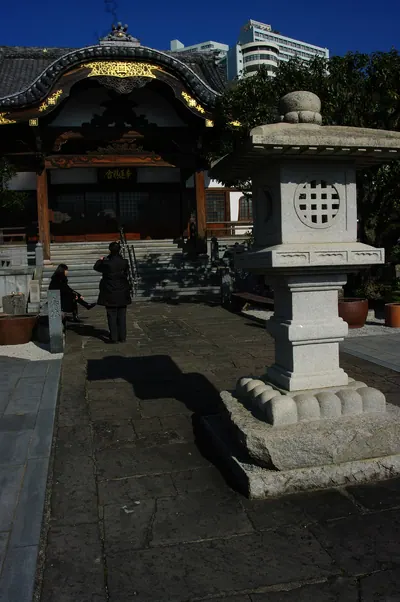
Beyond the gate is the main hall, which holds a set of three bronze altar decorations: a candlestick with a crane-and-turtle motif, a lion-shaped censer, and a flower vase. These items were gifts from the king of Korea, sent as an expression of condolences for the death of a head of the So family. The Korean court maintained close ties with the So, who were tasked with managing diplomatic relations between the kingdom and the Tokugawa shogunate and were granted a trade monopoly with Korea throughout the Edo period (1603–1867). Banshoin used to house many more such metal implements, but the others were requisitioned and melted down for military use during World War II.
From the main hall, a 132-step stone staircase leads to the So family mausoleum. Its uppermost section, the Kami-Otamaya, is overshadowed by three giant cedar trees; it contains the tombs of the So lords and those of their wives and adult children. The tombs’ sizes vary according to the prominence and wealth of the Tsushima domain at the time. So Yoshinari’s tombstone and that of his successor Yoshizane (1639–1702) are the largest, reflecting the prosperity of Tsushima during the latter half of the seventeenth century when trade with Korea flourished. On the cemetery’s lower levels are the tombs of other family members, including concubines and children who died young.
Text: 観光庁 地域観光資源の多言語解説文データベース. Reproduced unchanged. The notes above were written from that text by Japan Gems.
Where it is
長崎県対馬市厳原町西里192 Open in Google Maps
この施設の関係者の方へ
このページは公開情報をもとに Japan Gems が作成し、訪日外国人向けに英語で掲載しています。 写真や情報の追加・修正を承っています。お店の写真に差し替えることもできます。
このページの情報を更新する