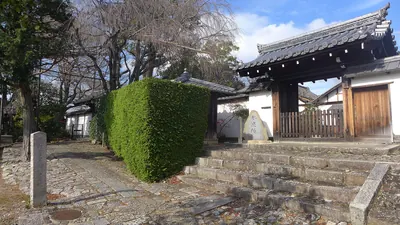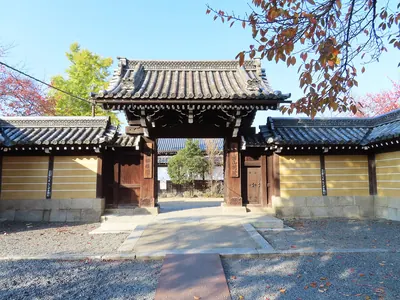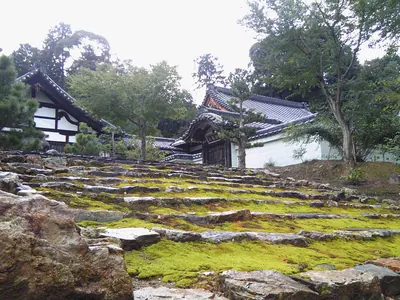

Eikan-dō Zenrin-ji Temple
禅林寺
This temple, established in 863, was a place of study for Buddhism and home to many monks.
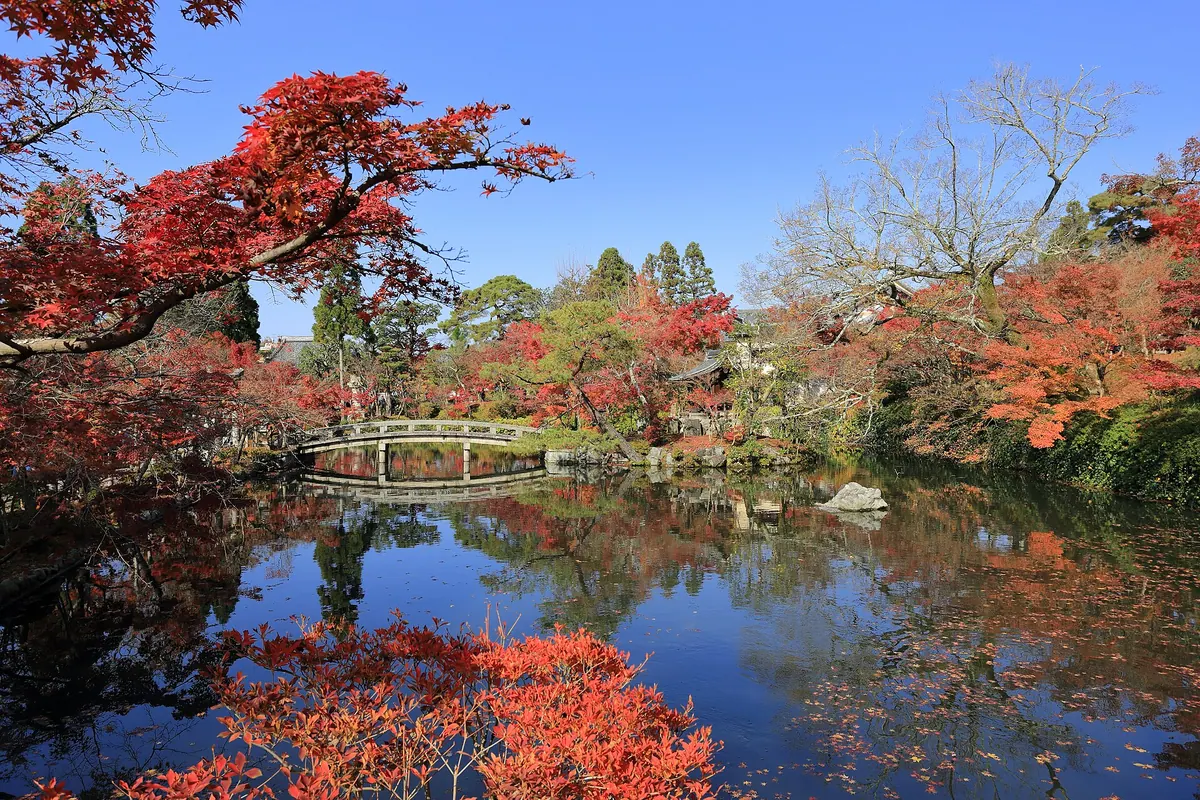
What it is
- Temple established in 863.
- Originally known as Zenrinji.
- Named after the influential monk Eikan.
- A place of study for various forms of Buddhism.
What to see
- Former mountain villa of Fujiwara no Sekio.
- Statues of the Five Wisdom Kings (Gochi Nyorai).
In detail
Since its establishment in 863, Eikandō has been a place of study for many different forms of Buddhism, and many illustrious monks have walked its halls. The temple’s history can be largely divided into three periods. The first period extends some 220 years, from the purchase of the property in 853 to the arrival of the influential monk Eikan, for whom the temple would eventually be named. During this time, the temple belonged to the Shingon school of Esoteric Buddhism and was known as Zenrinji.
Zenrinji’s grounds were originally occupied by the mountain villa of Fujiwara no Sekio (805–853), a member of the powerful Fujiwara family. Though many Fujiwara were bureaucrats, Sekio was a respected poet and scholar who preferred a quiet life in the mountains. Sekio’s mountain retreat, being remote but still close to the capital in Kyoto, was the ideal location for a Buddhist temple. When Sekio died in 853, an enterprising monk named Shinjō (797–873) set out to convert the vacated residence into a temple.
Shinjō faced a number of barriers, beginning with the purchase of the property itself. Monks traditionally own no property or money of their own, and they rely on beneficiaries and donations to maintain their livelihoods. Even after Shinjō organized the funds to purchase Sekio’s villa, the new temple would also need money for its daily operations. During the Heian period (794–1185), this support was typically provided by the imperial court, which established and regulated official temples called kanji. In order to receive this support and open Zenrinji, however, Shinjō would need to get governmental authorization.
Thankfully, Shinjō was well connected within the imperial government. He was a disciple of Kūkai (774–835), the founder of the Shingon school and the driving force behind the creation of several temples, including the Shingon headquarters on Mt. Kōya. Following in those footsteps, Shinjō had already spearheaded the creation of Kanshinji temple in what is now Osaka, so he and his teacher were already known at the capital. Using these connections, Shinjō was able to organize the purchase of Sekio’s villa.
Normally, the creation of new temples was strictly regulated, but Shinjo also had a crafty plan to secure governmental authorization: first, he commissioned impressive statues of the Five Wisdom Kings (Gochi Nyorai) at Kanshinji Temple. After three years, the statues were completed, and Shinjō informed the imperial court that he wanted to enshrine them somewhere. The statues were sure to attract many visitors, but Kanshinji Temple was located far from the capital and deep in the mountains, and it seemed like a waste to keep them there. Shinjō suggested that he just happened to have an ideal location for exhibiting the statues—the former site of Fujiwara Sekio’s villa. In 863, Emperor Seiwa (850–881) agreed to let him establish the temple of Zenrinji.
Text: 観光庁 地域観光資源の多言語解説文データベース. Reproduced unchanged. The notes above were written from that text by Japan Gems.
Where it is
京都府京都市左京区永観堂町48 Open in Google Maps
この施設の関係者の方へ
このページは公開情報をもとに Japan Gems が作成し、訪日外国人向けに英語で掲載しています。 写真や情報の追加・修正を承っています。お店の写真に差し替えることもできます。
このページの情報を更新する