
Higashi Hongan-ji Temple
東本願寺
This temple, founded in 1602, is the head temple of a large Buddhist denomination in Japan.
What it is
- Head temple of the Otani branch of Jodo Shinshu.
- Founded in 1602 by Kyonyo.
- Official name is Shinshu Honbyo, main Shinshu mausoleum.
- Originally the tomb of Shinran, founder of Jodo Shinshu.
What to see
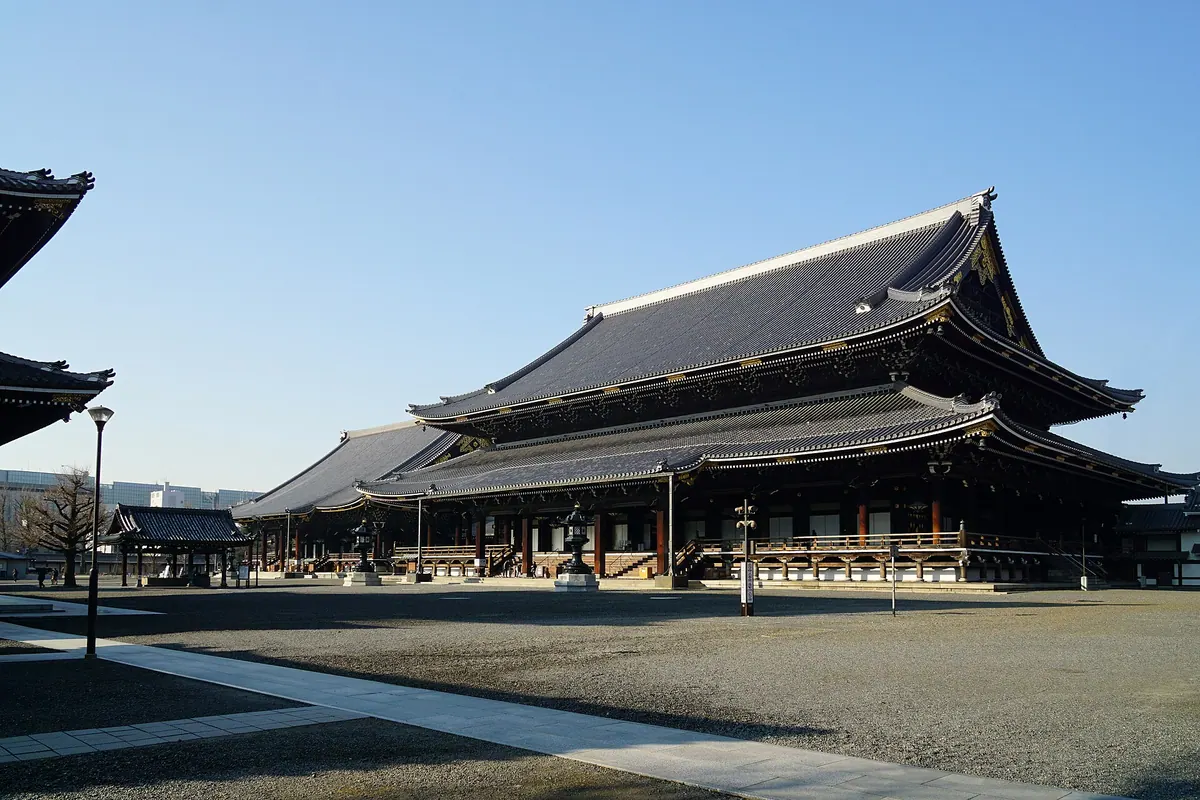
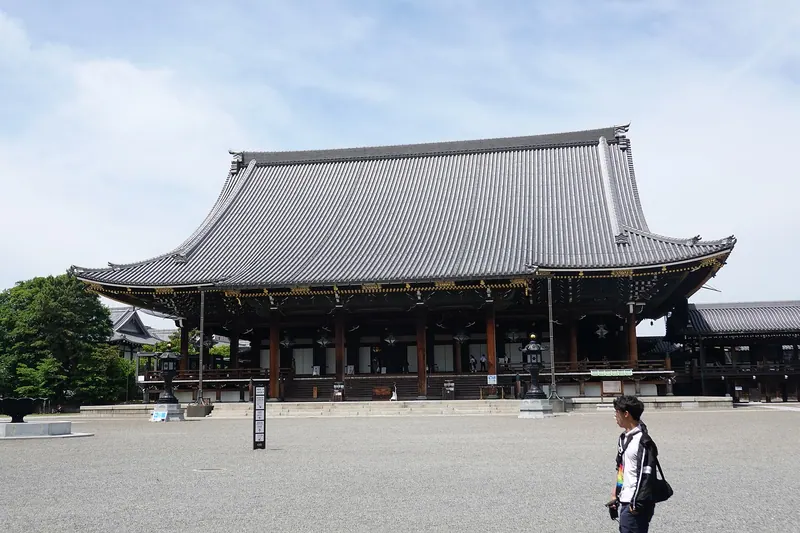
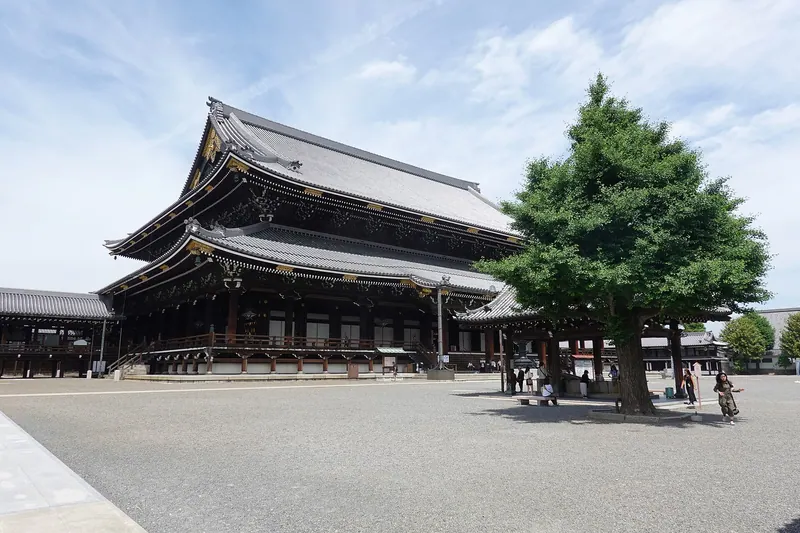
- Founder’s Hall, enshrines Shinran.
- Amida Hall, houses a statue of Amida Buddha.
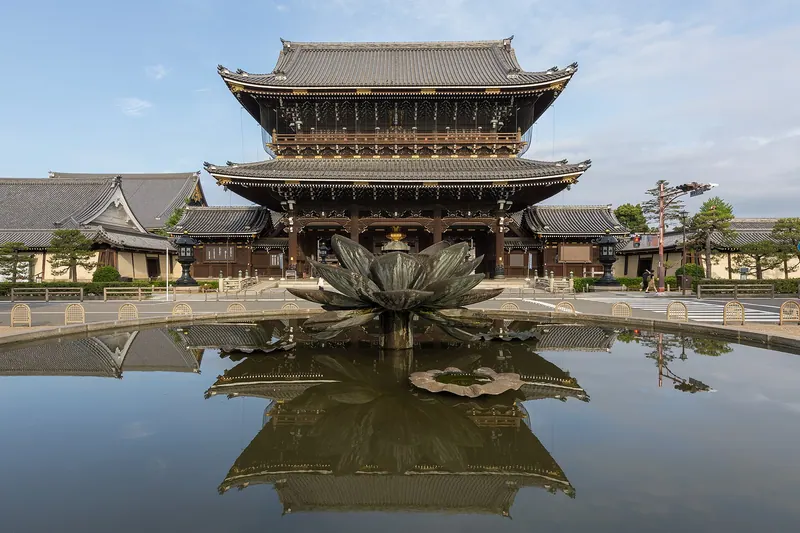
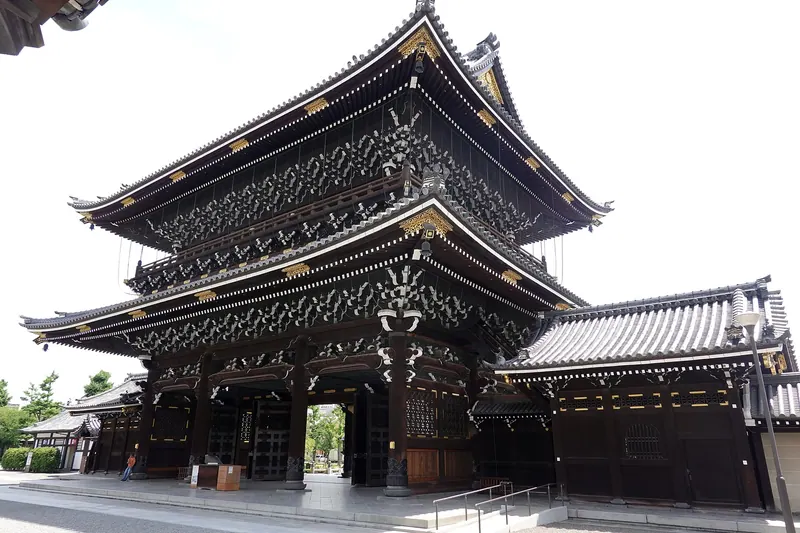
- Immense Founder’s Hall Gate.
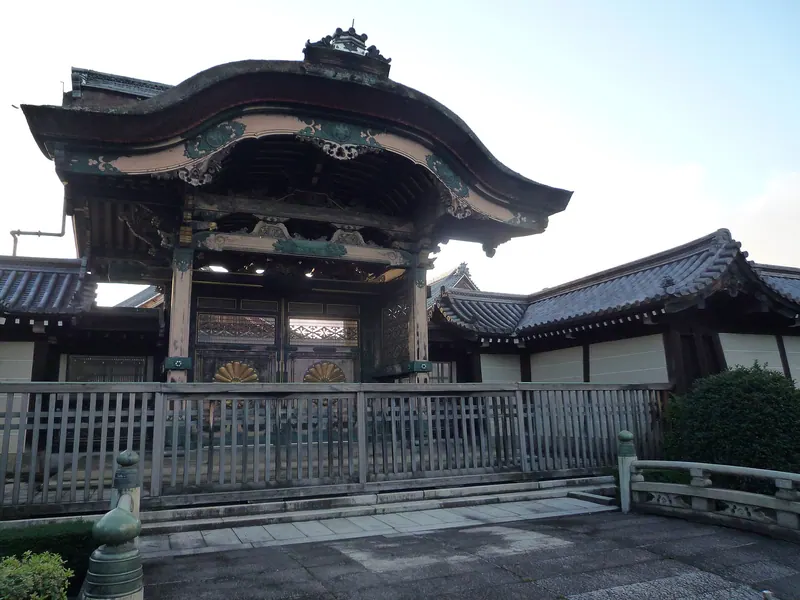
- Smaller Amida Hall Gate.
- Shoseien Garden, east of the temple grounds.
When to go
- Current buildings date from 1895 and 1911.
In detail
Higashi Honganji is the head temple of the Otani branch of Jodo Shinshu (True Pure Land), one of the largest Buddhist denominations in Japan. The temple’s official name is Shinshu Honbyo (“main Shinshu mausoleum”), which refers to its origins as the tomb of Shinran (1173–1262), the founder of Jodo Shinshu.
Fluctuating fortunes
Shinran’s original mausoleum was located in Otani, in what is now the eastern part of the city of Kyoto. His great-grandson Kakunyo (1270–1351) converted the burial complex into a place of worship. Named Honganji, the temple flourished under its eighth head priest, Rennyo (1415–1499), who considerably expanded its membership and influence. However, Rennyo’s early success was deemed a threat by the Tendai school, which until then was the Buddhist movement with the greatest influence in the court. As a result, Tendai monks destroyed Honganji and drove Rennyo out of the city, but that became an opportunity for him to further spread Jodo Shinshu teachings outside Kyoto.
Honganji was later reestablished elsewhere in Kyoto and then in Osaka, but was burned down by rivals for influence on both occasions. Jodo Shinshu endured nonetheless, and in the late sixteenth century, the school rebuilt its head temple in Kyoto under the protection of Toyotomi Hideyoshi (1537–1598), the warlord and regent who was the most powerful man in the country at the time.
The East-West split
Soon after Honganji returned to Kyoto, internal disagreement over who would succeed the temple’s deceased head priest Kennyo (1543–1592) escalated into a lengthy power struggle that tore the institution apart. Hideyoshi was asked to mediate in the succession dispute, and he ruled that Kennyo’s eldest son, Kyonyo (1558–1614), should relinquish the post of head priest in favor of his younger brother, Junnyo (1577–1630).
After Hideyoshi died in 1598, his most powerful ally, Tokugawa Ieyasu (1543–1616), unified the country under his own banner. The deposed Kyonyo pledged to support Ieyasu and was rewarded with a piece of land in Kyoto to the east of Honganji. Ieyasu went on to establish the Tokugawa shogunate, which was to rule Japan until 1867, and Kyonyo founded a Honganji temple of his own on the land he had been awarded. The new temple came to be known as Higashi (East) Honganji to distinguish it from Junnyo’s Nishi (West) Honganji. The shogunate approved of and, to some extent, encouraged the split, which served to diminish the political influence of Jodo Shinshu as a whole.
Higashi Honganji today
Higashi Honganji has endured on its present site since its founding by Kyonyo in 1602. Its structures have burned down four times, most recently in 1864. The current Founder’s Hall and Amida Hall, the temple’s two largest buildings, date to 1895, whereas the immense Founder’s Hall Gate and the smaller Amida Hall Gate were completed in 1911. The Founder’s Hall enshrines Shinran, while the Amida Hall houses a statue of Amida Buddha, the central deity in Jodo Shinshu. A few minutes’ walk east from the grounds is the Shoseien Garden, which has been part of the temple since the seventeenth century and was reconstructed in its current configuration after the fire of 1864.
Text: 観光庁 地域観光資源の多言語解説文データベース. Reproduced unchanged. The notes above were written from that text by Japan Gems.
More photos
Where it is
京都府京都市下京区烏丸通七条上ル常葉町754 Open in Google Maps
この施設の関係者の方へ
このページは公開情報をもとに Japan Gems が作成し、訪日外国人向けに英語で掲載しています。 写真や情報の追加・修正を承っています。お店の写真に差し替えることもできます。
このページの情報を更新する