
Hikō Shrine
飛行神社
This shrine, founded by an aviation pioneer, is a place to pray for safe air travel.
What it is
- Modern Shinto shrine founded in 1915.
- Dedicated to souls of people who died in aviation accidents.
- Honors all victims regardless of nationality.
- Founded by Ninomiya Chuhachi, a pioneer of Japanese aviation.
What to see
- Main sanctuary with three altars.
- Central altar enshrines Nigihayahi no Mikoto, a sky deity.
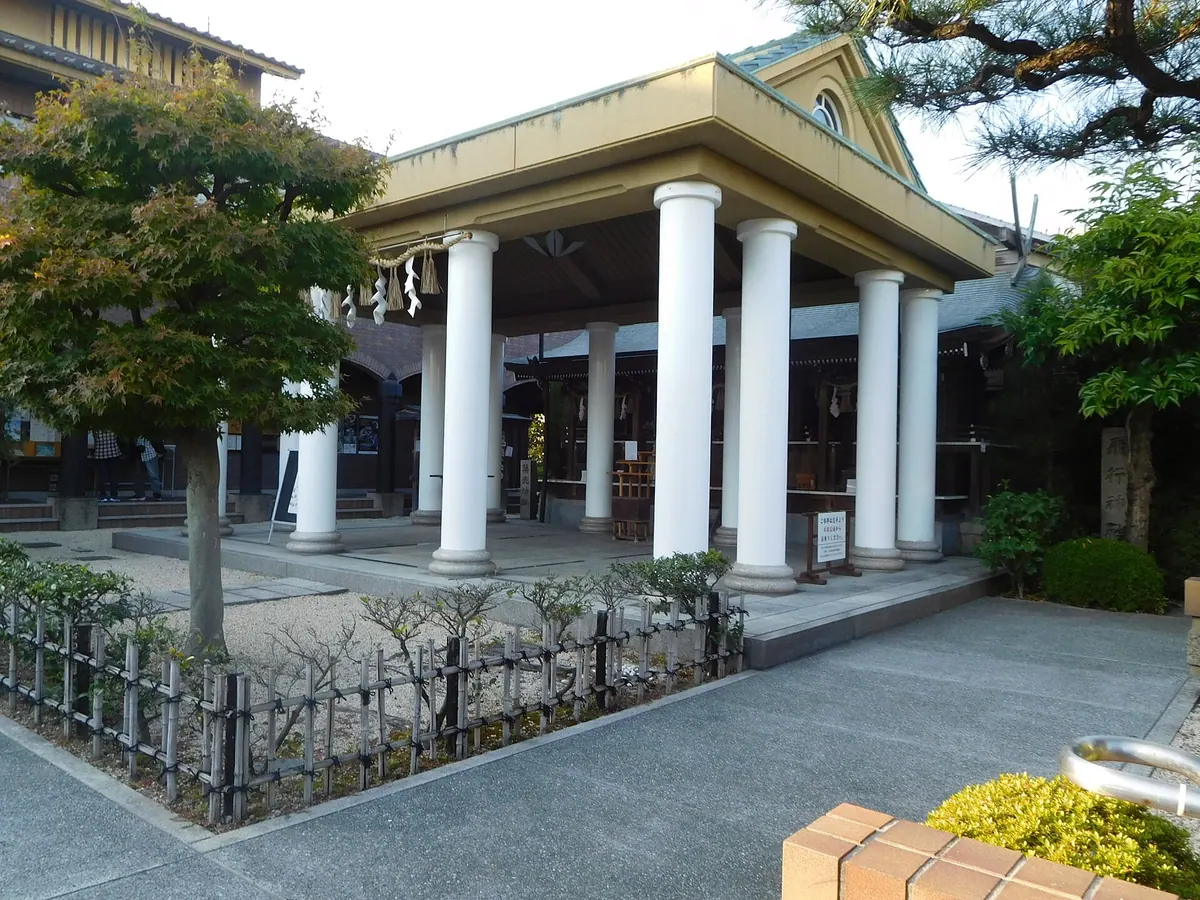
- Prayer hall in classical Western style with columns.
- Stained-glass decorations depicting animals.
- Small museum with items related to Chuhachi and his inventions.
- Hundreds of collectible airplane models donated by enthusiasts.
In detail
Hiko Jinja Shrine is a relatively modern Shinto shrine founded by Ninomiya Chuhachi (1866–1936), a pioneer of Japanese aviation. It is known as a place to pray for safe air travel and is dedicated to the souls of all people who died in aviation accidents. Based on the belief that the world is united under the same sky, Hiko Shrine honors all victims, regardless of nationality.
Chuhachi’s interest in flight began at an early age and continued throughout his life. While working at his uncle’s pharmacy as a teenager after his parents’ deaths, he designed and sold kites to support his studies. When serving as an army medic in his twenties, he drew inspiration from nature and created a fixed-wing rubber-powered “crow-type model aircraft,” which flew successfully in 1891. Next was the “jewel beetle-type aircraft,” a tailless man-carrying biplane model built in 1893, but lack of financing put Chuhachi’s further plans on hold. After years of working in the pharmaceutical industry, he secured land in Yawata and began building a full-scale prototype. However, before the project could be completed, the Wright Brothers successfully accomplished the world’s first controlled, sustained flight of a powered heavier-than-air aircraft in 1903.
Though Chuhachi abandoned his project, he did not lose his love for aviation. As humanity entered the age of flight, he was saddened by the rising number of deaths in airplane-related incidents. This led him to Shinto priesthood, and in 1915 he founded this shrine, naming it Hiko Jinja, “the shrine of flight.” Its main sanctuary is comprised of three altars. The central altar enshrines Nigihayahi no Mikoto, a deity of the sky. The altar on the right is dedicated to the souls of people lost in aviation accidents, as well as to aviation pioneers. The altar on the left enshrines prominent figures of the Japanese pharmaceutical industry.
The shrine was rebuilt in 1989 with a prayer hall in a classical Western style, with columns and stained-glass decorations depicting animals that inspired Chuhachi’s models. A small museum exhibits many items related to Chuhachi and his inventions, including sketches, photos, art, kites, and models of airplanes that he developed. Hundreds of collectible airplane models donated by aviation enthusiasts are also displayed there.
Text: 観光庁 地域観光資源の多言語解説文データベース. Reproduced unchanged. The notes above were written from that text by Japan Gems.
Where it is
京都府八幡市八幡土井44 Open in Google Maps
この施設の関係者の方へ
このページは公開情報をもとに Japan Gems が作成し、訪日外国人向けに英語で掲載しています。 写真や情報の追加・修正を承っています。お店の写真に差し替えることもできます。
このページの情報を更新する