
Hōfuku-ji Temple (Nagaoka)
法福寺 (長岡市)
This temple honors Nichiren, who stayed here before exile, offering insight into his teachings and journey.
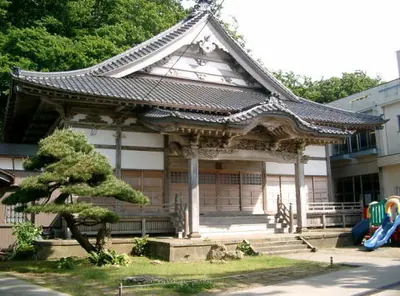
What it is
- Hofukuji belongs to the Nichiren school of Buddhism.
- Founded by Nichiren (1222–1282), a Buddhist priest.
- Land donated by the Ishikawa family in 1706.
What to see
- Soshido (Founder’s Hall) on the property.
- Inside the hall: scroll painting of Nichiren’s sea crossing.
- Inside the hall: copy of the Letter from Teradomari.
- Inside the hall: golden altar with a statue of Nichiren.
- Ground well used by Nichiren to wet his inkstone.
- Large statue of Nichiren erected beside the well in 1964.
When to go
- Doors of the small wooden hall are usually closed, but visitors may enter freely.
In detail
The Legacy of Nichiren
Hofukuji belongs to the Nichiren school of Buddhism, which was founded by Nichiren (1222–1282), a Buddhist priest who challenged the established religious order. After years of study, Nichiren concluded that the Lotus Sutra was the embodiment of the Buddha himself and the only true doctrine for the contemporary age. From 1253, he began propagating the chant Namu myoho renge kyo (I take refuge in the Lotus Sutra) as a central tenet of his teachings. However, Nichiren was exiled to the Izu Peninsula for two years for his rebuke of other Buddhist schools and critique of the government. After returning in 1263, Nichiren continued to spread his teachings. In 1271, after challenging a prominent priest connected to the shogunate, Nichiren was ordered into exile on Sado Island.
On November 24, 1271, Nichiren arrived in Teradomari to board a ship to Sado. Strong winds delayed his departure, however, forcing him to remain in Teradomari for seven days as a guest of the wealthy Ishikawa family. During this period, he composed letters to his disciples before moving on to Sado.
Letter from Teradomari
One particular letter, which eventually became known simply as the “Letter from Teradomari,” was addressed to Nichiren’s loyal follower Toki Jonin (1216–1299). In the letter, Nichiren reassured his followers of the righteousness of the Lotus Sutra and cited multiple sutras to refute arguments against his teachings. He also compared his own persecution to that suffered by the historical Buddha and declared he had no regrets despite the hardships to come. As instructed by Nichiren, Toki Jonin shared the contents of the letter among Nichiren’s followers, which served as a great comfort and source of encouragement to them during his exile.
The Founder’s Hall and the Former Site of the Ishikawa Residence
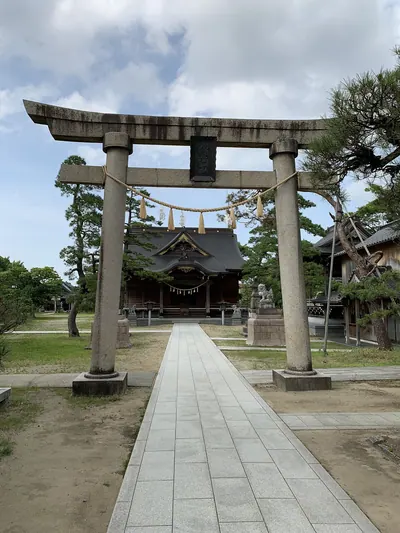
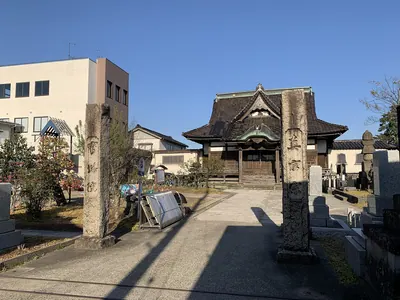
In 1706, though the residence where Nichiren had stayed in the thirteenth century was no longer standing, the Ishikawa family donated the land to nearby Hofukuji Temple. Hofukuji then erected a Soshido (Founder’s Hall) on the property to honor its connection to Nichiren as the point of his crossing to Sado Island. The doors of the small wooden hall are usually closed, but visitors may enter freely. Inside is a scroll painting of Nichiren’s sea crossing, a copy of the Letter from Teradomari, and a golden altar that houses a statue of Nichiren.
On the other side of the road that cuts through the property is a simple ground well. Nichiren is said to have used its water to wet his inkstone when he wrote the Letter from Teradomari. The well is protected now by a simple wooden structure topped with roof tiles decorated with the Nichiren school crest: a tachibana citrus tree surrounded by a well curb. A large statue of Nichiren was erected beside the well in 1964. The dynamic pose captures the priest with his arms outstretched and sleeves billowing in the wind, his gaze directed toward Sado Island.
Text: 観光庁 地域観光資源の多言語解説文データベース. Reproduced unchanged. The notes above were written from that text by Japan Gems.
Where it is
新潟県長岡市寺泊二ノ関2720 Open in Google Maps
この施設の関係者の方へ
このページは公開情報をもとに Japan Gems が作成し、訪日外国人向けに英語で掲載しています。 写真や情報の追加・修正を承っています。お店の写真に差し替えることもできます。
このページの情報を更新する