
Honmyō-ji Temple
本妙寺
This temple, founded by Kato Kiyomasa, offers a stone pathway, unique concrete gate, and a historic staircase.
What it is
- Nichiren Buddhist temple in western Kumamoto.
- Founded in 1585 in Osaka by Kato Kiyomasa.
- Dedicated to the memory of Kato Kiyomasa's father.
- Relocated to its current site in 1616.
What to see
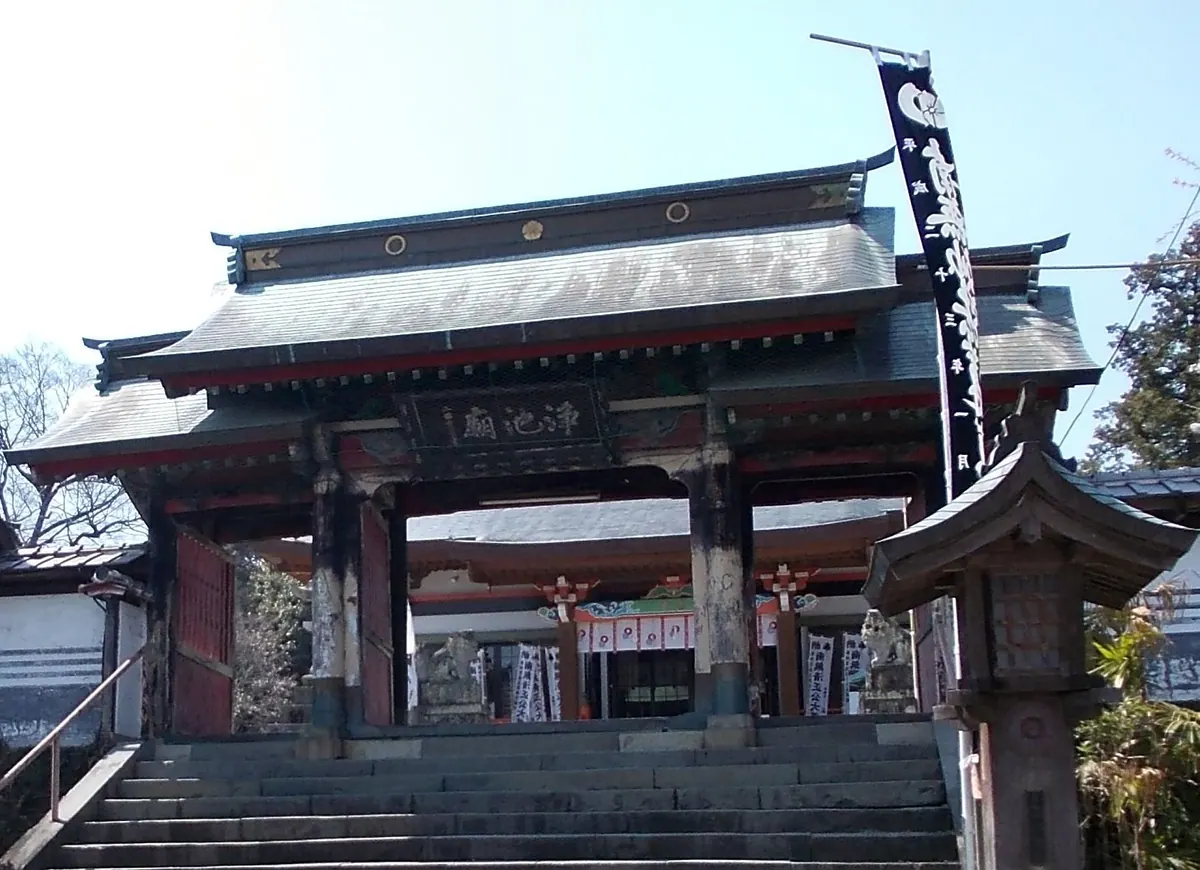
- Concrete niomon front gate from 1920.
- Long stone pathway leading to the temple.
- Munatsuki Gangi stone staircase with 176 steps.
- Hundreds of stone lanterns lining the staircase.
- Enormous joyato lantern at the top of the staircase.
- Mausoleum with worship hall and main sanctuary.
Getting there
- Long stone pathway leads from the road to the temple.
In detail
Honmyoji Temple is a Nichiren Buddhist temple located on a mountain in western Kumamoto. It was originally built in Osaka in 1585 by the first-generation lord of Kumamoto, Kato Kiyomasa (1562–1611), in memory of his father, Kato Kiyotada (1526–1564). Kiyomasa eventually relocated the temple to the grounds of Kumamoto Castle; it was moved to its present site in 1616, after Kiyomasa’s death.
The niomon front gate dates from 1920 and is made of concrete, which was a rare and novel material in Japan at the time. A long stone pathway leads from the road to Honmyoji Temple, which stands at the end of the path. The original temple burned down in the Satsuma Rebellion of 1877; the present structure dates from 1884. Many of the other buildings lining the pathway are older than the main temple.
The stone staircase that leads up the mountain from the temple to the grave of Kato Kiyomasa has the evocative name of Munatsuki Gangi (“Feel-it-in-your-chest steps”). It consists of 176 steps running on either side of a central strip crammed with four or five hundred stone lanterns. At the top right of the staircase, just before the middle gate, stands an enormous joyato lantern with wooden weatherboards around the base. In olden times, it was lit at night to make the shrine visible from the keep of Kumamoto Castle.
Past the gate at the top of the steps is a stone-paved courtyard, with the mausoleum—consisting of a worship hall (haiden), with a main sanctuary (honden)—immediately behind it. Kato Kiyomasa’s grave is in the honden, along with the graves of two of his most faithful retainers, who committed ritual suicide at his death. The main sanctuary dates from the early Meiji era (1868–1912), though the worship hall has been rebuilt several times since then. In the Meiji era the government compelled Buddhist temples and Shinto shrines to separate, so the deified spirit (kami) of Kato Kiyomasa was moved to Kato Shrine, then located in the inner compound of Kumamoto Castle. The mausoleum was constructed with the castle in mind. The top of the main sanctuary is the same height as the larger of the two castle keeps of Kumamoto Castle.
A further 300 steps up the mountain is a statue of Kiyomasa Kato that was erected in 1960. It is the work of sculptor Kitamura Seibo (1884–1987), who designed the Peace Statue in Nagasaki Peace Park.
Text: 観光庁 地域観光資源の多言語解説文データベース. Reproduced unchanged. The notes above were written from that text by Japan Gems.
Where it is
熊本県熊本市西区花園4-13-1 Open in Google Maps
この施設の関係者の方へ
このページは公開情報をもとに Japan Gems が作成し、訪日外国人向けに英語で掲載しています。 写真や情報の追加・修正を承っています。お店の写真に差し替えることもできます。
このページの情報を更新する