

20 Temples in Kumamoto worth your time
Japan Gems
Kumamoto Prefecture's temples, such as Iō-ji Temple and Tōfuku-ji Temple, offer a mix of quiet reflection and historical architecture. These 25 locations provide diverse experiences for visitors interested in Japan's spiritual heritage.
Kumamoto has 27 temples on Japan Gems. Below are the 20 we can tell you the most about — each one written up in English from Japanese sources, with what to see and how to get there. See all temples in Kumamoto.
01
Honmyō-ji Temple
KUMAMOTO · TEMPLE 本妙寺
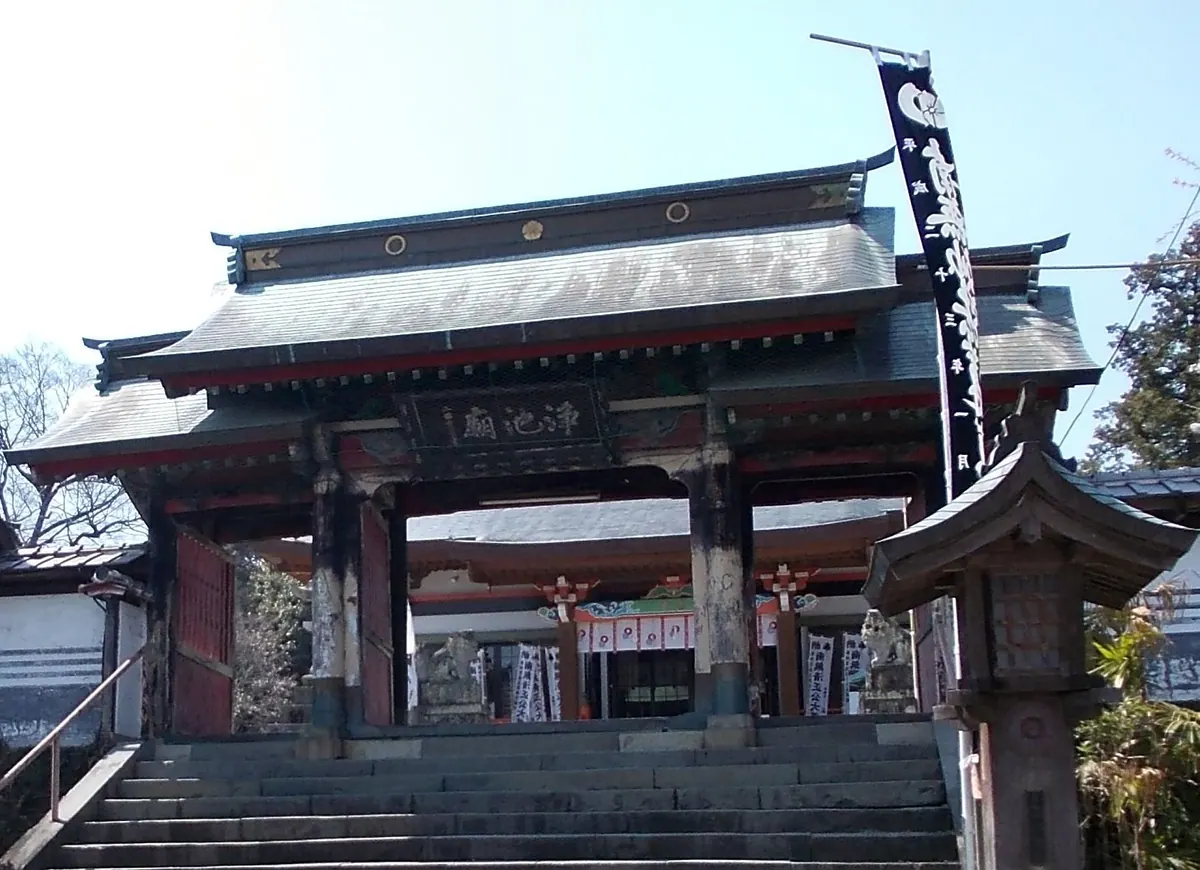
This temple, founded by Kato Kiyomasa, offers a stone pathway, unique concrete gate, and a historic staircase.
What it is
- Nichiren Buddhist temple in western Kumamoto.
- Founded in 1585 in Osaka by Kato Kiyomasa.
- Dedicated to the memory of Kato Kiyomasa's father.
- Relocated to its current site in 1616.
What to see
- Concrete niomon front gate from 1920.
- Long stone pathway leading to the temple.
- Munatsuki Gangi stone staircase with 176 steps.
- Hundreds of stone lanterns lining the staircase.
- Enormous joyato lantern at the top of the staircase.
- Mausoleum with worship hall and main sanctuary.
Getting there
- Long stone pathway leads from the road to the temple.
- Address
- 熊本県熊本市西区花園4-13-1 Map
- Official site
- www.honmyouji.jp
02
Ōjō-in Temple
KUMAMOTO · TEMPLE 往生院
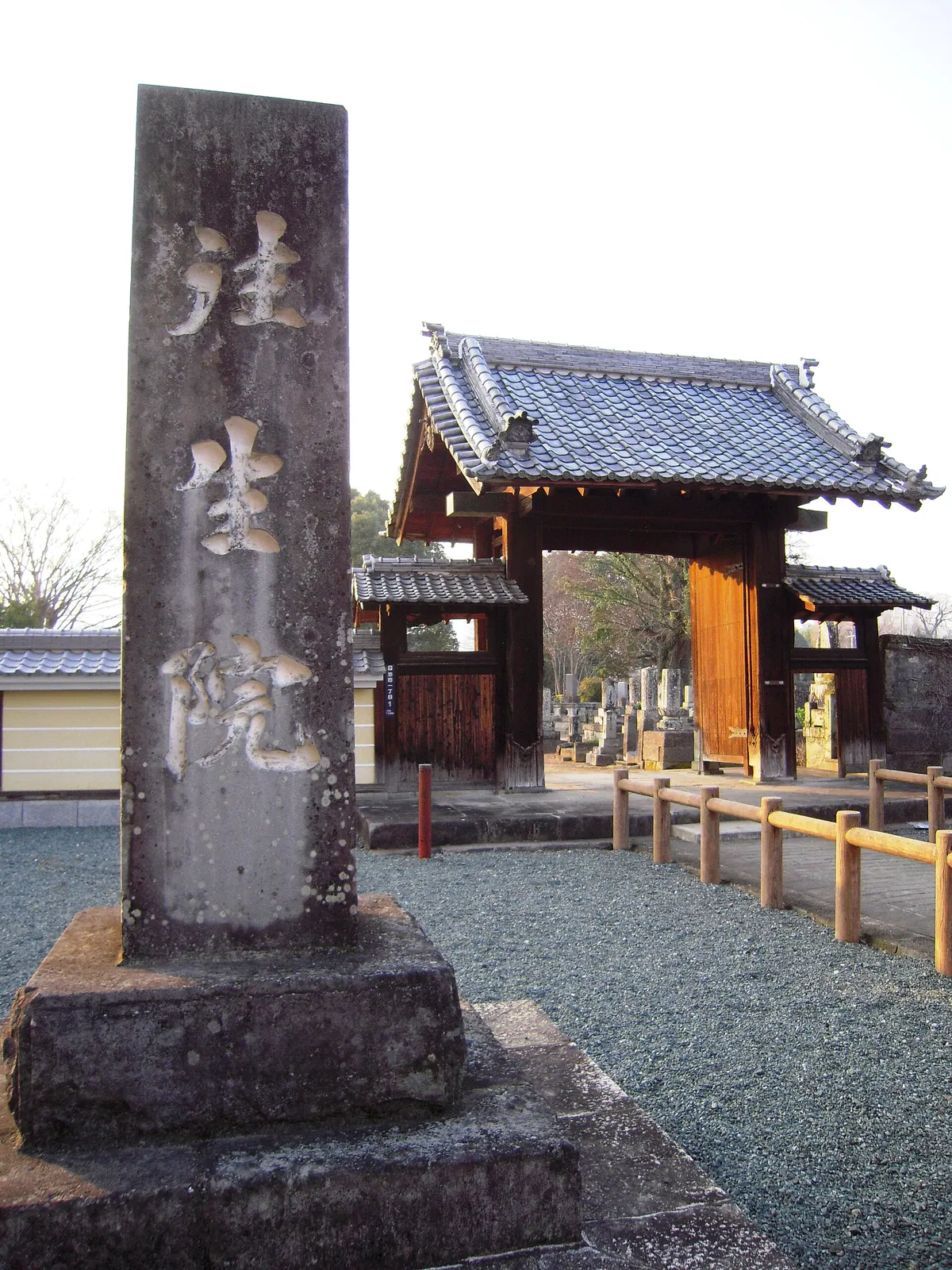
A 13th-century Jodo sect temple in Kumamoto featuring historic Jizo statues and ties to the 1877 Satsuma Rebellion.
What it is
- A Jodo sect Buddhist temple dedicated to the deity Amida Nyorai.
- Founded in 1228 by Priest Bencho and moved to its current site in 1724.
- Served as the Kumamoto Corps headquarters during the historic Satsuma Rebellion.
What to see
- The 6th and 100th Hogyu Jizo statues located on the temple grounds.
- The burial site of the temple founder, Priest Bencho.
- A memorial tower dedicated to Seishoin and a Hokyointo tower built by Gocho.
Getting there
- The temple is located a short walk from the Ojoin-mae bus stop.
03
Shōzen-in Temple
KUMAMOTO · TEMPLE 生善院 (水上村)
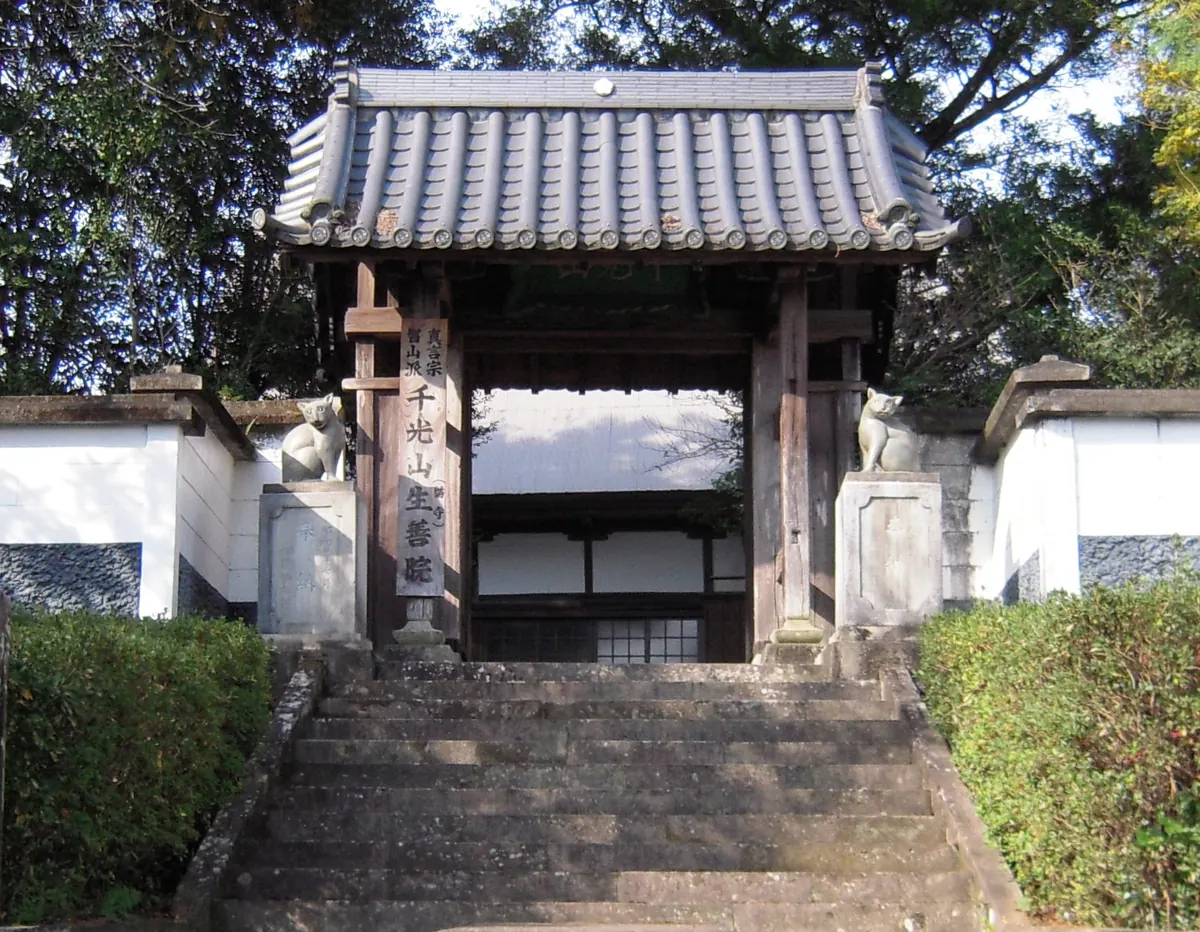
Shōzen-in Temple, also known as Cat Temple, is a historic Shingon-shu temple with unique cat-themed cultural properties.
What it is
- A Shingon-shu Chizan-ha temple.
- Commonly known as "Nekodera" or Cat Temple.
- Its Kannon-do hall was built in 1625.
- Main hall and living quarters are Japan Heritage cultural properties.
What to see
- A pair of guardian cats (Komane) next to the main gate.
- The Kannon-do hall, a National Important Cultural Property.
- Cats carved on the altar's panel inside the Kannon-do hall.
- Kannon-do hall has a hip-and-gable roof and thatched roof.
Getting there
- 20-minute walk from Kumagawa Railway Yunomae Station.
- Address
- 熊本県球磨郡水上村大字岩野3542 Map
04
Mōshigi monju-dō Temple
KUMAMOTO · TEMPLE 舞鴫文殊堂
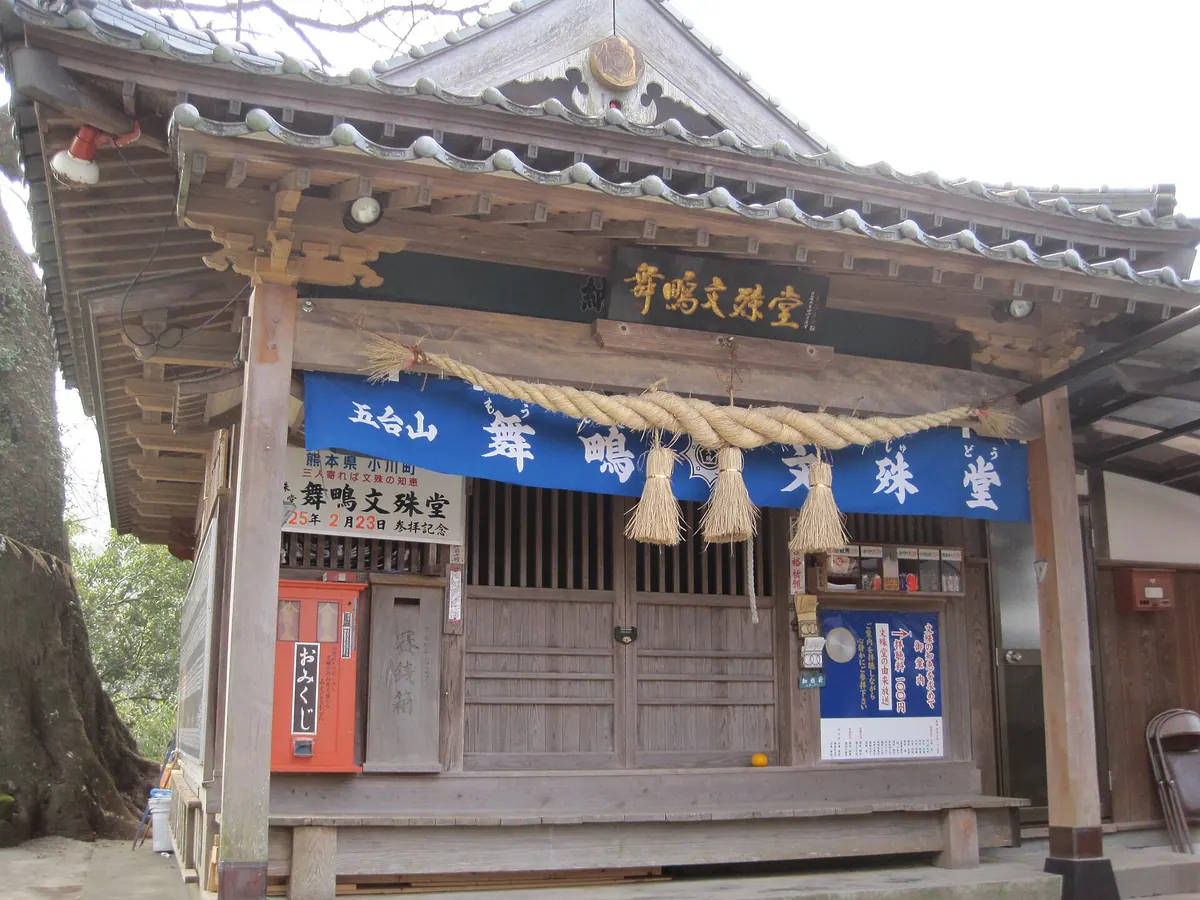
A historic temple in Kumamoto, founded in 1593, dedicated to academic success.
What it is
- A syncretic Buddhist temple founded in 1593.
- Brave warriors from Mōshigi founded the temple.
- It is also called Dazaifu of the West.
- Students visit for academic improvement and success.
What to see
- Monju Bosatsu is the principal deity.
- It enshrines Amitābha, Akiba Myōjin, and Ikime Hachiman.
- Mōshigi Monju-dō was selected as New Kumamoto 100 Landscapes.
When to go
- The annual festival is on January 1st.
- The first shrine visit is from January 2nd to 3rd.
- Address
- 熊本県宇城市小川町東海東3077 Map
05
Eikoku-ji Temple
KUMAMOTO · TEMPLE 永国寺
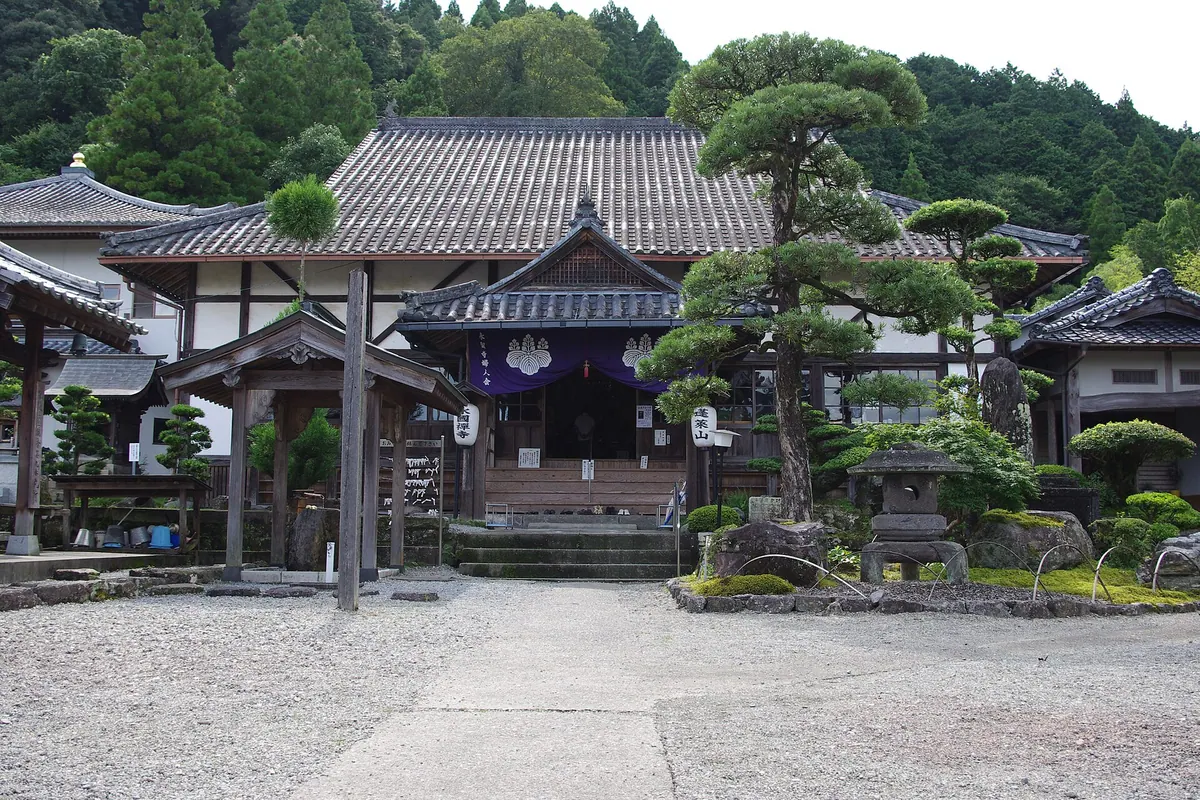
Eikokuji Temple offers ghost tales, a scenic pond, and artifacts from the Satsuma Rebellion.
What it is
- Soto Zen Buddhist temple.
- Founded in 1408.
- Known for ghost tales and Satsuma Rebellion events.
What to see
- Picturesque pond behind the Main Hall.
- Copy of a hanging scroll depicting a ghost.
- Artifacts from the Satsuma Rebellion in Main Hall.
- Artillery shell from the rebellion.
- Hanging scroll with calligraphy by Saigo Takamori.
- Flowering plants and trees around the pond.
When to go
- Enjoy varied colors of changing seasons.
- Address
- 熊本県人吉市土手町5 Map
06
Mangan-ji Temple
KUMAMOTO · TEMPLE 満願寺
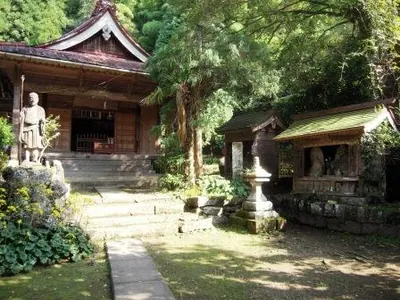
Mangan-ji Temple is a historic site with ancient trees and cultural properties, worth visiting for its serene beauty.
What it is
- A Koyasan Shingon sect temple.
- Founded in 1274 by Hojo Tokisada.
- Principal image is Jizo Bosatsu.
- The 16th temple of the Kyushu Kannon Pilgrimage.
What to see
- Konpira Sugi, a 1000-year-old National Natural Monument.
- Mangan-ji Garden, a Prefectural Scenic Spot.
- Mangan-ji Pagoda, a Prefectural Important Cultural Property.
- Mangan-ji Stone Pagoda Group, a Prefectural Historic Site.
- Painting of Hojo Tokisada, a National Important Cultural Property.
- Address
- 熊本県阿蘇郡南小国町満願寺2292番地 Map
07
Unganzen-ji Temple
KUMAMOTO · TEMPLE 雲巌禅寺
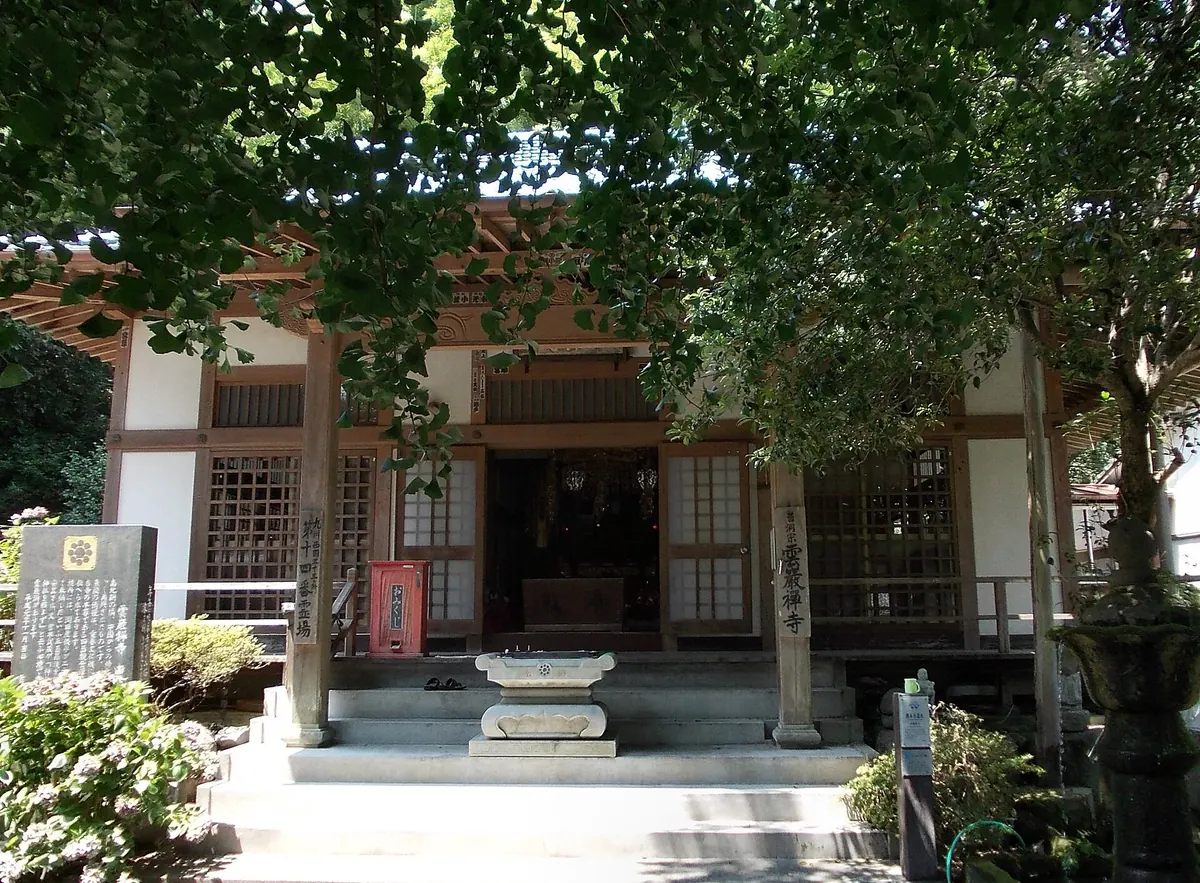
Explore a historic Zen temple, cave, and park with samurai connections and scenic views.
What it is
- Soto Zen Buddhist temple, also called Iwato Kannon.
- Established by the Zen monk Tōryō Eiyo.
- Main deity is a horse-headed Kannon statue.
- Temple grounds are a designated historic site.
What to see
- 16 Rakan and 500 Rakan stone statues.
- Reigando Cave, where Miyamoto Musashi wrote.
- Treasure hall with Miyamoto Musashi's sword and self-portrait.
- Iwatono-sato Park surrounds the temple.
- Kuroiwa Observatory offers views of Mount Unzen-Fugen.
- Address
- 熊本県熊本市西区松尾町平山589 Map
08
Japan Evangelical Lutheran Kumamoto Church
KUMAMOTO · TEMPLE 日本福音ルーテル熊本教会
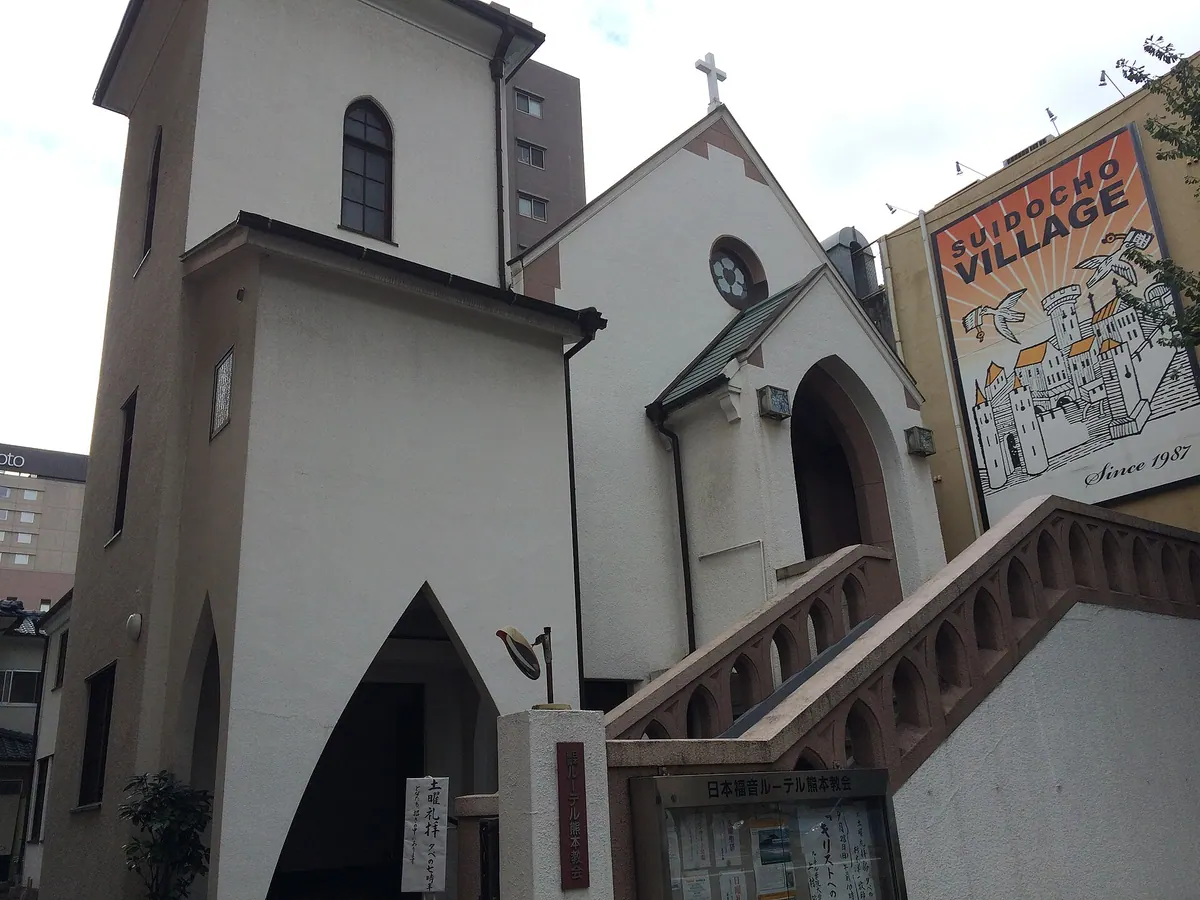
Historic Lutheran church in Kumamoto, rebuilt after war, notable for its architecture and resilience.
What it is
- A Lutheran church, founded in 1905.
- Designed by American architect William Merrell Vories.
- Rebuilt in 1950 after wartime destruction.
- Registered as a tangible cultural property in 2019.
What to see
- The distinctive architecture by William Merrell Vories.
- A building restored after earthquake damage in 2016.
Getting there
- 3-minute walk from Suidocho streetcar stop.
- 1-minute walk from Suidocho bus stop.
- Official site
- kumamoto-lutheran-church.blogspot.jp
09
Kōfuku-ji Temple
KUMAMOTO · TEMPLE 廣福寺
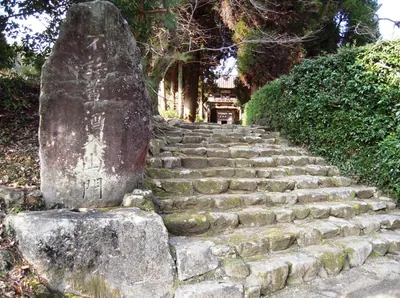
Kōfuku-ji Temple is a historic Zen temple founded in 1357, preserving ancient documents and treasures.
What it is
- A Sōtō Zen temple, founded in 1357.
- A direct branch temple of Eihei-ji Temple.
- The 24th sacred site of Higo Saigoku Kannon Pilgrimage.
- Founded by Kikuchi Takezumi, with Daitchi Zenji as founding priest.
What to see
- Ancestral tablets of the Kikuchi clan.
- Ancient documents related to the Kikuchi clan.
- Many temple treasures.
- A temple gate with a Shodai 88 Sacred Sites plaque.
- The main hall, formerly a zazen hall.
- Address
- 熊本県玉名市石貫1379 Map
10
Jōgyō-ji Temple
KUMAMOTO · TEMPLE 浄行寺
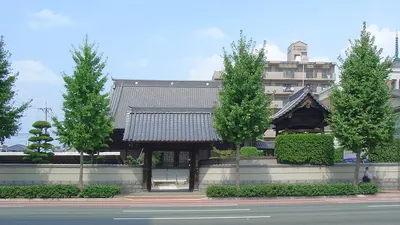
Jogyoji Temple: a historic Jodo Shinshu temple with notable burials, easily accessible by bus.
What it is
- A Jodo Shinshu Honganji-ha Buddhist temple.
- Founded between the Sengoku and early Edo periods.
- Its mountain name is Chōryūzan.
What to see
- Burial site of Japanese naval officer Horiuchi Toyoaki.
Getting there
- Immediately accessible from Jogyoji bus stop.
- Bus routes connect to Kumamoto, Kami-Kumamoto, and Tatsutaguchi Stations.
- 500m north of Fujisakigū-mae Station along Route 3.
- Address
- 熊本県熊本市中央区坪井3-10-18 Map
11
Daiji-ji Temple
KUMAMOTO · TEMPLE 大慈寺
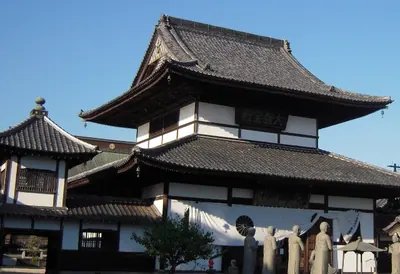
Daiji-ji is a historic Soto Zen temple in Kumamoto with important cultural properties.
What it is
- A Soto Zen temple in Kumamoto City.
- Founded in 1278 by Kangan Gien.
- Also known as Daiji Zenji.
What to see
- Main hall completed in 1300.
- Somon gate built in 1720.
- Sutra repository built in 1746.
- Bronze bell from 1287, an Important Cultural Property.
- Stupa from 1224, a Prefectural Important Cultural Property.
Getting there
- 25-minute walk from JR Kawashiri Station.
- Address
- 〒861-4114 熊本県熊本市南区野田1丁目7−1 Map
- Official site
- kumamoto-guide.jp
12
Rendai-ji Temple
KUMAMOTO · TEMPLE 蓮台寺
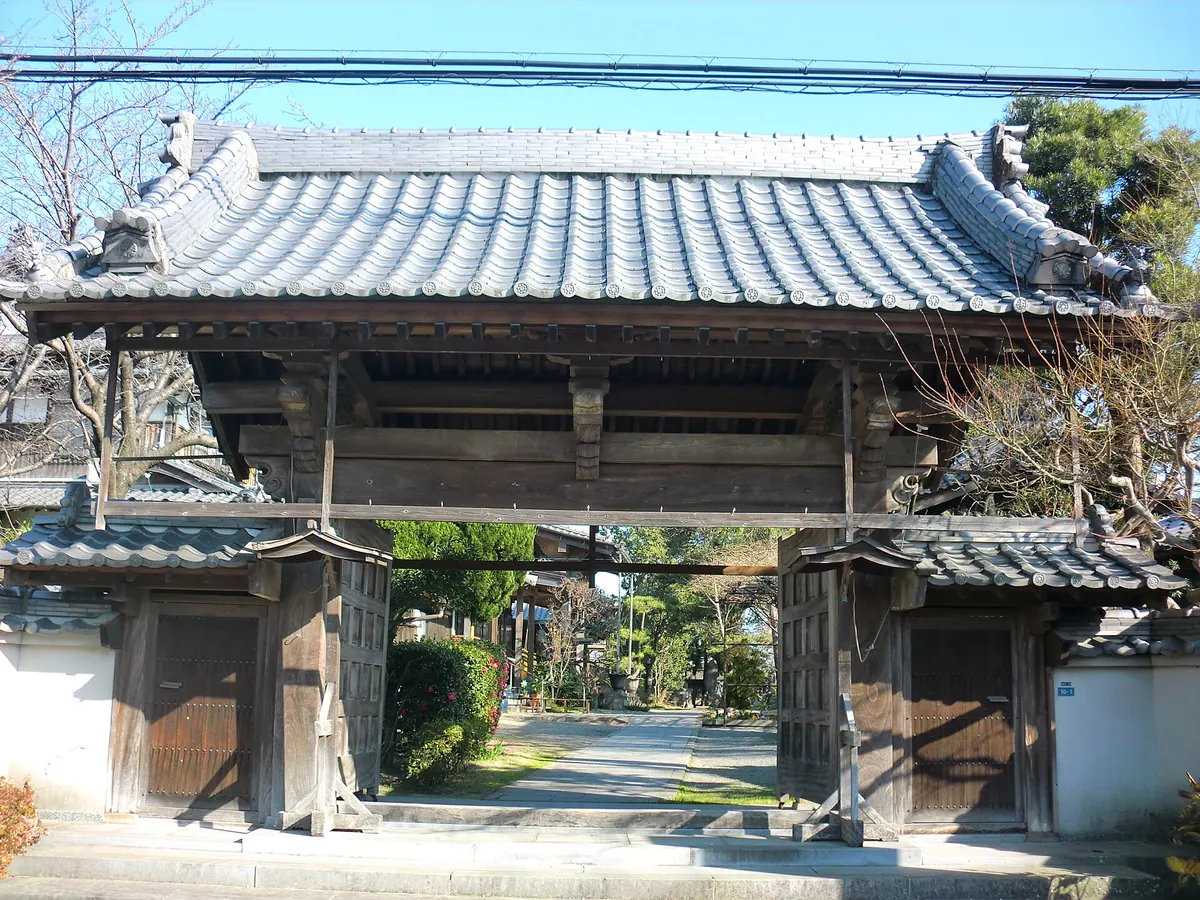
Rendai-ji Temple, a historic site with unique statues and a well, offers a glimpse into local legends.
What it is
- Jodo-shu Seizan Zenrin-ji sect temple.
- Also known as Higaki-dera and Sentai Jizo-ji.
- History began around 984-986 with poet Higaki.
- 16th sacred site of Higo Province 33 Kannon Pilgrimage.
What to see
- Treasures 'Higaki no To' and 'Higaki Oba Zo'.
- Amida Buddha statue donated in 1671.
- Thousand Jizo statues enshrined by Myoku Shonin.
- Old well where Higaki is believed to have drawn water.
- Address
- 熊本県熊本市西区蓮台寺2-10-1 Map
13
Tōfuku-ji Temple
KUMAMOTO · TEMPLE 東福寺
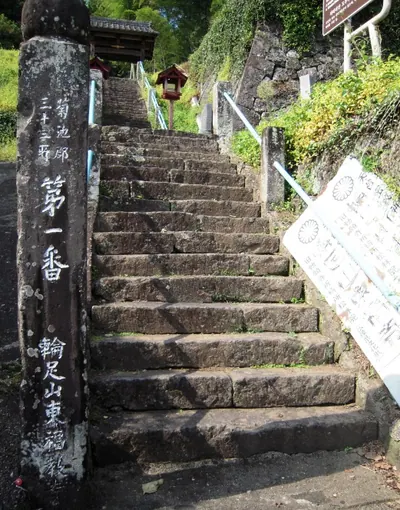
Ancient Tendai temple with imperial ties, housing important cultural statues and family graves.
What it is
- Tendai sect temple, one of the Kikuchi Gozan.
- Founded in 938 by Shokei Hoin.
- Became an imperial temple in 1089.
- Family temple of the Kikuchi clan.
What to see
- Graves of the Kikuchi family are on the grounds.
- Main hall was rebuilt in 1819.
- Wooden Eleven-faced Senju Kannon is the principal image.
- Wooden Fudo Myoo and Bishamonten statues.
- Fudo Myoo hanging scroll.
- Address
- 熊本県菊池市亘406 Map
- Official site
- www.tendai924.com
14
Shaka-in Temple (Yatsushiro)
KUMAMOTO · TEMPLE 釈迦院
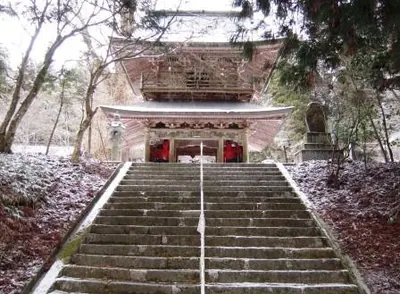
Shaka-in Temple is a historic Tendai temple with important cultural properties.
What it is
- A Tendai sect temple in Yatsushiro, Kumamoto Prefecture.
- Founded in 799 by Jōzen Daishi.
- Main deity is Shaka Nyorai.
- Also called 'Pokkuri-dera'.
What to see
- Bronze Shaka Nyorai statue, important cultural property.
- Seven wooden seated statues, important cultural property.
When to go
- Hanamatsuri festival is held on April 8th.
- Address
- 熊本県八代市泉町柿迫5536 Map
15
Myōdō-ji Temple
KUMAMOTO · TEMPLE 明導寺
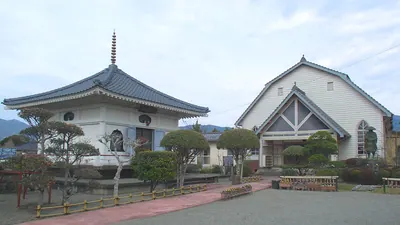
Myodoji is a historic temple with ancient Buddhist statues and important cultural properties.
What it is
- A Jodo Shinshu Honganji-ha temple.
- Founded in 1229 as Josenji Amidado.
What to see
- Josenji Amidado: a thatched, hip-roofed Buddhist hall.
- Josenji Nine-tiered Stone Pagoda.
- Josenji Seven-tiered Stone Pagoda.
- Wooden Amida Nyorai and two attendant figures from 1229.
- Myodoji Main Hall, completed in 1926.
- Bronze Nyorai statue from 1381.
- Address
- 熊本県球磨郡湯前町1955(城泉寺阿弥陀堂の Map
16
Aira-ji Temple
KUMAMOTO · TEMPLE 相良寺
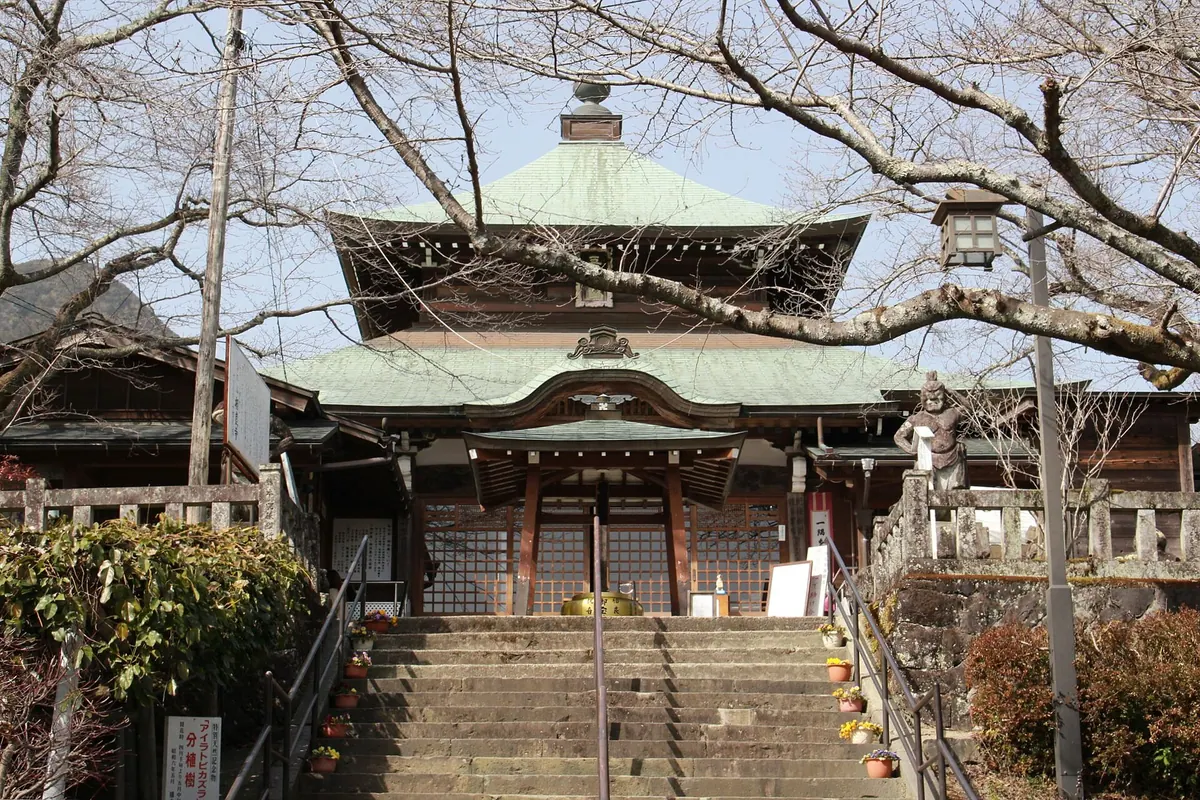
Aira-ji Temple houses Japan's largest wooden seated statue, a must-see cultural property.
What it is
- A Tendai sect temple, re-established in 1877.
- Commonly known as Sagara Kannon.
- A fudasho on three different pilgrimages.
What to see
- Principal image: Senju Kannon statue from late Muromachi period.
- Statue is approximately 3.4 meters tall.
- Japan's largest wooden seated statue.
- Statue is a Yamaga City cultural property.
- Address
- 熊本県山鹿市菊鹿町相良370 Map
- Official site
- www.tendai924.com
17
Iō-ji Temple
KUMAMOTO · TEMPLE 医王寺
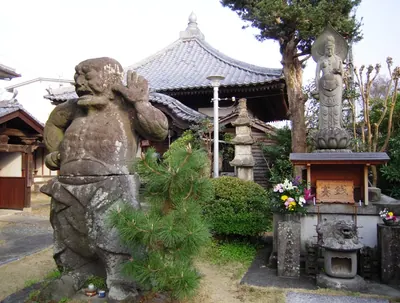
Iō-ji Temple is an ancient Shingon temple with important statues and a connection to the Matsui family.
What it is
- A Kōyasan Shingon sect temple.
- Founded in the mid-Heian period.
- Commonly known as Ashide Kōjin.
- The 54th sacred site of the Kyushu 88 Sacred Places.
What to see
- A wooden Yakushi Nyorai standing statue.
- A wooden Shō Kannon Bosatsu standing statue.
- A Myōken Bosatsu statue.
- A stone Kongō Rikishi statue.
- Address
- 熊本県八代市袋町5-34 Map
18
Saigan-ji Temple (Kumamoto)
KUMAMOTO · TEMPLE 西岸寺 (熊本市)
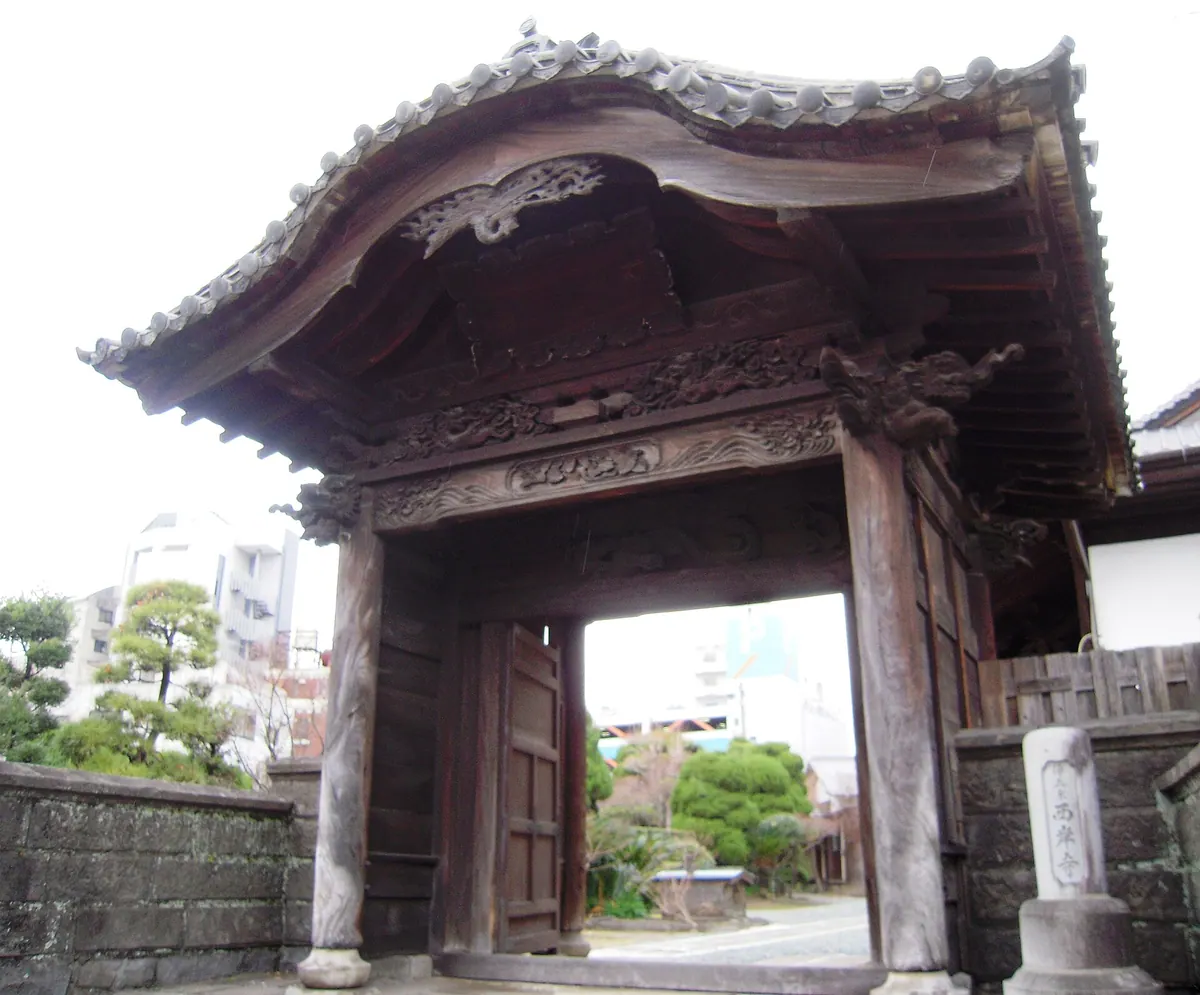
Saigan-ji Temple, a historic Jodo-shu Buddhist temple, offers a glimpse into Japan's past.
What it is
- A Jodo-shu Buddhist temple.
- Founded in 1228 by Chinzei Shonin Bencho.
- Rebuilt by Taiwa, who received the title Tenka Shonin.
What to see
- Back gate with a plaque: Chokugo Tenka Shonin Iseki.
- Plaque Sanno on the main hall, inscribed by Hosokawa Tadaoki.
- Grave of Taiwa Oshō, dated July 13, 1660.
- Address
- 熊本県熊本市中央区下通2-8-2 Map
19
Jōdō-ji Temple
KUMAMOTO · TEMPLE 成道寺
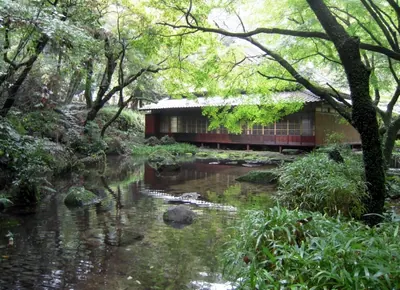
Jōdō-ji Temple is a historic Rinzai temple with a significant wooden sculpture, worth visiting for its heritage.
What it is
- A Rinzai sect temple.
- Founded by Kanchu Genshi Oshō.
- Named after Buddha's enlightenment day.
- Kikuchi Mochitomo donated land in 1426.
What to see
- 33cm wooden sculpture from the Muromachi period.
- Temple grounds are 3000 tsubo.
When to go
- Open from 9 AM to 5 PM.
- Address
- 熊本県熊本市西区花園7丁目2476 Map
20
Sanpō-ji Temple
KUMAMOTO · TEMPLE 三宝寺 (宇城市)
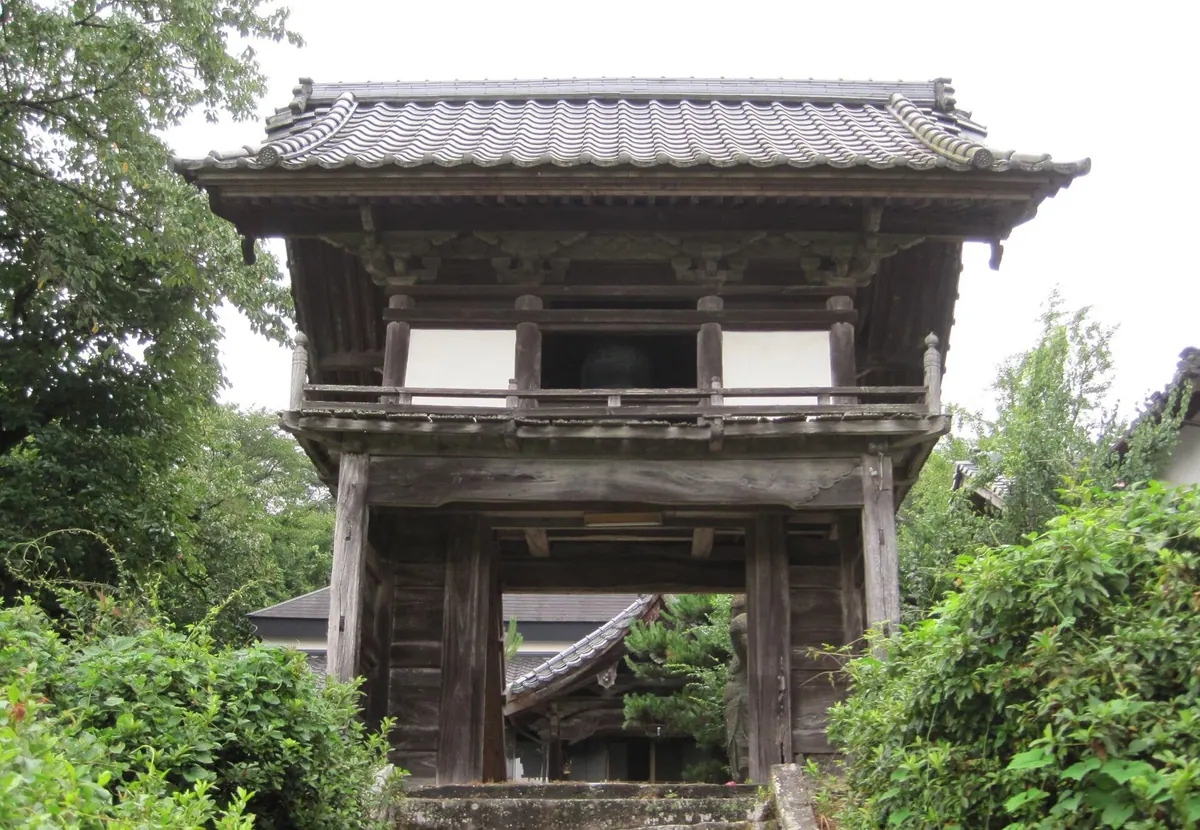
Sanpoji Temple, founded in 1674, preserves a rare woodblock and honors its founder.
What it is
- A temple of the Obaku sect.
- Founded in 1674 by Tetsugen Dokou.
- The founder's home became the main hall.
What to see
- One woodblock of the Tetsugen Issaikyo.
- A wooden statue of Zen Master Tetsugen.
Getting there
- 7 minutes by taxi from Ogawa Station.
- Address
- 熊本県宇城市小川町南部田1138 Map