
Honryū-ji Temple
本隆寺
This temple offers historic wooden buildings, beautiful spring cherry blossoms, and a well where a Zen abbess achieved enlightenment.
What it is
- Chief temple of the Shinmon sect of Hokke Buddhism.
- Founded in 1488 by priest Nichishin.
- Site where Mugai Nyodai achieved enlightenment.
What to see
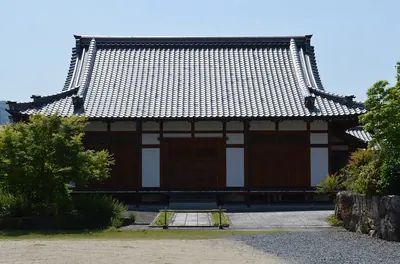
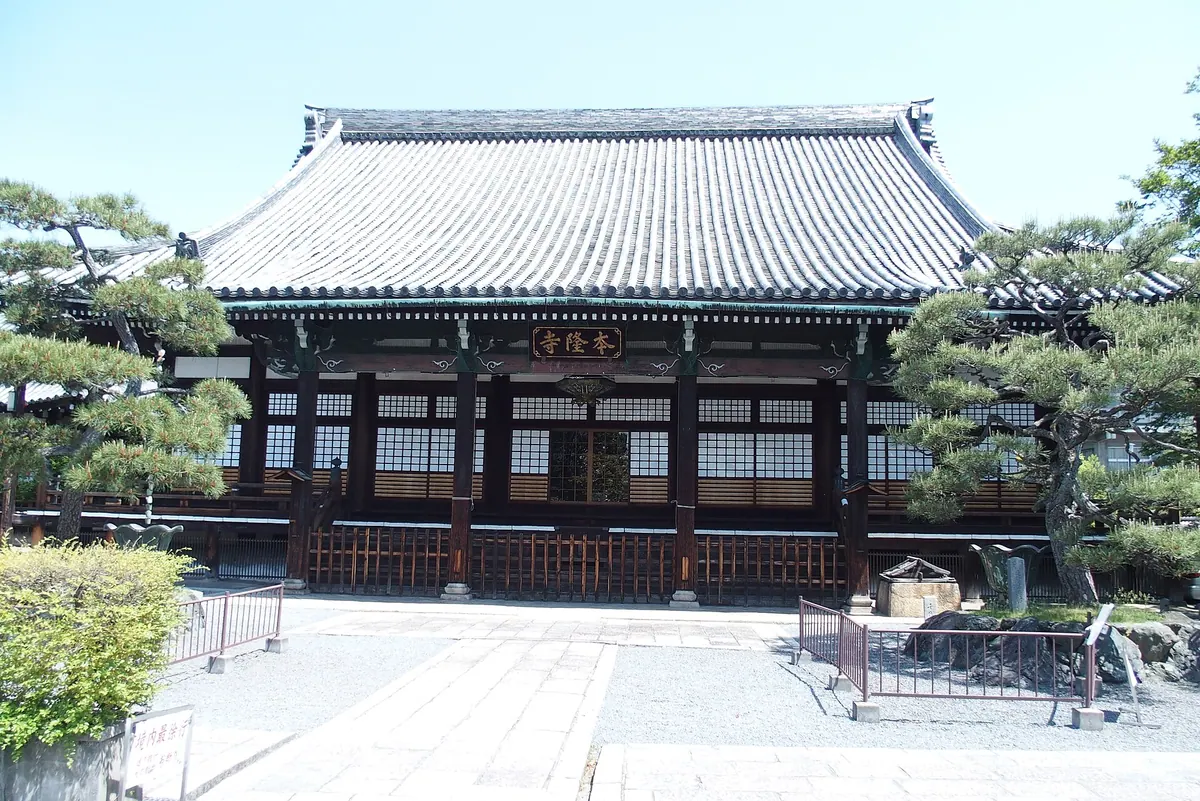
- Main hall (hondo) built in 1658.
- Founder's hall (soshido) built in 1658.
- Both halls are Important Cultural Properties.
- Abundant cherry trees on the temple grounds.
- Large pine trees with soothing powers.
- Well in front of the main hall.
When to go
- Spring for beautiful cherry blossoms.
In detail
Honryuji is the chief temple of the Shinmon sect of Hokke Buddhism, founded in 1488 by a priest named Nichishin. Its main hall (hondo) and founder’s hall (soshido), both built in 1658, are among the very few wooden buildings in Nishijin to predate 1788, when a fire laid waste to the area. These two structures are designated Important Cultural Properties.
The abundant cherry trees on the temple grounds bloom beautifully in spring, and the large pine trees nearby are thought to have soothing powers: their bark and leaves are said to stop children from crying at night when placed under their pillows.
The well in front of the main hall predates the temple and is said to be where the thirteenth-century noblewoman and nun Mugai Nyodai achieved enlightenment. She became the first Zen abbess, the first female Zen master, and one of the most influential priests of her time.
Text: 観光庁 地域観光資源の多言語解説文データベース. Reproduced unchanged. The notes above were written from that text by Japan Gems.
Where it is
京都府京都市上京区智恵光院五辻上ル紋屋町330 Open in Google Maps
この施設の関係者の方へ
このページは公開情報をもとに Japan Gems が作成し、訪日外国人向けに英語で掲載しています。 写真や情報の追加・修正を承っています。お店の写真に差し替えることもできます。
このページの情報を更新する