
Jōruri-ji Temple
浄瑠璃寺
Joruriji Temple is the last remaining example of a temple with nine Amida Nyorai statues.
What it is
- Temple grounds designed as a Jodo Garden, or Pure Land Garden.
- Founded in the eighth century for monks to train and study.
- Last remaining example of a temple with nine Amida Nyorai statues.
- Sometimes called Kutaiji Temple, meaning "temple of the nine statues".
What to see
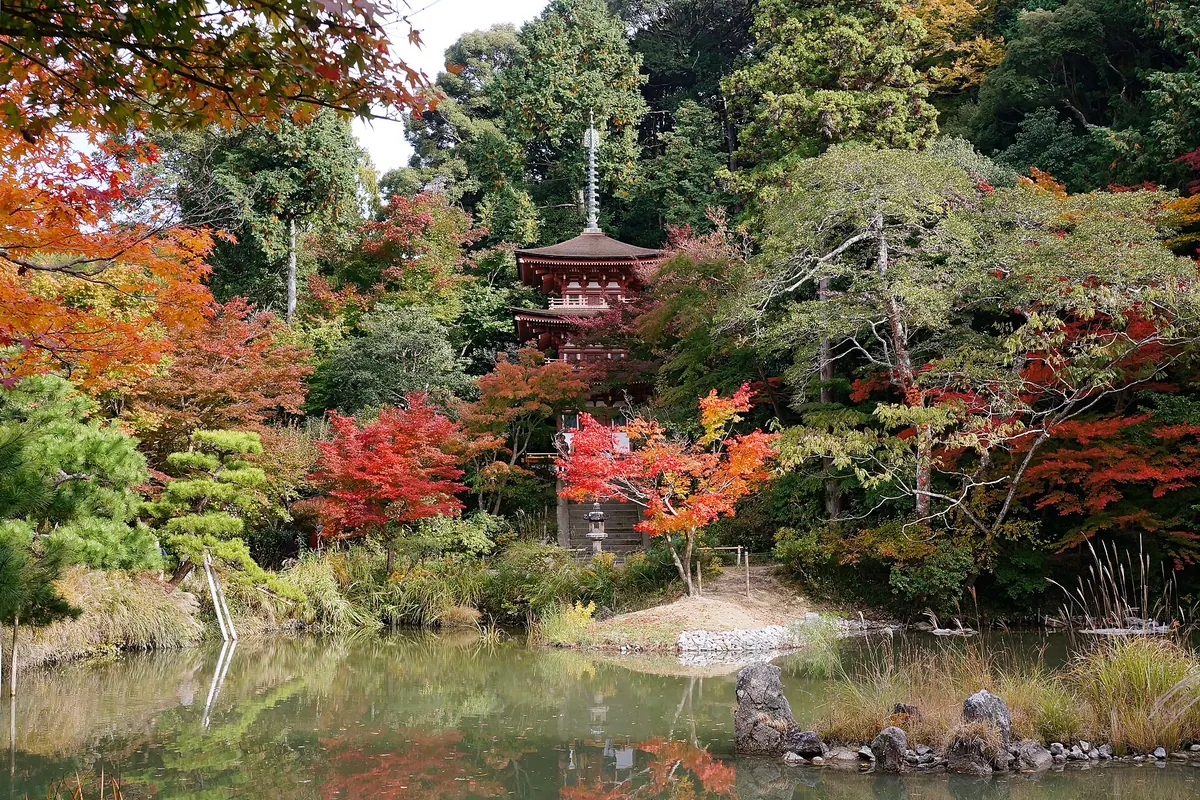
- Three-Storied Pagoda, a National Treasure, in the east.
- Main Hall, a National Treasure, in the west.
- Central pond representing the ocean between life and the world beyond.
- Nine wooden statues of Amida Nyorai, National Treasures, in the Main Hall.
- Wooden statue of Yakushi Nyorai, an Important Cultural Property, in the pagoda.
- Hidden statue of Kichijotennyo, an Important Cultural Property, in the Main Hall.
When to go
- Yakushi Nyorai statue viewable on the eighth day of every month, if clear.
- Kichijotennyo statue viewable January 1–15, March 21–May 20, October 1–November 30.
Getting there
- Located in the city of Kizugawa, Kyoto.
In detail
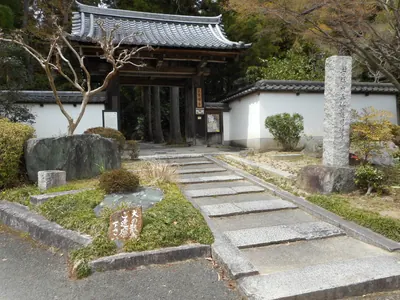
The Joruriji Temple grounds were designed in the style of a Jodo Garden, or Pure Land Garden, in the Heian period (794–1185). A Jodo Garden design attempts to replicate the Pure Land on earth and calls to mind Buddhist notions of conscientious living. Accordingly, Joruriji Temple’s Three-Storied Pagoda stands in the east where the sun rises (symbolizing birth), and its Main Hall is in the west where the sun sets (symbolizing death), facing each other over a central pond that represents the ocean between this life and the world beyond. The pond also serves as a symbol of Amida’s paradise. Both the Main Hall and the Three-Storied Pagoda are National Treasures of Japan. Joruriji Temple is also sometimes referred to as Kutaiji Temple (“the temple of the nine statues”) in reference to the group of nine Amida Nyorai statues enshrined in its Main Hall.
History
Located in the city of Kizugawa, Kyoto, Joruriji Temple is believed to have been founded during the eighth century as a place for monks to train and study, though the exact date is unknown. Records state that the first Main Hall was built in 1047 and that a small, carved wooden statue of Yakushi Nyorai (the Medicine Buddha) was enshrined here as the principal deity. This is believed to be the same Yakushi Nyorai that is enshrined at the temple at present. In 1107, the nine wooden statues of Amida Nyorai were enshrined at Joruriji Temple, among other Buddhist statues.
Historical records indicate that temples containing nine statues of Amida Nyorai, the Lord of the Western Paradise, were quite common at one time and were built at the request of court nobles or members of the imperial family. Joruriji Temple is the last remaining example of such a temple and is thus a significant testament to the importance placed in honoring Amida Nyorai and the Western Paradise at that time. The present Main Hall was moved to its current location in 1157, but it is unknown from where. The Three-Storied Pagoda, originally built in Kyoto, was dismantled and moved to Joruriji Temple in 1178. The Pure Land garden and its pond were originally constructed in 1150, excavated in 1976, and subsequently restored.
Treasures and Artifacts
Joruruiji has several National Treasures and Important Cultural Properties. Its Three-storied Pagoda and Main Hall are both National Treasures. A wooden statue of Yakushi Nyorai, the Medicine Buddha, is enshrined in the pagoda, and is an Important Cultural Property. It can be viewed on the eighth day of every month, if the weather is clear. The Main Hall houses a horizontal line of nine wooden statues of Amida Nyorai and the Four Heavenly Kings that are also National Treasures. There are also several other Important Cultural Properties in the Main Hall, such as the hidden statue of Kichijotennyo, who is represented as a graceful lady, to whom prayers for peace and prosperity are offered. This statue can be viewed only on certain days of the year (January 1–15, March 21–May 20, October 1–November 30).
Text: 観光庁 地域観光資源の多言語解説文データベース. Reproduced unchanged. The notes above were written from that text by Japan Gems.
Where it is
京都府木津川市加茂町西小札場40 Open in Google Maps
この施設の関係者の方へ
このページは公開情報をもとに Japan Gems が作成し、訪日外国人向けに英語で掲載しています。 写真や情報の追加・修正を承っています。お店の写真に差し替えることもできます。
このページの情報を更新する