
Kikō-ji Temple
喜光寺
Kikō-ji Temple, founded in 721, offers a lotus garden and sutra copying sessions.
What it is
- Buddhist temple founded in 721 by priest Gyōki.
- Renamed Kikōji, meaning "temple of joyous light," by Emperor Shōmu.
- Known for connection to Tōdaiji Temple.
What to see
- Wooden statue of Amida Buddha from the Heian period.
- Garden of over 250 lotus plants.
- Hall honoring Gyōki built in 2014.
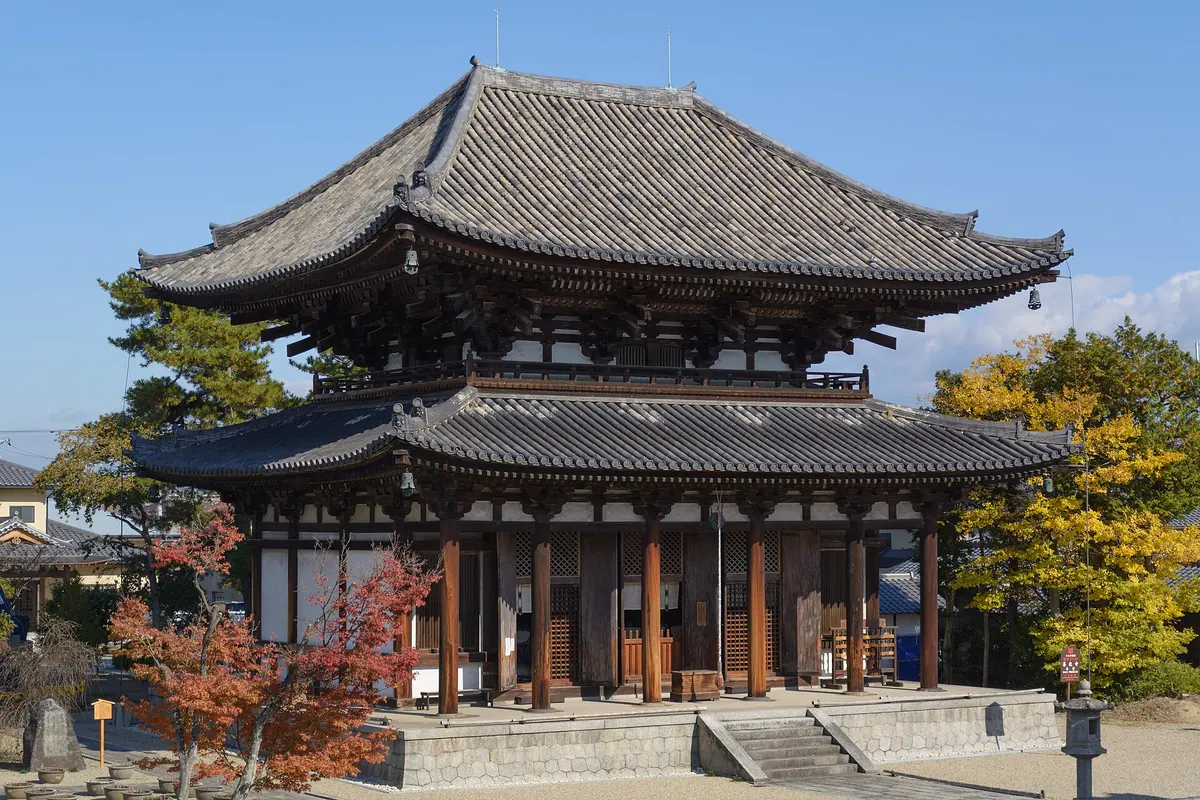
- Nandaimon Gate, 12 meters high, completed in 2010.
- Two Niō guardian statues by sculptor Nakamura Shinya at the gate.
When to go
- Sutra copying and lectures on the second day of each month.
- Annual festival for Gyōki's death on March 2.
In detail
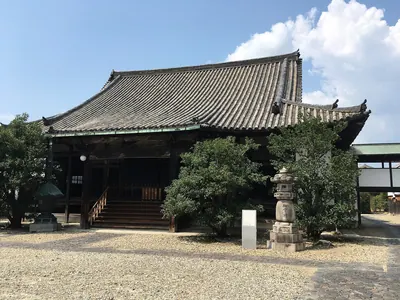
Welcome to Kikōji Temple, a Buddhist temple founded in 721 by the renowned priest Gyōki (668–749). Kikōji is known for its historical connection to Tōdaiji Temple and its wooden statue of Amida Buddha (Amitābha), which dates to the Heian period (794–1185). Today, many visitors come to see Kikōji’s garden of lotuses or center themselves with a session of shakyō, the copying of sutras by hand.
Gyōki, the temple’s founder, roamed the country preaching Buddhism, establishing temples, and initiating public works projects. He founded this temple in 721, naming it “Sugawara-dera.” Emperor Shōmu (701–756) visited Gyōki here in 748. According to legend, the emperor was contemplating the temple’s principal image when he saw a mysterious light emanating from the statue. Inspired by his vision, Shōmu renamed the temple “Kikōji,” meaning “temple of joyous light.”
Kikōji’s Decline and Rebirth
The century-long Sengoku period (1467–1568) was marked by civil war and widespread conflict. During that time, Kikōji was damaged by a fire and its main hall was destroyed. The hall was rebuilt in 1544, but further upheaval in the 1570s led to many other structures being burned down, including the temple’s southern gate.
Kikōji was slowly rebuilt over the following three centuries. But in the early Meiji era (1868–1912), the temple lost its governmental patronage and nearly fell to ruin. The temple’s tragic state was captured by the poet Aizu Yaichi (1881–1956), who visited in 1921 and described in verse the sorrow he felt at seeing the dilapidated buildings.
Efforts to revive Kikōji began in earnest in 1990, with the appointment of chief priest Yamada Hōin (b. 1940). Although daunted by its run-down condition, Hōin set to work revitalizing the temple. Proceeds from sutra-copying sessions and donations from modern followers of Gyōki helped fund the repairs and created a sense of community. Another key element in the revival was the cultivation of lotus plants. The lotuses, which were planted gradually over a period of years, now number over 250 plants, and Kikōji has become known as a “temple of lotuses.”
Today, the temple continues to evolve. A hall honoring Gyōki was built in 2014, and a columbarium was built in 2021. Sutra copying sessions and lectures are held on the second day of each month, and an annual festival commemorates the anniversary of Gyōki’s death on March 2. Kikōji, founded over 1,300 years ago, is once again a vital part of its neighborhood.
Nandaimon Gate
You are standing at the temple’s southern gate, completed in 2010 as part of the temple’s ongoing revival efforts. The 12-meter-high gate features two Niō guardian statues created by leading sculptor Nakamura Shinya (b. 1926). The gate’s Niō guardians are said to purify the hearts of those who pass between them.
Text: 観光庁 地域観光資源の多言語解説文データベース. Reproduced unchanged. The notes above were written from that text by Japan Gems.
Where it is
奈良県奈良市菅原町508 Open in Google Maps
この施設の関係者の方へ
このページは公開情報をもとに Japan Gems が作成し、訪日外国人向けに英語で掲載しています。 写真や情報の追加・修正を承っています。お店の写真に差し替えることもできます。
このページの情報を更新する