
Kiyomizu-dera Temple
清水寺
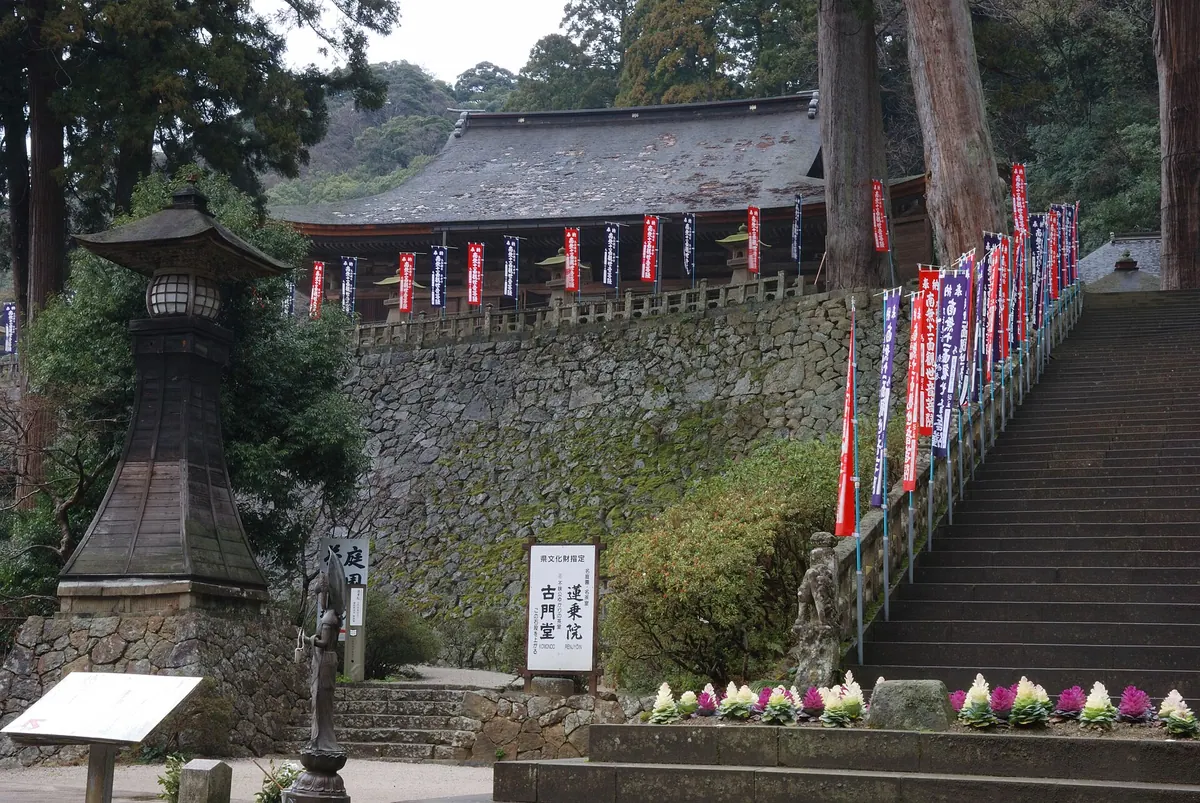
This Shingon Buddhist temple, originally on Mt. Sennoyama, is worth visiting for its historical significance to Iwami Ginzan.
What it is
- Shingon Buddhist temple.
- Founded in the latter half of the sixteenth century.
- Associated with Iwami Ginzan silver mine history.
- Originally located on Mt. Sennoyama.
What to see
- Main hall, repurposed in 1878.
- Gilded statue of Juichimen Kannon in the main hall.
- Lattice ceiling with samurai and merchant family emblems.
- Main gate, added in 1931.
- Stone statue of Fudo Myo-o guarding the gate.
- Stone statue of Bishamonten guarding the gate.
In detail
Seisuiji is a Shingon Buddhist temple that figures extensively in the history of Iwami Ginzan going back to the latter half of the sixteenth century. It was originally located on the side of Mt. Sennoyama, around which the silver mine was spread out, and attracted the reverence of warlords and commoners alike. It was at Seisuiji where Yasuhara Denbei, a prospector who discovered one of the most abundant silver veins at Iwami Ginzan, is said to have prayed before hitting the mother lode in 1602. The ornate jacket Yasuhara received from shogun Tokugawa Ieyasu (1543–1616) as a reward for his contribution to the shogunate’s coffers was donated to Seisuiji. The jacket remains the property of the temple but is now in the keeping of the Kyoto National Museum.
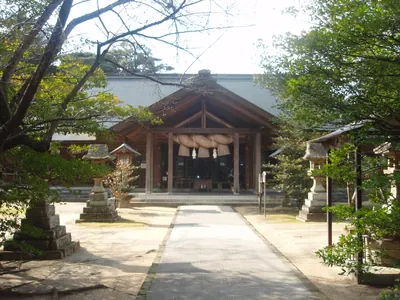
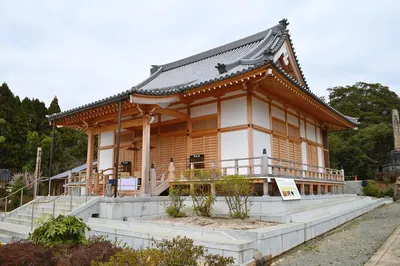
Seisuji was moved to its current site in 1878, when an existing Buddhist structure on the premises was repurposed as the temple’s main hall. The hall houses a gilded statue of Juichimen Kannon, the eleven-headed bodhisattva of compassion, and its lattice ceiling is decorated with the family emblems of samurai and merchants who made donations to the temple. Seisuiji’s current main gate was added in 1931, when it was relocated from an obsolete temple that once administered Sahimeyama Shrine, the silver mine’s main Shinto sanctuary. The gate is guarded by a pair of stone statues: on the right is Fudo Myo-o, one of the Five Wisdom Kings, who is ever ready to unleash his anger on demons and other enemies of Buddhism, and on the left stands Bishamonten, chief among the Four Guardian Kings and a powerful guardian deity.
Text: 観光庁 地域観光資源の多言語解説文データベース. Reproduced unchanged. The notes above were written from that text by Japan Gems.
Where it is
清水町528番地 Open in Google Maps
この施設の関係者の方へ
このページは公開情報をもとに Japan Gems が作成し、訪日外国人向けに英語で掲載しています。 写真や情報の追加・修正を承っています。お店の写真に差し替えることもできます。
このページの情報を更新する