
Kushiro City Museum
釧路市立博物館
This museum tells Kushiro's story from prehistory to today, covering archaeology, geology, nature, and human history.

What it is
- Museum telling the story of Kushiro from prehistory to present.
- Covers archaeology, geology, nature, and human history.
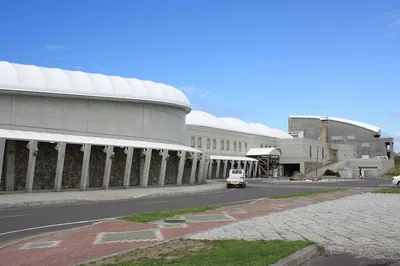
- Built in 1983, designed to resemble a crane with outspread wings.
- Symbolizes Kushiro’s rare population of Japanese cranes.
What to see
- Dynamic displays and artifacts.
- Exhibits on ice age animal migration and Kushiro Wetlands formation.
- Information on Ainu culture and early settlers.
- Videos of Ainu stories told in their language.
- Stone arrowheads and pottery from Jomon period.
- Iron ware and metal tools from Satsumon period.
In detail
The Kushiro City Museum tells the story of Kushiro from prehistoric times to the present day, through dynamic displays and artifacts covering archaeology, geology, nature, and human history. Learn about ice age animal migration, the formation of the Kushiro Wetlands, Ainu culture, and the area’s early settlers from other parts of the Japanese archipelago. The museum was built in 1983, designed by local architect Mozuna Kiko (1941–2001) to resemble a crane with outspread wings. The design symbolizes Kushiro’s rare population of Japanese cranes.
Kushiro and the Ice Age
The geography of Kushiro has been influenced by glaciation, changing sea levels, and volcanic activity. Over time, distinctive landscapes developed, including wetlands and a variety of marine environments.
Around 30,000 years ago during the coldest part of the last ice age, Hokkaido was connected by a land bridge to the Eurasian continent via the island of Sakhalin. The land bridge allowed animals, including mammoths, to migrate to what is now Hokkaido. Some of these species, such as the Siberian salamander, continue to inhabit the Kushiro area today.
Fauna and Flora in the Kushiro Area
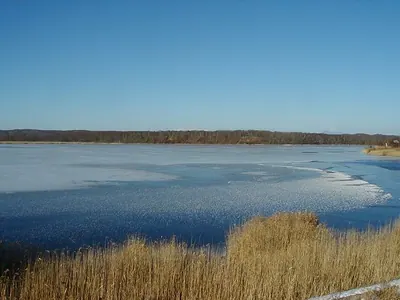
The Kushiro Wetlands are a primitive lowland environment. They are the habitat of many rare and endemic species of plants and animals, including Japan’s only resident population of its endangered species of crane (Grus japonensis), or tancho, and remnant species from the last ice age.
The wetlands support over 1,000 species of insects, including survivors of the ice age like the subarctic darner dragonfly, or iijimaruriboshi yanma, and the Japanese water spider, or mizugumo.
Several species of plants that are usually only found in alpine environments thrive here in the Kushiro Wetlands because of its cool climate and the frequent fog that blankets the area in summer.
Marimo
The rare spherical growth forms of a species of freshwater algae (Aegagropila linnaei) are called marimo. Water movement can cause these filamentous algae to grow in spheres of up to 30 centimeters in diameter. Spherical marimo growth forms are only found in Lake Akan in northern Kushiro, but the algae filaments also grow in Lake Shirarutoro and Lake Toro on the outskirts of the Kushiro Wetlands.
Kushiro and the Pacific Ocean
Kushiro Bay is a geologically diverse environment that supports a wealth of marine life. The bay is divided into two sides by an underwater canyon. The west side has a gentle, sandy shoreline, and the east side has steep, rocky cliffs. The marine life of the Kushiro Submarine Canyon and the shoreline environment is distinct: Flatfish flourish in the sandy shoreline area and deep-sea shrimp and crabs populate the slopes of the marine canyon.
Prehistoric Kushiro
Humans likely came to Hokkaido during the last ice age when the island was connected to the Eurasian continent via the island of Sakhalin. They are believed to have settled in Kushiro around 10,000 years ago, after rising sea levels separated the island from the continent. Sites along the plateau above the Kushiro Wetlands show the development of prehistoric society in Kushiro. Around 1.4 million artifacts have been found, and a range of these are displayed at the museum, including stone arrowheads and pottery from the Jomon period (13,000 BCE–400 CE) and iron ware and metal tools from the Satsumon period (700–1200 CE).
Kushiro in Modern Times
Before Kushiro became the thriving city that it is today, there was an Ainu village in the area, visited by Japanese traders during the Edo period (1603–1867). A trading post known as Kusuri Basho developed nearby and people from Honshu settled here toward the end of the Edo period. The small trading post grew into the main transport hub and center of fishing in eastern Hokkaido. Coal mining and logging developed in the area in the nineteenth and twentieth centuries, and lumber was exported from Kushiro to other parts of Japan and overseas. Mining began in the early twentieth century after coal seams were discovered in the region. As the economy boomed, the population increased, and Kushiro was designated a city in 1922.
The Development of Ainu Culture
Ainu are the indigenous people of northern Japan. Their culture is rooted in unique customs, language, and beliefs, including a spiritual reverence for the natural world. They lived a hunter-gatherer lifestyle and traded with surrounding communities on Honshu to the south and the island of Sakhalin and the Eurasian continent to the north.
From around 300 BCE, the culture in Hokkaido developed separately from that of the rest of the Japanese archipelago. Rice cultivation was adopted on the islands of Honshu, Shikoku, and Kyushu, but a largely hunter-gatherer society continued in Hokkaido. Ainu culture developed from this post-Jomon culture through trade and contact with the northern communities around the Sea of Okhotsk.
The history and beliefs of Ainu have been passed down through oral traditions and stories such as heroic epics (sakorpe). Visitors to the museum can watch videos with a selection of these stories told in the Ainu language.
Japanese Crane
The Japanese crane (Grus japonensis crane, or tancho), is the only crane species that breeds in Japan.
The crane population in eastern Hokkaido lives in the area all year, while those on the Eurasian continent are migratory. The Japanese crane has a distinctive crown of red feathers. It is a common motif in traditional art and a symbol of long life and happiness.
In the Edo period (1603–1867), the Japanese crane was found across the eastern parts of the archipelago, but through hunting and loss of habitat, the population diminished over time and was thought to be extinct in Japan by the early twentieth century. In 1924, a group of around 10 Japanese cranes were found living on the Kushiro Wetlands. Through winter feeding and conservation programs, the population has increased to around 1,800.
Text: 観光庁 地域観光資源の多言語解説文データベース. Reproduced unchanged. The notes above were written from that text by Japan Gems.
Where it is
北海道釧路市春湖台1-7 Open in Google Maps
この施設の関係者の方へ
このページは公開情報をもとに Japan Gems が作成し、訪日外国人向けに英語で掲載しています。 写真や情報の追加・修正を承っています。お店の写真に差し替えることもできます。
このページの情報を更新する