
Mōtsū-ji Temple
毛越寺
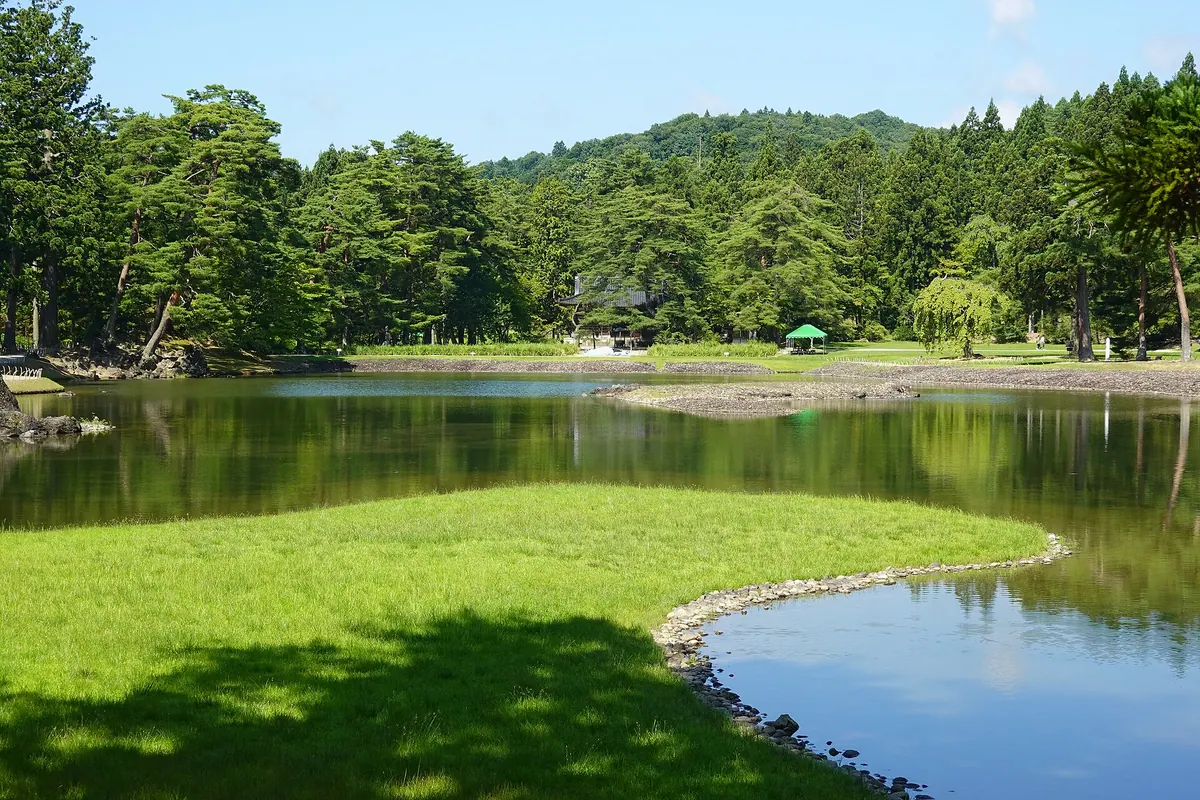
Mōtsū-ji Temple offers a rare look at Heian period culture through its intact foundation stones and original pond.
What it is
- Temple founded in 850 by Buddhist priest Ennin.
- Embodies Heian period culture (794-1185).
- Part of a UNESCO World Heritage site since 2011.
- Designated a Special Historic Site and Place of Scenic Beauty.
What to see
- Foundation stones of original temple buildings.
- Original pond, very rare for its age.
- Pure Land-style garden representing Buddhist paradise.
- Earthen mounds from past structures.
- New main hall (hondō) completed in 1989.
In detail
Mōtsūji Temple Overview
Mōtsū-ji Temple is one of Japan’s most faithful remaining embodiments of culture at the end of the Heian period (794-1185). The temple grounds uniquely combine various cultural and religious features of the time with the surrounding natural landscape Enryū-ji, the Main Hall was burned down in 1226 and the rest of the halls had also burned down by the 16th century, however, the foundation stones and original pond are still intact, which is very rare.
Legend of Mōtsūji
According to legend, Mōtsūji was founded in 850 by the Buddhist priest Ennin (794–864, posthumously known as Jikaku Daishi). A high-ranking priest of the Tendai school, Ennin is said to have established many temples during his travels in the Tohoku region of northern Honshu.
Mōtsūji’s construction
The second Fujiwara lord Motohira (1105–1157), who had consolidated his power in the region by 1128, restored Mōtsūji and began initial construction, which was later completed by his son Hidehira (1122?–1187). At its peak, the Mōtsūji complex contained 40 temple buildings and quarters for 500 priests that extended beyond the current temple grounds. A thirteenth century Japanese historical record known as the Azuma Kagami claimed that Mōtsū-ji's ‘magnificence was unparalleled in all the land.’ Mōtsū-ji was built in the Pure Land style popular among aristocrats in Kyoto during the late Heian period. A primary example of this style is the garden and large pond that were built to represent a Buddhist paradise in harmony with nature.
Mōtsūji today
Although all the temple buildings were destroyed by fires between the thirteenth and sixteenth centuries, foundation stones from various buildings, earthen mounds, and the Pure Land-style garden have survived in relatively good condition. Excavation and restoration allow visitors today to see and experience these unique artifacts from the Heian period.
Mōtsūji was designated a Special Historic Site in 1952, a Place of Scenic Beauty in 2005 and is one of five locations at Hiraizumi that were registered collectively as a UNESCO World Heritage site in 2011. A new main hall (hondō), designed by an expert in Heian architecture, was completed in 1989 for the 800th anniversary of the demise of the Northern Fujiwara clan. The hall stands in a different location from the original, but still evokes a feeling of the Heian style.
Text: 観光庁 地域観光資源の多言語解説文データベース. Reproduced unchanged. The notes above were written from that text by Japan Gems.
Where it is
岩手県西磐井郡平泉町平泉字大沢58 Open in Google Maps
この施設の関係者の方へ
このページは公開情報をもとに Japan Gems が作成し、訪日外国人向けに英語で掲載しています。 写真や情報の追加・修正を承っています。お店の写真に差し替えることもできます。
このページの情報を更新する