
Myōsen-ji Temple
妙宣寺
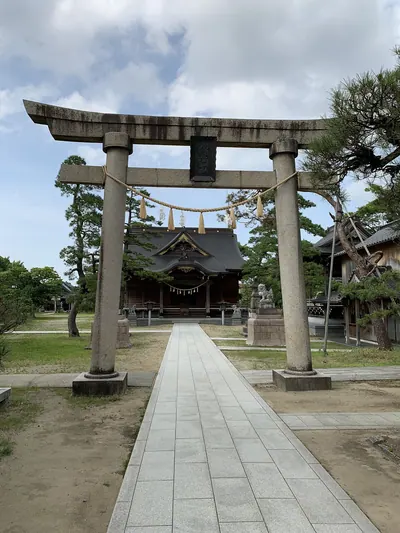
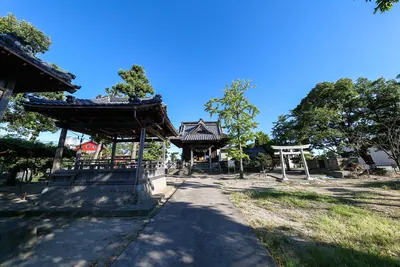
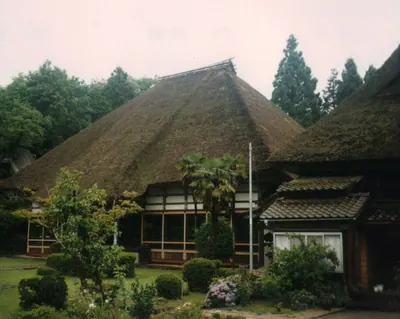
This 13th-century Buddhist temple on Sado Island is worth visiting for its exile history and unique pagoda.

What it is
- Thirteenth-century Buddhist temple.
- Belongs to the Nichiren school of Buddhism.
- Associated with Nichiren, exiled to Sado 1271–1274.
- First abbot, Abutsubō Nittoku, became a follower of Nichiren.
What to see
- Oldest-known wooden statue of Nichiren, carved in 1274.
- Original letter from Nichiren to Nittoku.
- Grave of courtier Hino Suketomo.
- Five-storied pagoda, unique in Niigata Prefecture.
In detail
This thirteenth-century Buddhist temple embodies Sado’s history as a place of exile. Japan’s military rulers, the shoguns, often dealt with political rivals or dissenters by banishing them to remote islands such as Sado. Myōsenji Temple belongs to the Nichiren school of Buddhism, whose founder, Nichiren (1222–1282), was banished to Sado from 1271 to 1274 for his criticism of the shogunate. During that period, Myōsenji’s first abbot, Abutsubō Nittoku (d. 1279), became a follower of Nichiren together with his wife, Sennichi-ama, a Buddhist nun. The temple’s treasures include the oldest-known wooden statue of Nichiren, carved in 1274, and an original letter from Nichiren to Nittoku.
The abbot Nittoku first arrived on the island as part of a military escort for Emperor Juntoku (1197–1242), who spent the last two decades of his life exiled to Sado. In 1221, Juntoku had been implicated in an attempt to overthrow the Kamakura shogunate (1185–1333) and restore direct imperial rule. The emperor was forcibly moved to Sado as punishment. Nittoku came to the island as a samurai, but he later renounced the world and became a monk.
A century later, a revolt by another emperor, Godaigo (1288–1339), produced a fresh wave of exiles to Sado. One of Godaigo’s supporters, the courtier Hino Suketomo (1290–1332), spent a total of seven years on Sado before he was executed for his loyalty to Godaigo. His grave is located at the temple.
Myōsenji’s five-storied pagoda is unique within Niigata Prefecture. The pagoda was constructed over a 30-year period, under two generations of master builders, and was completed in 1825. According to temple lore, although the pagoda has five stories, the magistrate’s office had only granted permission to the abbot Nittai (1764–1831) for three stories. To make matters worse, Nittai was later accused of conducting prayers that did not align with the teachings of Nichiren Buddhism. For this offense, the abbot was removed from Myōsenji Temple and sent to a much smaller branch temple elsewhere on the island. In this way, he became another of Sado’s many exiles.
Text: 観光庁 地域観光資源の多言語解説文データベース. Reproduced unchanged. The notes above were written from that text by Japan Gems.
Where it is
新潟県佐渡市阿仏坊29 Open in Google Maps
この施設の関係者の方へ
このページは公開情報をもとに Japan Gems が作成し、訪日外国人向けに英語で掲載しています。 写真や情報の追加・修正を承っています。お店の写真に差し替えることもできます。
このページの情報を更新する