
Niutsuhime Shrine
丹生都比売神社
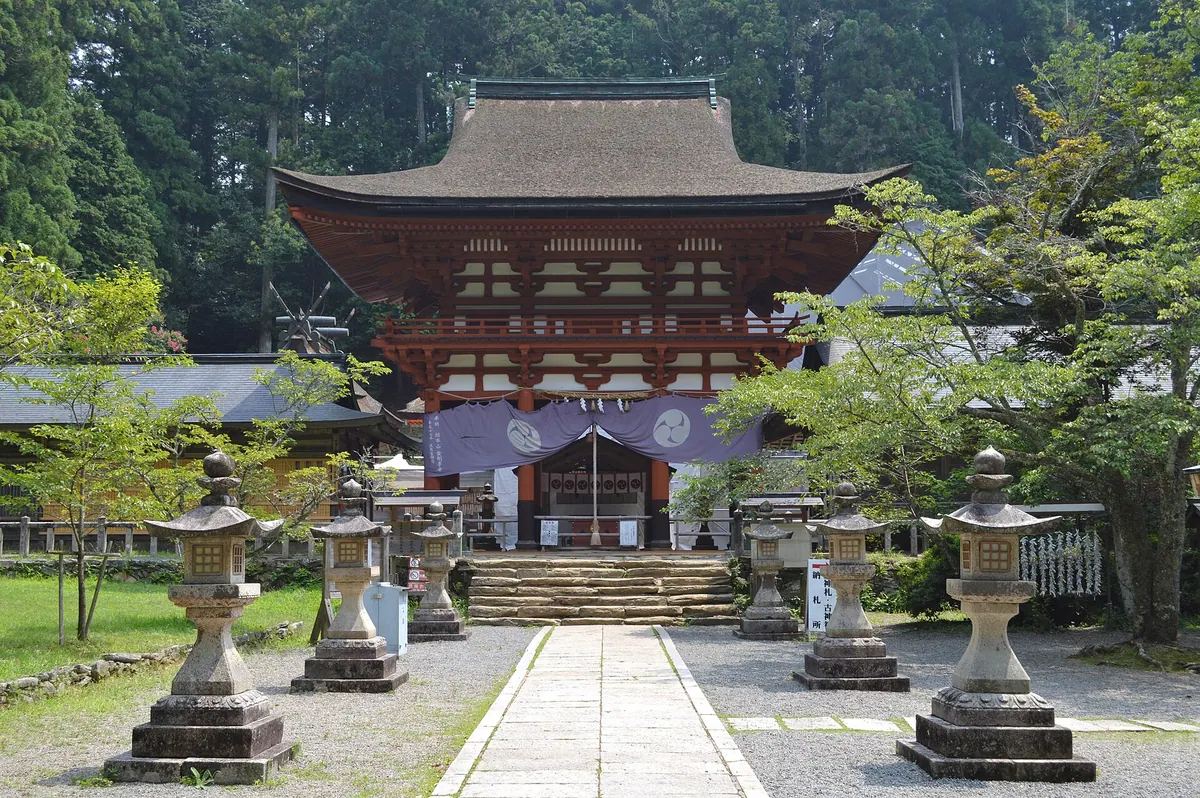
This ancient shrine, a UNESCO site, is where four gods protected Japan from Mongol invasions.
What it is
- One of the oldest shrines in Japan.
- Dedicated to four gods, main deity Niutsuhime.
- Niutsuhime is younger sister of sun goddess Amaterasu.
- Designated a UNESCO World Heritage Site in 2004.
What to see
- Main shrine of the Kii region.
When to go
- Before climbing to Koyasan via the Choishi Michi.
In detail
The exact origins of this shrine are lost in the mists of time, but it is considered one of the oldest in Japan. According to the ancient almanac Harima no kuni fudoki, Emperor Ojin dedicated this area to the gods in the fourth century.
Four gods are enshrined, with the main deity being Niutsuhime, the younger sister of the most important deity of the Shinto religion, the sun goddess Amaterasu. While originally associated with weaving, Niutsuhime gained a more martial image in the thirteenth century.
In 1274, the Mongols’ first attempt to invade Japan failed due to a sudden violent typhoon. The shogunate deeply feared a second invasion, however, and sent emissaries to all of the major shrines to ask the gods for protection.
According to legend, this shrine received an omen prior to a second Mongol invasion in 1281. The four gods of Niutsuhime Shrine, accompanied by a great crow, took the lead and flew to the island of Kyushu, where the invaders were landing. The great crow beat its huge wings, creating a divine wind that scattered the Mongolian fleet. The invasion was once again turned back by a typhoon, and in recognition of the four gods’ intervention, the shogunate designated this as the main shrine of the Kii region (modern-day Wakayama).
Niutsuhime Shrine’s connection to Koyasan goes back even further. According to another legend, the goddess granted part of her sacred lands to the founder of Koyasan, the priest Kukai (posthumously known as Kobo Daishi; 774–835), to build his center for esoteric Buddhism. His first act upon establishing Koyasan was to raise a large Shinto shrine to thank the goddess for her generosity.
This kind of interreligious cooperation was common, as Buddhism and Shinto peacefully co-existed for over a thousand years after the former’s introduction to Japan in the sixth century. Niutsuhime Shrine and Koyasan are still deeply interconnected to this day, as those planning to climb up to Koyasan via the Choishi Michi (Stone Marker Route) pay their respects at the shrine.
The shrine was designated a UNESCO World Heritage Site in 2004, as part of the Sacred Sites and Pilgrimage Routes in the Kii Mountain Range.
Text: 観光庁 地域観光資源の多言語解説文データベース. Reproduced unchanged. The notes above were written from that text by Japan Gems.
Where it is
和歌山県伊都郡かつらぎ町上天野241 Open in Google Maps
この施設の関係者の方へ
このページは公開情報をもとに Japan Gems が作成し、訪日外国人向けに英語で掲載しています。 写真や情報の追加・修正を承っています。お店の写真に差し替えることもできます。
このページの情報を更新する