
Ōharano Shrine
大原野神社
Ōharano Shrine, known for its deer-themed items, offers beautiful seasonal foliage and traditional sweets.

What it is
- Shrine dedicated to Kasuga Daimyojin, the Fujiwara family's guardian deity.
- First Kasuga shrine established by welcoming deity from Nara's Kasuga Taisha.
- Founded in 784 by the Fujiwara family near the new capital Nagaokakyo.
- Known for deer-themed items like statuary, amulets, and votive tablets.
What to see
- Koisawa Pond with its striking vermilion bridge.
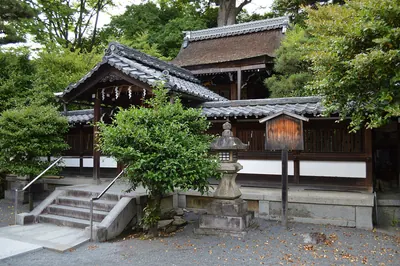
- Wakamiya Shrine dedicated to Ame no Oshikumone no Mikoto.
- Senganzakura, a weeping cherry tree with many large flowers.
- Water basin with water pouring from a bronze deer's mouth.
- Sumo ring used for ritual wrestling during the Mitakarisai Festival.
- Main sanctuary (1822) in kasuga-zukuri style, flanked by cypress trees.
When to go
- Popular for viewing cherry blossoms, irises, water lilies, and maple leaves.
- Senganzakura cherry tree's peak bloom lasts only three days.
- Mitakarisai Festival in September for ritual wrestling and harvest thanks.
In detail
Oharano Jinja Shrine is also called the “Kasuga Shrine of Kyoto” due to its historical connection to the famous Kasuga Taisha Shrine in Nara. The deity worshipped at Kasuga shrines is Kasuga Daimyojin, who is traditionally depicted riding a white deer. Oharano Shrine is known for its deer-themed items, including statuary, amulets, and votive tablets. The grounds are a popular spot for viewing cherry blossoms, irises, water lilies, and maple leaves. Two teahouses, one along the entrance path and one near the parking lot outside the first torii gate, offer traditional mugwort sweets to enjoy as a light snack after the shrine visit or to take home.
History
There are many Kasuga shrines across the country. Among them, Oharano Shrine is considered the first to have been established by ritually welcoming the deity Kasuga Daimyojin from Kasuga Taisha, the head shrine. In 784, the capital of Japan was moved from Heijokyo (present-day Nara) to Nagaokakyo. Oharano Shrine was built by the noble Fujiwara family for Kasuga Daimyojin, their guardian deity, at a site chosen for its proximity to the new seat of government. The Fujiwara family was extremely influential at court for centuries: many of the men held high-ranking positions, and many of the women became empresses or imperial consorts. Much like at Kasuga Taisha Shrine, prayers were offered at Oharano Shrine for the country’s peace and prosperity. The shrine continued to fulfill this role even after the capital was moved to Heiankyo (present-day Kyoto) in 794.
Kasuga Daimyojin and the Fujiwara Family
Kasuga Daimyojin represents four divinities: the deity of thunder Takemikazuchi no Mikoto, the warrior deity Iwainushi no Mikoto, the Fujiwara family ancestral deity Ame no Koyane no Mikoto, and his wife Hime Okami. The son of Ame no Koyane no Mikoto, Ame no Oshikumone no Mikoto, is often worshipped alongside them. All these deities are believed to have played important roles in the creation of Japan. They are said to answer prayers related to political affairs, protection, wisdom, and auspicious marriages for women.
Throughout history, Oharano Shrine benefited from Fujiwara family support and imperial patronage. Emperor Montoku (827–858), whose grandfather was the head of the Fujiwara family, ordered the construction of several grand worship halls in 850. It became a tradition for the Fujiwara to pray for newborn daughters at Oharano Shrine, hoping that they would be chosen as empresses or imperial consorts. If the prayer was answered, an elaborate procession would visit the shrine to express gratitude to the deities. Such processions are mentioned in historical records, poems, and novels, including Genji monogatari (The Tale of Genji), written by the lady-in-waiting Murasaki Shikibu (973?–1014?), a Fujiwara branch family member. When the prominent poet Ariwara no Narihira (825–880) accompanied a Fujiwara lady on her pilgrimage, he wrote the following poem:
The deities of Oharano Shrine at the base of Mt. Oshio
Must recall the age of the gods themselves
Seeing our grand procession on this day
Shrine Grounds
The path through the torii gates and into the shrine grounds goes past the Koisawa Pond and its striking vermilion bridge. On the far bank is Wakamiya Shrine, dedicated to the deity Ame no Oshikumone no Mikoto. The fenced-off weeping cherry tree nearby is called Senganzakura (“thousand-eye cherry tree”) for the many large flowers that bloom in round clusters on its branches. The tree has another nickname, “fleeting-dream cherry tree,” inspired by the fact that its peak bloom period only lasts three days. It is said that a thousand wishes will come true for those lucky enough to see Senganzakura in full bloom.
Farther along the approach is a water basin for ritual purification, where the water pours from the mouth of a bronze deer. The sumo ring on the left-hand side of the path is used for Kamizumo, a ritual wrestling competition for both adults and children that takes place during the Mitakarisai Festival in September. The celebration is held to thank the deities for the good harvest and has continued uninterrupted since 1717.
Main Sanctuary
Beyond the third torii gate on the shrine’s primary path is the main sanctuary, which dates to 1822. It is built in the kasuga-zukuri style, with a central altar for offerings and prayers flanked by two shrine halls on either side, each housing one of the four divinities of Kasuga Daimyojin. Tall cypress trees behind the complex create a natural contrast with the classic white and vermilion structures. Several subsidiary shrines on the left are dedicated to deities offering protection from diseases and misfortune. They are also believed to grant abundant harvests and commercial success, good health, longevity, and conception.
Sacred Deer Messengers
According to legend, Kasuga Daimyojin appeared to an ancestor of the Fujiwara family riding a white deer, so these animals came to be regarded as sacred messengers of the deity. For this reason, stone statues of a male and a female deer guard the main sanctuary of Oharano Shrine instead of the usual mythical komainu figures. Deer themes can also be seen in the shrine’s omamori amulets, goshuincho seal books, ema votive tablets, and omikuji fortunes.
Text: 観光庁 地域観光資源の多言語解説文データベース. Reproduced unchanged. The notes above were written from that text by Japan Gems.
Where it is
京都府京都市西京区大原野南春日町1152 Open in Google Maps
この施設の関係者の方へ
このページは公開情報をもとに Japan Gems が作成し、訪日外国人向けに英語で掲載しています。 写真や情報の追加・修正を承っています。お店の写真に差し替えることもできます。
このページの情報を更新する