
Ōno Castle
大野城
Ōnojō is Japan's oldest mountain fortress, built in 665 to defend against foreign invasion.
What it is
- Large-scale fortification built in 665.
- Oldest known mountain fortress in Japan.
- Built to defend against foreign invasion.
What to see
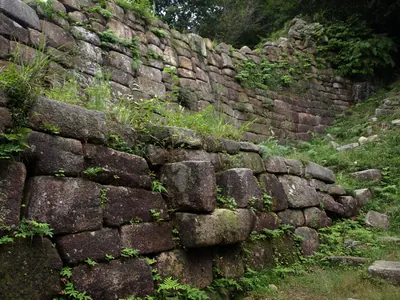
- Eight kilometers of earthen and stone walls.
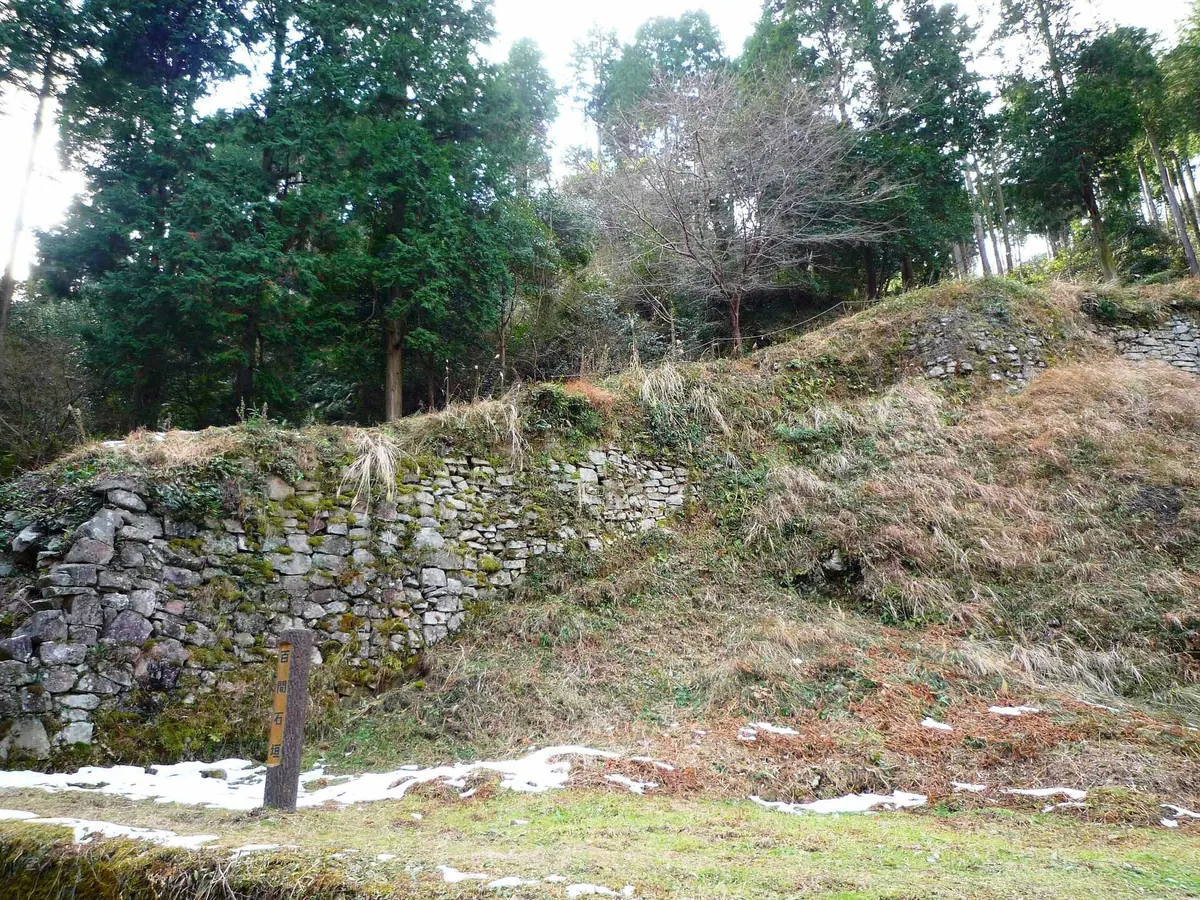
- Sections of stone wall between 3 and 8 meters high.
- Culverts or gaps in rock for water flow.
- Nine gates have been found.
- Seventy buildings, mainly storehouses.
- Central structure, possibly a headquarters.
Getting there
- Located on Mt. Shiōji, just north of Dazaifu.
In detail
Ōnojō Fortress was a large-scale fortification built in 665 on Mt. Shiōji, just north of Dazaifu. Eight kilometers of earthen and stone walls surrounded a central camp on the mountain’s summit, which gave a vantage of ships approaching Hakata Bay. The imperial court ordered the construction of a fortress in this strategic position to defend the country against foreign invasion. Another followed that same year, but Ōnojō is the oldest known mountain fortress in Japan.
During the sixth and seventh centuries, Japan (called “Wa” at the time) maintained good relations with the Korean kingdom of Baekje (? CE–660 CE) and enjoyed a flourishing cultural exchange. Baekje’s stability began to wane, however, and in 663, Japan and the remnants of Baekje suffered a disastrous military defeat at the hands of China’s Tang dynasty (618–907) and Silla (? CE–935 CE), another Korean kingdom. At that time, Tang China was the most advanced civilization in Asia, and Japan faced significant technological and tactical disadvantages. The enemy had better steel weapons and an abundance of warhorses and crossbows, both of which were still rare in Japan; they also had superior warships.
The 663 loss spurred rulers in the court to create large-scale fortifications south of Hakata Bay, which seemed the most likely landing place for foreign ships. This round of defensive infrastructure also saw the building of Mizuki Fortress, a 1.2-kilometer-long fortified embankment between Hakata Bay and Dazaifu, as well as a second mountaintop fortification known as Kiijō Fortress.
Ōnojō Fortress was constructed using the techniques and guidance of exiled nobles from Baekje, who patterned it after mountain fortresses in their own capital. Workers first flattened the ground, dug a pit, and erected wooden walls around the section to be filled. The planks retained the earth and sediment that was then poured in and tamped down, layer by layer. Most of the walls surrounding the fortress were also built with this hard-packed earth, but sections of stone wall between 3 and 8 meters in height guarded the valleys. Often springs or small rivers flowed through these valleys, so the walls had culverts or gaps in the rock to permit water flow. Excavators have found or uncovered 9 gates, some 70 buildings (primarily storehouses from the eighth century and later), and a central structure thought to have been a headquarters.
Ultimately there was no invasion, but Ōnojō Fortress was kept manned until around the tenth century. Its construction represented one of Japan’s earliest efforts at a wide-reaching national defense policy. In addition, the use of continental building techniques to construct Ōnojō Fortress is just one of the many signs of cultural and technological exchange occurring in Dazaifu at that time.
Text: 観光庁 地域観光資源の多言語解説文データベース. Reproduced unchanged. The notes above were written from that text by Japan Gems.
Where it is
Ōno Castle Open in Google Maps
この施設の関係者の方へ
このページは公開情報をもとに Japan Gems が作成し、訪日外国人向けに英語で掲載しています。 写真や情報の追加・修正を承っています。お店の写真に差し替えることもできます。
このページの情報を更新する