
長谷寺本堂
Hasedera's Main Hall, rebuilt in 1650, offers panoramic views and houses the Eleven-Headed Kannon.
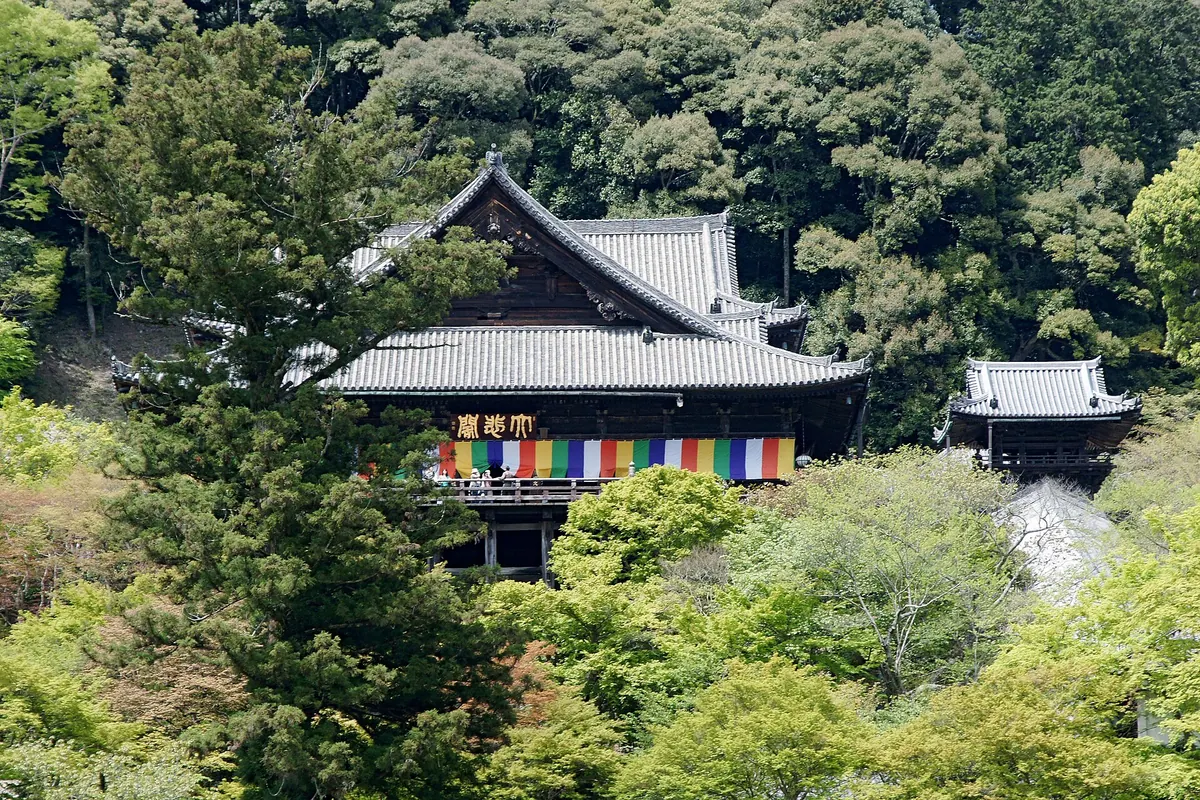
What it is
- Main Hall of Hasedera Temple.
- Houses the Eleven-Headed Kannon.
- Reconstructed in 1650 by Tokugawa Iemitsu.
- One of the largest in Nara Prefecture.
What to see
- Outer worship area (Gejin) for visitors.
- Monks' area (Shodo).
- Japanese hip-and-gable style roof.
- Wide veranda with panoramic views.
- Bell Pagoda next to the hall.
When to go
- Mornings for monks chanting sutras.
- Noon daily for horagai conch sounding.
In detail
Main Hall
National Treasure
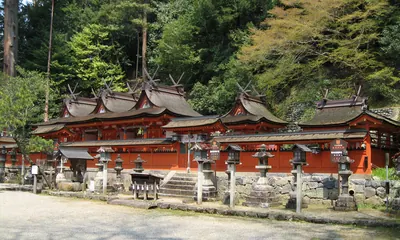
The Main Hall of Hasedera stands on the steep southern slope of Mount Hatsuse and houses the Eleven-Headed Kannon, the temple’s principal object of worship. Reconstructed in 1650 by Tokugawa Iemitsu, the third shogun of the Tokugawa shogunate, the Main Hall is one of the largest of its kind in Nara Prefecture. It consists of the Gejin, an outer worship area for visitors, and the Shodo, an area for monks. The roof is constructed in the Japanese hip-and-gable style (irimoya-zukuri).
The wide veranda of the Main Hall provides panoramic views. In a ceremony that has been held every morning for over 1,000 years, the monks of Hasedera gather at the Main Hall to chant sutras that echo through the valley below; visitors are welcome to attend. An equally time-honored observance is the sounding of the horagai conch. From the Bell Pagoda next to the Main Hall, monks blow these large shells like trumpets at noon every day.
Text: 観光庁 地域観光資源の多言語解説文データベース. Reproduced unchanged. The notes above were written from that text by Japan Gems.
Where it is
奈良県桜井市大字初瀬 Open in Google Maps
この施設の関係者の方へ
このページは公開情報をもとに Japan Gems が作成し、訪日外国人向けに英語で掲載しています。 写真や情報の追加・修正を承っています。お店の写真に差し替えることもできます。
このページの情報を更新する