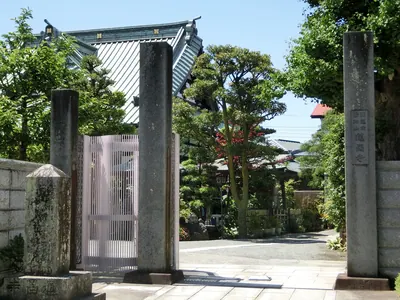

Sōun-ji Temple
早雲寺
A Zen Buddhist temple with a tragic history, worth visiting for its historical significance and garden.
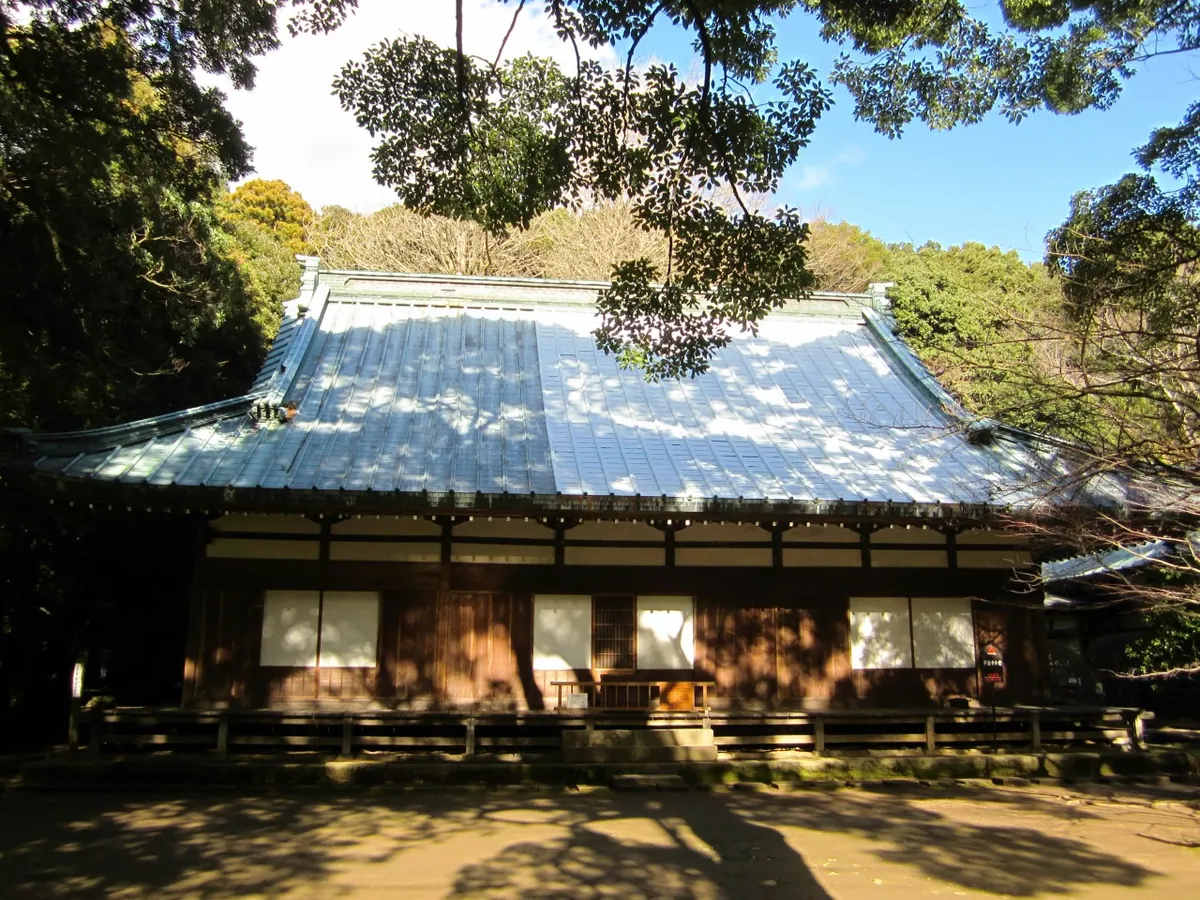
What it is
- Temple of the Rinzai school of Zen Buddhism.
- Established in 1521 by Hojo Ujitsuna.
- Honors his father, the samurai leader Hojo Soun.
What to see
- Zen-style rock garden behind the main hall.
- Monument to five generations of Hojo lords.
- Majestic castanopsis trees on the hillside.
- Temple cemetery with graves of Hakone's former masters.
Getting there
- Precincts once reached Hakone-Yumoto Station.
In detail
A temple of the Rinzai school of Zen Buddhism, Sounji looks austere, as is perhaps fitting for a place with a tragic history. That history begins in 1521, when the samurai leader Hojo Ujitsuna (1487–1541) had the temple established in honor of his father, the late Hojo Soun (1432?–1519). Soun, a ruthless but successful military commander during a time of constantly shifting alliances and rivalries among local warlord-led families, had consolidated power in the region around Hakone, paving the way for his son to rule these domains and assume the prestigious name of Hojo for their family. As the Hojo prospered, so did Sounji: at the height of its splendor, the temple’s precincts reached all the way to present-day Hakone-Yumoto Station. This was also when Hojo Soun’s youngest son, Gen’an (1493–1589), is said to have constructed the Zen-style rock garden on the premises.
Sounji’s fortunes turned in 1590, when the warlord Toyotomi Hideyoshi (1537–1598), who later went on to unify all of Japan’s provinces under his banner, vanquished the Hojo and conquered Odawara Castle, the family’s stronghold. Hojo Ujimasa (1538–1590), great-grandson of Soun and head of the Hojo at the time, was forced to commit ritual suicide. Hideyoshi burned Sounji to the ground and sent Ujimasa’s son Ujinao (1562–1591) into exile, where he died the following year.
The lords of Hakone were down, but not out: Ujimasa’s brother Ujinori (1545–1600) and nephew Ujikatsu (1559–1611) both escaped the calamity and kept the Hojo name alive. These two family lines, which survive in the present, played a significant part in the rebuilding of Sounji in the first half of the seventeenth century. Since 1672, the grounds have included a monument to five generations of Hojo lords: Soun, Ujitsuna, his son Ujiyasu (1515–1571), Ujimasa, and Ujinao. Gen’an’s Zen garden, located behind the temple’s main hall, was revived in the 1660s. And beyond it on the hillside, majestic castanopsis trees tower over the temple cemetery, casting their shadows over the graves of Hakone’s former masters.
Text: 観光庁 地域観光資源の多言語解説文データベース. Reproduced unchanged. The notes above were written from that text by Japan Gems.
Where it is
神奈川県足柄下郡箱根町湯本405 Open in Google Maps
この施設の関係者の方へ
このページは公開情報をもとに Japan Gems が作成し、訪日外国人向けに英語で掲載しています。 写真や情報の追加・修正を承っています。お店の写真に差し替えることもできます。
このページの情報を更新する