
Giō-ji
祇王寺
Giō-ji is a former nunnery in Kyoto known for its moss and maple garden and connection to a court dancer's story.
What it is
- Former nunnery, reestablished in 1895.
- Dedicated to Gio, a court dancer turned nun.
- Houses statues of Gio, Gijo, Toji, Hotoke Gozen, and Kiyomori.
What to see
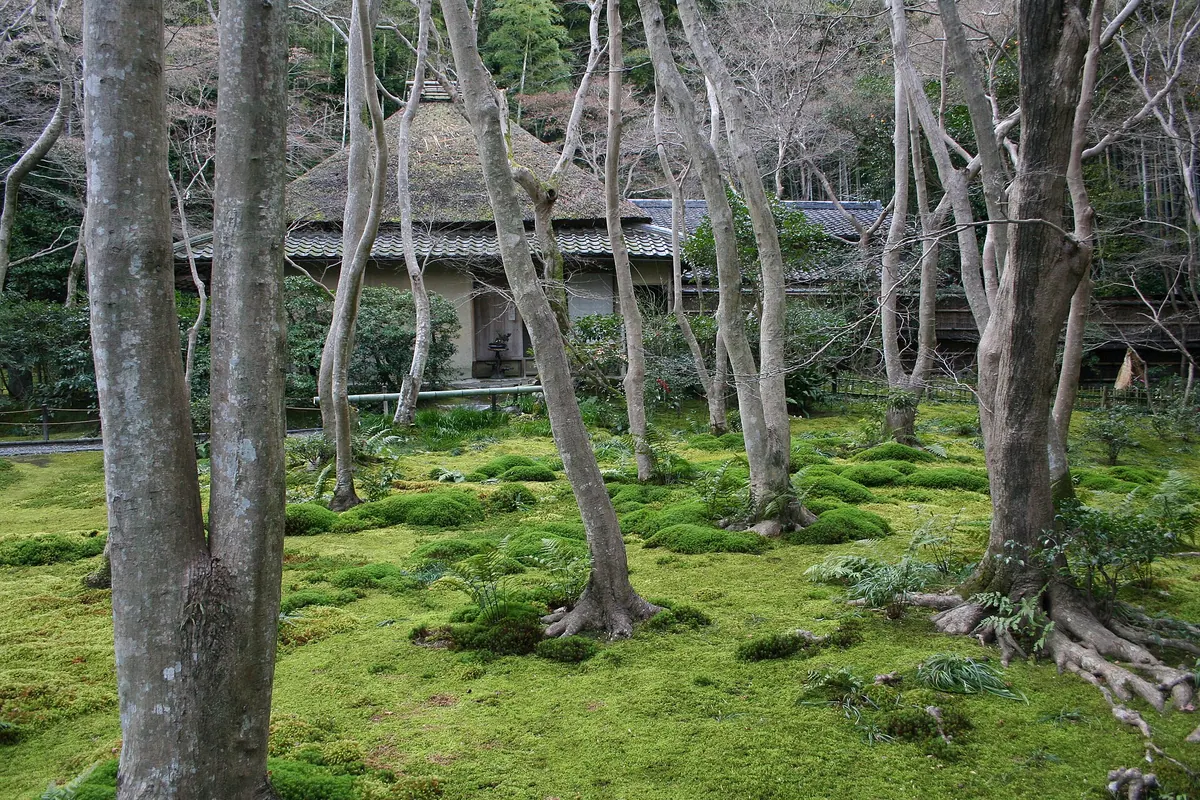
- Garden of lush moss and maple trees.
- Rustic, thatched-roof building with a round, latticed window.
- Statue of Dainichi Buddha as principal object of worship.
- Statues of Gio and Gijo from the Kamakura period.
- Modest graveyard and two large stone markers.
- Garden path, camellias, stream, bamboo grove, stone lanterns.
When to go
- Garden is particularly popular in autumn.
- Offers beautiful scenery in every season.
Getting there
- Located in the Okusaga area, past Saga-Arashiyama in western Kyoto.
In detail
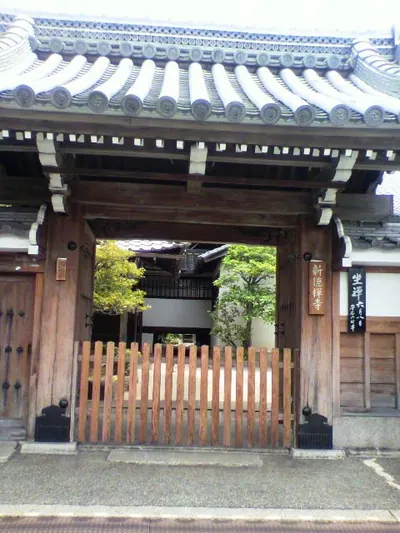
Gioji Temple is a former nunnery nestled in the hills of the Okusaga area, which lies just past Saga-Arashiyama in western Kyoto. The temple is known for its garden of lush moss and maple trees that frame a rustic, thatched-roof building. Its history has a strong connection to Gio, a court dancer turned nun, whose story is detailed in Heike Monogatari (The Tale of the Heike), a classic thirteenth-century epic.
According to the story, Gio was a talented court dancer (shirabyoshi) who won the heart of Taira no Kiyomori (1118–1181), a military leader and one of the most powerful men in Kyoto. Though she enjoyed his favor for several years, he eventually turned his attentions to a younger dancer named Hotoke Gozen. Gio was not only sent away from Kiyomori’s side, but was even forced to perform for his new favorite. Humiliated, Gio contemplated suicide, but ultimately chose to leave the capital and become a nun together with her mother Toji and sister Gijo. They settled in a small hut on the grounds of a large temple called Ojoin in the Okusaga area and dedicated their lives to prayer. Hotoke Gozen, realizing that eventually she would also be tossed aside and wishing to atone for the pain she had caused, followed the three women, and they spent the rest of their days together as nuns.
A small nunnery on the grounds of Ojoin later came to be known as Gioji in memory of Gio. Even after Ojoin itself fell into disrepair, the nunnery remained active until the Meiji government ordered the separation of Shinto and Buddhist religious practice in 1868, after which Buddhist temples fell out of favor. In 1895, Gioji was reestablished with the support of the nearby Daikakuji Temple, which had been keeping its sacred objects safe. A thatched-roof building with tatami floors and a round, latticed window was donated by a former Kyoto governor to support the temple’s revival. It now houses a statue of Dainichi Buddha as the principal object of worship, surrounded by statues of Gio, Gijo, Toji, Hotoke Gozen, and Kiyomori. Of these, the statues of Gio and Gijo are considered to date back to the Kamakura period (1185–1333). A modest graveyard and two large stone markers honoring the figures from Gio’s story can be found a short distance away. The taller marker on the left memorializes Gio, Gijo, and Toji, while the one on the right pays tribute to Kiyomori.
The famous garden at Gioji is filled with maple trees and is thickly carpeted with moss that covers most of the temple’s grounds. There are more than 20 varieties of moss, tended just enough to make the most of their natural beauty. One corner of the garden displays samples of the different species of moss that grow there, demonstrating the various textures and hues. The garden path meanders past evergreen camellias, a small winding stream, a bamboo grove just beyond the fence line, and traditional landscape decorations of stone lanterns and water basins. The garden is particularly popular in autumn, but offers beautiful scenery in every season.
Text: 観光庁 地域観光資源の多言語解説文データベース. Reproduced unchanged. The notes above were written from that text by Japan Gems.
Where it is
Giō-ji Open in Google Maps
この施設の関係者の方へ
このページは公開情報をもとに Japan Gems が作成し、訪日外国人向けに英語で掲載しています。 写真や情報の追加・修正を承っています。お店の写真に差し替えることもできます。
このページの情報を更新する