
西方寺
This Zen temple offers panoramic views of the historic district from its cantilevered veranda.
What it is
- Zen temple founded in 1560.
- Moved to current location after 1602 fire.
- Designated an Important City Heritage Site.
- Immortalized in 1983 movie, "The Girl Who Leapt Through Time."
What to see
- Viewing platform with panoramic views.
- Impressive stone wall, resembling a castle.
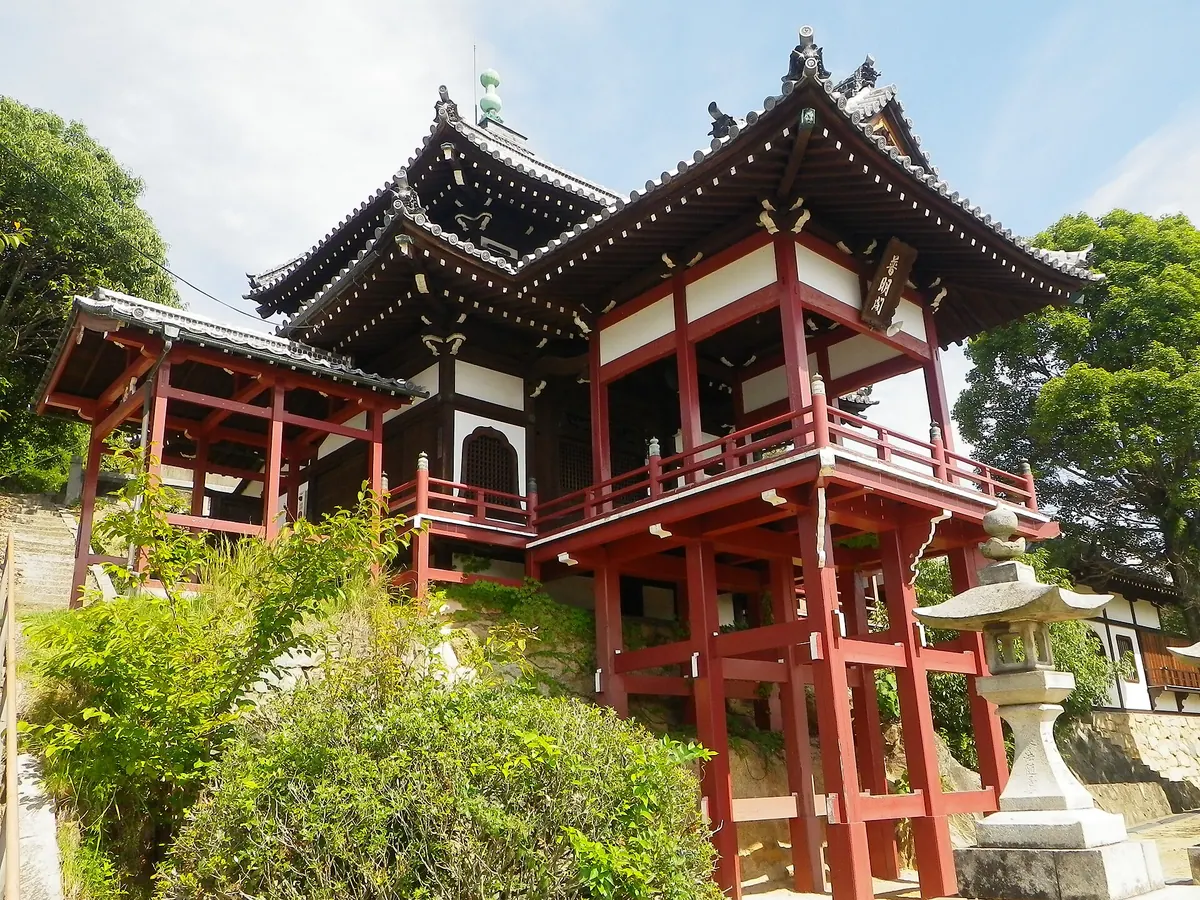
- Fumeikaku (Kannon Hall) built in 1758.
- Veranda cantilevered over the sacred site.
- Asakarizuka Mound, a haiku poetry memorial.
In detail
Saihoji Temple is a local landmark that can be seen from locations around Takehara. The Zen temple was built on a hill overlooking the historic district. It was originally founded in a nearby town in 1560. After being destroyed by a fire in 1602, it was moved to its current location.
The temple is famous for its viewing platform and impressive stone wall, which resembles that of a castle.
The Fumeikaku (Kannon Hall) was built in 1758 to enshrine Juichimen Kannon (Eleven-Headed Kannon), a manifestation of Kannon (Avalokiteshvara), the bodhisattva of compassion. The veranda is cantilevered over the edge of the sacred site, offering panoramic views of the entire historic district and surrounding landscape.
In the precincts of the temple is the Asakarizuka Mound, a memorial to the haiku poetry of Takehara during the Edo period (1603–1867).
The temple was immortalized in the 1983 movie, Toki o kakeru shojo (The Girl Who Leapt Through Time), directed by Obayashi Nobuhiko (1938–2020). Saihoji is an important part of the town’s landscape and has been designated an Important City Heritage Site.
Text: 観光庁 地域観光資源の多言語解説文データベース. Reproduced unchanged. The notes above were written from that text by Japan Gems.
Where it is
広島県竹原市本町3丁目10-44 Open in Google Maps
この施設の関係者の方へ
このページは公開情報をもとに Japan Gems が作成し、訪日外国人向けに英語で掲載しています。 写真や情報の追加・修正を承っています。お店の写真に差し替えることもできます。
このページの情報を更新する