
Rikyū Hachimangū
離宮八幡宮
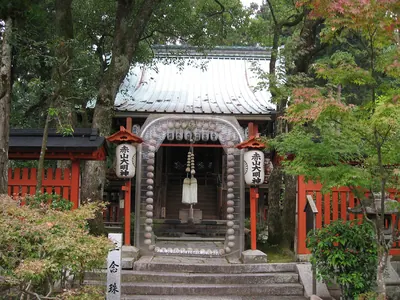
This shrine is the origin of Japan's perilla seed oil production and has a sacred well.
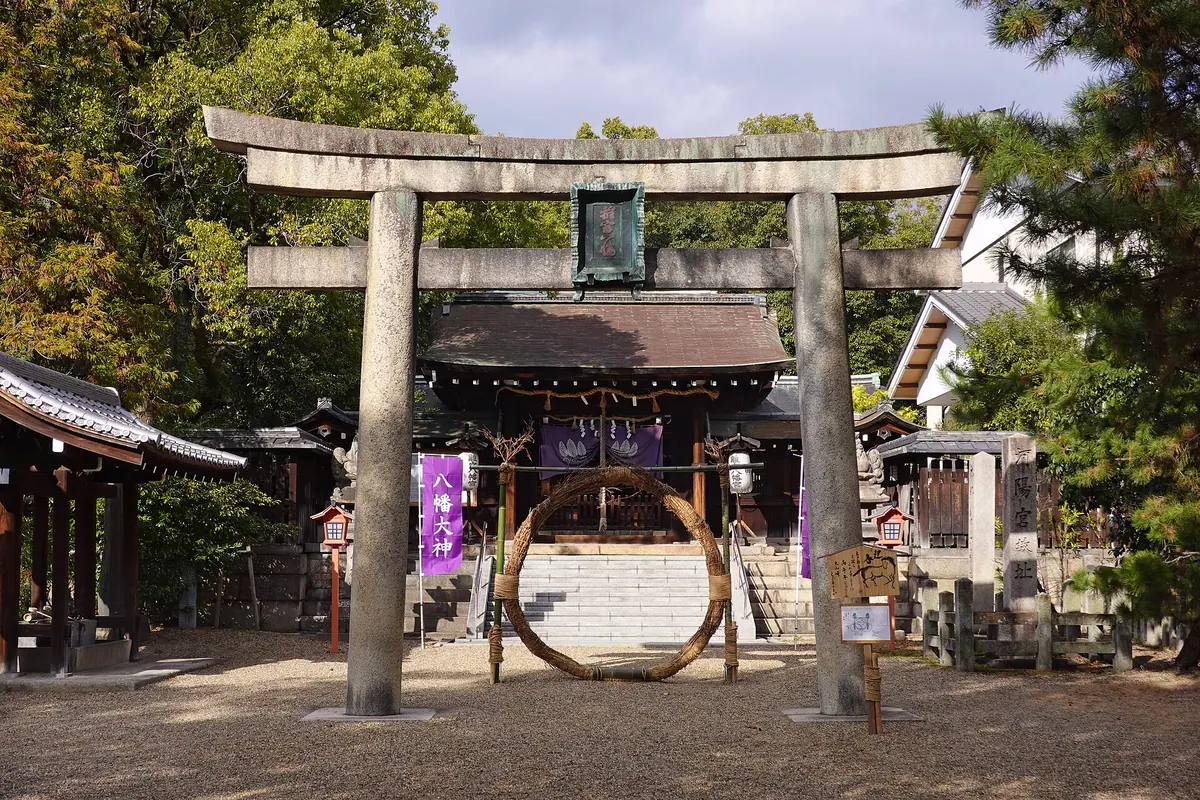
What it is
- Shrine founded in 859 by monk Gyokyo.
- Dedicated to the deity Hachiman.
- Origin of perilla seed oil production in Japan.
- Monopolized oil trade with court privileges.
What to see
- Sacred well named Iwashimizu, to the left of the main sanctuary.
- Statue of a priest presenting perilla seed oil.
- Black and yellow sign for the shrine's 1,100th anniversary.
- Signboards with illustrations of oilseed presses.
- Bottled oil, votive tablets, and omamori amulets for sale.
- Half-scale model presses displayed during festivals.
In detail
In the ninth century, a head priest of Rikyu Hachimangu Shrine invented a press for seed oil extraction, which became the origin of perilla seed oil production in Japan. At first, the oil served as fuel for lamps in the imperial court, shrines, and temples, but its use gradually spread to the general public. Rikyu Hachimangu prospered from making and selling this commodity for a very long time, becoming a monopoly due to privileges bestowed by the court. All perilla seed oil merchants were required to obtain special permission from the shrine.
Shrine Founding
Rikyu Hachimangu is also known for its origin story and sacred well. According to legend, the monk Gyokyo founded the shrine in 859 when he transferred the deity Hachiman from Kyushu to Kyoto by order of the emperor. After discovering a spring of pure water, Gyokyo chose it as the location for the shrine now known as Rikyu Hachimangu. The well, named Iwashimizu, can still be seen to the left of the main sanctuary enshrining Hachiman. Notably, Iwashimizu Hachimangu Shrine on Mt. Otokoyama in Kyoto Prefecture has a similar origin story.
Shrine Grounds
To the right of the torii gate is a statue of a priest presenting a vessel of perilla seed oil, a black and yellow sign developed for the shrine’s 1,100th anniversary to be used by oil stores across Japan, and signboards with illustrations of oilseed presses. Rikyu Hachimangu sells bottled oil, votive tablets depicting the priest’s statue and an oil seller, and omamori amulets that read yudan taiteki (“carelessness is one’s greatest foe”). This idiom contains word play, as the term for carelessness (yudan) is written with kanji characters that mean “to run out of oil.” Half-scale model presses donated to the shrine are displayed to the public during festivals.
Text: 観光庁 地域観光資源の多言語解説文データベース. Reproduced unchanged. The notes above were written from that text by Japan Gems.
Where it is
Rikyū Hachimangū Open in Google Maps
この施設の関係者の方へ
このページは公開情報をもとに Japan Gems が作成し、訪日外国人向けに英語で掲載しています。 写真や情報の追加・修正を承っています。お店の写真に差し替えることもできます。
このページの情報を更新する