
Saikyō-ji Temple
西教寺
This temple, rebuilt after 1571, offers continuous chanting, a unique main hall, and a garden overlooking Lake Biwa.
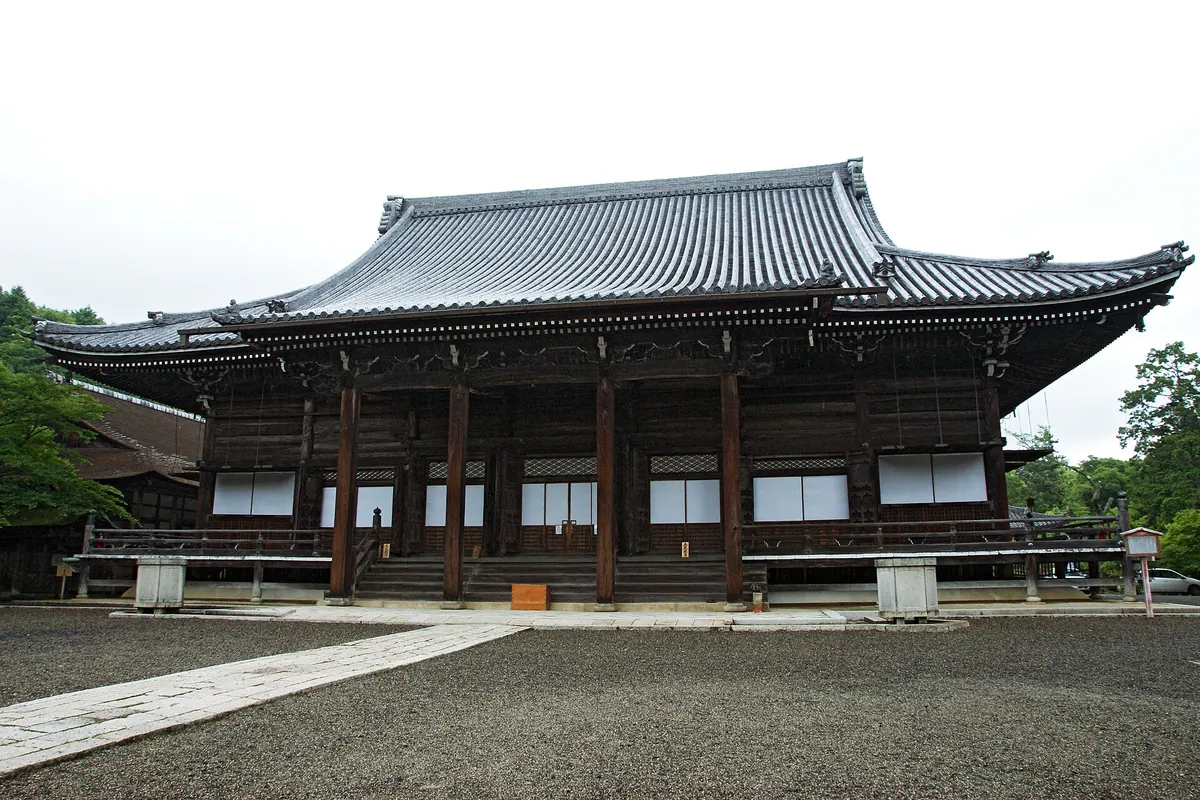
What it is
- Temple at the foot of Mt. Hiei, overlooking Lake Biwa.
- Reputedly built in the seventh century by Prince Shotoku.
- Associated with priest Shinsei, founder of the Shinsei sect.
- Place to practice fudan nenbutsu, continuous recitation of Amida Buddha's name.
What to see
- Main hall (hondo) built in 1739 entirely from zelkova wood.
- 2.7-meter statue of Amida Buddha from the Heian period inside.
- Front transom with 16 wooden carvings of Buddha's disciples.
- Mischievous monkey statue, tribute to Mt. Hiei's native monkeys.
- Large guest hall (kyakuden) moved from Fushimi Castle.
- Guest hall has five rooms with paintings by the Kano school.
When to go
- Spring for cherry blossoms and azaleas.
- Autumn for colorful maple trees.
In detail
Saikyoji Temple is located at the foot of Mt. Hiei, overlooking Lake Biwa. Reputedly built in the seventh century by Prince Shotoku (574–622), the temple is closely associated with the priest Shinsei (1443–1495), founder of the Shinsei sect of the Tendai school of Buddhism.
Shinsei made Saikyoji a place to practice fudan nenbutsu, which is the continuous recitation of the words namu amida butsu (the name of the Amida Buddha). Every time the words have been uttered 10 times, a bell is rung. The monks of Saikyoji still take turns practicing fudan nenbutsu in the main hall (hondo) as a means of achieving enlightenment, although it is no longer done through the night.
All of the temple’s current structures were erected after 1571, when Saikyoji was burned down by the warlord Oda Nobunaga (1534–1582). Nobunaga sought to unify all of Japan under his rule and destroyed many politically powerful temples that opposed him. In the case of Saikyoji, however, Nobunaga’s vassal Akechi Mitsuhide (1526–1582) arranged for its early reconstruction. Mitsuhide was a patron of the temple, and he and his wife are buried on its grounds. The temple also possesses a document signed by Mitsuhide.
The current main hall building was built in 1739 entirely from zelkova wood without using any other materials, including nails. It is designated an Important Cultural Property. Inside, a 2.7-meter statue of the Amida Buddha from the Heian period (794–1185) dominates the interior, while the front transom has 16 wooden carvings of the historical Buddha’s disciples with eyes of inlaid crystal. The constant chanting and bell ringing give the building an otherworldly feel. There is also a mischievous monkey statue that is a tribute to the native monkeys of Mt. Hiei, believed to be protectors of the temple.
Beside the main hall is the large guest hall (kyakuden), which was moved from Fushimi Castle in Kyoto and is designated an Important Cultural Property. The guest hall has five rooms, each with different paintings on the sliding panels and walls. The paintings were produced by artists of the famous Kano school, possibly by master artist Kano Eitoku (1543–1590).
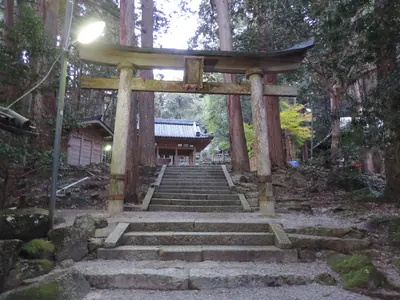
The guest hall also has a traditional garden dating back to the seventeenth century that uses the surrounding mountain as part of the landscape. It has a pond shaped like Lake Biwa and the ground around it is shaped like Shiga Prefecture. The best views of the real Lake Biwa are framed by the decorative Karamon Gate in front of the founder’s hall, which enshrines the founding priest Shinsei. The temple’s main approach is lined with maple trees, cherry blossoms, and azaleas, and is filled with color in spring and autumn.
Text: 観光庁 地域観光資源の多言語解説文データベース. Reproduced unchanged. The notes above were written from that text by Japan Gems.
Where it is
滋賀県大津市坂本5丁目13-1 Open in Google Maps
この施設の関係者の方へ
このページは公開情報をもとに Japan Gems が作成し、訪日外国人向けに英語で掲載しています。 写真や情報の追加・修正を承っています。お店の写真に差し替えることもできます。
このページの情報を更新する