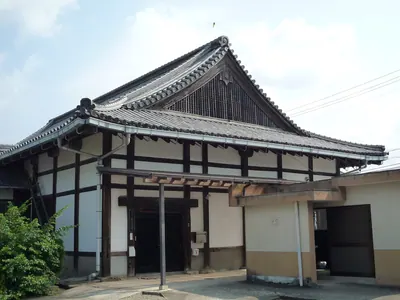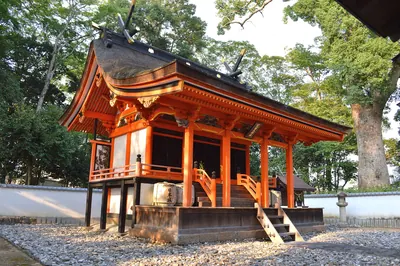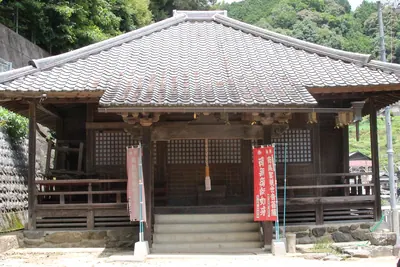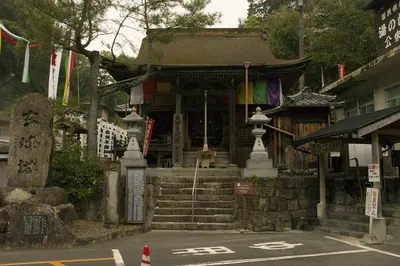

Seiganto-ji Temple
青岸渡寺
This temple, the first stop on a pilgrimage, houses the world's largest waniguchi slit gong.
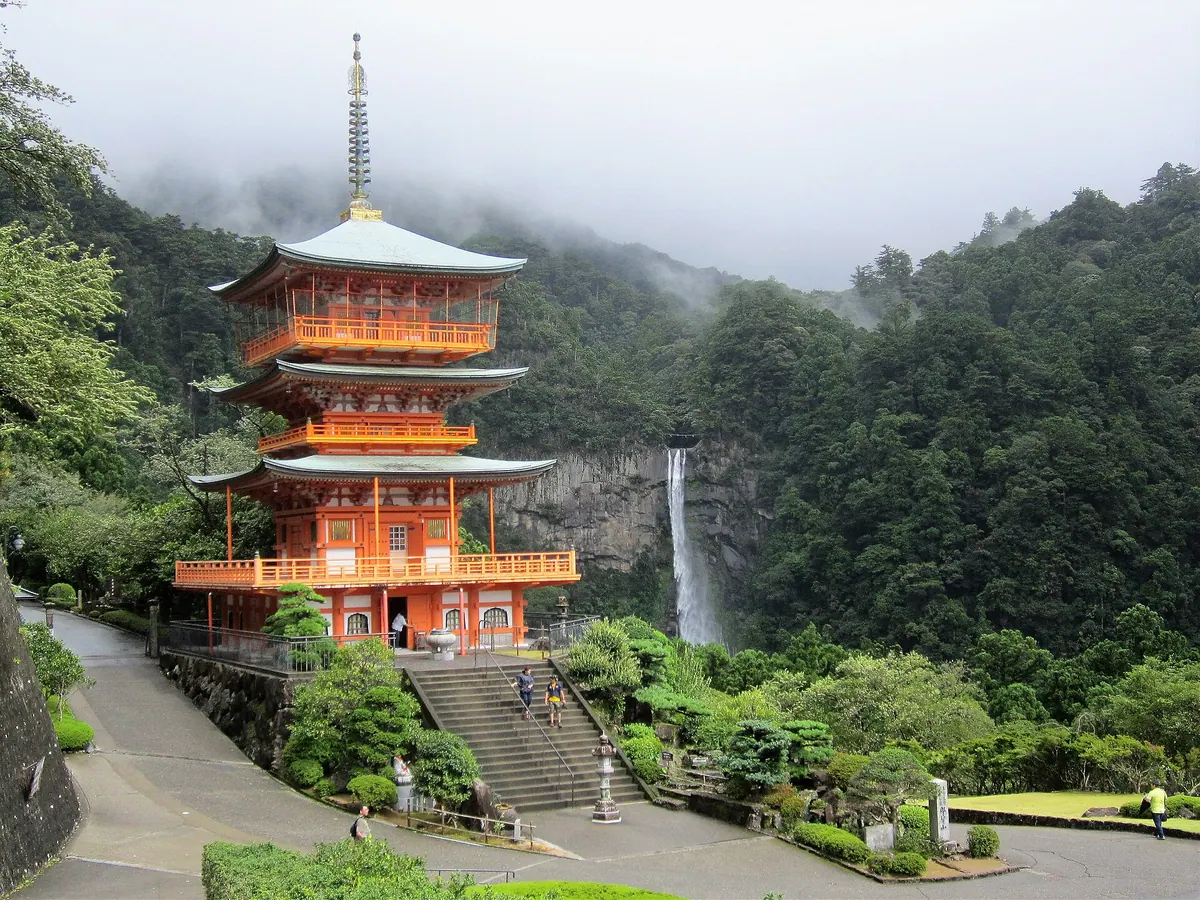
What it is
- Tendai school Buddhist temple.
- Part of the Nachisan complex.
- First stop on the Saigoku Kannon Pilgrimage.
- Founded late sixth or early seventh century.
What to see
- Current hondo (main hall) dates from 1590.
- Sanmon (Mountain Gate) built in 1933.
- Sanmon has Nio guardian deities and komainu guardians.
- Three-storied pagoda rebuilt in 1972.
- World's largest waniguchi (slit gong) inside main hall.
- Gong is 1.4 meters across and weighs 450 kilograms.
In detail
(478 ww [251-500], web)
Seiganto-ji is a temple of the Tendai school of Buddhism. It is part of the Nachisan complex, and has special significance as the first stop on the Saigoku Kannon Pilgrimage, a circuit of 33 statues of Kannon, bodhisattva of compassion. “Saigoku” means “western provinces,” and indicates that the sites to be visited are all in the area generally equivalent to what is known today as Kansai. The Saigoku Kannon Pilgrimage was traveled by pilgrims as early as the Heian period (794–1185), when it was popular among nobles and retired emperors.
Ancient Origins
The temple traces its origin as a place of worship to Ragyo, a fourth-century ascetic from India who found a golden statue of Kannon, bodhisattva of compassion, in the pool beneath the falls, and built a small hut in which to worship it. The founding of the actual temple dates from the late sixth or early seventh century, when a priest named Shobutsu built a hall to house a larger, wooden statue of Kannon with Ragyo’s golden statue inside.
A Syncretic Institution
The temple’s current hondo (main hall) dates from 1590, and is located beside Kumano Nachi Taisha Grand Shrine. Until the end of the Edo period (1603–1867), the temple and shrine formed a single Shinto-Buddhist syncretic institution known as Nachisan. This ended when the new Meiji government ordered strict separation between Buddhism and Shinto, and the temple’s priests were forced out.
In 1874, the Buddhist priests were granted permission to use the vacant hall as a new temple, possibly because of the site’s role as the starting point of the Saigoku Kannon Pilgrimage. The temple was then given its current name of Seiganto-ji, literally “Temple of Passage to the Blue Shore.”
Expansion and Development
The temple complex expanded and developed over the following decades. The Sanmon (Mountain Gate) was built in 1933, and is notable for the rare combination of Buddhist Nio guardian deities and komainu shrine guardian animals. The three-storied pagoda was built—or, technically, rebuilt—in 1972. Its predecessor is visible in the 500-year-old painting known as the Nachi Pilgrimage Mandala, but this earlier pagoda burned down in 1581.
The Waniguchi Slit Gong
Seiganto-ji also has the world’s largest waniguchi (literally, “crocodile mouth”), a kind of slit gong. The gong at Seiganto-ji is 1.4 meters across and weighs 450 kilograms. It hangs just inside the entrance to the temple’s main hall.
Shugendo Revival
In recent years, the temple has been the center of a revival of Shugendo mountain asceticism. Shugendo has deep roots in Kumano, but its Buddhist elements made its practitioners, known as yamabushi, unwelcome after Buddhism was expelled from the three main shrines. With the help of other Shugendo centers, such as Mt. Koya in the mountains to the north, the assistant head priest of Seiganto-ji was able to reestablish the tradition. Today yamabushi once more practice austerities in the mountains during the ritual seasons.
Text: 観光庁 地域観光資源の多言語解説文データベース. Reproduced unchanged. The notes above were written from that text by Japan Gems.
Where it is
和歌山県東牟婁郡那智勝浦町那智山8 Open in Google Maps
この施設の関係者の方へ
このページは公開情報をもとに Japan Gems が作成し、訪日外国人向けに英語で掲載しています。 写真や情報の追加・修正を承っています。お店の写真に差し替えることもできます。
このページの情報を更新する